Review technology set for 32 matches in Kirtipur
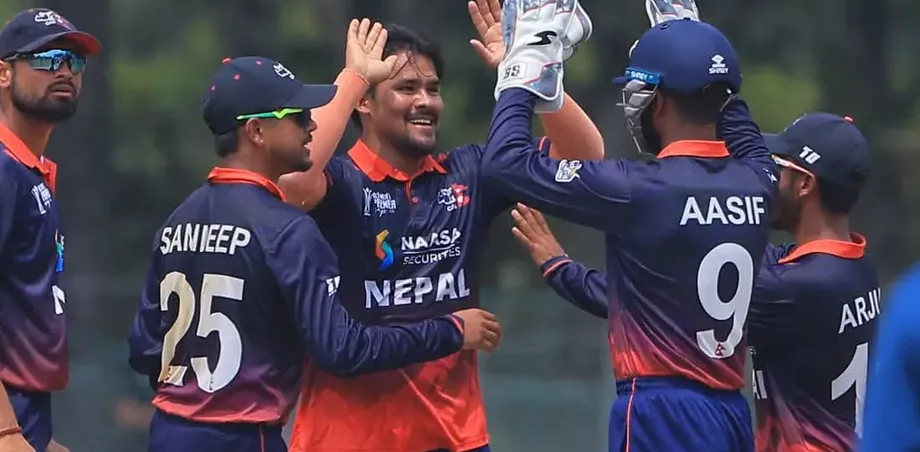
The Nepal Premier League will introduce the Decision Review System for its third edition, with the Cricket Association of Nepal promising full 3D ball tracking for leg before wicket decisions and artificial intelligence to help detect contact between ball and bat. The tournament is scheduled for October 26 to November 21, 2026, at the TU International Cricket Ground in Kirtipur, where eight teams will play 32 matches.
Contents
- Review technology set for 32 matches in Kirtipur
- What ball tracking will show
- AI will help examine disputed edges
- Why earlier decisions created pressure for change
- How testing led to the announcement
- Who will pay for the system?
- Budget limits shape the package
- Reviews could affect match starting times
- Overseas recruitment and ICC approval also matter
- Key Points
CAN announced the decision on social media on Tuesday, October 20, with the league also publicising it through its Facebook page. The announcement moves the project beyond the testing stage described by CAN secretary Paras Khadka in September. Implementation is expected from the opening match.
Siddhartha Bank is supporting the introduction of the technology, according to the league. The package also includes reviews of run outs, stumpings and no balls, analysis of wides based on height, and measurements of the distance and height of sixes.
For players, the central change is the opportunity to challenge eligible umpiring decisions through a formal review process. A batter given out can seek another examination of the dismissal, while a bowling team can challenge a decision that leaves a batter at the crease.
The move follows two seasons in which disputed calls became a recurring concern. Television umpires already examined some incidents, including run outs and stumpings, but teams lacked a formal DRS route to contest decisions. The new system will broaden the evidence available for some of cricket's most difficult judgments.
What ball tracking will show
CAN says full 3D ball tracking will be used for leg before wicket, usually shortened to LBW. This dismissal can occur when a batter intercepts a delivery with the body, often the pad protecting the leg, and the delivery meets the conditions for an LBW decision.
Officials must consider several things: where the ball bounced, where it struck the batter, whether the bat touched it first and whether it would have hit the stumps. Ball tracking reconstructs the delivery's movement and projects its path after the point of impact.
A review can therefore give the television umpire evidence that is difficult to judge at normal speed. A delivery may look straight from one camera angle yet be moving past the stumps. Another may strike the pad close to the wicket but have touched the bat first.
The league's promise of full 3D tracking describes a specific part of its planned package. Khadka has also said CAN must choose technology within its financial and operational resources, rather than reproduce the entire setup used at an ICC World Cup.
AI will help examine disputed edges
CAN also plans to use artificial intelligence for edge detection, helping officials determine whether a ball touched the bat. A faint contact can decide a caught behind appeal or change the examination of an LBW decision.
A caught behind dismissal occurs when the wicketkeeper catches a ball after it touches the bat, before it reaches the ground. A very small edge may be difficult to see in an ordinary replay, especially when the ball passes close to the bat and pad together.
The planned package includes reviews of no balls, run outs and stumpings. A no ball is an illegal delivery, including one where the bowler oversteps the permitted front foot position. Run outs and stumpings require officials to judge whether the batter is safely behind the crease when the wicket is broken.
CAN lists height based wide analysis alongside other bowling information. Measurements of sixes will add information about how far and how high the ball travels after a boundary clearing shot. Those measurements serve a different purpose from the tools used to decide whether a batter is out.
Why earlier decisions created pressure for change
The NPL began in 2024, and complaints about umpiring continued into its second edition. By the sixth match of that season, allegations had emerged of more than two dozen incorrect decisions involving officials on the field and in the television review role.
Several incidents showed the kinds of calls players wanted reviewed. During a match between Chitwan Rhinos and Lumbini Lions, Sandeep Jora's dismissal from a Rijan Dhakal delivery went to the television umpire. Viewers questioned why a no ball was not called when the replay appeared to show Dhakal's front foot crossing the crease.
A stumping review involving Lumbini captain Rohit Paudel in the same match took roughly six to seven minutes. Chitwan players, including overseas cricketers, expressed dissatisfaction with the decision. Paudel later urged improvements rather than blame, pointing out that human errors also occur in international cricket, where players can request reviews.
A match between Sudurpashchim Royals and Kathmandu Gorkhas produced further complaints. Josh Brown was given out LBW although replay footage appeared to show contact with his bat. A caught behind appeal against Arif Sheikh was rejected, with a later replay appearing to show an edge.
Kathmandu wicketkeeper John Simpson was also given out LBW despite footage appearing to show the ball hitting his glove. He signalled for a review, but the competition had no formal DRS. For players facing similar decisions this season, the practical change will be a defined way to request another examination.
How testing led to the announcement
Khadka said in September that CAN had tested systems from two companies and was seeking feedback about their accuracy and effectiveness. Provider selection was to follow an assessment of those results.
Speaking about the selection process, CAN secretary Paras Khadka said:
"We have tested systems from two companies. Now, once we get the final assessment of their accuracy, we will decide which company to work with. If the technology is found to be reliable, we can start DRS from this edition," Khadka said.
The main steps leading to the planned introduction are:
- 2024: The NPL held its inaugural season.
- Second edition: Disputed umpiring decisions increased pressure for a formal review system.
- September 20, 2026: Khadka described tests with two companies and an assessment of accuracy before selection.
- October 20, 2026: CAN announced that DRS would be used in the third edition.
- October 26 to November 21, 2026: The tournament is scheduled in Kirtipur, with DRS expected from the opening match.
The six days between the announcement and the scheduled opening leave the league a short final preparation period. Players and officials will need to operate the review process from the start if the opening match plan is implemented.
Who will pay for the system?
Khadka earlier estimated the cost at 15 million to 20 million Nepalese rupees. A subsequent account citing a CAN source put a reported agreement with an Indian company at 20 million to 25 million rupees.
CAN's proposed funding model involves sharing some of the expense with the eight franchises. Khadka described a plan to adjust the cost against the 50 percent revenue sharing portion from commercial media rights. Siddhartha Bank's support is another part of the introduction announced by the league.
The financial plan places the technology alongside the competition's broadcasting business. Money generated through commercial rights would help cover a service used throughout the tournament, rather than leaving the full expense with a single participant.
CAN has not publicly specified the provider's identity, the final contract value, the exact contributions from the association, franchises and bank, or the detailed playing rules governing reviews. Those rules include how many unsuccessful challenges a team receives and which decisions players can challenge themselves.
Budget limits shape the package
Khadka has repeatedly described the project as a search for dependable technology that a domestic competition can afford. His comments explain why the package has been assessed through trials rather than simply copied from a major international tournament.
Explaining the resource limits, CAN secretary Paras Khadka said:
"The DRS used in the World Cup requires considerable resources. But if there is a reliable system that can be used for the first time in Nepal, we are in favour of implementing it," he said.
Review technology requires more than software. Cameras must capture useful angles, operators must prepare the evidence and the television umpire must apply the competition's rules. Picture quality and the time taken to retrieve footage matter when a decision rests on a small movement of the ball or a foot.
The earlier disputes show why both accuracy and speed matter. Some decisions remained contentious after television replays, while Paudel's stumping review took several minutes. The planned tracking and edge detection tools give officials more information to examine, alongside the need for a consistent process.
Reviews could affect match starting times
Khadka has said DRS could extend a match by up to half an hour. CAN has consequently discussed changes to the schedule and the possibility of earlier starts, also taking cold weather and dew into account.
Dew is moisture that collects as temperatures fall. On a cricket ground it can make the ball wet and harder to grip, affecting bowlers and fielders. A delay that pushes play further into the evening can therefore affect playing conditions as well as spectators waiting for a result.
The planned broadcasts are on Star Sports, Himalaya Television and Net TV's streaming platform. A formal review process will become part of the viewing experience, allowing audiences to follow the examination of a disputed decision rather than watch players appeal without access to DRS.
For the 32 matches scheduled at one venue, the challenge is practical: gather the relevant evidence, communicate the decision and resume play promptly. The league's experience with lengthy television reviews gives that task a concrete starting point.
Overseas recruitment and ICC approval also matter
The technology announcement comes as franchises recruit international players. Kathmandu Gorkhas have signed former Australia captain David Warner. Other players named in preparations include Sikandar Raza, Shakib Al Hasan, Ravi Bopara, Jimmy Neesham and Charith Asalanka.
In his September update, Khadka described the process of obtaining International Cricket Council sanction as being in its final stage. He expected the approval process connected with overseas participation to take another seven to 10 days and said further franchise announcements would follow sanction.
CAN was also seeking recognition affecting how tournament performances enter official player records. Khadka said the classification could be List A or T20. These are statistical categories for recognised limited overs cricket, with T20 referring to matches allowing each team 20 overs and List A generally covering the longer limited overs format.
Performances in the first two NPL editions had not counted in players' official career records. Recognition would therefore matter to the record of runs, wickets and appearances accumulated by both Nepali and overseas players. The approval timetable Khadka gave was an expectation expressed in September; the October DRS announcement addresses the review system.
Key Points
- CAN announced the NPL's first DRS system on October 20, ahead of the third edition.
- Eight teams are scheduled to play 32 matches in Kirtipur from October 26 to November 21, 2026.
- The planned package includes full 3D ball tracking for LBW and AI based edge detection.
- Run outs, stumpings and no balls are included, alongside height based wide analysis and measurements of sixes.
- Siddhartha Bank is supporting the introduction, while CAN has proposed sharing costs with franchises.
- DRS is expected from the opening match, and CAN has discussed earlier starts because reviews could lengthen play.