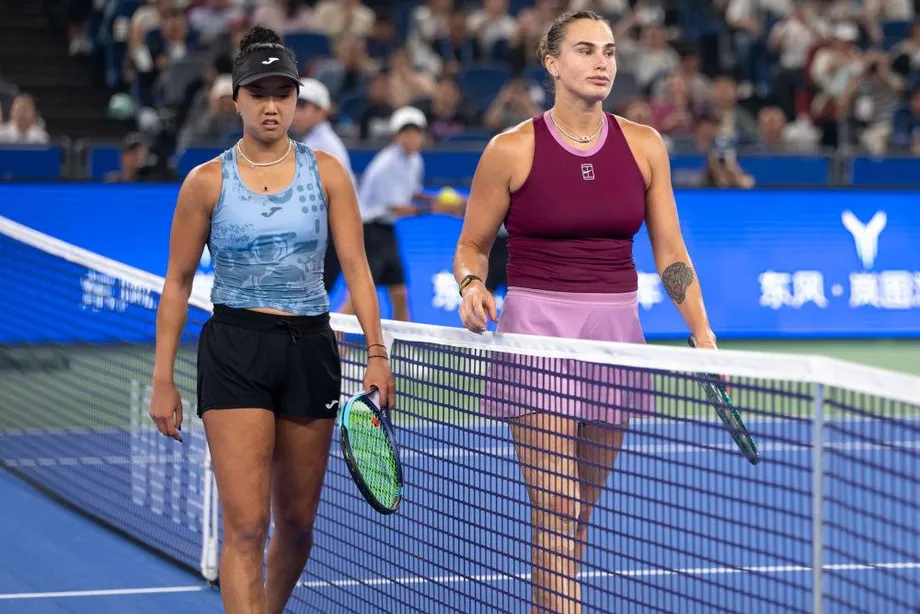
Li survives a dramatic finish to reach the last 16
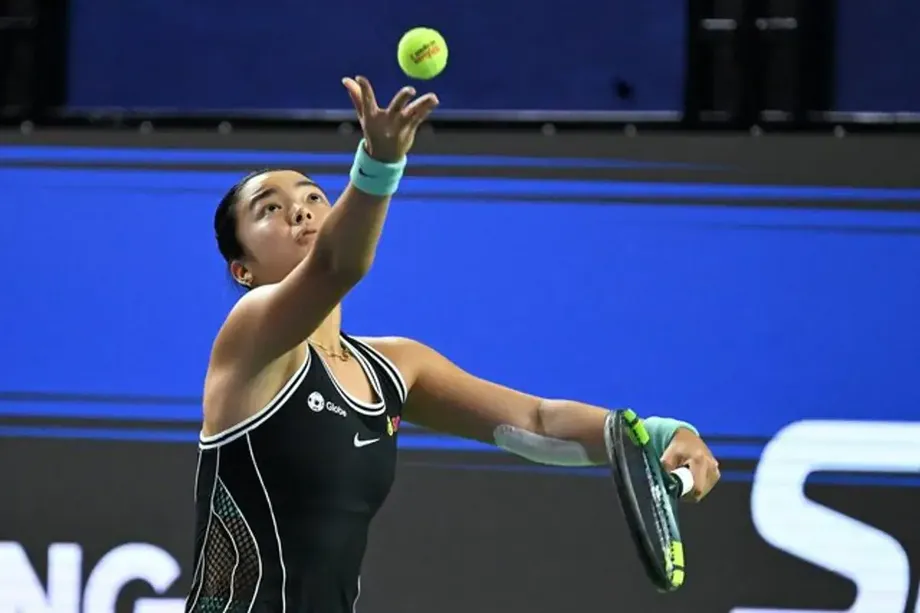
Ann Li converted her 10th match point to defeat top seed Aryna Sabalenka 3-6, 6-4, 7-6 (5) at the Wuhan Open on October 14, 2026, securing the biggest victory of her career after two hours and 27 minutes. The American recovered from a set and a break down, then withstood a prolonged comeback from the three times Wuhan champion.
Contents
- Li survives a dramatic finish to reach the last 16
- How Li turned the match around
- Nine chances saved before the final winner
- Li explains how she kept going
- A new opportunity against Janice Tjen
- Sabalenka and Pegula lose from winning positions
- Guo gives China a place in the last 16
- Other results shape the next round
- Key Points
Li, ranked No. 31, advanced to face Indonesia's Janice Tjen in the round of 16. Her victory over the world No. 2 was her first against Sabalenka in four tour meetings, her third career win against a player ranked in the top 10 and her second such success this season.
Sabalenka saved seven match points before the deciding tiebreak and another two during it. Li finally ended the contest with a forehand winner, turning an afternoon of missed opportunities into a personal breakthrough.
Second seed Jessica Pegula also lost after winning the opening set, falling 2-6, 7-6 (7), 6-3 to Latvia's Jelena Ostapenko. Both leading seeds therefore exited in the second round, while China's Guo Hanyu reached the last 16 of a WTA 1000 singles tournament for the first time.
How Li turned the match around
Sabalenka initially controlled the contest. She won eight consecutive points to finish the opening set, taking it in 35 minutes, and moved ahead 4-2 in the second. Li needed to recover a service break simply to bring that set back level.
The American responded by winning nine of the next 11 games. She took the second set 6-4 and carried that momentum into the decider, where she established a 5-2 lead. A match that had appeared to be moving toward a routine Sabalenka victory was suddenly within Li's reach.
Sabalenka then made Li work through almost every possible complication before the finish. Serving at 2-5, she saved five match points to hold. She broke Li in the following game and, serving at 4-5, erased two more match points with a forehand winner and a backhand winner.
A match point is a point that would end the contest if the leading player wins it. Saving one keeps the match alive, and Sabalenka repeatedly produced her strongest tennis with defeat just a point away.
The main stages of the comeback and finish were:
- First set: Sabalenka won 6-3 after closing with eight straight points.
- Second set: Li recovered from 2-4 to win 6-4.
- Deciding set: Li led 5-2 before Sabalenka saved seven match points and forced a tiebreak.
- Tiebreak: Li led 6-3, lost her next two opportunities and converted her 10th match point to win 7-5.
Nine chances saved before the final winner
Li's advantage in the tiebreak gave her three more match points. Sabalenka saved the first two, including one with a forehand that caught the corner of the court. Li then struck the forehand winner that secured the match.
The final score, 7-6 (5), means Li won the deciding set in a tiebreak by seven points to five. Sabalenka's nine saved match points consisted of seven during ordinary service games and two in that tiebreak.
Sabalenka also received attention from a physiotherapist during the final set, when tape was reapplied to her right leg. No diagnosis or further information about the leg was given.
The match statistics showed a substantial difference in errors: Sabalenka made 44 unforced errors to Li's 28, a gap of 16. An unforced error is a missed shot judged to have come without enough pressure from the opponent to force the mistake. Against a player capable of producing winners under extreme pressure, Li's lower error count helped her remain competitive through repeated reversals.
Li explains how she kept going
Li described the emotional strain of watching opportunities disappear. Speaking after the match, the American said she had tried to focus on the next point rather than dwell on the chances Sabalenka had escaped.
I think on some of those match points I was about to lose my mind. I was about to crash out. In the end, you just have to realize, I didn't play bad and she just played really well," Li said. "And so you have to just play point by point. And I knew that if I stayed there, I could get to the situation again.
Li's explanation reflected the pattern of the finish. Sabalenka had answered several match points with outright winners, leaving Li to reset repeatedly rather than simply correct a single recurring mistake.
Li also said her aim had been to improve on her previous performance, connecting the victory to her daily work rather than a special approach reserved for a leading opponent.
For me, it just shows that I'm trying to improve every day from every match. My only goal was to improve from the last match I played," Li said. "I know that if I play my tennis and I stay positive, and I stay physical and intense, I can win any match.
A new opportunity against Janice Tjen
Li's next opponent, Janice Tjen, advanced by beating Ukraine's Daria Snigur 7-5, 6-3. The American and Indonesian will meet for the first time in professional competition, although Li said they have practised together a few times.
Both players will be attempting to reach their first WTA 1000 quarterfinal. WTA 1000 tournaments form one of the highest levels of the women's tour, bringing together many leading players and awarding substantial ranking points.
Li has now reached the third round at four consecutive WTA 1000 events, her best such sequence. This is her first appearance at that stage in Wuhan, and it follows another run to the last 16 at the China Open.
Her next task is to move beyond a stage where she has previously stopped: Li lost all three of her earlier WTA 1000 round of 16 matches. She enters the meeting with Tjen having won eight of her past nine matches against opponents ranked below her.
Li described Tjen as a player who uses variety, meaning she can change the pace, spin and shape of her shots rather than repeatedly play the same kind of ball. After the long contest against Sabalenka, Li said she felt physically good and planned to recover before preparing for that different challenge.
Sabalenka and Pegula lose from winning positions
Sabalenka's defeat ended her attempt to win a fourth Wuhan title. She lifted the trophy in 2018, 2019 and 2024, and had reached at least the semifinals in each of her four previous appearances. This was her first Wuhan campaign to finish before the last four.
The top seed had received a first round bye, so the loss came in her opening match of the tournament. Despite her late resistance, she could not regain control after Li's surge through the second set and the early part of the third.
Pegula, last year's Wuhan runner-up, also appeared well placed to progress. She won the opening set against Ostapenko in 31 minutes, taking both of her break opportunities while facing none herself.
Ostapenko then saved three match points in the second set tiebreak before taking it 9-7. She won the deciding set 6-3, finishing a contest that lasted two hours and 23 minutes.
The Latvian struck 45 winners to Pegula's 15. In the final set alone, she led that category 15-3, served four aces and broke Pegula three times. Her next opponent will be Canada's Leylah Fernandez.
Li and Ostapenko reached the same outcome by different routes. Li had to keep creating chances after Sabalenka repeatedly escaped; Ostapenko first had to save herself from defeat before turning her attacking play into a deciding set victory.
Guo gives China a place in the last 16
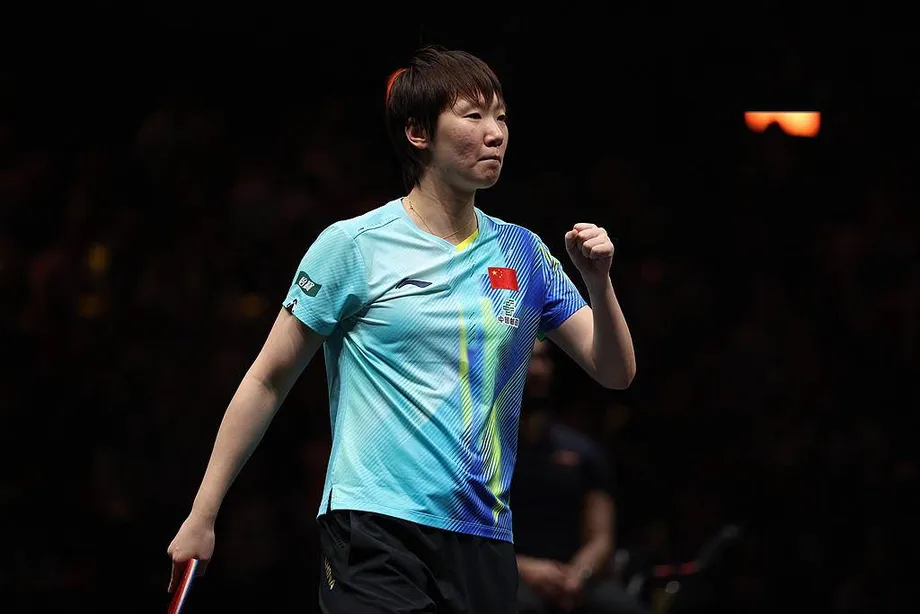
Guo Hanyu became the only Chinese player to reach the women's singles round of 16 at this year's tournament, defeating American qualifier Katie Volynets 6-4, 4-6, 7-6 (3). It was the first time Guo had won consecutive singles main draw matches on the tour.
Playing on a wild card, Guo had already saved three match points to defeat 12th seed Sorana Cirstea in the opening round. Against Volynets, she again had to navigate a deciding set filled with changes of momentum.
Guo broke serve in the ninth game of the final set to lead 5-4 but could not serve out the match. Volynets won two consecutive games to move ahead before Guo forced a tiebreak and took it 7-3.
Guo said the close score had kept her focused on competing until the final point.
It was another very tough match today, and the score stayed close," Guo said. "Until the last point, there was no way to say the match was over, so I just tried to give everything I had from start to finish and do the best I could. I'm happy to have won another match.
Guo will next play fifth seed Elina Svitolina, who beat Liudmila Samsonova 6-2, 5-7, 6-2. Guo said recovery would be her first priority before returning to court the following day.
Other results shape the next round
China's Shi Han lost 6-3, 6-4 to Fernandez, ranked No. 25. The 21-year-old had come through qualifying and beaten 13th seed Alexandra Eala of the Philippines in the first round, recording both her first victory over a player ranked in the top 20 and her first WTA 1000 main draw singles win.
Seventh seed Iga Swiatek defeated fellow Pole Magdalena Frech in straight sets for her 40th tour victory of the season. She will face Ashlyn Krueger in the third round.
Sixth seed Karolina Muchova recovered to beat American qualifier Caty McNally and will next meet 11th seed Diana Shnaider. Tenth seed Iva Jovic beat Dayana Yastremska 6-4, 6-1 to set up a meeting with 16th seed Maja Chwalinska.
Britain's Sonay Kartal defeated ninth seed Belinda Bencic 6-0, 7-5 and will play 15th seed Jasmine Paolini. With Sabalenka and Pegula eliminated, the remaining players head into a round of 16 missing its two highest seeds.
Key Points
- Ann Li defeated Aryna Sabalenka 3-6, 6-4, 7-6 (5) in two hours and 27 minutes on October 14.
- Li converted her 10th match point after Sabalenka saved seven before the tiebreak and two during it.
- The victory was Li's first against Sabalenka and her third career win over a player ranked in the top 10.
- Li next faces Janice Tjen, with both seeking a first WTA 1000 quarterfinal.
- Jelena Ostapenko saved three match points before eliminating second seed Jessica Pegula.
- Guo Hanyu reached her first WTA 1000 singles round of 16 and will face Elina Svitolina.