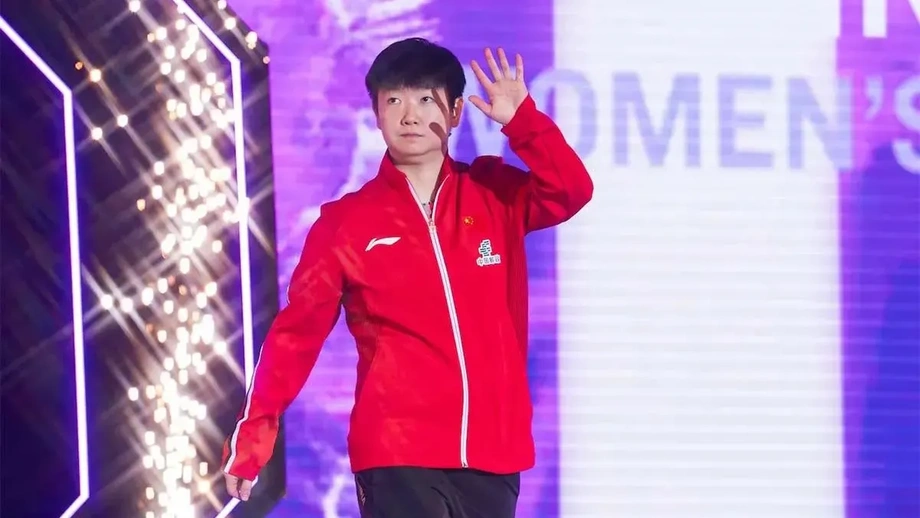
A demanding finish brings Sun another title
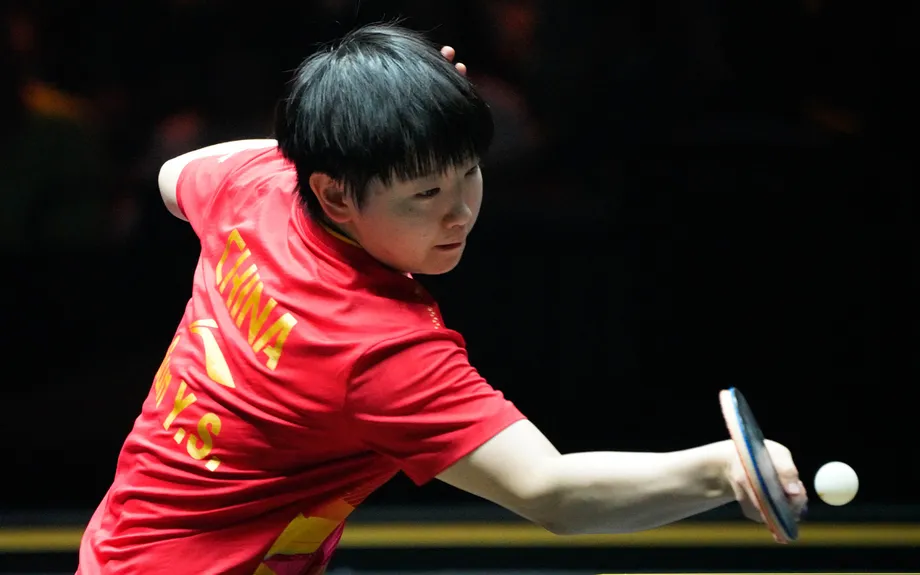
Sun Yingsha defeated Chinese teammate Kuai Man 4-1 to win the WTT Champions Montpellier women's singles title on November 1, 2026, recovering from an opening game defeat after surviving two matches that went to a deciding seventh game. Her victory at the Sud de France Arena in France was her 20th WTT circuit title and eighth WTT Champions crown.
Contents
- A demanding finish brings Sun another title
- How Sun turned the final around
- A familiar opponent with growing confidence
- Five victories, three deciding games
- Wang Yidi pushed Sun to the limit
- Why this trophy felt different
- France also figures in Sun's next chapter
- Jang completes a different comeback
- Key Points
The final scores were 8-11, 11-7, 11-3, 11-9 and 11-6. Sun won four consecutive games, including a comeback from 4-8 down in the fourth, to secure her first major singles title since beating Kuai in the United States Smash final in July.
For Sun, the result carried a personal weight beyond another trophy. She said injuries and other physical problems had contributed to fluctuating form over nearly three months. Montpellier gave her a chance to recover her feel for competition, then tested it repeatedly under pressure.
The toughest stretch came on the final day. Sun needed seven games to overcome Wang Yidi in the semifinal, despite taking a 3-0 lead, and said she returned for the final less than three hours later. Against Kuai, she had to find another response after falling behind immediately.
The tournament ran from October 27 to November 1. Its closing day also brought a first WTT Champions title for South Korea's Jang Woojin, who recovered from 1-3 down to defeat Germany's Patrick Franziska 4-3 in the men's final.
How Sun turned the final around
Kuai began the women's final strongly, taking the opening game 11-8. She also led 6-4 in the second before Sun won four points in a row to move ahead 8-6. Sun completed that game 11-7, bringing the match level.
Sun then produced the most one sided game of the final. She opened a 4-0 lead in the third, stretched it to 7-1 and won 11-3. Her changes of speed and spin, together with repeated pressure toward Kuai's forehand, helped her take control.
The fourth game was the turning point. Kuai led 8-4 and was three points from drawing level at two games each. Sun changed her serve, including a long delivery toward Kuai's forehand, and began closing the gap. Kuai called a timeout with her lead reduced to 8-7, but Sun drew level and eventually won 11-9.
From 4-8 down, Sun won seven of the next eight points. That sequence changed the match from a possible 2-2 contest into a 3-1 lead for Sun, leaving her one game from the championship.
Sun moved ahead 5-2 and then 8-3 in the fifth. Kuai narrowed the gap to 6-9, but Sun took the final two points to complete the victory. The final lasted five games, compared with the seven needed to settle their United States Smash championship match in July.
A familiar opponent with growing confidence
Kuai reached the final by defeating Chen Yi 4-2 in the semifinals, setting up a championship match between two Chinese players who knew each other's games well. Her early leads in Montpellier gave Sun another difficult examination after their close final in the United States.
Sun, the second seed, described both that familiarity and Kuai's recent improvement in her comments after the match. She said her approach was to compete freely while keeping pressure on her opponent.
"We know each other very well and are quite evenly matched. Kuai has shown significant progress and a very high level of play recently. So I wanted to play freely, without putting too much pressure on myself, and focus on challenging her throughout the match," Sun said after the match.
Kuai's strongest opportunity to interrupt Sun's run came in the fourth game. Her 8-4 advantage offered a route back into the match, but Sun's recovery left Kuai needing to win three consecutive games instead. Sun closed the contest in the next game.
Five victories, three deciding games
Sun's route through Montpellier became difficult soon after a comfortable opening match. She beat Lutz 3-0 in the round of 32, then needed the maximum number of games against Shin Yubin, Hina Hayata and Wang Yidi.
The tournament used matches requiring three game wins in Sun's first two rounds and four game wins from the quarterfinals onward. A deciding game is the final possible game, played when both players are one game victory away from winning the match.
- October 27: The six days of competition began in Montpellier.
- Round of 32: Sun defeated Lutz 3-0.
- Round of 16: Sun defeated Shin Yubin 3-2.
- Quarterfinal: Sun defeated Hina Hayata 4-3.
- November 1 semifinal: Sun defeated Wang Yidi 4-3 after Wang recovered from 0-3.
- November 1 final: Sun defeated Kuai Man 4-1 to take the title.
Across those five victories, Sun played 27 games and won 18. Her matches against Shin, Hayata and Wang accounted for 19 games, compared with eight across her opening match and the final. Three consecutive deciding games formed the demanding middle of her championship run.
Wang Yidi pushed Sun to the limit
Sun's semifinal against Wang was close long before it reached a seventh game. Sun took the first three games 13-11, 11-9 and 12-10, winning each by only two points. Her 3-0 lead therefore came from a series of narrow finishes.
Table tennis games normally go to 11 points, but a player must win by at least two. When the score reaches 10-10, play continues until someone creates that margin. That explains the extended scores in the first and third games of this semifinal.
Wang won the next three games, including the sixth 14-12, to force a decider. Sun then produced a much more decisive finish, taking the seventh 11-2 and securing her place in the final.
Sun said afterward that the semifinal's intensity, followed by a break of less than three hours before facing Kuai, tested her physical strength. The day required two different recoveries: first stopping Wang's comeback, then overcoming the loss of the opening game in the final.
Why this trophy felt different
Sun described Montpellier as valuable for the mental demands of the competition as well as the result. In her interview after winning, she said repeatedly surviving close matches had brought a personal breakthrough at crucial moments.
Her account of the preceding months added context to that assessment. Sun said injuries and other physical issues had left her form uneven, and that she had not been competing at her best. Her aim in entering Montpellier was to regain a better feeling on court.
No specific injury diagnosis or treatment schedule was given. Sun presented the title as a starting point for gradually returning to her previous level, with the close victories giving her something more than another addition to her record.
The timing also ended a gap of about four months since her July singles title at the United States Smash. Both victories came against Kuai in a final, but Montpellier required Sun to get through three consecutive deciding games before reaching the championship match.
France also figures in Sun's next chapter
Sun linked her Montpellier victory to another competition in France: the ITTF Singles World Cup in 2027. In her Chinese interview, she said she understood that the event would take place at the same venue.
Sun also explained why winning in France felt meaningful as she looked toward that tournament.
"France will also host the ITTF Singles World Cup next year, so I see this as a very good start to my time competing here," she added.
Montpellier gave her experience of competing at the arena through a full title run, including the short recovery between a demanding semifinal and the final. Her closing message in English kept the focus on the present rather than the next trophy.
Sun ended her championship interview with these words:
Focus on now, Thank you every one.
Jang completes a different comeback
Jang Woojin supplied the other major comeback on the final day. The South Korean, 31, defeated Germany's Patrick Franziska, 34, by scores of 3-11, 11-7, 7-11, 9-11, 11-9, 11-8 and 11-8 to claim his first WTT Champions title.
Franziska led 3-1 and needed only one more game. Jang won the fifth 11-9, then took the sixth and seventh by the same 11-8 score to complete the reversal.
Both men had already survived seven games in the semifinals. Jang beat Brazil's Hugo Calderano 4-3, winning both the fifth game and the decider 14-12. Franziska defeated Sweden's Truls Möregårdh 4-3, taking their seventh game 11-6 and ending the defending champion's run.
The two finals rewarded different responses to pressure. Jang recovered from the edge of defeat in the championship match itself. Sun's longest battles came earlier, before she found a more direct route through the final by winning four games in succession.
Key Points
- Sun Yingsha beat Kuai Man 4-1 in Montpellier on November 1, 2026.
- She won the final 8-11, 11-7, 11-3, 11-9, 11-6, recovering from 4-8 down in the fourth game.
- The victory brought her 20th WTT circuit title and eighth WTT Champions crown.
- Sun survived deciding games against Shin Yubin, Hina Hayata and Wang Yidi.
- She described the tournament as a step toward recovering her form after injuries and other physical problems.
- Jang Woojin beat Patrick Franziska 4-3 to win his first WTT Champions men's title.