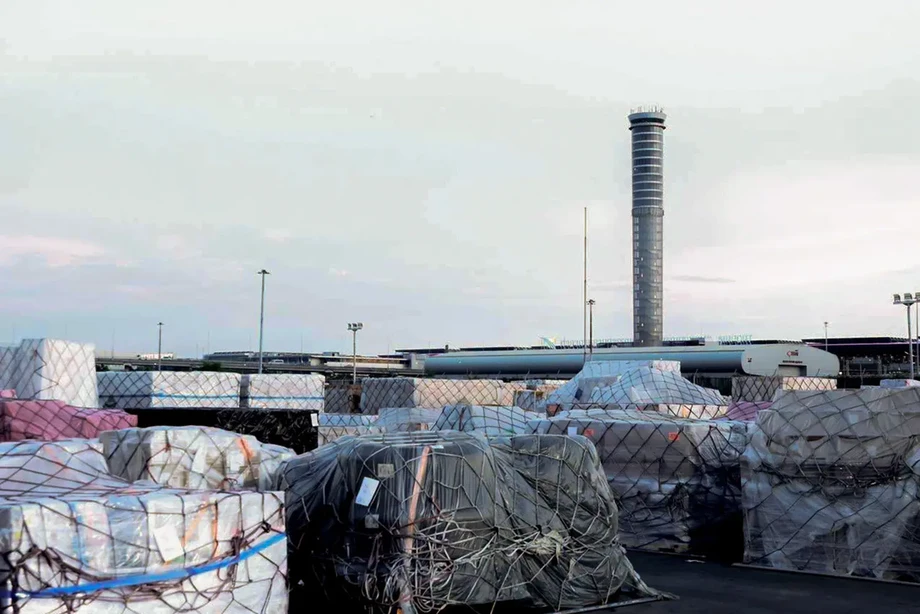
More than 1,000 shipments await clearance as tourism pressure builds
More than 1,000 cargo consignments remained outstanding at Bangkok's Suvarnabhumi Airport as of November 9, 2026, with another 700 to 800 pallets awaiting processing, as Thailand's travel industry warned that airport congestion could weaken the final two months of the tourism high season. Airlines have restricted some incoming freight, while businesses face delays obtaining electronics, medical equipment and manufacturing supplies.
Contents
- More than 1,000 shipments await clearance as tourism pressure builds
- Why a warehouse delay can spread across the airport
- Airlines restrict freight as the backlog grows
- What AOT and Thai Airways are changing
- Trade worth trillions of baht depends on reliable handling
- Tourism businesses want one centre to manage disruptions
- Two industries are asking for coordinated decisions
- Expansion plans run well beyond this high season
- December demand adds urgency to the recovery
- Key Points
Adith Chairattananon, secretary-general of the Association of Thai Travel Agents (ATTA), said the concern extends beyond cargo warehouses to immigration, baggage handling, airline operations and transport outside the terminal. His warning puts the airport's ability to move people and goods at the centre of Thailand's effort to turn seasonal travel demand into revenue.
Airports of Thailand (AOT), which operates Suvarnabhumi, has allocated additional warehouse space and is working with Thai Airways and Customs to clear accumulated imports. Thai Airways is adding workers and equipment. Yet congestion has persisted after flooding eased, with problems locating stored shipments adding to the delays.
Neither Thai Airways nor AOT has confirmed the current backlog total or announced a recovery date. The figures of more than 1,000 consignments and 700 to 800 pallets come from airline accounts, which described the pallets as awaiting breakdown, the process of separating aircraft cargo loads into individual shipments.
Why a warehouse delay can spread across the airport
Thai Airways has acknowledged that rising import volumes left large numbers of unit load devices awaiting breakdown and storage. These devices, commonly called ULDs, are containers or pallets used to load goods onto aircraft. When they remain full on the ground, fewer are available for subsequent flights.
The Thai Airfreight Forwarders Association has identified missing storage records and inadequate shipment tracking as further causes of slow cargo releases. Agents arranging collection can struggle to establish where goods are stored and when they will become available. Clearing space therefore requires both physical handling and accurate records.
Export operations are also being affected as congested working areas and delayed unloading restrict the flow of outgoing goods. Forwarding companies have described longer queues for weighing and handing over exports at the Thai Airways warehouse. At Bangkok Flight Services, another cargo handler, truck waiting times were around 24 hours despite some improvement following warehouse expansion.
Chudech Kongsunthorn, an executive at WICE Logistics, described shipments that would normally be released within 24 hours taking days or, in some cases, weeks. The affected goods include semiconductor and electronic parts, equipment for data centres, medical equipment and pharmaceuticals. For manufacturers waiting for components, a delayed shipment can also disrupt production and delivery schedules.
Airlines restrict freight as the backlog grows
Cathay Cargo restricted Bangkok-bound shipments at least until November 15 to intact ULDs that could be released without being broken down at the destination, with exemptions for specified cargo requiring temperature control and other special handling. Singapore Airlines Cargo also imposed temporary restrictions on certain shipments, citing disruption to cargo container circulation and outbound handling.
Thai Airways had requested a 50% reduction in incoming cargo through November 7, according to freight forwarder Expeditors, and restricted additional charter flights. An advisory from the airline's Korea cargo office also limited acceptance of some transit and Thailand-bound freight between November 4 and 8.
The sequence shows how restrictions tightened after earlier warnings:
- September 2026: The Thai Chamber of Commerce raised concerns about persistent warehouse, staffing, equipment and procedural constraints.
- October: AOT began coordinating with Thai Airways over the cargo problem, according to AOT president Paweena Jariyathitipong.
- November 5 and 6: Further cargo backlog problems were reported at the Thai Airways warehouse.
- November 9: Airline accounts still put outstanding consignments above 1,000, alongside 700 to 800 pallets awaiting processing.
- November 15: Cathay Cargo's restrictions were scheduled to remain in place at least until this date.
Thai Airways said it was giving priority to shipments received before October 23 while continuing to handle new arrivals. That leaves warehouse teams managing older accumulated cargo alongside the daily flow of incoming goods.
What AOT and Thai Airways are changing
Paweena said AOT had allocated Warehouse 4 in Suvarnabhumi's Free Zone for oversized cargo. Moving large shipments into dedicated space is intended to reduce pressure on other working areas and help release accumulated imports. AOT, Thai Airways and Customs have also discussed using domestic cargo warehouse facilities to clear international inbound shipments.
Thai Airways has deployed more staff and handling equipment, including forklifts, secured additional space and begun improving its system for recording cargo locations. AOT is monitoring incoming and outgoing volumes together with the quantity and status of accumulated shipments.
AOT is also working to connect Thai Airways' radio frequency identification technology, known as RFID, with the AOT Cargo Clearhouse platform. RFID uses electronic tags that can be read by scanners to identify and track goods. Connecting the systems is intended to improve the information available as cargo moves through the warehouse and collection process.
About 46,000 cargo collection requests had been submitted through Cargo Clearhouse, Paweena said. Transport Minister Phiphat Ratchakitprakarn has warned that the backlog could disrupt the country's logistics network and international trade, making the recovery effort relevant well beyond airport operations.
Trade worth trillions of baht depends on reliable handling
The Thai Chamber of Commerce puts Thailand's trade transported by air at about 5.53 trillion baht for January through July 2026. Exports accounted for about 2.42 trillion baht, roughly one third of the country's total export value. Electronics represented more than 1.32 trillion baht, while agricultural and food products exceeded 380 billion baht.
Those figures explain the concern among businesses that rely on fast deliveries. Electronics manufacturers need components to arrive when production requires them. Fresh food and flowers have limited selling periods, while medicines and medical equipment can require carefully timed transport and handling.
Demand has continued to grow on some routes even as warehouses struggle. Air cargo data company WorldACD recorded a 20% increase from a year earlier in chargeable weight shipped from Thailand to the United States in the week ending November 1. Chargeable weight is the measure airlines use for freight pricing, taking account of a shipment's weight and the space it occupies.
Chamber chairman Phon Aramwatananon said constraints had accumulated since the previous year across warehouse space, staffing, equipment, operating procedures and infrastructure for cargo security checks. Heavy rain and flooding had added pressure by disrupting journeys for workers and passengers. The continuing backlog after flood conditions improved has kept attention on those operating constraints.
Tourism businesses want one centre to manage disruptions
ATTA's Adith identified three main tourism risks: weaker visitor confidence, higher operating costs and reduced competitiveness. Long immigration queues or delayed baggage can make the first hours of a holiday frustrating. Late passenger arrivals also disrupt the schedules of tour operators, hotels and transport companies, which may need workers and vehicles to remain on duty longer.
Adith proposed a central airport operations centre bringing together AOT, immigration police, airlines, ground handlers and private businesses. The centre would monitor conditions in real time and help the organisations respond together when queues or delays begin building.
ATTA also wants more immigration officers, passport processing capacity and baggage handling resources, along with better management of passenger transfers during busy periods. Advance flight information could help managers identify when several aircraft will arrive close together and place staff where they are most needed.
Adith said a reliable estimate of financial losses would require immigration waiting times, flight delays, baggage backlog figures and logistics costs. His proposed performance targets cover waiting times, punctuality, baggage collection and passenger movement, with results monitored and reported regularly. Those measurements would give airport managers and businesses a shared picture of where delays occur.
Two industries are asking for coordinated decisions
The Chamber's cargo proposals and ATTA's passenger proposals share a central demand: agencies should make decisions together across the entire journey. The Chamber wants AOT, the Civil Aviation Authority of Thailand, Customs, warehouse operators, the Thai Airfreight Forwarders Association and business representatives involved in a common mechanism with named responsibilities, deadlines and performance measures.
Phumin Harinsut, the Chamber's vice-chairman and chair of its Logistics and Supply Chain Committee, said the organisation had collected information across the cargo chain to prepare immediate, medium and longer term proposals. Its study on improving Thailand's air cargo system through the case of Suvarnabhumi congestion was scheduled for presentation to the transport minister on October 5.
The Chamber has also called for a review of the terms governing rights for new warehouse operators. It wants requirements covering handling capacity, service standards, efficiency and readiness for seasonal peaks. The proposals connect the immediate need to clear freight with the rules under which future warehouse capacity would operate.
For travellers and businesses, the practical concern is the handover between organisations. An arriving passenger moves from an airline to immigration, baggage collection and ground transport. A shipment passes through unloading, storage, Customs and collection. ATTA and the Chamber are seeking coordination across those stages so that delays can be identified and addressed earlier.
Expansion plans run well beyond this high season
Deputy Transport Minister Siripong Angkasakulkiat has outlined plans for approximately 2,250 square metres of additional check-in space, with 610 seats, 18 shared self-service kiosks and eight check-in counters. The proposed facilities also include baggage repacking areas, information and security points, tax refund services, drinking water and charging facilities.
Larger construction projects follow a much longer timetable. The East Expansion is scheduled for 2027 to 2031 and would raise annual passenger capacity to 70 million. Construction of the South Terminal is planned for 2029 to 2035, taking capacity to 120 million passengers annually. A fourth runway is expected to open in 2040, raising flight handling capacity to 120 movements per hour.
The ministry's figures put Suvarnabhumi's 2025 traffic at 62.90 million passengers and 370,823 flights, with 2026 forecasts of 61.85 million passengers and 368,959 flights. The passenger forecast is about 1.7% below the 2025 total. The Chamber separately cited 59.62 million passengers, 340,000 flights and 118 airlines in its 2026 traffic figures, without specifying the reporting period.
Planned development south of the airport includes a cargo terminal covering 280,000 square metres, an aircraft maintenance centre covering 420,800 square metres and 539,200 square metres for support activities. AOT is also pursuing commercial development of the 548-rai Airport Business A37 site, including hotels, alongside logistics and warehouse support investment. The construction timetable leaves this year's seasonal response dependent on existing facilities, staff, equipment and operating changes.
December demand adds urgency to the recovery
Thailand's high season includes major events that depend on smooth international arrivals. The sold out Tomorrowland debut is scheduled for December 11 to 13 at Wisdom Valley in Chonburi. Organisers expect 70,000 to 80,000 foreign visitors and more than 5 billion baht in economic activity, with travel package data suggesting an average stay of seven days.
Those expected visitors will need accommodation and transport as well as festival access. The event illustrates Adith's concern that attracting demand and serving it are separate tasks: spending opportunities depend on passengers reaching hotels and destinations without lengthy disruption.
Adith said Thailand still had opportunities to generate substantial tourism revenue in the remaining months of 2026, but its ability to accommodate visitors was becoming a greater concern than travel demand. The immediate priorities he set out are measurable: shorter queues, reliable baggage delivery, coordinated transfers and earlier action when congestion starts to build.
Key Points
- Airline accounts put the November 9 backlog above 1,000 consignments, with another 700 to 800 pallets awaiting processing.
- AOT has allocated Warehouse 4 for oversized cargo, while Thai Airways is adding staff, equipment and storage capacity.
- Cathay Cargo's restrictions were scheduled to last at least until November 15.
- ATTA wants a joint operations centre and published targets for passenger waiting times, baggage delivery and flight punctuality.
- Thailand's January to July air trade was worth about 5.53 trillion baht, according to the Thai Chamber of Commerce.
- Major terminal and runway projects extend from 2027 to 2040, leaving immediate improvements dependent on current airport operations.