A December festival with billions riding on it
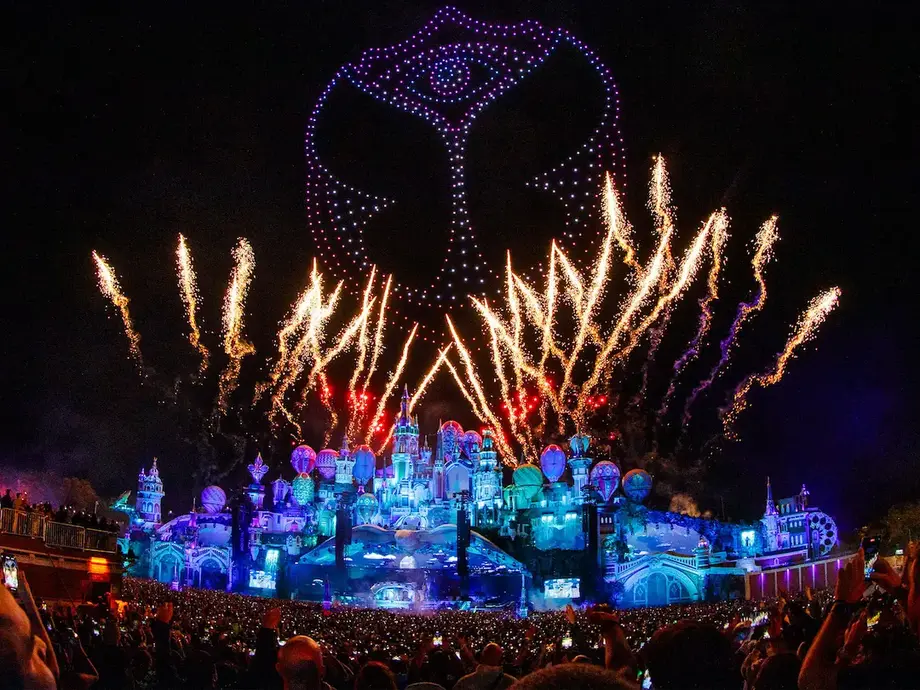
Tomorrowland Thailand is expected to generate more than THB5 billion in economic activity when its first full festival in Asia takes place at Wisdom Valley in Chonburi from December 11 to 13, 2026. Tickets have sold out, organisers are investing about THB2 billion, and Pattaya is preparing for hotel occupancy that could reach 99%.
Contents
- A December festival with billions riding on it
- Tickets sold before the artists were revealed
- Why a sold out event can still lose money
- Building the venue while training Thai crews
- Six stages, Thai food and a global sponsor
- Pattaya hotels face a surge in demand
- Getting thousands of people home after midnight
- Security, medical care and ticket warnings
- Five years of plans depend on the first edition
- Key Points
The immediate challenge is turning that demand into a workable event: moving around 50,000 people a day, completing elaborate stages, protecting visitors and keeping accommodation costs from damaging the experience. Organisers expect 70,000 to 80,000 foreign visitors, with travel package data suggesting an average stay of seven days.
Thailand's Board of Investment has approved investment promotion for WeAreOne.World (Thailand) Co., Ltd., the company hosting the festival. The government's investment approval announcement projects at least THB21 billion in economic value over five years and says more than 60% of attendees are expected to arrive from overseas.
Those forecasts extend well beyond ticket sales. Organisers expect spending at hotels, restaurants, shops and transport businesses, while the project includes training for Thai festival workers and equipment intended for repeated use. Actual visitor spending will be assessed after the event with relevant agencies and Pattaya's hotel association.
The December debut is part of an arrangement covering 2026 to 2030. Executive Rachat Thanyawut says the first edition must demonstrate that Thailand can handle the operational demands of a major international festival, particularly as Singapore and Malaysia have also expressed interest in hosting it.
Tickets sold before the artists were revealed
Tomorrowland said in its March 7, 2026, ticket sales announcement that more than 150,000 tickets had sold before the lineup was revealed. Hotel packages and Discover Thailand travel experiences had also sold out within hours during the preceding weekend.
Debby Wilmsen, Tomorrowland's press coordinator and spokeswoman, described the significance of the Thai edition in that announcement:
While Tomorrowland previously brought several special shows to Asia, this will mark the very first full-scale Tomorrowland festival in the region.
Organisers say the daily ticket allocation sold within the first hour. The government places capacity at up to 50,000 attendees a day, while organisers describe sales exceeding 50,000 daily. Across three days, the official total of more than 150,000 tickets represents attendance opportunities, with visitors able to attend on multiple days.
Thailand's Tourism Authority supported bringing the festival to the country after a search for an Asian location lasting more than a decade. The main milestones now stretch from the initial announcement to expansion plans:
- January 2026: Tomorrowland announced its Thailand debut.
- March 7, 2026: Tomorrowland confirmed that tickets and travel packages had sold out.
- October 15, 2026: Organisers say installation work began at Wisdom Valley.
- December 11 to 13, 2026: The inaugural festival is scheduled in Chonburi.
- 2027: Organisers plan to expand to two consecutive weekends.
Why a sold out event can still lose money
Rachat puts investment for the first edition at about THB2 billion, up from an initial THB1.6 billion. That is an increase of THB400 million, or 25%, as imported equipment, construction and operating requirements have pushed costs higher.
About 60% of the THB2 billion budget is allocated to operations in the first year, including transport, artists and management. Another 20% is for equipment and storage intended for use over years three to five, while the remaining 20%, or THB400 million, is for site improvements.
Organisers expect a loss in the first year because much of the spending establishes facilities for future editions. Rachat describes a joint venture in which the Belgian parent holds 85% and the Thai partner holds 15%. The Board of Investment identifies the venture's partners as TL International, a Tomorrowland Group subsidiary, and Thailand's One Asia Ventures.
The THB5 billion economic activity forecast measures spending across businesses connected with the event. The organiser's own finances depend on its revenue and costs, including ticket income, sponsorship, artists, transport and construction. Hotels and restaurants can gain business while the festival company records a loss.
Private sponsorship has come in below expectations, partly because Tomorrowland limits conventional advertising displays to preserve the appearance of the venue. Rachat also says only part of an expected THB400 million in government support has been received, with the balance awaiting reporting on results after the event and subsequent disbursement.
Building the venue while training Thai crews
Wisdom Valley covers more than 1,400 rai, approximately 224 hectares, in the Khao Mai Kaeo area of Bang Lamung district. Organisers say storms, flooding and landslides damaged the site before installation began, but repairs and ground restoration have been completed.
Stage and installation work is reported to be about 40% complete. Around 120 containers of equipment have arrived from Belgium, including specialised main stage components and scaffolding that organisers say could not all be sourced locally.
About 200 overseas specialists are helping install the main stage and teaching Thai crews the assembly methods. Organisers put total staffing at around 8,000 positions, covering work inside and outside the venue. Those roles bring immediate employment, while the installation work gives local teams experience with equipment used at major international festivals.
The stated construction schedule allows 60 days from October 15, which runs into mid December, close to the festival dates. Organisers have not given a separate final readiness date before the December 11 opening. Completing the stages, testing systems and preparing visitor areas will be central to the remaining work.
The Board of Investment says the project also includes a Tomorrowland Academy to train Thai personnel in event management and festival operations. Eligible projects under its policy can receive import duty exemptions on equipment and coordinated visa and work permit services. Organisers say immigration officials have provided checks at the venue for more than 800 foreign crew members.
Six stages, Thai food and a global sponsor
Tomorrowland Thailand will have six main stages under the Consciencia concept, built around wonder, love, anger, joy, desire and sadness. A stage called CODEX will incorporate Thai decoration, while Thai performers and DJs will appear alongside international artists.
Thai design will also shape areas beyond the stages. Plans include bamboo, woven materials and a food zone with a large roof inspired by traditional Thai architecture. More than 70% of the food is expected to be Thai, ranging from street food to dishes served by restaurants including Le Du Kaan and Gaggan Anand.
ABSOLUT Vodka and Pernod Ricard have announced the brand as an official main sponsor. ABSOLUT has supported Tomorrowland since 2017, with the partnership entering its tenth year in 2026. British designer Yinka Ilori is creating a distinctive activity dome for the brand.
Patrick Castanier, managing director of Pernod Ricard Thailand, says the company will provide VIP areas and bars featuring brands from its portfolio. A limited edition ABSOLUT bottle inspired by Consciencia was scheduled for release in Thailand in October, using the theme's wonder, joy and love elements.
The sponsor's planned spaces show how commercial partners can participate within Tomorrowland's design requirements. For the organiser, the task is to secure revenue while maintaining a venue in which branding, food areas and installations follow a coordinated visual plan.
Pattaya hotels face a surge in demand
Pattaya normally records hotel occupancy of about 85% during December's busy travel season, according to the organiser. The festival is expected to push that to 99%, a rise of 14 percentage points, leaving very little spare capacity at participating properties.
Some room prices have climbed to as much as three times their previous level. Organisers are discussing accommodation costs with hotel operators, concerned that visitors facing steep bills could leave with a poor impression of Pattaya despite enjoying the festival.
Travel packages combined festival tickets, hotels and transport, and booking data suggests an average stay of seven days. That gives restaurants, shops and attractions opportunities to earn income before and after the three festival days. The length of stay is also a major part of the argument behind the THB5 billion spending forecast.
Organisers estimate that Thai attendees will make up about 25% of the audience. They also describe substantial demand from other Asian markets and from Europe, the Americas and Oceania. Their forecast refers to visitors from 196 countries, while sponsor publicity describes 191 nationalities. Final attendance figures will become available after the event.
Bangkok accommodation is one way organisers hope to ease pressure on Pattaya. Shuttle services will allow some visitors to stay in the capital, and possible activities there could spread spending across more businesses. Camping has also been discussed as an option for future editions.
Getting thousands of people home after midnight
Tomorrowland Thailand is scheduled to run from noon until midnight. The most demanding transport period will come when large numbers of visitors leave together, making the journey back to accommodation part of the festival's practical test.
Organisers have hired 800 shuttle buses, including services to Bangkok. Their traffic plans aim to get visitors to their accommodation within roughly 90 to 120 minutes, although individual journeys will depend on destinations, boarding arrangements and road conditions.
Six access roads are being developed or improved to connect the venue with three motorway approaches. Organisers have described the surrounding road preparations as complete in their latest updates, while the broader transport plan includes traffic specialists from overseas.
The buses also serve an accommodation purpose: they make hotels outside Pattaya a more workable choice. That could reduce pressure on local rooms, but it also places greater responsibility on departure management, particularly after a full day at the venue.
Security, medical care and ticket warnings
About 300 police officers and 600 to 700 security guards are planned for the event. Police dogs and Tourist Police vehicles equipped with cameras providing a view in every direction will support monitoring, alongside an emergency control centre.
More than 10 first aid stations and over 40 emergency ambulances are planned. Organisers say visitors span generations, including people older than 70, adding to the need for accessible assistance and clear arrangements across a large venue.
Representatives from more than 19 embassies have taken part in safety coordination. Organisers prohibit narcotics and cannabis within the festival. They say cannabis found at entry will be confiscated and destroyed, while cases involving other illegal drugs will be referred to police.
Fire prevention is another priority following the fire at Tomorrowland in Belgium in July 2025. Organisers say materials resistant to fire will be used in Thailand's stage construction. The scale of the installations makes fire precautions, emergency access and coordination between security and medical teams essential parts of preparation.
Tickets are personalised, and organisers warn that resale is prohibited. Some resale offers have reached three times the original price, while altered electronic tickets may be fraudulent. Buyers considering those offers face both the inflated cost and the possibility that the ticket will fail entry checks.
Five years of plans depend on the first edition
Thailand's approved project extends across five years, with the Board of Investment forecasting at least THB21 billion in economic value over that period. The organiser's immediate target is more than THB5 billion from the debut, followed by expansion to two consecutive weekends in 2027.
Rachat has discussed a possible THB10 billion annual economic activity target for an expanded event. Reaching it would require more than selling additional tickets. Accommodation, transport, staffing and emergency services would have to support a larger programme without making the trip unaffordable or difficult.
After December, the promised assessment of hotel nights and actual visitor spending will provide a firmer measure of the first edition's economic results. The same event will show how well the buses, roads, construction work and visitor services perform under the pressure of a sold out crowd.
For Thai workers and businesses, the lasting benefits will depend on repeat demand and skills retained between editions. Permanent site improvements, reusable equipment and training are intended to make later festivals easier to deliver. December 11 is the next major test of those plans.
Key Points
- Tomorrowland Thailand is scheduled for December 11 to 13, 2026, at Wisdom Valley in Chonburi.
- Tomorrowland says more than 150,000 tickets sold before the lineup was revealed.
- Organisers forecast more than THB5 billion in economic activity and investment of about THB2 billion.
- Pattaya hotel occupancy is projected to reach 99%, with some room prices rising to three times their previous level.
- Plans include 800 shuttle buses, about 900 to 1,000 police and security personnel, and over 40 ambulances.
- The project covers 2026 to 2030, with two consecutive weekends planned for 2027.