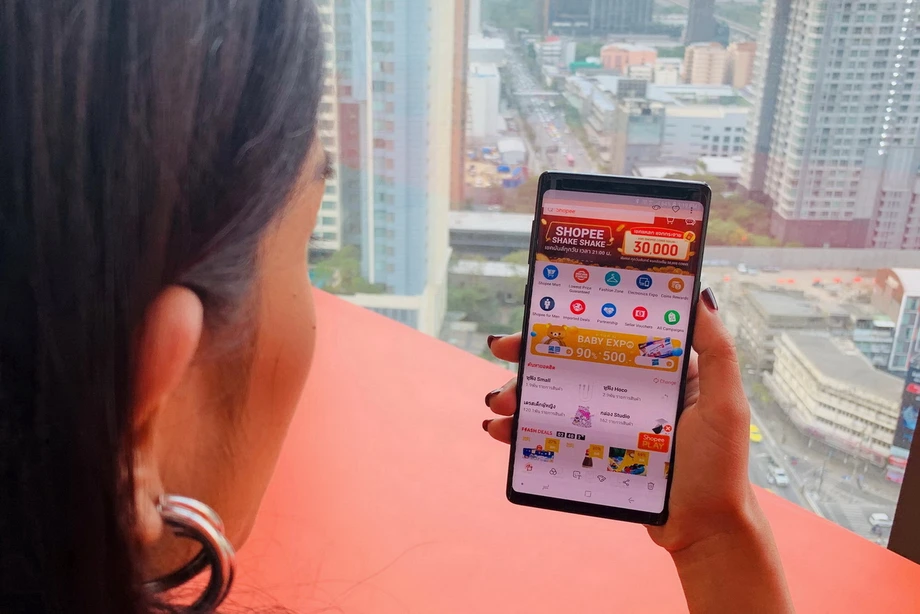
Relief targets 1.2 million small Thai sellers
Thailand's Commerce Ministry expects small online businesses to save about 1.93 billion baht under an agreement returning mandatory selling fees on Shopee, TikTok Shop and Lazada to reference rates applied on 1 January 2026. The reductions run from 1 December 2026 to 31 May 2027, with eligibility checks targeting approximately 1.02 million individual traders and 180,000 registered businesses.
Contents
- Relief targets 1.2 million small Thai sellers
- Who qualifies for the reductions?
- How much will platform fees fall?
- Which goods are included?
- Registration comes before approval
- The dates sellers need to track
- Why small businesses sought help
- Competition regulators are examining fee increases
- The bigger issue is predictable costs
- Key Points
The agreement, announced on 28 October 2026, offers relief after repeated increases in platform charges. Access depends on several conditions: sellers must be Thai operators with valid electronic commerce registration, remain within annual sales or revenue limits for each platform, and sell eligible products. Electronics are excluded.
The Department of Business Development's application announcement also sets a requirement that shops must have opened on the participating platforms before 30 September 2026. Applications are divided into two rounds, from 1 to 15 November and from 16 November to 16 December 2026.
For a small merchant, a lower fee means keeping more of each sale to pay suppliers, replenish stock or cover wages. The practical benefit depends on the merchant's product category, seller status and other platform charges, because the agreement covers mandatory fees rather than every expense associated with selling online.
The detailed arrangement follows an initial fee reduction pledge announced before the ministry's October agreement. That earlier promise proposed cuts of at least 10%. Sellers now have dates, eligibility thresholds and fee ranges against which to check their own accounts.
Who qualifies for the reductions?
The Department of Internal Trade has set annual limits of 1.8 million baht in sales for individual sellers and 3.5 million baht in revenue for companies or other legal entities. Both limits apply per platform, per year. Shops exceeding the relevant threshold are excluded from the benefit.
The department says these limits are separate from the rules governing registration for value added tax, or VAT. For this program, sellers need to check their electronic commerce registration and platform income against the eligibility conditions.
Thai operators can apply through the Seller Center of each participating marketplace where they have a shop. Eligible businesses can receive the benefit on all three platforms where they are members, subject to the applicable conditions and verification.
Officials describe the scheme as support for small Thai businesses selling Thai products. Chantaraphat Panchamanon, deputy director general of the Department of Internal Trade, said the screening process is intended to direct assistance to those businesses and prevent foreign sellers from claiming their benefits.
The projected recipient figures show how strongly the measure is weighted toward individual traders. Of the approximately 1.2 million businesses identified, 1.02 million are individuals, equivalent to 85%, while 180,000 are registered businesses, or 15%.
How much will platform fees fall?
The three marketplaces have agreed to restore mandatory fees, commonly called GP in Thailand, to reference rates used at the beginning of 2026. GP is the platform's commission or required share of a sale. Sellers pay it alongside the cost of obtaining and supplying their goods.
- Shopee: fees move from approximately 8.03% to 19.26% to a range of 8.03% to 13.91%.
- TikTok Shop: fees move from 13.38% to 21.94% to a range of 11.24% to 17.66%.
- Lazada: fees move from 9.00% to 17.50% to a range of 7.50% to 11.60%.
The Department of Internal Trade gives maximum reductions of 33.30% for Shopee, 35% for TikTok Shop and 42.90% for Lazada. Actual reductions vary with seller type, product category and platform terms, so merchants need the schedule applying to their own shop to calculate their savings.
A percentage reduction describes the change relative to the old fee. A percentage point change measures the gap between two rates. For example, Lazada's published upper rate falls from 17.50% to 11.60%, a gap of 5.90 percentage points. The department's maximum discount figures refer to the reductions available under the relevant fee arrangements.
Which goods are included?
Consumer goods, fashion, lifestyle products and OTOP goods are among the categories covered by the program. OTOP, short for One Tambon One Product, is Thailand's initiative promoting products associated with local communities.
Electronics are excluded because officials say checking the origin of those products is difficult. The department also points to Thailand's limited production in the category when explaining why electronics fall outside assistance directed at small Thai sellers of Thai goods.
A shop's nationality, registration, income and product category therefore all matter. A registered Thai business selling eligible community products must still satisfy the income limit and the requirement concerning when its platform shop opened.
The exclusion also means the relief will reach different parts of online retail unevenly. An eligible clothing merchant can apply for lower mandatory charges, while a merchant selling electronics continues under the fee arrangements applicable to that category.
Registration comes before approval
Electronic commerce registration is central to the application process. Businesses that already hold a valid registration can enter their registration number through the marketplace's application system. Sellers without it must complete registration before returning to request the reduction.
Companies can register through the Department of Business Development or provincial commerce offices. Individuals can use local administrative organisations or district offices, including district offices in Bangkok.
Platforms send application information for verification with the Department of Business Development. Officials estimate that checking eligibility and the accuracy of the information takes about 10 working days. Existing registration allows sellers to submit their claim promptly, with approval following the verification process.
The department has encouraged merchants to prepare their documents and check their status during November. Sellers seeking clarification can contact the Department of Internal Trade's hotline on 1569.
The second application round continues after the reduced rates begin on 1 December. Sellers applying during that round should check their platform's conditions for when approved benefits take effect, since the program links access to verification and the applicable participation terms.
The dates sellers need to track
The program spans an October agreement, November registration and six months of lower fees. A separate competition measure also overlaps with part of that period, making the dates important for businesses preparing their budgets.
- 1 January 2026: the reference date for the mandatory fee rates being restored.
- August 2026 to February 2027: the stated period of a separate suspension of fee and sales commission increases under competition law.
- Before 30 September 2026: shops must have opened on a participating platform to meet the application announcement's shop opening condition.
- 28 October 2026: the Commerce Ministry announces the agreement with Shopee, TikTok Shop and Lazada.
- 1 to 15 November 2026: the first application round.
- 16 November to 16 December 2026: the second application round.
- 1 December 2026 to 31 May 2027: the scheduled period for reduced mandatory fees.
Platforms began notifying sellers from 1 November, with registration activity taking place during the month. The ministry describes the fee reduction as lasting at least six months. No extension or replacement fee schedule after 31 May 2027 has been announced.
Why small businesses sought help
Watansak Suea-iam, director general of the Department of Internal Trade, said platforms had raised GP charges three times since the beginning of 2026. Small businesses have limited room to absorb those increases, particularly when they must pay suppliers and daily operating expenses before enough sales income arrives.
Supree Thongphet, president of Thailand's SME Council, said commissions had risen from around 8% to approximately 17% to 18% in some cases. He welcomed the return toward January rates as a way to improve margins and release working capital, the money a business uses to keep operating.
Supree explained the purpose of the immediate intervention in a statement in Thai:
Asking platforms to reduce fees back to the rates in January 2026 is therefore an urgent way to help businesses manage costs close to what they had previously planned.
The council identifies access to finance and liquidity, access to markets, and fair business rules as three main concerns for SMEs. It also supports payment terms of 45 days, seeking to reduce the strain caused when businesses wait a long time to receive money owed to them.
Lower platform fees address one part of that cash pressure. Faster payment and predictable charges address another: a business needs both enough money from each sale and enough certainty about when that money will become available.
Competition regulators are examining fee increases
The Trade Competition Commission has used Section 60 of the Trade Competition Act B.E. 2560 (2017) to impose measures concerning fee and sales commission increases by major digital platforms. The measures suspend increases for six months, from August 2026 to February 2027, and require platforms to submit their fee structures for review.
The Commerce Ministry's negotiated reductions provide lower reference rates for eligible sellers. The commission's intervention addresses increases and regulatory scrutiny of fee structures. Both operate alongside wider complaints from merchants, restaurants and service providers using digital platforms.
Preliminary information cited in the policy discussion records 10 Shopee fee increases since 2022, with cumulative changes in some fee items reaching 433%. Lazada recorded seven increases, with changes in some items reaching 367%. TikTok Shop's history remains under review.
Thailand had already expanded marketplace oversight through TikTok Shop's regulatory designation in 2025. Its inclusion in the Electronic Transactions Development Agency's high impact marketplace category brought stricter duties covering merchant verification, risk management and regulatory reporting.
The Department of Internal Trade plans to work with the competition commission, the Electronic Transactions Development Agency, SME organisations and platforms on further discussions. It is considering extending assistance to other platforms and will next examine delivery platforms. Major ride platforms also adjusted GP several times between April and August 2026.
The bigger issue is predictable costs
Supree wants platforms to give sellers advance notice before future fee increases. He also supports the competition authority examining operating costs, business practices and fee calculation methods to help set reasonable trading conditions.
Advance notice has a practical value for a merchant. A shop may buy stock or agree to a promotion using one fee schedule, then receive less money than expected if charges change before those goods are sold. Knowing the timing and basis of a change helps the owner plan prices, purchasing and participation in platform services.
The Commerce Ministry's estimated saving of 1.93 billion baht covers the full six months. Spread across the approximately 1.2 million expected recipients, it works out to roughly 1,608 baht per business for the period. Individual savings will depend on eligible sales and the fee reduction applying to each seller.
Permanent secretary of commerce Poonpong Naiyanapakorn said the government wants businesses, platforms and consumers to share the burden amid economic pressure and energy costs. The ministry plans to collect information from those groups and regulators to support reconsideration of the draft Digital Platform Economy Act.
Deputy Prime Minister and Commerce Minister Suphajee Suthumpun says digital economy policy must address competition, transparency and consumer protection while supporting investment and innovation. She has asked relevant agencies to review existing laws and regulatory mechanisms because several bodies share responsibility for platform activity.
The six months of relief therefore serve two immediate purposes: reducing eligible sellers' mandatory charges and giving authorities time to develop more predictable trading rules. Sellers still need to budget for their full platform bill, including service charges outside the agreement, while the government reviews how future fee changes should be handled.
Key Points
- Reduced mandatory fees apply from 1 December 2026 to 31 May 2027 on Shopee, TikTok Shop and Lazada.
- The ministry expects about 1.2 million recipients and combined savings of 1.93 billion baht.
- Thai sellers need valid electronic commerce registration and must meet annual income limits per platform.
- The limits are 1.8 million baht for individuals and 3.5 million baht for companies or other legal entities.
- Electronics are excluded, and shops must have opened before 30 September 2026.
- Applications run in two rounds ending on 15 November and 16 December 2026; verification takes about 10 working days.
- Other service charges remain outside the reduction, while regulators examine fee structures and future trading rules.