Large cash transactions face closer scrutiny as credit reforms take shape
Thailand plans to introduce closer checks on large cash transactions, a new licence for buy now, pay later services and rules for digital tokens linked to the baht as the Bank of Thailand expands its efforts to support borrowers and strengthen financial supervision.
Contents
- Large cash transactions face closer scrutiny as credit reforms take shape
- What changes at bank branches on November 1?
- Gold payments and currency dealers face tighter oversight
- Buy now, pay later would become a licensed credit business
- Nonbank supervision moves under one management structure
- Household debt measures already reach hundreds of thousands of accounts
- Small businesses get a proposed credit gateway
- Baht stablecoin rules are planned for March
- Why the governor supports keeping interest at 1%
- The rollout spans five months
- Key Points
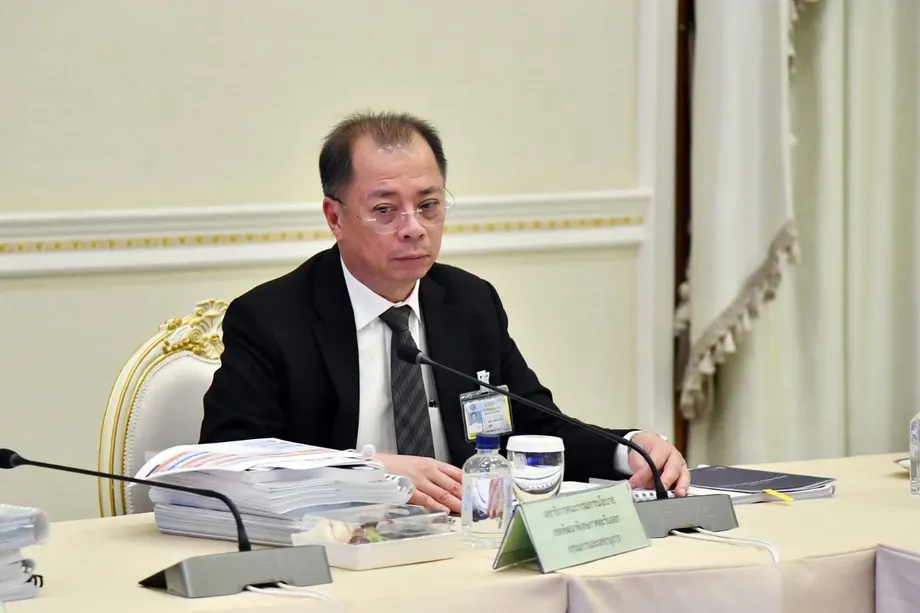
Governor Vitai Ratanakorn outlined the programme on October 29, 2026, at the Governor Connect event. Measures scheduled between November 2026 and March 2027 include oversight of cash purchases and sales of gold above 10 million baht, proposed instalment credit limits of 20,000 baht, and a central platform connecting small businesses with lenders.
The central bank's broader roadmap brings together nine measures and workstreams. Its priorities for 2027 are household debt, access to credit for small and medium enterprises, or SMEs, and stronger supervision of financial businesses outside the banking sector.
A more immediate change comes on November 1, 2026. Bank of Thailand Notification No. 57/2569 introduces closer scrutiny of cash deposits totalling at least 5 million baht within one day at bank branches, alongside other covered transactions. Banks will ask about the money's origin and purpose, with supporting documents required according to customer risk.
The programme combines two tasks that can pull in different directions: making legitimate finance easier to obtain while making suspicious money movements harder to conceal. For households, the most direct changes concern debt repayments, instalment purchases and credit information. For businesses, they concern loan applications, financial service fees and the documents needed when handling large amounts of cash.
What changes at bank branches on November 1?
Notification No. 57/2569 requires financial institutions to conduct enhanced due diligence, commonly called EDD, on qualifying transactions. In simple terms, this means looking more closely at who the customer is, where the money came from and why it is being moved.
The 5 million baht threshold applies to cash deposits accumulated within the same day. The rules cover transactions conducted through branches, while electronic banking channels fall outside this particular branch transaction framework.
The expanded scope also covers cheque or draft deposits, exchanges of baht banknotes, acceptance of cash to issue cheques or drafts, foreign currency transactions, and payments for insurance premiums, investment products and financial derivatives. Derivatives are contracts whose value depends on another asset, price or financial measure.
Banks must adjust their checks to each customer's risk. A customer handling a large legitimate payment may therefore need to explain its purpose or provide records supporting the transaction. Vitai said institutions must report unusual activity to the central bank and provide prompt, fair assistance to customers affected by the checks.
The rules form part of Thailand's effort to prevent financial institutions from becoming channels for illegal funds. The central bank connects this work with the Bangkok Blueprint for Fraud-Resilient Financial Services, which it has promoted with the International Monetary Fund and the World Bank Group.
Gold payments and currency dealers face tighter oversight
The Bank of Thailand expects to announce a measure governing large cash purchases and sales of gold in November 2026. Its proposed approach is to require transfers or cheque payments for transactions above 10 million baht, creating a payment record that can be examined more easily than a handover of banknotes.
The gold proposal sits alongside plans to raise standards at money changing businesses. Those businesses would face stronger requirements for customer checks, information reporting and controls against money laundering, the process of making illegally obtained funds appear legitimate.
The central bank says earlier controls on cash transactions of at least 5 million baht were followed by a fall of more than 57% in the value of cash withdrawals compared with January 2026. Transactions involving gold withdrawals of at least two kilograms a day fell by more than 85% against the same month's comparison level.
Those figures describe withdrawal activity, while the rule taking effect on November 1 sets requirements for deposits and a broader range of branch transactions. Together, the measures extend scrutiny across several ways that large amounts of money or gold can move through the financial system.
Buy now, pay later would become a licensed credit business
Buy now, pay later, often shortened to BNPL, allows a customer to receive goods or services immediately and repay the cost in instalments. The proposed Thai framework would place this form of borrowing under a new licence for credit used to buy goods and services through digital platforms.
The proposal sets a credit limit of 20,000 baht, a maximum repayment period of six months and an interest ceiling of 15%. The central bank expects about seven businesses to apply for licences.
The framework was undergoing public consultation when Vitai outlined the plans, with an announcement expected in December 2026. Consultation gives businesses and other interested parties an opportunity to comment before the regulator completes the rules.
For shoppers, the practical issue is that spreading a purchase across several payments still creates a debt. The proposed limits would set boundaries around the amount borrowed, the repayment period and the interest charged. For providers, a dedicated licence would bring the activity into a more clearly defined supervisory framework.
Nonbank supervision moves under one management structure
The central bank plans to bring supervision of nonbank financial businesses under a single management structure. Previously, oversight was spread across several units and inspections had a limited reach.
The businesses involved include personal loan and credit card providers, nanofinance lenders, payment acceptance services, electronic wallets, foreign exchange and international money transfer businesses, and asset management companies. Nanofinance involves small loans, while asset management companies handle assets such as distressed debts purchased from lenders.
Credit and payment businesses will receive attention first. Vitai said the sector has grown in size, lending volume and business complexity, increasing the need for closer oversight.
The Bank of Thailand intends to use data and artificial intelligence to help prioritise inspections among thousands of operators, taking account of their size and potential impact. Its consumer protection priorities include interest or fees above legal limits and the charging of interest on unpaid interest.
For a borrower, that last practice can make an outstanding balance grow faster because new charges are calculated on earlier unpaid interest as well as the original loan. The planned supervisory approach is intended to identify unfair charging practices across a much wider group of providers.
Household debt measures already reach hundreds of thousands of accounts
The Bank of Thailand says its debt resolution programme, whose Thai name translates as Close Debt Quickly, Move Forward, has helped more than 182,000 retail accounts with bad debts against a target of 200,000 accounts. Bad debt generally means borrowing on which repayments have fallen seriously behind.
The reported total represents more than 91% of the target, leaving fewer than 18,000 accounts to reach it. The figures count accounts, so the programme's reach is expressed in debts handled rather than a stated number of individual borrowers.
The central bank has also maintained the minimum credit card repayment at 8%, saying this preserves liquidity for about 2 million accounts. Liquidity here means the cash borrowers have available to cover their immediate expenses.
A lower required payment can ease pressure on a household budget in the current month, while the remaining balance still needs to be repaid under the applicable terms. Debt resolution and minimum payment relief address different problems: one helps deal with borrowing already in serious trouble, while the other reduces immediate repayment pressure.
Vitai linked the central bank's wider economic role to the connection between weak household income, missed repayments and reduced spending. When families have less money, they can struggle to service debt and buy goods, putting further pressure on businesses and employment.
Small businesses get a proposed credit gateway
The planned SMEs Credit Portal would provide a central platform linking business owners with lenders. The central bank expects its introduction around December 2026 to January 2027, with January identified as the expected announcement month in the broader roadmap.
The portal addresses the process of connecting applicants and lenders. Other programmes tackle lending capacity and the way a business's finances are assessed.
The Bank of Thailand says SMEs Credit Boost has generated more than 80 billion baht in lending. SMEs Secure Plus supports liquidity by allowing other collateral to be considered alongside cash flow when lenders assess a business.
Cash flow is the money moving into and out of a business. Considering it alongside collateral allows a lender to examine how the business earns money and meets expenses, as well as what assets it can offer to support a loan.
The central bank also says reductions in 19 financial service fees save retail customers and SMEs about 8 billion baht annually. For firms facing tight margins, the programme therefore combines efforts to obtain financing with lower costs for using financial services.
Baht stablecoin rules are planned for March
The Bank of Thailand expects to introduce a framework for baht stablecoins in March 2027. A stablecoin is a digital token designed to maintain a value linked to a reference asset, in this case Thailand's currency.
The proposed reference rate is one token to one baht. The framework would distinguish between businesses issuing the tokens and businesses providing digital wallets used to hold or transfer them.
The central bank may initially limit the number of issuers to two. Keeping issuers and wallet providers in separate categories would assign supervision according to the role each business performs: creating the tokens or providing the service through which customers use them.
The final licensing conditions and implementation details have not yet been specified. March 2027 is the stated target for the framework, while the initial limit of two issuers remains a possibility under consideration.
Why the governor supports keeping interest at 1%
Vitai said maintaining the policy interest rate at 1% remained appropriate for Thailand's slow recovery and relatively low inflation. The Bank of Thailand says it reduced the rate twice over the preceding year, bringing it down from 1.50% to 1.00%, a reduction of 0.50 percentage points.
The policy rate helps influence borrowing and saving rates across the economy. Lower rates can reduce financing costs, but their effect depends partly on whether lenders are willing to lend and whether households and businesses can afford additional debt.
The governor acknowledged costs from keeping rates low for a long period. He identified the accumulation of structural financial risks, weaker returns for depositors and unequal access to credit.
Vitai also said the interest rate gap between Thailand and other countries was only one consideration in policy decisions. Thailand operates a flexible exchange rate, allowing the baht to adjust as economic conditions change, while the central bank seeks to reduce excessive currency volatility.
A policy review could follow if the economy recovered strongly enough to create inflation pressure, or if inflation around the middle of 2027 failed to decline as expected. The governor identified rising global oil prices and reduced government fuel subsidies as possible reasons price pressures could last longer than anticipated.
The rollout spans five months
The programme has several stages, with some measures awaiting announcements or consultation outcomes. The dates outlined by the central bank place branch cash checks first and stablecoin supervision near the end of the planned rollout.
- October 29, 2026: Vitai outlines the financial reform programme and the central bank's priorities for 2027.
- November 1, 2026: Notification No. 57/2569 takes effect for qualifying branch transactions.
- November 2026: An announcement on large cash purchases and sales of gold is expected.
- December 2026: Announcements on BNPL supervision and lower credit bureau checking costs are expected.
- December 2026 to January 2027: The SMEs Credit Portal is expected to be introduced.
- March 2027: The framework for baht stablecoins is expected.
The credit information measure would allow people to check their own credit records free twice. A credit record shows a person's borrowing and repayment history, helping lenders assess applications and allowing borrowers to review the information used in lending decisions.
The combined programme reaches beyond changes in the policy interest rate. Its practical focus is on how debts are managed, how small businesses find financing, how financial firms treat customers and how institutions check large money movements.
Key Points
- Thailand's central bank is combining stronger financial supervision with measures to support household borrowers and SMEs.
- From November 1, 2026, qualifying branch transactions face closer customer checks, including cash deposits totalling at least 5 million baht in one day.
- The proposed BNPL licence includes a 20,000 baht credit limit, repayment within six months and a 15% interest ceiling.
- Nonbank oversight will be brought under one management structure, with lending and payment services addressed first.
- Debt assistance has reached more than 182,000 accounts, while SMEs Credit Boost has generated more than 80 billion baht in lending.
- The credit portal is expected around December 2026 to January 2027, followed by a baht stablecoin framework in March.
- Vitai supports keeping the policy rate at 1%, with a review possible if growth or inflation conditions change.