Atlanta talks approach with the biggest trade gaps unresolved
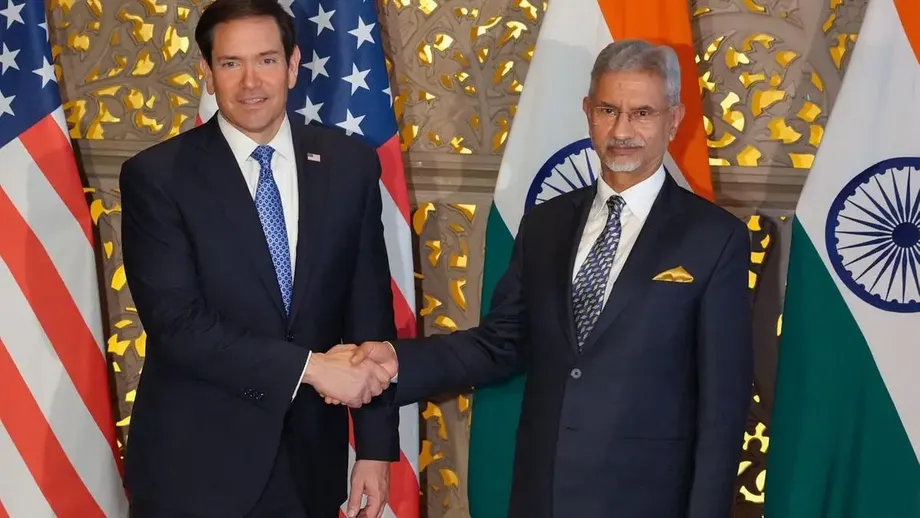
India and the United States face unresolved disputes over tariffs and access to India's agricultural market ahead of an expected meeting between External Affairs Minister S. Jaishankar and US Secretary of State Marco Rubio in Atlanta on October 30-31. People tracking the negotiations say a breakthrough on an interim trade agreement is unlikely, despite Washington's desire to announce a pact before the November 3, 2026, midterm elections.
Contents
- Atlanta talks approach with the biggest trade gaps unresolved
- Why a lower US levy has complicated the bargain
- India wants an advantage over competing exporters
- Farm access remains India's most sensitive issue
- Public optimism has outpaced the final agreement
- How the negotiations reached this point
- Energy purchases connect trade with strategic relations
- Goyal places the US talks within a wider trade strategy
- Atlanta is one stop in a crowded diplomatic calendar
- Key Points
The central problem is that the tariff bargain has changed since the two governments announced a framework on February 7. That framework set out an 18 per cent US reciprocal tariff on specified Indian goods alongside Indian concessions on American industrial and agricultural products. A subsequent US Supreme Court ruling invalidated the reciprocal tariffs, and the Trump administration introduced a lower additional levy of 10 per cent under a different legal provision.
New Delhi now wants to know precisely what its exporters would receive in exchange for opening more of India's market. It is seeking clarity on the revised tariff system, protection against additional duties after an agreement, and competitive treatment against other Asian suppliers.
For Washington, an announcement before the election would provide a concrete result to present to American farmers and manufacturers seeking more sales in India. For New Delhi, the proposed terms remain unacceptable because greater competition for domestic producers must be matched by worthwhile gains for Indian exporters, according to a person following the talks.
Rubio is hosting the G20 Foreign Ministers' meeting in Atlanta. Jaishankar is expected to meet other participating ministers as well, giving the visit a wider diplomatic agenda even if the trade negotiations remain unfinished.
Why a lower US levy has complicated the bargain
The February framework was negotiated against a much harsher tariff backdrop. The United States had imposed duties of up to 50 per cent on many Indian goods in August 2025, including measures connected to India's purchases of Russian oil. The framework envisaged bringing the tariff on specified goods to 18 per cent, with further relief for certain exports dependent on successful completion of the agreement.
The Supreme Court ruling subsequently removed the legal basis for reciprocal tariffs imposed under the International Emergency Economic Powers Act, or IEEPA. Washington then introduced the additional 10 per cent levy through another legal route, bringing both countries back to negotiations over what their exchange of concessions should look like.
In its February 20, 2026, Supreme Court opinion, the court held that IEEPA does not authorize the President to impose tariffs. Its decision addressed only whether the power to regulate importation under 50 U.S.C. §1702(a)(1)(B) includes the power to impose tariffs, rather than deciding the validity of tariffs under other statutes. The court said tariffs are an exercise of the taxing power assigned to Congress by Article I, Section 8 of the Constitution, and that IEEPA's list of powers contains no mention of tariffs or duties. It affirmed the judgment in the V.O.S. Selections case, while vacating the judgment in Learning Resources and remanding that case with instructions to dismiss for lack of jurisdiction.
A tariff is a tax charged when a product enters a country. It is normally paid by the importer, although its cost can affect the price charged to customers or the amount a supplier earns. For an Indian manufacturer, a change in US duties can therefore affect whether an American buyer chooses its goods or buys from another country.
The 18 per cent figure in the February framework and the subsequent 10 per cent additional levy concern different tariff arrangements. India's negotiators are seeking a clear picture of the duties that would apply to individual products, alongside assurances about future increases. Those details will determine the practical value of the agreement.
India wants an advantage over competing exporters
Commerce and Industry Minister Piyush Goyal has said India is seeking better tariff treatment than competing suppliers including Bangladesh, Vietnam, Indonesia and Cambodia. New Delhi's concern extends beyond reducing a headline percentage: exporters want terms that help them win orders against businesses making similar products elsewhere.
A US tariff reduction can help an Indian exporter, but its commercial value depends partly on the rate charged to competitors. If another supplier faces a lower duty, an American buyer may still find that supplier cheaper. India's demand for a comparative advantage is about the relative position of its goods in the same market.
Goyal described that objective at the ISID-IDRA national conference on October 29:
On the contrary, India will stand at a very strong comparative advantage. And trade is about comparative advantage.
Indian exporters are also seeking predictability. A company deciding whether to expand production needs to know whether the tariff benefit supporting its expected sales will survive after the agreement is signed. That explains New Delhi's demand for protection against further duties as well as lower rates today.
Farm access remains India's most sensitive issue
The February framework proposed Indian tariff reductions on American products including tree nuts, fruits, soybean oil and animal feed products, as well as a range of industrial goods. These are specific commercial opportunities for US suppliers and a potential source of increased competition for Indian producers.
Lower import duties can make foreign goods cheaper to bring into India. Consumers and businesses using those goods may benefit, while local producers can face pressure to reduce prices. The outcome depends on the products covered, the size of the tariff cuts and how quickly they take effect.
New Delhi is resisting broad agricultural opening without comparable benefits for its exporters in the United States. Farming carries particular political weight because many Indian households depend on it for income, and smaller producers have limited financial reserves when prices fall.
Goyal has insisted that farmers and other sensitive interests will be protected. Speaking at the Institute for Studies in Industrial Development event, he said:
I have the courage of conviction to announce that the US trade deal -- once details are out -- the people of India will celebrate that not a single sensitive interest of our farmers or any stakeholder has been compromised.
The Congress party has called for the interim agreement to be put on hold. Goyal has accused opponents of politicising negotiations before the details are public. The final product lists, tariff schedules, agricultural protections and implementation timetable have yet to be released, leaving producers and buyers waiting to calculate their likely gains or costs.
Public optimism has outpaced the final agreement
Indian and American officials have repeatedly described the negotiations as close to completion. Their recent comments, however, also show how difficult the final decisions remain.
Finance Minister Nirmala Sitharaman said on October 5 that talks had reached a plateau and that further concessions would be difficult. Rubio struck a more optimistic tone during his October 20 visit to Mumbai, saying only a small number of items remained to be settled.
Rubio also explained the State Department's role in supporting negotiations handled by trade officials:
"Obviously the State Department doesn't negotiate trade agreements, but we are very much involved in what's happening," Rubio said.
Jaishankar offered a caution at a summit in New Delhi on October 22. After describing negotiations as being in their final stage, India's external affairs minister said:
Well, look, it's never done till it's done,
Goyal later said most discussions had concluded and the agreement was being fine tuned. White House spokesman Matthew Middleton described the talks as productive and said President Donald Trump and Prime Minister Narendra Modi remained committed to strengthening bilateral ties. The remaining disagreements concern politically sensitive choices, even if much of the negotiating text is ready.
How the negotiations reached this point
October brought several rounds of contact between trade officials and senior ministers. The expected Atlanta meeting follows direct negotiations in Washington and Rubio's visit to India, rather than opening a new diplomatic channel.
- August 2025: The United States imposed tariffs of up to 50 per cent on many Indian goods amid trade disputes and tensions over Russian oil purchases.
- February 7, 2026: India and the United States announced a framework for an interim agreement, including an 18 per cent reciprocal tariff on specified Indian goods.
- February 20, 2026: The US Supreme Court held that IEEPA does not authorize the President to impose tariffs, prompting further negotiations after Washington changed its tariff arrangements.
- October 1: Goyal met US Trade Representative Jamieson Greer during the G20 Trade Ministerial in Milwaukee.
- October 5: Sitharaman said negotiations had reached a plateau.
- October 15-17: A delegation led by Commerce Secretary Rajesh Agrawal held talks with US officials in Washington.
- October 20: Rubio met Jaishankar in Mumbai and said relatively few issues remained.
- October 22: Jaishankar described talks as approaching completion while warning that agreement still required a formal conclusion.
- October 29: Goyal defended India's negotiating position and promised protection for sensitive interests.
- October 30-31: Rubio is hosting G20 foreign ministers in Atlanta, where a meeting with Jaishankar is expected.
The sequence shows sustained engagement at several levels. Trade negotiators are working on the terms, while ministers are trying to maintain political support and resolve the most difficult choices.
Energy purchases connect trade with strategic relations
India has said it intends to buy $500 billion in American energy products, aircraft and aircraft parts, precious metals, technology products and coking coal over five years. Spread evenly, that would amount to $100 billion a year, although the stated intention is a total over five years rather than a published annual purchasing schedule.
Washington wants expanded sales of American energy and technology. New Delhi is seeking stronger commercial ties alongside access to products and technologies needed by its economy. These interests give both governments reasons to pursue an agreement beyond the tariff dispute.
India's continued purchases of Russian crude have complicated the relationship. Trump waived key measures related to Russia on October 16, and Rubio acknowledged that trade negotiations were a consideration. Energy policy and trade talks are therefore moving together, with decisions in one area affecting the atmosphere in the other.
The US State Department said the Mumbai discussions covered energy security and opportunities to diversify India's supply chains. Rubio and Jaishankar also discussed defence, technology and regional developments. A meeting with UAE Foreign Minister Sheikh Abdullah bin Zayed addressed energy security and connectivity, without an announced trilateral agreement.
Goyal places the US talks within a wider trade strategy
Goyal has defended the US negotiations as part of India's effort to gain access to wealthier markets while protecting vulnerable domestic industries. He said recent trade and bilateral agreements opened preferential opportunities in economies with a combined gross domestic product of $60 trillion, compared with $10 trillion covered by agreements concluded before 2014.
The economies covered by those figures are six times as large by GDP. GDP measures the size of an economy, so Goyal's comparison describes the scale of the markets covered. Indian businesses still have to compete for customers within them.
Goyal said India had implemented agreements with Oman, the United Kingdom and New Zealand during the current financial year and expected to sign an agreement with the European Union by December. His wider argument is that trade partnerships should connect economies whose needs and strengths complement each other.
The minister also pointed to India's withdrawal from Regional Comprehensive Economic Partnership negotiations in Bangkok on November 4, 2019. He argued that joining the arrangement, which includes China, would have damaged Indian manufacturing. That defence of an earlier decision helps explain the government's position today: access to a large foreign market must be weighed against the pressure an agreement places on Indian producers.
Atlanta is one stop in a crowded diplomatic calendar
The Atlanta G20 meeting will cover economic cooperation, shared security challenges, freedom of navigation, energy and food security, and global supply chains. Several of those subjects overlap directly with the India-US discussions, particularly energy purchases and the movement of goods between markets.
A meeting of foreign ministers from the Quad, comprising India, the United States, Japan and Australia, may also take place in Atlanta. Jaishankar's expected bilateral meetings offer further opportunities for discussions alongside the formal G20 agenda.
The next political deadline is November 3, when the United States holds its midterm elections. Washington's interest in an announcement before voting adds urgency, while India's demands remain focused on tariff certainty, competitive export access and protection for farming.
Further opportunities for contact follow. The ASEAN summit is scheduled for November 16-18 in Manila, where Rubio has confirmed plans for a Quad leaders' meeting. A Modi-Trump meeting is possible there. The United States will then host the G20 leaders' summit at Trump National Doral in Miami on December 14-15, offering another potential occasion for bilateral talks.
For businesses and farming communities, the practical test will be the published terms: which products receive lower duties, what India opens to American suppliers, and how durable those commitments are. Until the remaining decisions are settled, the expected Atlanta encounter is chiefly an opportunity to narrow the gaps.
Key Points
- Jaishankar and Rubio are expected to meet during the October 30-31 G20 gathering in Atlanta, but a trade breakthrough is considered unlikely.
- Washington wants an interim agreement before the November 3 US midterm elections.
- The February framework envisaged an 18 per cent reciprocal tariff on specified Indian goods; the Supreme Court's February 20, 2026, ruling that IEEPA does not authorize presidential tariffs and a subsequent 10 per cent additional levy changed the negotiating conditions.
- India wants tariff certainty, better treatment than competing exporters and protection against additional duties.
- Agricultural access remains sensitive, with Goyal promising that farmers and other vulnerable interests will be protected.
- India has stated an intention to purchase $500 billion in specified American goods over five years.
- Possible meetings in Manila in November and Miami in December provide further opportunities for senior political engagement.