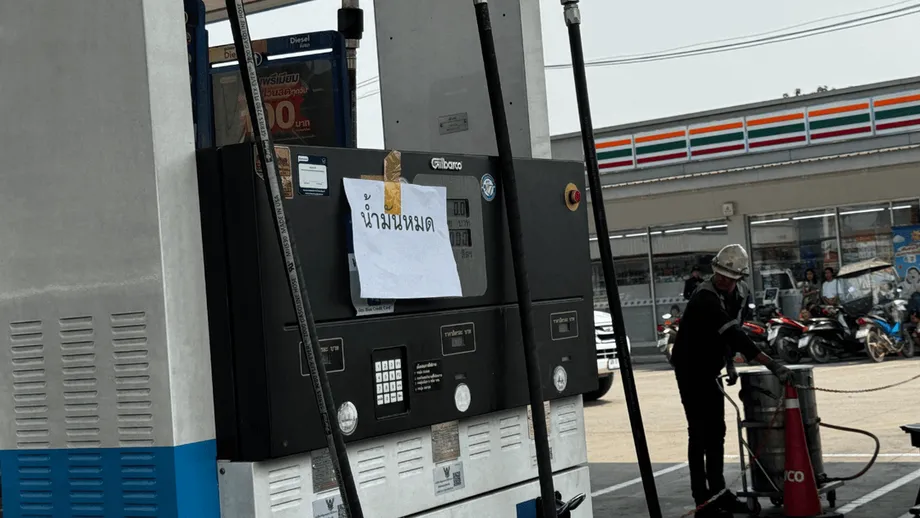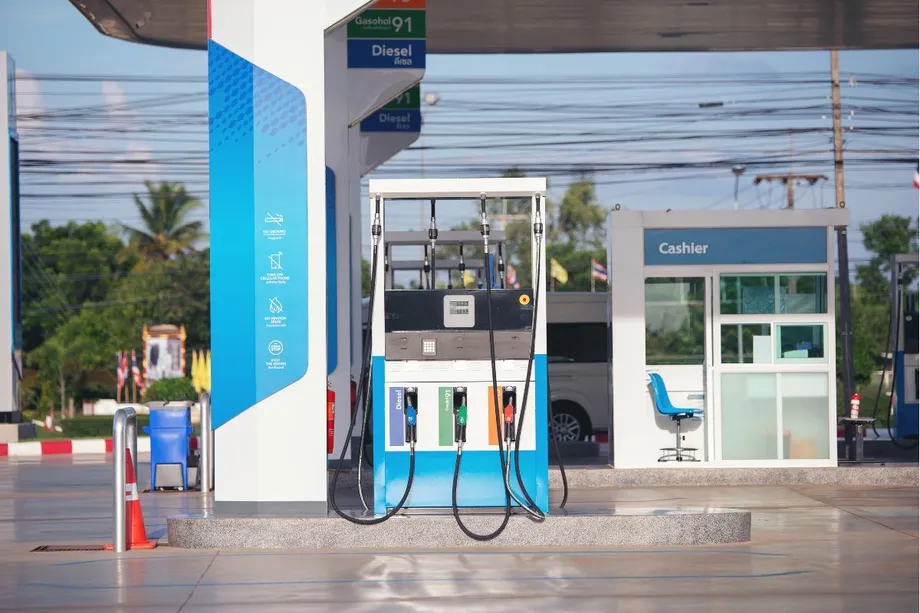
Lower pump prices begin on October 29
Thailand will cut the retail price of B7 diesel by 1 baht per litre to 42.54 baht and reduce two widely used gasohol grades by 0.50 baht from October 29, 2026, following changes to a fuel pricing formula that Energy Minister Akanat Promphan says has included assumed costs since 2004.
Contents
- Lower pump prices begin on October 29
- What drivers will pay and save
- Why Singapore shipping costs are being removed
- Refinery savings and pump reductions operate at different stages
- A permanent revision after eight emergency interventions
- Why B7 matters to transport businesses
- The fund still faces a large daily bill
- A broader review of energy charges
- Key Points
The Oil Fuel Fund Management Committee approved the changes on October 28. Gasohol E10-95 will fall to 41.54 baht per litre and E10-91 to 41.17 baht. The new pump prices are scheduled to begin at 5 a.m. on October 29, while other retail fuel prices remain unchanged.
The price cuts accompany a revision approved by the Energy Policy Administration Committee, also known as CEPA. It removes freight, insurance and losses during transport calculated as though fuel had travelled by sea from Singapore, even though most of the fuel concerned is refined in Thailand.
Akanat puts the savings from the formula revision at 10.839 billion baht a year, or about 29.7 million baht a day. The government is presenting the change as a permanent removal of assumed expenses, alongside the continuing use of the Oil Fuel Fund to cushion prices.
The decision comes as transport businesses complain of rising costs and international fuel prices remain high. Singapore diesel was around US$171 a barrel on October 28, while gasoline was around US$139. Thailand's fund was paying approximately 253 million baht a day in compensation to help manage domestic fuel prices.
What drivers will pay and save
B7 diesel previously cost 43.54 baht per litre, calculated from the announced price and reduction. The move to 42.54 baht is a cut of about 2.3%. A driver buying 50 litres will pay 2,127 baht instead of 2,177 baht, saving 50 baht.
Gasohol E10-95 falls from an implied previous price of 42.04 baht to 41.54 baht, while E10-91 falls from 41.67 baht to 41.17 baht. Both reductions are about 1.2%. Buying 40 litres of either grade will cost 20 baht less.
The fuel names describe different blends. B7 is diesel blended with about 7% biodiesel. E10 is gasoline blended with about 10% ethanol, while 91 and 95 refer to octane ratings, a measure of how well gasoline resists unwanted ignition inside an engine.
The announced reductions give drivers a saving tied directly to the amount they buy: 1 baht for every litre of B7, and half a baht for every litre of the two E10 grades. Frequent users and businesses buying larger volumes will therefore see larger cash savings.
Why Singapore shipping costs are being removed
Thailand's refinery pricing formula has traditionally started with prices for refined fuel in Singapore, then added costs calculated as if that fuel were being shipped to Thailand. Akanat said the Energy Policy and Planning Office established the formula in 2004.
A refinery turns crude oil into usable products such as diesel and gasoline. The refinery gate price is the price at an earlier stage of the supply chain, before fuel reaches the retail pump. A regional market price can serve as a reference for that calculation, even when the product itself is made locally.
CEPA's revision removes the assumed Singapore route costs for freight, insurance and fuel lost during transport. The ministry's stated aim is to make consumers pay prices that more closely reflect expenses actually incurred.
The formula also reduces the allowance for oil reserves to two thirds of its previous level, a reduction of one third in that component. This changes the reserve allowance used in pricing to better match actual reserve requirements.
Akanat said relying on global benchmarks could be appropriate in normal conditions, but argued that the existing calculation could generate excessive returns during a crisis. His response combines the removal of the shipping assumptions with a smaller reserve allowance.
Refinery savings and pump reductions operate at different stages
The revised formula will reduce refinery gate prices across fuel products by between 0.0875 baht and 0.3548 baht per litre. B7 diesel receives the largest reduction, at 0.3548 baht per litre, with estimated annual savings of 6.795 billion baht.
Gasohol 95 receives a refinery gate reduction of 0.3203 baht per litre, worth an estimated 2.115 billion baht annually. Together, those two products account for 8.910 billion baht, or about 82% of the projected 10.839 billion baht in annual formula savings.
The Oil Fuel Fund Management Committee also changed compensation rates. Support for B7 diesel falls by 0.38 baht per litre to 2.93 baht. Support for both E10-95 and E10-91 falls by 0.16 baht per litre to 1.61 baht.
Drivers therefore receive lower pump prices while the fund pays less compensation for each litre of those fuels. The refinery gate changes affect the price earlier in the supply chain, and the fund adjustments affect the support applied within the retail pricing structure.
The announced figures leave one detail unresolved: a complete calculation connecting each refinery gate reduction and compensation adjustment to the final pump price cut. Consumers have the new retail prices, but the figures given do not provide every component needed to reproduce the calculation.
A permanent revision after eight emergency interventions
CEPA has adjusted refinery gate prices for high speed diesel eight times since April 2026, using powers under the Emergency Decree on Remedy and Prevention of Shortage of Fuel Oil B.E. 2516 (1973).
The government says those measures recovered 31.786 billion baht in benefits it considered excessive, across 11.058 billion litres of diesel. It also says 64.355 billion baht from the Oil Fuel Fund was used to manage fuel prices, bringing the combined amount deployed to 96.141 billion baht.
Akanat, the energy minister, described the difference between those interventions and the new pricing formula:
"Removing excess refinery benefits was a short-term response to the crisis, while removing these assumed costs addresses the structure itself," he said.
The minister said the removal of assumed costs was intended to last beyond the current period of pressure on energy prices:
Even after the crisis ends, this roughly THB10 billion a year will not return to Thai consumers' fuel bills.
The key dates show how the policy developed:
- 2004: The Energy Policy and Planning Office established the pricing formula that Akanat says included the assumed costs.
- From April 2026: CEPA made eight interventions in refinery gate prices for high speed diesel under the 1973 emergency decree.
- October 28, 2026: The Oil Fuel Fund Management Committee approved the latest compensation adjustments and retail price reductions.
- October 29, 2026: The revised refinery pricing formula and lower pump prices take effect, with the retail changes scheduled from 5 a.m.
Why B7 matters to transport businesses
Udom Suwitsakdanon, vice chairman of Nim See Seng Transport 1988 Co., a major operator in northern Thailand, called on October 28 for relief aimed at B7 diesel. He said most trucks used B7, making reductions for that fuel more useful to his industry than support for other blends.
Udom criticised the government's separate tax reductions for E20 and B20 lasting three months. He said B20 was more commonly used by tractors and agricultural vehicles than by the trucks central to his business.
His concern was the scale of the increase already absorbed by transport operators. He said fuel prices had risen more than 10 times and transport costs had climbed by more than 20%. Fuel accounted for 60% to 70% of transport costs, according to his estimate.
The 1 baht B7 reduction addresses the particular grade he wanted the government to target. At the announced prices, it lowers the cost of a given volume of B7 by about 2.3%, offering some relief against the much larger increase in transport expenses he described.
Udom said operators had tried to hold transport charges steady but were struggling to absorb repeated fuel increases. Cheaper B7 reduces one of their largest expenses, while any change in delivery charges or goods prices will depend on decisions by the businesses involved.
The fund still faces a large daily bill
The Oil Fuel Fund continues to carry a substantial burden despite the reduction in compensation per litre. At approximately 253 million baht a day, its reported compensation bill is much larger than the estimated 29.7 million baht in daily savings from the formula revision.
The formula savings amount to roughly 12% of that daily compensation figure. The two sums measure different things: one estimates costs removed from the pricing structure, while the other records the fund's support for fuel prices.
Singapore's quoted diesel price of about US$171 a barrel was US$32 above gasoline at about US$139 on October 28. Those are prices for refined fuels, the products sold after crude oil has been processed.
The committee kept other retail fuel prices steady to limit pressure on household living costs. The ministry is therefore using two approaches together: changing the formula used to calculate fuel costs and continuing financial support through the fund.
A broader review of energy charges
Akanat linked the fuel revision to an earlier move that he said removed about 18 billion baht in public lighting costs from household electricity bills. He presented both decisions as efforts to review expenses built into energy prices and reduce charges unrelated to consumers' actual use.
For motorists, the immediate result is specific: cheaper B7 diesel and E10 gasohol from October 29. For transport operators, the B7 cut reaches the fuel that Udom identified as central to truck operations. For the government, the longer task is to manage continuing support costs while international fuel prices fluctuate.
The lasting change is in the calculation itself. Removing the assumed shipping expenses and reducing the reserve allowance lowers the starting point for pricing, while future pump prices will continue to reflect market conditions and government decisions on support.
Key Points
- B7 diesel falls by 1 baht to 42.54 baht per litre from October 29, 2026.
- E10-95 and E10-91 fall by 0.50 baht to 41.54 baht and 41.17 baht per litre.
- The revised formula removes assumed freight, insurance and transport losses on the Singapore route.
- The reserve allowance falls to two thirds of its previous level.
- The government estimates annual savings from the formula revision at 10.839 billion baht.
- Compensation falls to 2.93 baht per litre for B7 and 1.61 baht for both E10 grades.
- Other retail fuel prices remain unchanged, while the fund's compensation bill is about 253 million baht a day.