A retirement plan for a country growing older
Kiatnakin Phatra Financial Group is introducing six retirement funds with Capital Group, targeting 30 billion baht in assets within three years as Thailand faces a widening gap between longer lives and inadequate savings. The first phase of its KKP Retirement Solutions is scheduled for November 2026, combining investments for people still working with funds designed to provide income after retirement.
Contents
- A retirement plan for a country growing older
- Why Thailand's ageing population faces a financial squeeze
- Confidence about retirement exceeds preparation
- What the savings targets mean in everyday money
- Longer lives bring larger healthcare bills
- How the four Ready Retire funds work
- Two income funds offer different ways to spend savings
- What Capital Group brings to the partnership
- A long retirement plan in an uneven economy
- Key Points
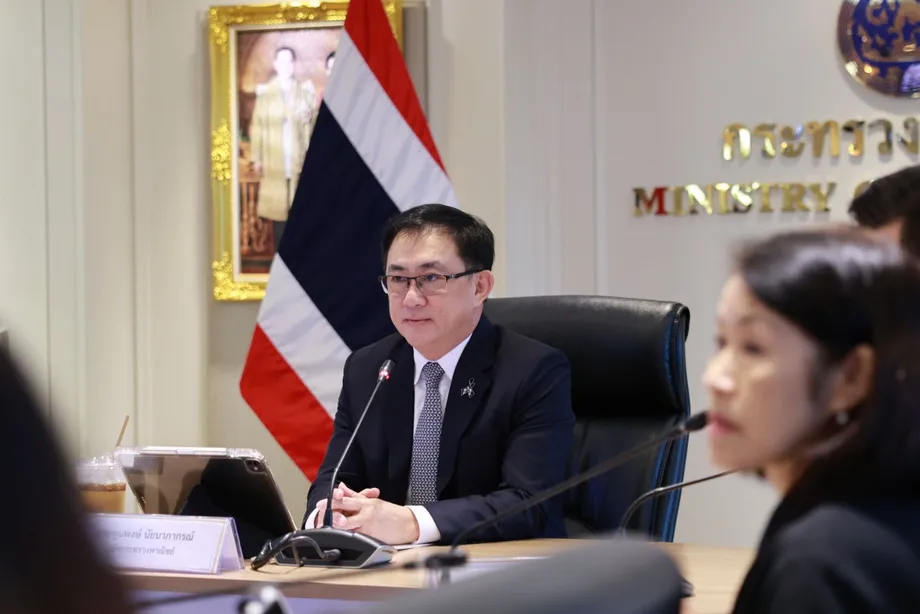
KKP chief economist Dr. Phiphat Luangnaruemitchai said people aged 60 and above already account for about 24% of Thailand's population. A KKP presentation drawing on United Nations data projects that share will reach 36% by 2049. Its projections also show the number of workers per older person falling from 5.5 to 1.8 by 2060.
For families, those figures describe a practical squeeze: fewer working adults will be available to support more older relatives, while retirement savings may need to cover several decades. KKP says 86% of Thais have no retirement savings plan or cannot follow the one they have.
The six funds address two different tasks. Four KKP Ready Retire funds aim to build savings before retirement and gradually reduce investment risk. Two income funds are designed for people approaching or already in retirement, turning accumulated savings into scheduled payments.
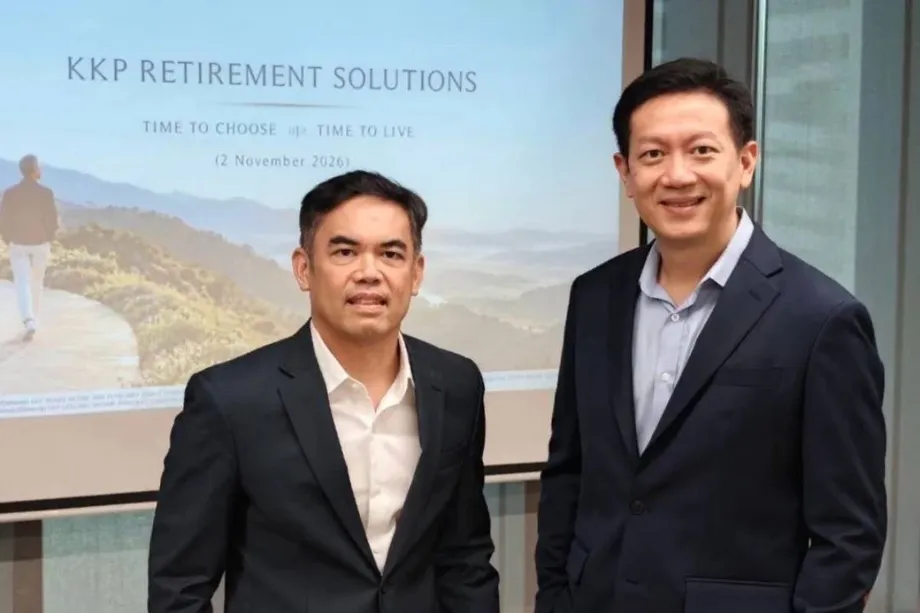
Narit Kosalathip, head of personal investment advisory at Kiatnakin Phatra Securities, said the broader service aims to manage retirement cash flow up to age 90. Its success will depend on more than choosing a retirement year: contributions, spending, investment performance and medical bills will determine how far each person's savings can stretch.
Why Thailand's ageing population faces a financial squeeze
Phiphat described Thailand as growing old before becoming rich. The country's median age is about 41, while economic output per person is around US$7,200. A relatively old population therefore has to finance retirement with less income than is available in many richer countries with similar age profiles.
KKP identifies four connected pressures: ageing before widespread prosperity, limited public welfare, weak financial planning and rising healthcare costs. More than 54% of Thai workers are outside the social security system, according to figures cited by the group. It estimates that the elderly allowance covers only around 7% of expenses.
Workplace savings reach a small part of the workforce. Phiphat said approximately 3.1 million people belong to provident funds, compared with a labour force of roughly 50 million. That is about 6.2%. Provident funds are workplace arrangements in which employees and employers contribute money for retirement.
Phiphat put monthly social security pension payments for people contributing throughout their working lives at around 5,000 to 7,000 baht. Thailand Development Research Institute figures cited by KKP indicate that nearly 70% of older people depend on their children or continue working, while only about 7% rely on retirement savings.
A shrinking pool of workers makes dependence on children harder to sustain. The projected fall from 5.5 workers per older person to 1.8 means the support burden would be shared among roughly one third as many workers by 2060.
Confidence about retirement exceeds preparation
A Society of Actuaries Research Institute poll of 750 private sector employees illustrates the gap between expectations and outcomes. It found that 86% expect to retire as planned, while only 5% do, according to the findings cited by Phiphat. Some 73% reach retirement with less than 60% of the money they need.
The poll's 86% figure measures confidence about retiring as planned. KKP's separate 86% planning figure concerns people without a savings plan or unable to follow one. Together, the findings describe both limited preparation and expectations that may be difficult to meet.
KKP also says more than 80% of savings are held in deposits and other assets with low investment risk. Such assets can provide stability and access to cash, but their purchasing power falls when returns remain below inflation. Money that buys a month's groceries today may buy less after prices rise.
Narit identified another obstacle: spending often rises as income increases, leaving little extra money for retirement. KKP's initial effort will therefore focus partly on encouraging people to save, rather than simply persuading existing investors to switch funds.
What the savings targets mean in everyday money
KKP estimates that a person earning 30,000 baht a month who wants to maintain 70% of that income after retirement would need around 6 million baht for 30 years. Seventy percent equals 21,000 baht a month, or 252,000 baht a year.
The median provident fund balance at retirement is only 2 million baht, according to figures cited by KKP. The median is the middle balance when accounts are arranged from smallest to largest. That amount is one third of the company's 6 million baht example.
KKP also describes the 2 million baht median as covering around five years of expenses under its spending example. A household's actual duration will depend on its budget. At a fixed 21,000 baht a month, 2 million baht would cover approximately eight years before allowing for investment returns or rising prices.
Phiphat offered another starting point: the 4% withdrawal rule, based on US retirement research. It begins with a withdrawal equal to 4% of the initial portfolio in the first year, followed by adjustments for inflation, with the aim of supporting approximately 30 years of spending.
The rule implies savings of about 25 times annual expenses. Someone spending 60,000 baht a month spends 720,000 baht a year, producing an initial savings target of 18 million baht. Phiphat said people seeking to leave an inheritance or facing faster increases in personal expenses would need more. Market performance and the timing of withdrawals also affect how long the money lasts.
Longer lives bring larger healthcare bills
A Thai person reaching 60 has an average remaining life expectancy of 23.5 years, according to figures presented by KKP. Its data also put the chance of reaching 85 at about 47%, and a woman's chance of reaching 90 after turning 60 at 35%.
These figures explain why the company is building plans around decades of retirement income. Average life expectancy gives a useful reference, while many people will live considerably longer and need money for those extra years.
KKP cited medical inflation of 14.8% in Thailand in 2026, while Phiphat's presentation also used an annual medical cost increase of about 11%. The two measures were presented without matching definitions. Both place medical costs well above the presentation's 3% general inflation illustration; elderly care costs were cited as increasing by 6% annually.
At 3% annual inflation, expenses of 720,000 baht today would rise to about 1.75 million baht a year after 30 years. Households with substantial medical or care needs could face a different spending path.
Phiphat recommended health and accident insurance as protection against unexpected expenses. Possible changes toward health insurance arrangements requiring patients to pay part of a bill could also increase costs for retirees. Those potential changes remain a planning concern rather than a settled benefit change.
How the four Ready Retire funds work
KKP's savings phase offers four choices: KKP Ready Retire 2035, KKP Ready Retire 2045, KKP Ready Retire 2035 RMF and KKP Ready Retire 2045 RMF. RMF stands for Retirement Mutual Fund, a Thai retirement investment category with tax benefits subject to contribution and holding conditions.
Investors select a target retirement year. The portfolio then gradually shifts away from riskier growth assets as that year approaches, while retaining shares for growth over longer periods. At the target date, the Ready Retire funds are intended to convert into KKP Lifelong Income.
The approach addresses a particular danger: a sharp market fall just before someone stops working. A saver approaching retirement has less time to rebuild a depleted portfolio through new contributions, especially once withdrawals begin.
KKP illustrated that risk using index data for a period of 15 years ending at the market low in February 2009 during the global financial crisis. A portfolio whose risk was gradually reduced finished 25.1% higher than one whose risk was not reduced. The illustration used index calculations rather than actual fund performance.
The announced schedule and investment milestones include:
- November 2, 2026: Phiphat discussed Thailand's retirement pressures at a media briefing.
- November 2026: KKP plans to begin the first phase of Retirement Solutions with its core investment products.
- 2035 and 2045: The Ready Retire funds reach their respective target retirement years.
- Later phases: KKP plans to integrate insurance and further application features; no detailed timetable was announced.
Two income funds offer different ways to spend savings
KKP Lifelong Income aims for annual payouts of roughly 4% while seeking to preserve capital, Narit said. Its intended audience includes retirees who need regular cash but also want to retain wealth for later life or the next generation.
KKP Advanced Income targets higher annual payouts of approximately 5% to 7% by drawing down principal. Principal is the money invested, so spending it reduces the pool available for future withdrawals. Narit cited a minimum investment of 1,000 baht.
Both approaches diversify across bonds and quality shares that pay dividends. Scheduled payments are made through automatic redemptions, meaning investment units are sold to release cash to the investor. The payment received can therefore include money taken from the accumulated investment.
A retiree choosing between the two approaches faces a concrete tradeoff: more spending now can leave less capital later. Narit said capital is not guaranteed and investors may receive less than they invested.
KKP cited expected average investment returns of around 6% to 7% annually for investors entering during the initial offering. Those are expectations, and actual returns will vary. The portfolios combine equities and bonds, with growth assets carrying greater risk making up less than half of the allocation described by KKP.
What Capital Group brings to the partnership
Capital Group has more than 90 years of investment experience and over US$2.2 trillion in retirement assets under management, according to the partnership announcement. KKP says it will combine that global portfolio experience with its understanding of Thai investors and household finances.
Jeik Sohn, head of Southeast Asia Client Group at Capital Group, described the purpose of the collaboration:
Together with KKP, we have brought that experience to Thai investors through solutions that combine global retirement-investing expertise with local market insight. It is designed to simplify important retirement decisions, evolve with investors' changing needs and help them pursue retirement with greater confidence.
Global diversification is a substantial part of KKP's argument. Its presentation says 97% of Thai provident fund assets are invested domestically. Over the decade to August 2026, it put annualised returns at 3.7% for the SET, 13.0% for global equities and 15.4% for the S&P 500. Annualised returns express growth as an equivalent yearly rate across the period.
Investing abroad spreads exposure across more economies and companies, while introducing exchange rate risk. A change in the baht can increase or reduce the value of an overseas investment when it is converted back into Thai currency.
KKP plans to connect its funds with life and health insurance and portfolio monitoring through KKP Better. Consultations are available through Kiatnakin Phatra Bank branches, personal financial advisers and 02-165-5555.
A long retirement plan in an uneven economy
KKP forecasts Thai economic growth of 2.5% in 2026, with gains distributed unevenly. Phiphat described a recovery in which export businesses and investment linked to artificial intelligence are performing better, while automotive, petrochemical, electrical appliance, construction, property and tourism businesses face pressure. Domestic consumption is also beginning to slow.
The group maintains a 2026 Thai stock index target of 1,680 points while reviewing its forecasts for 2026 and 2027. It expects listed company earnings to improve in aggregate, with petrochemicals remaining an exception.
Phiphat identified overseas risks including the US midterm elections, protests in Europe, rising interest rates, slower growth and volatile stock markets. Such developments can weaken confidence and encourage investors to move money out of emerging markets.
KKP favours banks among comparatively defensive sectors and healthcare, food and beverages for growth over longer periods. It also flagged the possibility of a slowdown in artificial intelligence investment.
Narit's central message was that consistent saving matters alongside returns. He said annual returns of 5% to 7% may be sufficient for many financial goals if investors maintain their contributions. Selling during a crisis and failing to reinvest during a recovery can disrupt that progress. For a plan intended to last to age 90, the amount saved and the ability to keep investing remain central.
Key Points
- KKP and Capital Group are introducing six retirement funds, with the first phase scheduled for November 2026.
- Four Ready Retire funds target 2035 or 2045 and gradually reduce portfolio risk before moving into retirement income.
- Lifelong Income aims for payouts near 4%; Advanced Income targets 5% to 7% while drawing down principal.
- KKP says 86% of Thais lack a retirement savings plan or cannot follow one.
- The median provident fund balance cited by KKP is 2 million baht, compared with its 6 million baht retirement illustration for someone earning 30,000 baht monthly.
- The group targets 30 billion baht in retirement fund assets within three years. Capital and investment returns are not guaranteed.