Repayments would go straight to existing investor accounts
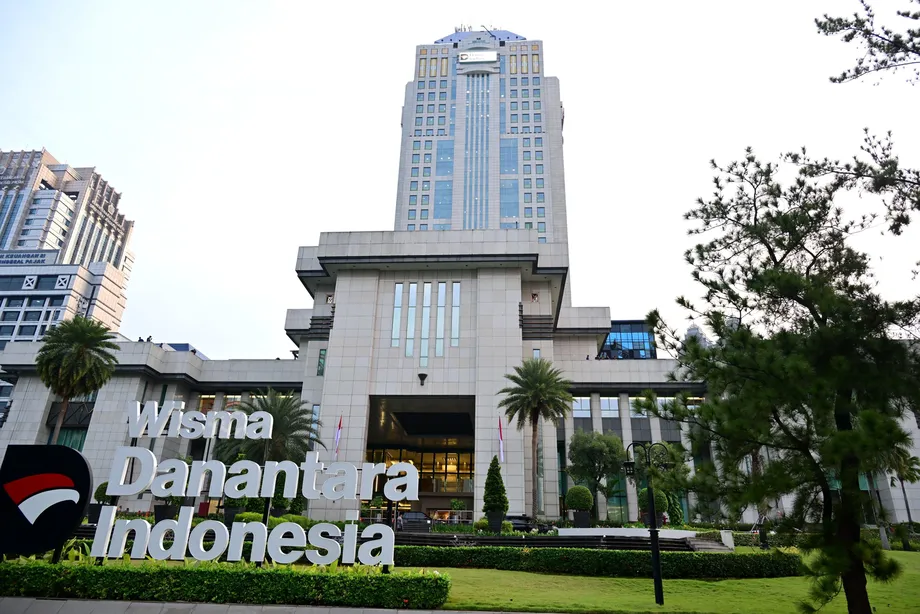
Indonesia's Financial Services Authority (OJK) is designing a system to return money to investors harmed by stock manipulation, with payments going directly into the customer fund accounts they already use for share trading. Hasan Fawzi, OJK's chief executive for capital market, derivatives finance and carbon exchange supervision, outlined the plan at the Indonesia Stock Exchange building in Jakarta on 23 November 2026. He said the number of recipients could run into thousands, depending on the scope of each case.
Contents
- Repayments would go straight to existing investor accounts
- How would OJK calculate each payment?
- The Rp2.1 trillion cases behind the plan
- Smaller cases provide the first working example
- What manipulation has cost ordinary investors
- Criminal cases and a faster enforcement calendar
- Why compensation became a test of market credibility
- Reforms aimed at making manipulation harder
- What happens next for investors
- What to Know
Money successfully collected from offenders would be divided proportionally, according to each victim's share of the losses. Distribution would use PT Kustodian Sentral Efek Indonesia (KSEI), the central securities depository that holds records of customer fund accounts, known as RDNs. An RDN is the bank account linked to an investor's securities account and used to settle share purchases and receive sale proceeds. Hasan said recipients would not need to open another account, and that the transfer process was designed to operate automatically.
KSEI would publish the names of eligible investors and the amount assigned to each person under OJK's instruction. OJK also plans to explain the procedure to market participants before distribution begins.
Four days earlier, on 19 November, Eddy Manindo Harahap, OJK's deputy commissioner for investment management licensing and supervision, capital markets and securities institutions, described the work still needed to calculate unlawful profits, customer losses and eligible recipients. Speaking at the same exchange building, he confirmed that payments in the major fine cases had been received.
For those fined, the fine payments have been completed. We have received them, but the matter of what gets returned to investors is still being calculated because this is the first time.
How would OJK calculate each payment?
The calculation starts with the period in which the violation occurred. Hasan used November 2026 as an illustration: OJK would identify the people involved, measure their trading during that month and calculate either the profit they obtained or the loss they avoided. He said those are the two likely motives behind market abuse, maximizing gains or avoiding losses as much as possible.
The resulting rupiah amount becomes the basis of OJK's financial demand against the offenders. Investigators would then identify investors harmed during the same period and calculate their respective losses. Once money has been collected, the available pool would be shared according to those proportions. This approach ties the payment exercise to a defined set of transactions rather than treating every investor who ever owned the affected shares as eligible.
Giovanni Mofsol Muhammad, a senior partner at the Dentons HPRP law firm in Jakarta, said OJK already has a legal instrument known as disgorgement. In plain language, disgorgement requires offenders to surrender profits made through unlawful conduct.
This clause would allow the watchdog to order manipulators to return illegal gains to a compensation fund for victims.
An administrative fine and disgorgement serve different purposes. A fine punishes a breach, while disgorgement removes the financial benefit of the violation. That difference is central to the compensation debate because the headline value of a fine does not by itself explain how much unlawful profit was identified, who received it or how much money can ultimately reach victims.
The Rp2.1 trillion cases behind the plan
The largest immediate test involves three names familiar to Indonesian investors: Dian Swastatika Sentosa (DSSA), Barito Renewables Energy (BREN) and Petrindo Jaya Kreasi (CUAN). OJK examined the cases during its scrutiny of shares with High Shareholding Concentration, or HSC. This means ownership is heavily concentrated among a small number of holders, leaving relatively few shares available for normal public trading and making prices easier to influence.
The precise penalties were Rp1.5 trillion imposed on PT Sinar Mas Tunggal in connection with DSSA share trading, Rp500 billion on Anbo Holdings Ltd in connection with BREN's public share offering, and Rp100 billion on Tigonis Capital Pte Ltd in connection with CUAN's public offering. Together, they amount to Rp2.1 trillion. OJK's 16 October statement also reported findings of unlawfully obtained gains in the DSSA transactions and in share orders for BREN and CUAN.
A tally of 10 sanction documents published through 31 October put total fines at Rp2,144,600,000,000, or about Rp2.14 trillion. Those documents named 38 sanctioned parties: 11 securities firms, four other business entities and 23 individuals. The penalties included fines, written warnings and suspensions of securities underwriting representative licences.
Enforcement extended beyond those three cases. Announcement No. PENG-4/PM.2/2026, issued in Jakarta on 6 November, imposed administrative sanctions on seven listed companies and related parties. Their stock codes were ASLI, ADHI, ADCP, WMUU, KLBF, EPMT and LMAS, representing Asri Karya Lestari, Adhi Karya, Adhi Commuter Properti, Widodo Makmur Unggas, Kalbe Farma, Enseval Putera Megatrading and Limas Indonesia Makmur.
Smaller cases provide the first working example
OJK's 21 November statement, reference SP 237/DKPU/OJK/XI/2026, covered 10 capital market cases, including three manipulation investigations. It ordered the return of Rp23.77 billion in unlawful gains and imposed Rp3.71 billion in administrative fines across the wider package. The action also blacklisted 17 people and ordered the closure of 16 securities accounts used in manipulation.
The three cases show how investigators connect a trading period, an account network and a specific financial demand:
- PT Saraswanti Anugerah Makmur (SAMF): trading from 4 to 19 May 2021, with Rp12.55 billion in unlawful gains ordered returned. Some participants had connections with SAMF affiliates.
- PT Grand House Mulia (HOMI): trading from 20 March to 21 July 2023, involving 15 customer securities accounts and Rp6.89 billion in ordered disgorgement.
- PT Suryamas Dutamakmur (SMDM): trading from 6 September to 18 October 2022, with Rp4.32 billion ordered returned. Some participants traded while taking part in a competition organised by a securities company.
OJK described the Rp23.77 billion as the amount ordered, with collection and any subsequent distribution forming separate steps. It said false or misleading impressions of trading activity damage fair price formation and weaken confidence in the market.
Sanusi, a capital market practitioner and former chairman of the Indonesian Securities Investors Association, known as MISSI, argued that these smaller cases demonstrate the legal tool while DSSA, BREN and CUAN test its use at a much larger scale. The Rp2.1 trillion in those penalties is roughly 88 times the Rp23.77 billion of disgorgement ordered in the three smaller cases.
Sanusi has proposed an Investor Loss Compensation Fund, also described as a Disgorgement Fund. Victim compensation would come first. Remaining money could support investor education, complaint assistance, professional training, research into suspicious trading detection, ownership transparency and forensic financial investigation. He has also asked OJK to clarify whether the Rp2.1 trillion already includes the unlawful gains identified in the major cases or whether a separate repayment order will follow.
What manipulation has cost ordinary investors
The compensation debate follows years of losses among people drawn into rapidly rising shares. Indonesians often call the practice goreng saham. One common method is pump and dump: promoters or connected traders create excitement and drive up a price, then sell to later buyers before the price collapses. Stock cornering can also involve accumulating so much of the available supply that a small group can strongly influence the price.
Qolbi, a 39-year-old employee of a Jakarta digital advertising company and a father of two, bought Bank MNC shares in 2021 after social media and trading forums circulated claims that TikTok parent ByteDance would back the bank through a rights issue. The rights issue proceeded, but ByteDance did not participate. Qolbi lost more than half of his investment within days. Although market participants widely suspected manipulation, no official investigation followed.
The realisation struck hard. The subsequent share price collapse was unforgiving.
Bank employee Rivki Maulana, 37, and Muhammad Avisena, a full-time trader in Pekalongan, Central Java, each lost at least Rp100 million, about S$7,500, in stock cornering episodes. Rivki said promises of quick gains encouraged investors to abandon analysis of a company's finances and behave more like gamblers. Avisena said the problem had also touched large companies, including stocks in the LQ-45 index of liquid shares with substantial market value.
Investors and market observers have cited several extreme price movements. Multi Makmur Lemindo rose 130% within a month in April 2025. Diamond Citra Propertindo surged 2,900% around mid-2025. Barito Renewables Energy gained more than 1,000% within months in 2024, in trading that also attracted scrutiny. Such increases can attract buyers who fear missing out, leaving them exposed when trading conditions change abruptly.
Criminal cases and a faster enforcement calendar
Administrative repayment orders are running alongside criminal enforcement. On 16 November, OJK investigators detained three private sector employees, identified as JF, also known as O, FS and S, over alleged manipulation of Series I warrants and structured warrants. Estimated losses were Rp6.97 billion. A fourth suspect, TGB, also known as T and described as a securities firm employee, was undergoing separate proceedings handled by the Jakarta Metropolitan Police.
Investigators alleged that on 29 May 2023 the suspects used other people's identities and external bank accounts to open multiple securities accounts and conduct artificial trades. The instruments included CHEM-W and DOOH-W, plus structured warrants ADRODRCM3A, BUKADRCV3A and INCODRCX3A. A warrant gives its holder a right to buy shares under specified conditions, while a structured warrant is an exchange traded product linked to an underlying asset. Artificial trading in either can create a misleading impression of demand or pricing.
The investigation order was issued in May 2026. The suspects face charges under the Capital Market Law as amended by the Financial Sector Development and Strengthening Law, known as UU P2SK, and Law No. 1 of 2026 on Criminal Adjustments.
OJK Chairwoman Friderica Widyasari Dewi, commonly known as Kiki, warned against coordinated trading and wash trading on 10 November. Wash trading involves trades between the same or connected parties to manufacture the appearance of market activity. She referred to roughly 33 million retail investors who depend on the domestic exchange.
In essence, cases of stock manipulation, coordinated trading, and wash trading that occurred in previous years must not happen again in the future. Those 33 million retail investors trust our capital market.
Hasan later said OJK had sanctioned 1,011 individuals and companies during 2026, with a total sanction value of Rp2.582 trillion. The actions included 609 written warnings, eight licence suspensions, six licence revocations and 76 specified measures. About 75 of those measures involved freezing securities accounts proven to have been used in violations. Temporary restrictions can last one, three, five or 10 years, depending on the offence. Hasan said OJK would aim to announce enforcement actions every two weeks, with recent announcements generally covering three or four cases.
Why compensation became a test of market credibility
The repayment initiative is unfolding during a severe confidence crisis. The Jakarta Composite Index fell nearly 9% on 28 January 2026 after MSCI raised concerns about Indonesian stocks. OJK chairman Mahendra Siregar, deputy Mirza Adityaswara and exchange chief Iman Rachman subsequently resigned. On 4 February, Hasan, then speaking as an OJK commissioner, addressed the need for stronger supervision.
We give serious attention to efforts to strengthen capital market surveillance and integrity.
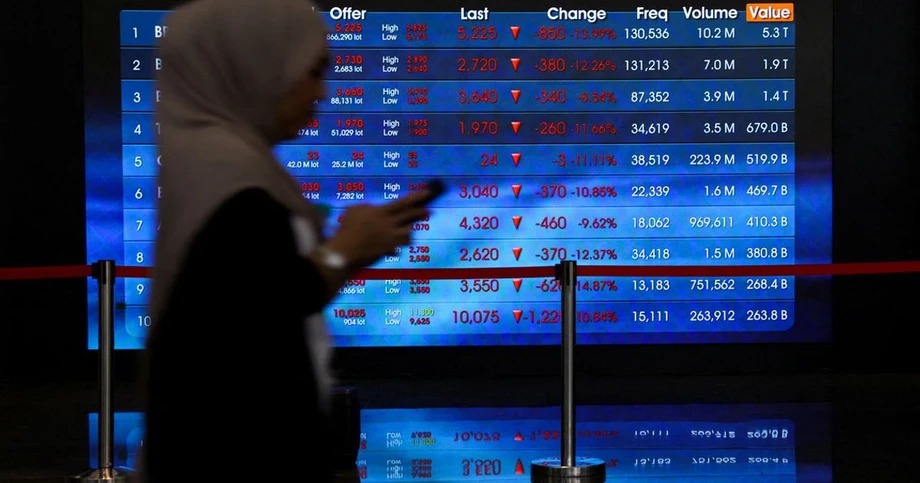
Pressure intensified in October. MSCI opened a consultation on 15 October over a possible move from Emerging Markets to Standalone Markets, citing opaque ownership, suspected coordinated trading and insufficient enforcement impact. The 16 October market crash erased about US$60 billion in value as the benchmark fell 11.57%, its steepest daily decline since January 1998. OJK announced the Rp2.1 trillion in major penalties on the same day.
Standalone status would place Indonesia outside MSCI's emerging and frontier index products. Funds that mechanically follow those indexes could be required to sell Indonesian shares, while other institutional investors could face restrictions in their mandates. That would reduce liquidity and could make it more expensive for Indonesian companies to raise capital.
The benchmark closed at 5,057.05 on 30 October, down 41.52% since the start of 2026. By 3 November it had fallen further to 4,904.287, a decline of 43.28%. Recovering from that point to its level at the end of 2025 would require a gain of 76.3%. Foreign investors recorded Rp98.61 trillion in net sales through 3 November, even as listed companies reported aggregate revenue growth of 15.9% and profit growth of 16.3% in the 12 months through June.
By 31 October, MSCI's remaining concerns centred on whether market dysfunction could recur despite reforms already announced. Compensation therefore sits beside prevention and prosecution: returning money addresses past harm, while reliable ownership data and credible penalties are intended to protect future trading.
Reforms aimed at making manipulation harder
OJK, the exchange and other market institutions have assembled an eight-part agenda covering public share ownership, disclosure of ultimate beneficial owners, shareholding data, exchange ownership, sanctions, issuer governance, market development and institutional coordination. An ultimate beneficial owner is the real person who ultimately controls or benefits from shares, even when they are held through companies or nominees.
Under amended Indonesia Stock Exchange Listing Rule No. I-A, effective 31 March 2026, the minimum public free float rose from 7.5% to 15%. Free float is the portion of a company's shares available for public trading rather than held tightly by controllers. Doubling that minimum increases the supply that must circulate publicly and can make it harder for a small group to dominate pricing.
Capital market legal counsel Erwin Kurnia Winenda said companies could reach the higher threshold through a rights issue, which offers additional shares to existing holders, or a private placement for selected investors. National Economic Council chairman Luhut Pandjaitan also pledged stricter monitoring of unusual transactions, artificial intelligence for market surveillance and demutualisation of the exchange. Demutualisation would address the conflict created by an exchange being owned by the brokerages it is expected to supervise.
An independent HSC committee is another part of the response, involving the presidents of KSEI, the stock exchange and clearing and guarantee institution KPEI. OJK has conducted preliminary examinations of 61 HSC stocks and identified at least 31 with indications of possible criminal capital market violations. Those investigations will determine whether charges and individual responsibility follow.
What happens next for investors
The main dates now span enforcement, repayment design and the international classification review:
- 19 November 2026: Eddy said OJK was calculating unlawful profits, customer losses and eligible recipients.
- 21 November: OJK announced the HOMI, SAMF and SMDM orders, including Rp23.77 billion in disgorgement.
- 23 November: Hasan described proportional payments through KSEI and existing RDN accounts.
- 30 April 2027: MSCI's market feedback period is scheduled to close.
- 30 June 2027: MSCI's final classification decision is due.
OJK has not published a deadline for completing its compensation calculations or distributing money in the DSSA, BREN and CUAN matters. It has also not released the number of eligible investors, their individual allocations or a final public answer on whether the major administrative fines include all identified unlawful gains. Sanusi's questions about beneficiaries and a possible separate disgorgement order remain part of that unfinished process.
For investors, the promised procedure is straightforward once those decisions are made. OJK identifies the violation period and victims, KSEI announces the approved recipients and amounts under OJK's instruction, and payment goes automatically to each recorded RDN. No new account is required. Until then, the Rp2.1 trillion figure describes completed penalty payments, while the compensation amount and distribution schedule are still being formulated.
What to Know
- OJK plans proportional compensation for manipulation victims, paid automatically through existing customer fund accounts recorded at KSEI.
- Payments would be based on each investor's share of losses during the identified violation period, with thousands potentially eligible in a large case.
- The DSSA, BREN and CUAN matters involve Rp2.1 trillion in penalties, but recipient numbers, allocations and a distribution date remain unpublished.
- Smaller HOMI, SAMF and SMDM cases produced orders to return Rp23.77 billion in unlawful gains, alongside account closures and market bans.
- Three suspects were detained on 16 November over alleged warrant manipulation causing estimated losses of Rp6.97 billion.
- Hasan said OJK sanctioned 1,011 parties in 2026, with a total sanction value of Rp2.582 trillion.
- Indonesia's market reforms and enforcement record feed into MSCI's review, with feedback closing on 30 April 2027 and a decision due by 30 June 2027.