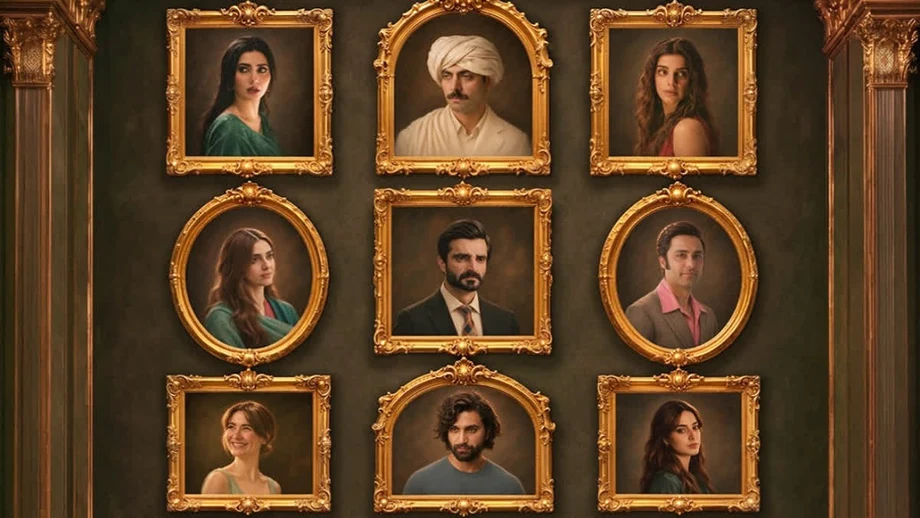
A Launch Shadowed by Security Rules
New Delhi moved on November 26, 2026 to stop Netflix from making Pakistani content available to subscribers in India, just days before Jo Bachay Hain Sang Samait Lo is due to premiere globally on December 4. The Ministry of Information and Broadcasting asked the streaming platform to ensure that content originating in Pakistan is not streamed on its India service. Official sources said the ministry acted after receiving several complaints and representations about the possible Indian release of the series.
Contents
- A Launch Shadowed by Security Rules
- What the May 2025 Advisory Says
- Why Pahalgam Remains Central
- What Triggered the Fresh Move
- What the Industry Bodies Want
- Netflix's Position and the Open Question
- A Short Timeline of the Standoff
- Inside the Series
- Why the Cast Matters in India
- Pakistan Answers With a Cultural Argument
- The Longer History Behind the Ban Calls
- What Changes for Viewers and the Industry
- Key Points
The request puts an entertainment launch into the middle of a security and cultural dispute. Netflix had told the ministry in June 2025 that it had not made any film or series originating in Pakistan available to Indian subscribers. The ministry has now asked the company to stand by that position. The series is still listed on Netflix India with a Remind me option and a December 4 date, but Netflix has not publicly said whether India will be part of the launch. Whether Indian subscribers will be able to watch it remains unknown, and Netflix has given no date for an announcement.
For viewers, the practical question is simple: a show can premiere around the world and still be left out of one country's catalog. That can happen because streaming companies license and arrange shows by territory. The Indian government's request concerns the territory, not the making of the series itself.
What the May 2025 Advisory Says
The instruction rests on an advisory dated May 8, 2025. The Ministry of Information and Broadcasting sent it to over the top platforms, media streaming services and intermediaries operating in India. An over the top platform is a service that delivers video over the internet, such as a streaming app, rather than through cable or satellite television.
The advisory told those services to discontinue web series, films, songs, podcasts and other streaming media content originating in Pakistan, whether paid or free. It referred to provisions of the Information Technology Rules, 2021, covering material that could affect India's sovereignty, security, relations with foreign countries or public order. The ministry cited national security as the reason for the instruction.
The advisory's wording also covers the way a show is paid for. The Ministry of Information and Broadcasting said platforms should stop Pakistani content on a subscription based model or otherwise. That phrase matters here because Netflix is a paid service, and a block on its India catalog would affect subscribers there even if the same title appears elsewhere.
Why Pahalgam Remains Central
The May 2025 advisory followed the April 22, 2025 attack in Pahalgam, Indian administered Kashmir. The Ministry of Information and Broadcasting linked the decision to a wider pattern of attacks it said had connections across the border. Pakistan has denied involvement in the Pahalgam attack.
The advisory itself set out the security argument. The Ministry of Information and Broadcasting said in the advisory that attacks on India had links to actors based in Pakistan. It also described the Pahalgam attack and its victims:
Several terrorist attacks in India have been established to have cross border linkages with Pakistan based State and non-State actors. Recently, on April 22, 2025, the terrorist attack in Pahalgam led to the killing of several Indians, one Nepali citizen, and injuries to a number of others.
The ministry's wording gives categories rather than a total in that passage. Figures used in the current discussion put the Pahalgam death toll at 26. The attack intensified military tension between the two countries and became the reference point for the advisory that Netflix is now being told to follow.
What Triggered the Fresh Move
Netflix's Middle East and North Africa division shared first look posters on November 22, 2026, presenting the show as a story of three generations and six love stories. The trailer followed on November 24. Within days, Indian film bodies urged Prime Minister Narendra Modi to intervene, and the ministry received complaints about the show's possible availability in India.
The All Indian Cine Workers Association, known as AICWA, sent its letter on November 24 to Modi, Information and Broadcasting Minister Ashwini Vaishnaw and Netflix India. The Federation of Western India Cine Employees, known as FWICE, took up the issue on November 25. Both bodies argued that Indian availability of the series would go against the May 2025 advisory and public sentiment after Pahalgam.
The timing gave the dispute a sharp new edge. AICWA had already announced a ban on Pakistani artists working in India after the 2019 Pulwama attack, and its new letter asked for a broader rule covering films, songs, podcasts and series on television, streaming platforms and cinemas.
What the Industry Bodies Want
AICWA's letter, signed by association president Suresh Shyamlal Gupta, asked for what it called a strong, permanent law with the severest penalties. The association said Pakistani entertainment had no place on Indian screens and argued that Netflix should not carry the series in India. Its letter also repeated its call for Indian platforms never to show Pakistani content.
AICWA made that demand in direct terms. The association said its request covered Netflix India and every streaming platform in the country:
We have also demanded a strong, permanent law with the severest penalties, and we appeal to Netflix India and all OTT platforms never to show any Pakistani content in India.
FWICE said it represents 32 associations and up to five lakh members. Its president, B N Tiwari, said the objection went beyond one title and concerned the presence of Pakistani artists on the platform. He framed the demand in national terms:
We want to express that we have an objection to the Pakistani show. For us, the country comes first, and Pakistani artists are not welcome.
FWICE had also warned that it would halt all Netflix projects if the series streamed in India. AICWA separately demanded removal before December 4, threatened a nationwide boycott and a protest outside Netflix's office, and used the No Terror on Our Screens slogan on social media. AICWA also singled out Hamza Ali Abbasi over an old remark it attributes to him about Hafiz Saeed.
Netflix's Position and the Open Question
Netflix's June 2025 message to the ministry was narrow and specific: the company said no film or series originating in Pakistan had been made available to subscribers in India. The new request asks Netflix to maintain that position. Official sources said the company was reminded of the assurance after the complaints about Jo Bachay Hain Sang Samait Lo.
The series remains in a middle state. It has an international date, a prominent trailer and a place on Netflix India's upcoming list. At the same time, the Indian government has asked that Pakistani content be kept off the India service, and the platform has not said how it will handle this title.
The 2025 communication sits under the Information Technology Rules, 2021. Industry bodies are asking for a permanent law with penalties, but no separate law naming this series was announced in the November 26 move. The practical decision for Netflix is whether to apply geographic blocking in India. Geographic blocking, often called geo blocking, means a service hides or withholds a title from one country's catalog even though it appears in others.
Whether Indian subscribers will see the show remains unresolved. December 4 is the next date that matters, because the global premiere is set for then. No hearing, vote or formal deadline was given in the November 26 announcement.
A Short Timeline of the Standoff
The dispute built over more than a year, from a security advisory to a streaming launch. The sequence helps explain why a romantic drama has become a test of India's rules for Pakistani content.
- April 22, 2025: The Pahalgam attack in Indian administered Kashmir killed 26 people, including one Nepali citizen, according to figures used in the current discussion.
- May 8, 2025: The Ministry of Information and Broadcasting advised platforms in India to stop streaming content originating in Pakistan, including series, films, songs and podcasts.
- June 2025: Netflix told the ministry that no Pakistani film or series was available to subscribers in India.
- November 22, 2026: Netflix's Middle East and North Africa account posted first look material for the series.
- November 24, 2026: The trailer was released, and AICWA wrote to the prime minister seeking action.
- November 25, 2026: FWICE took up the issue and sought government intervention.
- November 26, 2026: The ministry asked Netflix to keep Pakistani content off its India platform.
- December 4, 2026: The series is scheduled to premiere globally, with India's status still unclear.
Inside the Series
Jo Bachay Hain Sang Samait Lo is Netflix's first original production from Pakistan. It was commissioned by the platform's Middle East and North Africa division and is being released internationally under the English title All the Love Our Hearts Carry. The series is adapted from Farhat Ishtiaq's bestselling 2013 Urdu novel of the same name.
Momina Duraid created, directed and produced the drama and served as showrunner. She was also behind Humsafar and Zindagi Gulzar Hai, two Pakistani shows with strong audiences in India. The new series follows six interconnected love stories across three generations. One thread follows Sikandar Sheheryar, a Harvard law student carrying emotional trauma, and Liza, an artist with a complicated past. Their meeting in Italy opens into love, heartbreak, family conflict and questions about choices made earlier in life.
The cast includes Fawad Khan, Mahira Khan, Sanam Saeed, Ahad Raza Mir, Hania Aamir, Hamza Ali Abbasi, Iqra Aziz, Ahmed Ali Akbar, Bilal Ashraf, Maya Ali and Khushhal Khan. That lineup explains why the possible India block drew attention so quickly: several of these actors already have Indian fans from earlier television and film work. The release is scheduled in two parts beginning December 4.
Why the Cast Matters in India
Fawad Khan and Mahira Khan were paired in Humsafar, the 2011 drama that became one of Pakistani television's best known love stories and found an audience in India too. Fawad and Sanam Saeed starred together in Zindagi Gulzar Hai in 2012 and returned in the 2024 series Barzakh. Their reunion gives the new Netflix drama a ready made audience built over more than a decade.
Fawad Khan also worked in Hindi films such as Khoobsurat, Kapoor & Sons and Ae Dil Hai Mushkil. He had a cameo in Ae Dil Hai Mushkil. Mahira Khan starred opposite Shah Rukh Khan in Raees. Hania Aamir has hits including Mere Humsafar and Kabhi Main Kabhi Tum, while Ahad Raza Mir has appeared in Netflix's Resident Evil and the BBC drama World on Fire.
Those careers sit at the center of the current row. When Indian industry bodies call for Pakistani content to be kept off screens, they are asking the government and Netflix to limit the work of actors whom many Indian viewers already know, and in some cases have seen in Indian films before the boycotts tightened.
Pakistan Answers With a Cultural Argument
Pakistan's planning minister Ahsan Iqbal rejected the ban demand and argued that sport, water and art were being pulled into political conflict. He wrote on X that India had moved from cricket to the Indus Waters Treaty and now to entertainment, then urged audiences to decide what they watch. India and Pakistan have not played a bilateral cricket series since 2012, and India placed the Indus Waters Treaty in abeyance after the Pahalgam attack in April 2025.
Iqbal also presented the series as a success for Pakistan's creative industry. The planning minister said government policy on streaming platforms had helped Pakistani talent reach global audiences. He made the argument in a post on X:
First weaponising sports, then water, and now art and culture. The All Indian Cine Workers Association is urging New Delhi to permanently ban Pakistani content. How insecure do you have to be to see a cricket match as a political threat and a television drama as a national security concern? India, grow up. Let athletes play, let waters flow, let artists create, and let audiences decide what they watch.
In a separate post, Iqbal called the debut series a significant milestone for Pakistan's drama industry and cultural exports. He pointed to Pakistan's push to work with global platforms such as Netflix and Disney and to align the country with the Middle East and North Africa content region. That regional alignment helps explain why the show was commissioned by Netflix's Middle East and North Africa division.
Nadeem Mandviwalla, a Pakistani producer, distributor, exhibitor and cinema owner, warned that the ban demand could affect the future of original Pakistani content on international streaming platforms. For Pakistan, the issue is bigger than one release: a successful Netflix series can open doors for writers, actors and crew beyond the country's television market.
The Longer History Behind the Ban Calls
Pakistani performers and content have faced repeated restrictions in India for a decade. After the 2016 attack on an Indian Army base in Uri, the Indian Motion Picture Producers Association and FWICE barred Pakistani actors and technicians from working in Indian films. The decision affected Karan Johar's Ae Dil Hai Mushkil, which starred Fawad Khan, and contributed to calls for films with Pakistani actors to be kept out of cinemas.
Mahira Khan faced opposition in 2017 when she made her Bollywood debut opposite Shah Rukh Khan in Raees. Saba Qamar appeared alongside Irrfan in Angrezi Medium the same year, and Pakistani artists remained a flashpoint. After the February 2019 Pulwama attack, which killed 40 Central Reserve Police Force personnel, AICWA announced a blanket ban on Pakistani actors and artists.
The pressure has also reached music and smaller screens. Songs such as Jhol, Maand, Pasoori and Faasle disappeared from Spotify India, Apple Music and YouTube Music. Some playlists also removed artwork showing Pakistani artists. A Pakistani series called Dar-e-Nijaat drew controversy more recently: a private screening in Delhi went ahead, while similar gatherings at a Bengaluru restaurant were cancelled after criticism on social media.
Courts and distributors have taken different positions. In October 2023, the Bombay High Court dismissed a petition seeking a complete ban on Indian citizens and companies hiring Pakistani artists, describing such a prohibition as a retrograde step for cultural harmony. In 2024, Indian distributors in Punjab dropped a planned release of The Legend of Maula Jatt, which starred Fawad Khan and Mahira Khan.
That history explains why the Netflix series has become a larger test. The May 2025 advisory moved the argument from films and live projects into the streaming catalog, where a title can be switched on or off for an entire country. The current request asks Netflix to treat Jo Bachay Hain Sang Samait Lo within that framework.
What Changes for Viewers and the Industry
If Netflix leaves India out of the launch, viewers there will still see publicity for the show but will not be able to watch it on the Indian service. If the show appears in India, it would put Netflix in direct conflict with the government's May 2025 instruction and intensify the industry bodies' threat of non cooperation. FWICE's warning about stopping Netflix shoots targets productions in India, not the Pakistan made series itself, but it shows how a streaming decision can spill into local employment.
For the wider industry, the dispute is about what counts as Indian screen space in the age of streaming. A satellite channel, a cinema release and an app catalog are different routes, yet the advisory names all of them. That is why film bodies are pressing for a permanent law with penalties instead of relying only on an advisory.
The series itself is likely to keep its audience elsewhere. Pakistani dramas have long had followers in India through television channels and video platforms, and the cast has name recognition on both sides of the border. If India is excluded, Indian fans may still encounter clips, discussion and imported viewing methods; the legal Netflix route would simply be closed in India.
The next concrete moment is December 4. Until then, the known facts are limited: the ministry has asked Netflix to keep Pakistani content off its India service, Netflix's earlier assurance said no Pakistani film or series was available there, and the company has not publicly confirmed the India status of this title.
Key Points
- The Ministry of Information and Broadcasting asked Netflix on November 26, 2026 to keep content originating in Pakistan off its India service.
- The move followed complaints about Jo Bachay Hain Sang Samait Lo, Netflix's first original production from Pakistan, ahead of its December 4 premiere.
- The ministry pointed to its May 8, 2025 advisory, issued after the Pahalgam attack and based on national security concerns under the Information Technology Rules, 2021.
- Netflix told the ministry in June 2025 that no Pakistani film or series was available to Indian subscribers and has now been asked to maintain that position.
- AICWA and FWICE sought government action, and FWICE warned of non cooperation with Netflix projects if the series streams in India.
- Pakistan's planning minister Ahsan Iqbal called the ban demand an attempt to bring art and culture into politics.
- Netflix has not said whether the December 4 rollout will include India, and the series remains listed on Netflix India with a Remind me option.