How an aircraft step became a diplomatic dispute
A gap initially described as about 40 centimeters between Japanese Prime Minister Sanae Takaichi's government aircraft and the mobile stairs at Shenzhen Bao'an International Airport has developed into an argument about airport safety, diplomatic courtesy and relations with China. On November 26, 2026, Liberal Democratic Party lawmaker Haruko Arimura said Japan's Foreign Ministry had explicitly denied claims that an early arrival left Chinese airport staff without enough time to prepare suitable stairs.
Contents
- How an aircraft step became a diplomatic dispute
- What Arimura says Japanese officials established
- Does a malfunction explain what happened?
- How the dispute unfolded
- What 400 online comments reveal about public reaction
- A quiet welcome and a summit without bilateral talks
- Why the Taiwan dispute hangs over every detail
- Pressure from Beijing meets the cost of economic separation
- What remains unresolved
- Key Points
Takaichi arrived in Shenzhen on November 18 for the Asia-Pacific Economic Cooperation summit. Images showed her gripping the aircraft door frame and looking surprised as she lowered herself onto the stairs. The height difference prompted questions in Japan about whether China had deliberately made her exit difficult, whether the equipment had malfunctioned and whether Japanese officials had provided enough assistance.
Arimura, a member of the House of Councillors and former chair of the Liberal Democratic Party's General Council, has addressed the dispute in repeated posts on X. Her latest account challenged two circulating explanations: that the aircraft arrived an hour early and that a mechanical failure fully answered safety concerns. She also disclosed that the widely repeated figure of 40 centimeters came from a visual estimate rather than an actual measurement.
What Arimura says Japanese officials established
Arimura said the Foreign Ministry rejected the suggestion that Takaichi's aircraft reached Shenzhen earlier than agreed. Presenting the ministry's explanation, she gave a specific account of the arrival time.
The government aircraft arrived at Shenzhen Airport on November 18 within the time slot agreed with the Chinese authorities.
That statement directly contradicts the social media claim that an arrival one hour ahead of schedule prevented China from providing stairs matching the aircraft. It does not identify the exact scheduled minute or the actual landing time, but it places the arrival within the period accepted by both governments.
Arimura separately questioned the malfunction explanation carried by Chinese media. She argued that even faulty equipment would not explain why Chinese personnel did not alert their Japanese counterparts before Takaichi stepped out. Her concern focuses on communication at the aircraft door: a prime minister facing an unexpectedly large drop could lose balance, particularly when no one had descended first to offer physical support.
The Liberal Democratic Party's foreign affairs division also heard that the supposed 40 centimeter gap had been estimated by eye. Arimura illustrated its possible scale using an image of Takaichi leaving the aircraft, writing that the prime minister's heels were six centimeters high and that the distance from her heel to the middle of her knee was 46 centimeters. Those body measurements helped readers visualize the descent, while the gap itself remains an estimate.
Arimura compared the scene with ordinary building stairs and explained why an unexpected drop could be hazardous.
Normally, stairs in a building have steps of 18 to 20 centimeters. This was a gap equivalent to two to two and a half steps. ... It is clear that stepping down without knowing would involve a considerable height.
Does a malfunction explain what happened?
The malfunction account gained prominence on November 24, when people familiar with conditions at the scene were cited as saying that a failure of the stairs' lifting mechanism was highly likely. Mobile aircraft stairs use an adjustable platform to meet doors at different heights. A mechanical failure could leave that platform too low, but no technical inspection report identifying a broken component has been released.
Chief Cabinet Secretary Minoru Kihara said China had given no advance notice about the gap. At his November 24 news conference, he also explained that Japanese personnel detected the height difference after the stairs had been positioned and warned the party inside the aircraft immediately before disembarkation. Kihara described the safety response in these words.
Since we had received that information in advance at the site, we took appropriate measures to ensure safety. As a result, Prime Minister Takaichi disembarked from the aircraft safely.
His statements and Arimura's later account describe different moments in the sequence. China did not notify Japan beforehand, according to Kihara, while Japanese personnel subsequently discovered the problem at the airport and alerted those aboard. Takaichi therefore did not step onto the stairs without any warning, although the available accounts do not say how much time passed between the discovery and her exit.
China's Foreign Ministry has said its arrangements followed international practice. Japanese social media users have nevertheless asked why the stairs were not replaced, why another set reportedly used by members of the press was not moved into position and why no apology accompanied Takaichi's handshake with Chinese President Xi Jinping. Those questions concern the response after the gap appeared, regardless of whether its original cause was mechanical.
How the dispute unfolded
The argument has developed through several distinct statements since Takaichi's two day visit.
- November 7, 2025: Takaichi told parliament that a Chinese attack on Taiwan involving warships and force could create circumstances in which Japan might support American forces, setting off the dispute that overshadowed her later visit to China.
- November 18, 2026: Takaichi arrived in Shenzhen, encountered the estimated 40 centimeter drop and attended a leaders' dinner where she shook hands with Xi and posed for a photograph.
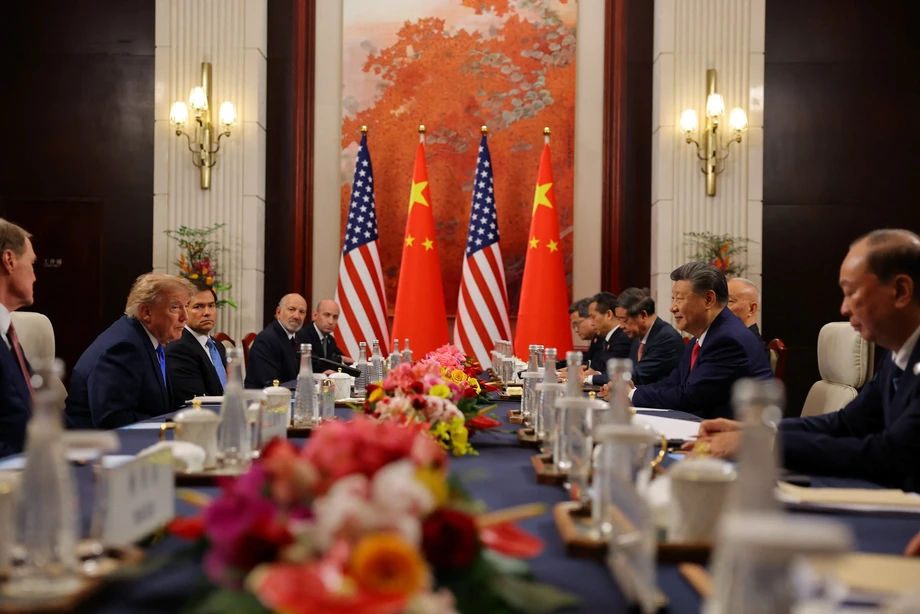
- November 18 and 19: The summit took place without a formal bilateral meeting between Takaichi and Xi or a substantive agreement between their governments.
- November 24: People familiar with the scene pointed to a probable lifting mechanism failure, while Kihara described Japan's detection of the gap and warning to the aircraft party. A tally of online comments was taken at about 23:00.
- November 26: Arimura disclosed the Foreign Ministry's denial of an early arrival and said the 40 centimeter figure was a visual estimate.
No measured height, maintenance record or complete communication log between Chinese airport staff and Japanese officials has been made public. Those details would establish the physical scale of the drop and show who knew about it at each stage.
What 400 online comments reveal about public reaction
A snapshot of the discussion examined the 400 comments ranked highest by the recommendation system beneath a Japanese article about the malfunction account. The page contained 6,595 comments in total, with 7,632 displayed when replies were included. Researchers conducting the tally also examined all 411 replies to the leading comment separately and reviewed five comments from people identifying specialist knowledge.
The 400 selected comments attracted 146,461 clicks across three response buttons. Comparisons of opinion used the 137,182 clicks expressing agreement or empathy. Of the comments themselves, 285 had received fewer than 10 reactions across all three buttons, showing how strongly engagement concentrated around a small number of popular posts.
- 306 comments, or 76.5%, doubted the malfunction explanation or questioned China's handling even if a failure had occurred. They received 110,113 agreement clicks, representing 80.3% of that category's total.
- 25 comments, or 6.2%, questioned Japan's handling, particularly why staff did not descend first or offer assistance. They received 16,061 agreement clicks, or 11.7%.
- 29 comments, or 7.2%, called the reaction excessive or urged people not to presume deliberate conduct. They received 3,871 agreement clicks, or 2.8%.
Another 30 comments questioned both sides or avoided taking a position, while 10 were off topic. The most supported comment received 44,396 agreement clicks, accounting for 32.4% of all such reactions among the 400. It cited footage appearing to show the stairs moving up and down, noted the apparent absence of problems at the rear stairs used by journalists and objected to changing explanations.
The second most supported comment, with 20,569 clicks, said the cause might never be established but argued that the gap should have been apparent when the stairs were installed. The third, with 13,968, focused on Japan's own precautions and suggested that someone could have descended first to extend a hand. That single comment attracted 87% of the agreement clicks given to posts questioning Japanese handling. The tally describes engagement on one page at one moment, rather than a representative survey of Japanese voters.
A quiet welcome and a summit without bilateral talks
The airport dispute resonated because other elements of Takaichi's reception were also restrained. During the frosty airport welcome, she received a red carpet and an honor guard, but there was no music, dancing or crowd of cheering young people. Zhang Qiyue, a former Chinese ambassador, greeted her at the airport.
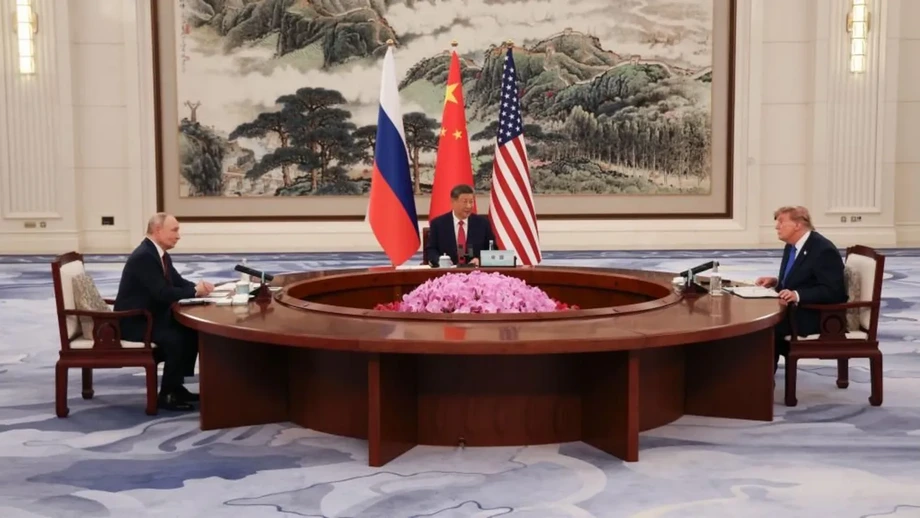
Other arrivals provided visible contrasts. Xi personally greeted United States President Donald Trump, while Russian President Vladimir Putin was met by Cai Qi, a member of the Communist Party's Politburo Standing Committee. Philippine President Ferdinand Marcos Jr. received music, flowers and dancing despite Manila's disputes with Beijing in the South China Sea. Australian Prime Minister Anthony Albanese and South Korean President Lee Jae-myung also received more elaborate ceremonial welcomes.
Takaichi's visit was her first to China since taking office in October 2025 and the first by a sitting Japanese prime minister in about seven years. She later exchanged a brief handshake with Xi before the summit dinner and tried to speak with him, but Japan did not obtain the short individual conversation that several other visiting leaders had.
William Yang, an International Crisis Group analyst based in Taiwan, interpreted the stairs and ceremony as parts of a single diplomatic message.
The Chinese side's coldness was fully displayed from the moment Takaichi's plane landed. I do not think the aircraft stairs incident was unintentional, and her welcome ceremony also stood in huge contrast to the others.
Yang's assessment addresses the political atmosphere surrounding the arrival. The mechanical condition of the stairs remains unresolved because neither government has published an inspection finding.
Why the Taiwan dispute hangs over every detail
Takaichi's November 2025 parliamentary remarks connected a possible Chinese attack on Taiwan with circumstances in which Japan's Self-Defense Forces could support American forces. Taiwan governs itself, while Beijing claims the island as its territory.
The legal concept behind her remarks is a situation threatening Japan's survival. Under Japan's security framework, that classification can permit collective self defense, meaning military action to assist another country when Japan's own survival is judged to be at risk. Tokyo subsequently explained that any decision would depend on the actual circumstances and available information, while maintaining that its established policy on Taiwan had not changed.
Beijing has continued to demand that Takaichi address the comments herself. An attempt on September 28, 2026, to narrow the disagreement through former Foreign Minister Takeshi Iwaya failed when Chinese Foreign Minister Wang Yi rejected a proposal to reaffirm the intent of the 1972 Japan-China Joint Communique. Iwaya described Wang's demand as seeking a withdrawal of Takaichi's remarks.
Yang said the pressure placed Takaichi in a difficult domestic and diplomatic position because she had built a reputation as a security hawk. He described the competing demands she now faces.
This is a major test of her ability and wisdom as national leader. On one hand, she needs to reduce tensions with China. At the same time, she needs to prepare Japan and its allies for an emergency involving Taiwan.
Pressure from Beijing meets the cost of economic separation
David Adebahr, a professor at Kobe University, placed the current chill alongside China's rising military spending, the collapse of East China Sea negotiations in 2006 and increased Chinese submarine activity near Japanese waters. He said these developments had worried even Japanese diplomatic figures who favored friendly relations with China.
Adebahr identified several sources of leverage for Beijing: Japan's dependence on Chinese rare earths, China's growing military visibility around Japan, sometimes alongside Russia, and Washington's encouragement for Tokyo to ease tensions. Rare earths are a group of minerals used in products including electronics, motors and other advanced technology. Restrictions on their export can therefore turn a diplomatic dispute into a concern for manufacturers.
Yang expects China to maintain its present position and increase pressure through targeted export restrictions. He also expects Beijing to work with Russia and North Korea in highlighting what it calls Japanese remilitarization. He suggested that Tokyo might look for opportunities to express goodwill and seek limited compromises, with American foreign policy under Trump remaining an important variable.
Adebahr expects relations to remain frozen but sees severe obstacles to a complete economic break.
Economic interdependence is not enough to stabilize the relationship, but complete decoupling is almost impossible because the cost would be too high for both sides.
That tension explains why a brief airport incident has acquired such weight. Japan wants China to account for the prime minister's reception without abandoning dialogue, while China can signal displeasure through protocol and economic pressure without formally closing diplomatic channels.
What remains unresolved
The immediate factual questions are now narrower. The Foreign Ministry, as quoted by Arimura, says the aircraft kept its agreed arrival window. The often repeated 40 centimeter height is an estimate, and Japanese officials detected the gap before Takaichi descended. The cause of the platform's position and the absence of earlier Chinese notification remain without a publicly released technical explanation.
For Japanese officials, the practical concerns include verifying equipment before a leader reaches the door, documenting communication with the host country and ensuring that someone can assist with a difficult descent. For China, questions about replacement equipment and an apology have become part of the broader judgment about its welcome. Neither government has announced a joint review, a date for technical findings or another meeting between Takaichi and Xi.
Key Points
- Takaichi encountered an estimated 40 centimeter drop while leaving her government aircraft in Shenzhen on November 18, 2026.
- Arimura said the Foreign Ministry confirmed that the aircraft arrived within the time slot agreed with China, rejecting claims of an arrival one hour early.
- The 40 centimeter figure was based on visual estimation, not a physical measurement.
- A malfunction of the stairs' lifting mechanism was described as highly likely by people familiar with the scene, but no inspection report has been released.
- Kihara said Japanese personnel detected the gap and warned the aircraft party before Takaichi disembarked safely.
- In one online tally, 76.5% of 400 prominent comments doubted the malfunction explanation or questioned China's response.
- Takaichi shook hands with Xi but held no formal bilateral meeting during a summit overshadowed by her remarks about Taiwan.
- No date has been announced for further technical findings or another meeting between the Japanese and Chinese leaders.