A New Understanding in Shenzhen
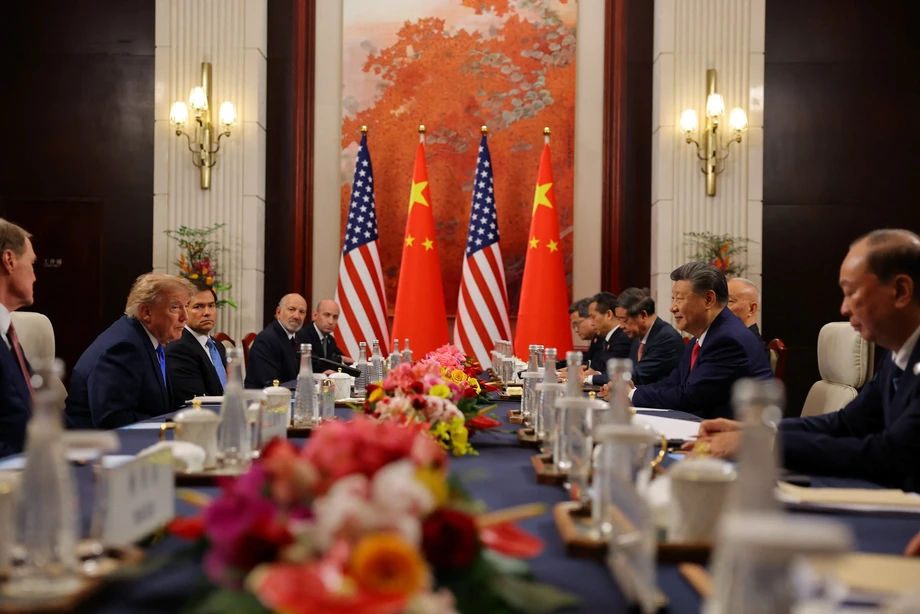
On Thursday, November 19, 2026, leaders from the United States and China met during the Asia-Pacific Economic Cooperation gathering in Shenzhen, China. Following the bilateral discussions, U.S. Treasury Secretary Scott Bessent revealed that President Donald Trump and Chinese President Xi Jinping reached a crucial agreement regarding the limits of artificial intelligence in warfare. The leaders concurred that human operators must always remain involved in military decisions informed by advanced intelligence systems, ensuring that algorithms never act autonomously during major military operations. This development addresses growing concerns about the integration of automated technologies into national security frameworks. No formal joint statement or official transcript was released by the summit participants detailing these AI military guardrails.
Contents
Artificial intelligence in this context refers to advanced machine learning systems capable of analyzing vast quantities of data, images, and intelligence information at speeds far exceeding human capabilities. When integrated into military command structures, these technologies can assist in identifying targets, managing logistics, and providing tactical recommendations. However, allowing such systems to make independent choices regarding the use of force creates profound risks, including the potential for technical malfunctions or rapid escalations during international crises.
Speaking to CNBC after returning to the United States, Treasury Secretary Scott Bessent emphasized the significance of the mutual understanding. He noted that the agreement represents a vital step toward establishing guardrails for emerging technologies, regardless of the broader technological competition between Washington and Beijing.
I think it was very important that President Trump and President Xi agreed that humans should always be involved in any military decisions that SI makes, and the SI should not be allowed to be autonomous for major military actions.
The Concept of Superintelligence
U.S. officials frequently refer to advanced artificial intelligence systems using the term superintelligence, abbreviated as SI. President Donald Trump highlighted this terminology during a White House news conference on Friday, November 20, 2026, following his return from Asia. He explained that the capabilities of these next-generation systems exceed traditional definitions of artificial intelligence, describing the technology as potentially too powerful if left unchecked.
Superintelligence systems operate by processing millions of data points simultaneously, offering commanders unprecedented speed in evaluating battlefield conditions. Yet this speed introduces significant dangers. In a fast-moving crisis, an automated system might misinterpret defensive maneuvers or routine cyber activities as imminent threats, drastically reducing the time available for human leaders to assess the situation and prevent a wider conflict.
The Chinese government news agency Xinhua reported that President Xi Jinping told President Trump that both nations should work together to prevent security risks associated with artificial intelligence and ensure that the technology remains under human control. This shared acknowledgment forms the foundation of the newly announced guardrails, even as both superpowers continue competing intensely for technological supremacy.
Competition Versus Cooperation
Despite the agreement on military restraint, the technological rivalry between the United States and China remains fierce. Treasury Secretary Scott Bessent asserted that American artificial intelligence laboratories must maintain their technological lead, describing this leadership as the best defense against what he characterized as dangerous Chinese models being utilized in cyberattacks. He maintained that the decision to preserve human control in military operations operates independently of the ongoing commercial and technological race.
The competition extends to the physical hardware required to train and run large intelligence models. Advanced semiconductors, commonly known as AI chips, underpin the development of these systems. U.S. export controls restrict Chinese access to cutting-edge processors, permitting sales only under specific licensing conditions for second-tier hardware such as Nvidia's H200 chip.
U.S. officials noted a distinct lack of orders for the H200 chip from Chinese entities. According to administrative assessments, Chinese technology firms are focusing on building their own domestic chip manufacturing capabilities, though analysts suggest their domestic technology stack remains years behind Western counterparts.
Export Restrictions and Ongoing Scrutiny
The regulatory landscape surrounding advanced computing hardware involves multiple U.S. agencies, including the Department of Commerce and the Department of the Treasury. Administrative actions taken on Monday following the Shenzhen summit further restricted China's access to advanced processors, including those utilized by overseas data centers where Chinese entities might rent high-performance computing power. These measures aim to close loopholes that could allow foreign competitors to bypass export controls. Specifically, the Department of Commerce administrative rules implemented on November 23, 2026, required licenses for advanced chip exports to Indonesia, Malaysia, Singapore, Thailand, and Brazil, and mandated that data centers obtain a license before providing remote access to companies headquartered in China or other restricted destinations, allowing a 90-day compliance window for existing arrangements.
Treasury Secretary Scott Bessent addressed internal discussions regarding enforcement strictness, affirming that cabinet members remain fully committed to following presidential directives. He confirmed that remote access restrictions and proper chip controls have been implemented to protect national security interests while managing the global supply chain for high-tech components.
The broader bilateral discussions also touched upon economic policy and trade arrangements, though specific outcomes regarding tariff adjustments were deferred for upcoming diplomatic meetings, such as the G20 summit scheduled for mid-December in Miami.
The Risks of Automated Warfare
Military experts and international observers have long warned about the dangers of integrating intelligent systems into nuclear command infrastructure and early-warning networks. In proposals published by Reuters in September 2026, researchers highlighted scenarios where automated platforms operating within nuclear command networks could leave leaders with dangerously narrow windows to verify whether an attack is underway. A technical glitch or misinterpreted data signal could theoretically trigger catastrophic countermeasures before human operators can intervene.
International humanitarian law dictates that responsibility for military force cannot be delegated entirely to machines. The United Nations maintains that all weapons, including those powered by advanced algorithms, must comply with established legal frameworks requiring meaningful human judgment. Defining what constitutes effective human oversight remains a central challenge for policymakers, as operators must retain the actual capacity to understand algorithmic outputs and halt mistaken attacks before execution.
The announcement from the Shenzhen summit provides a high-level political commitment, but it leaves several operational questions unanswered. Observers note that the public statements do not yet include detailed verification mechanisms, timetables, or formal enforcement rules to ensure compliance on both sides.
Timeline of Key Developments
- September 2026: Experts publish warnings regarding artificial intelligence integration within nuclear command networks.
- November 19, 2026: President Donald Trump and President Xi Jinping meet in Shenzhen during the APEC gathering and agree on human oversight for military AI.
- November 20, 2026: Treasury Secretary Scott Bessent reveals the agreement during a CNBC interview, detailing the principle of human involvement in major military actions.
- November 23, 2026: The Department of Commerce implements stricter rules curtailing remote access to advanced computing resources and requiring licenses for advanced chip exports to Indonesia, Malaysia, Singapore, Thailand, and Brazil.
The Bottom Line
The understanding reached between Washington and Beijing establishes a foundational principle for managing the intersection of advanced technology and military force. By agreeing that superintelligence systems must not independently launch or direct major military operations, the two nuclear powers have acknowledged the severe risks of automated warfare. While significant questions remain regarding verification, enforcement, and the precise definition of human control, the commitment represents a notable first step toward establishing international guardrails for the artificial intelligence era.