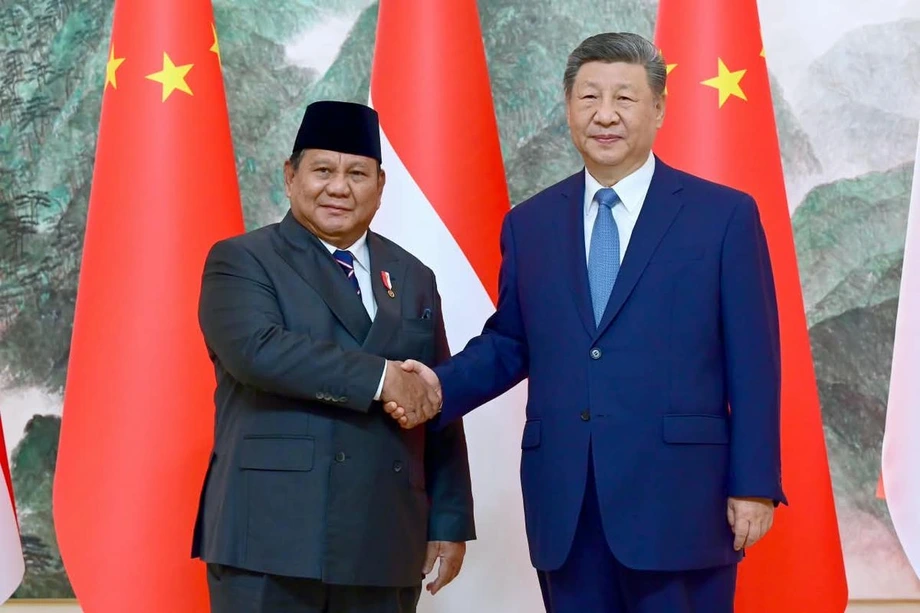
Two accounts of what Prabowo said
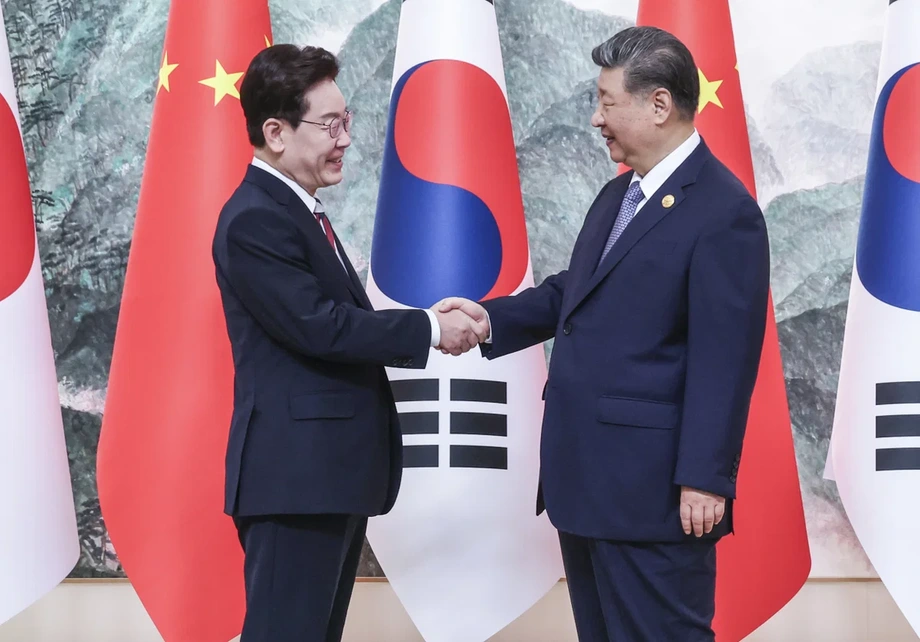
Taiwan's foreign ministry on Nov. 20, 2026, rejected Chinese state media's claim that Indonesian President Prabowo Subianto described Taiwan as a province of China during a meeting with Chinese President Xi Jinping in Shenzhen. The dispute centers on a simple but consequential question: did Prabowo say those words, as Beijing's account states, or were they absent from Indonesia's official record, as Taiwan's ministry says?
Contents
The Chinese account quoted Prabowo as saying Indonesia firmly follows the one-China policy and regards Taiwan as a province of the People's Republic of China. Taiwan's ministry said it checked statements from Indonesia's presidential office and its state secretariat and found no such wording. Indonesia's state news coverage of the meeting focused on economic ties and cooperation in the South China Sea, without mentioning Taiwan.
The competing accounts matter because the status of Taiwan is a sensitive diplomatic issue. Beijing claims the self-governed island as part of China. Taiwan rejects that claim and says it is not subordinate to the People's Republic of China. Indonesia has previously endorsed Beijing's one-China position, but the immediate disagreement is over whether Prabowo repeated that position in Shenzhen and what the Indonesian government chose to put on the public record.
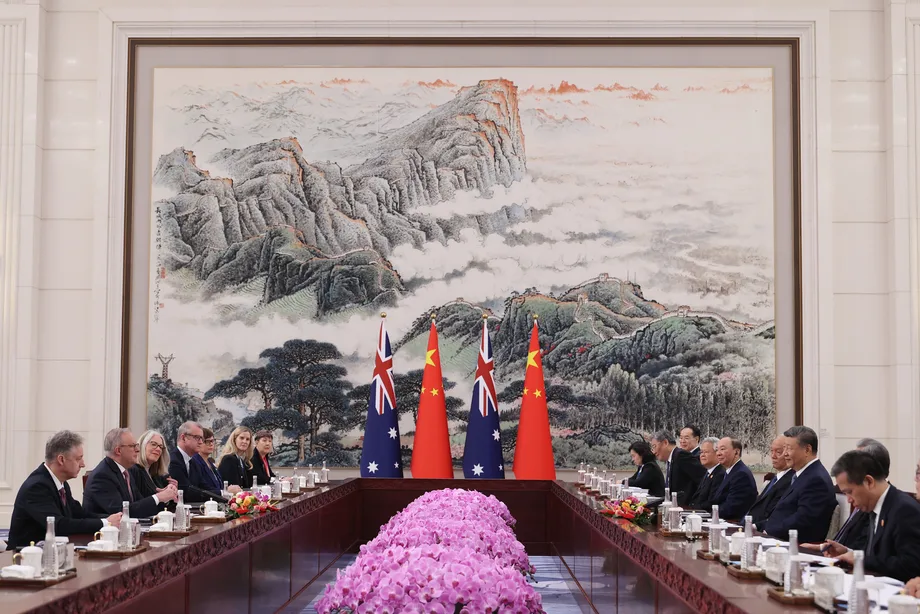
At the same meeting, Xi and Prabowo agreed to begin negotiations on a comprehensive economic partnership agreement. They also discussed cooperation in areas including energy, infrastructure, artificial intelligence and maritime development, giving the dispute a wider setting of expanding ties between Beijing and Jakarta.
What did the Chinese account attribute to Prabowo?
The Chinese state media account said Prabowo declared that Indonesia "firmly follows the one-China policy" and considers Taiwan a province of the People's Republic of China. The account described the statement as part of the leaders' meeting in Shenzhen on Nov. 20, held while Prabowo was in China for the Asia-Pacific Economic Cooperation leaders' gathering.
The same account said Xi and Prabowo jointly announced the start of negotiations on a comprehensive economic partnership agreement. It also reported that Prabowo referred to four meetings with Xi in recent years and said maritime joint development had made positive progress. Senior Chinese officials Cai Qi, Wang Yi and Huang Kunming were among those listed as attending.
Taiwan's foreign ministry disputed the claimed Taiwan remarks, saying the Indonesian presidential office's release and the state secretariat's release did not contain them. The ministry accused Chinese state media of speaking on behalf of other countries in ways that, in Taiwan's view, diminish its sovereignty. It urged other governments to respond to what it described as political pressure and manipulation of information.
Why do the public records matter?
The Indonesian presidential office and state secretariat statements are central to Taiwan's response because they are official records issued by the government whose president was said to have made the remarks. Taiwan's ministry said those records did not include the reported wording. Indonesia's state news service also covered economic and maritime topics without referring to Taiwan.
The absence of a Taiwan reference in those public accounts does not settle what was said in the room. It does, however, show why the competing descriptions have become a diplomatic issue: one public account attributes a specific position to Prabowo, while the Indonesian government material cited by Taiwan does not record that position. No further Indonesian clarification addressing the disputed sentence was included in the statements described by Taiwan's ministry.
Taiwan's ministry said the island and the People's Republic of China are not subordinate to one another. Beijing's position is the opposite: it treats Taiwan as part of China and seeks eventual unification. When another government is said to endorse Beijing's language, that can carry diplomatic weight even if the wording does not appear in that government's own public statement.
Indonesia has endorsed Beijing's policy before
The dispute comes against a backdrop of Indonesia's earlier public support for Beijing's position. During Prabowo's visit to China in November 2024, the two governments issued a joint statement describing Taiwan as an inseparable part of China and voicing support for peaceful unification.
Taiwan's foreign ministry rejected that statement at the time as well. It objected to the statement's use of United Nations General Assembly Resolution 2758 in support of Beijing's position. The resolution, adopted in 1971, addressed which government represented China at the United Nations. Taiwan's ministry argued that it did not decide Taiwan's status or give Beijing the right to speak for Taiwan.
The 2024 statement helps explain why the latest claim is politically charged, while leaving the current factual dispute intact. Indonesia's earlier joint statement expressed a position on Taiwan; the question raised in November 2026 is whether Prabowo made the specific statement attributed to him during the Shenzhen meeting.
Trade talks and maritime cooperation were also on the agenda
Xi and Prabowo agreed to launch negotiations on a comprehensive economic partnership agreement, a broad pact intended to set terms for economic cooperation between the two countries. The leaders also discussed investment and collaboration in energy, infrastructure, artificial intelligence, digital industries and clean energy.
Prabowo's office said the leaders discussed economic and investment ties as well as progress in maritime cooperation. Prabowo said the relationship was growing stronger and that the two sides had reached a more aligned understanding. The Chinese account also described progress in joint maritime development, though its summary did not spell out the South China Sea discussion in the same detail.
Maritime cooperation is sensitive because Indonesia has said it does not recognize China's claims in the South China Sea. In November 2024, the countries signed an agreement referring to joint development in areas where their maritime claims overlap. That language prompted concern in Indonesia that it could be read as accepting China's claims or affecting Indonesia's rights to resources in its exclusive economic zone, the sea area where a coastal country has rights to explore and use resources.
Indonesia's foreign ministry later said the country did not recognize China's South China Sea claims, while Prabowo said he would defend Indonesian sovereignty. The latest reference to progress in joint development therefore sits alongside Jakarta's stated position on sovereignty, rather than replacing it.
How the events fit together
The main dates show how the Taiwan dispute overlaps with a longer effort to deepen ties between Indonesia and China:
November 2024: During Prabowo's visit to Beijing, Indonesia and China issued a joint statement describing Taiwan as part of China and supporting peaceful unification. The countries also signed a maritime development agreement referring to areas where claims overlap.
After the 2024 maritime agreement: Indonesia's foreign ministry said it did not recognize China's South China Sea claims, and Prabowo said he would defend Indonesian sovereignty.
Nov. 20, 2026: Xi and Prabowo met in Shenzhen, agreed to begin trade agreement negotiations and discussed economic and maritime cooperation. Chinese state media attributed a statement on Taiwan to Prabowo; Taiwan's ministry challenged that attribution by pointing to Indonesian official releases.
The timing places two kinds of diplomacy side by side. Indonesia is seeking wider economic cooperation with China, while the Taiwan issue and South China Sea claims remain subjects on which public wording can carry important meaning. The accounts available so far leave unresolved whether the disputed Taiwan sentence was spoken during the meeting, and no date for further talks on the trade agreement was given.
What the dispute means for the region
For Taiwan, the concern is that a major country's position could be presented as supporting Beijing's claim without the same statement appearing in that country's own public documents. Taiwan's ministry has called on other governments to resist what it describes as attempts to shape international views through misleading claims.
For Indonesia, the episode comes as it pursues closer economic ties with China while also maintaining stated positions on maritime sovereignty. Its public statements on the Shenzhen meeting, as described by Taiwan's ministry and in Indonesian coverage, highlighted economic and South China Sea cooperation rather than Taiwan.
The next concrete step announced by the leaders is the start of negotiations on a comprehensive economic partnership agreement. The public material described in the dispute does not set a timetable for those negotiations or provide an Indonesian government statement resolving the disagreement over Prabowo's reported words on Taiwan.
Key Points
Taiwan's foreign ministry challenged Chinese state media's claim that Prabowo called Taiwan a province of China at his Nov. 20, 2026, meeting with Xi.
The ministry said Indonesian presidential and state secretariat releases did not include the claimed Taiwan remarks.
Indonesia and China agreed to begin talks on a comprehensive economic partnership agreement and discussed maritime cooperation.
Indonesia's November 2024 joint statement with China had endorsed Beijing's position on Taiwan; Jakarta has separately said it does not recognize China's South China Sea claims.