Five men face return after 12 years in Thai custody
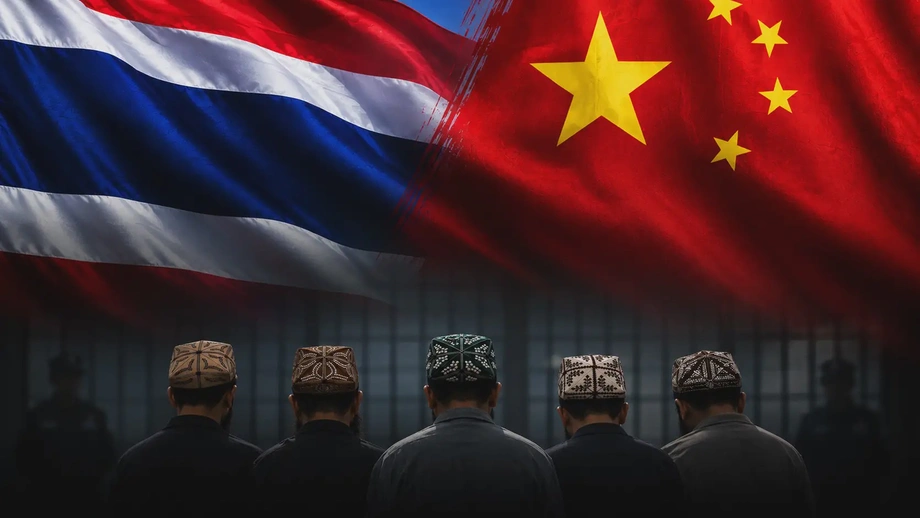
Five Uyghur men detained in Thailand since 2014 face the risk of being sent to China, including two who have moved from prison into immigration detention. On November 13, 2026, independent human rights experts appointed by the United Nations called on Thailand to refuse their extradition, warning that the men could face serious and irreversible harm.
Contents
- Five men face return after 12 years in Thai custody
- Why two men face an immediate risk
- What Thailand says about the court process
- Why extradition does not remove the ban on unsafe return
- What happened to the 40 returned in 2025?
- The danger identified in China
- A long detention with limited outside contact
- How the case reached this point
- Pressure grows for protection elsewhere
- Key Points
China requested the return of 45 Uyghurs in January 2025, including these five men, allegedly for illegally crossing borders. Thailand sent 40 of them back the following month. According to the experts' November statement, the whereabouts and fate of those 40 remain unknown, and Thai government efforts to monitor them have been largely ineffective.
The five men still in Thailand were all convicted of attempting to escape detention. Two were children when their detention began. The experts say their criminal cases do not remove Thailand's duty to protect them from torture, enforced disappearance or other serious abuse if returned.
The immediate dispute concerns whether Thailand will use extradition, a legal process for transferring someone to another country to face criminal proceedings, rather than deportation under immigration rules. Both routes face the same basic restriction: a government must not send someone to a place where there is a real risk of certain grave human rights violations.
The experts urged Thailand and other countries to arrange safe resettlement. For the men, the practical choice is whether years of detention end with protection elsewhere or a return to the country they fled.
Why two men face an immediate risk
The two men now in immigration custody had been serving sentences of seven years for offences connected to an attempted escape in January 2020. The UN experts say they completed their prison sentences before being transferred. The Network for Uyghur Rights (NUR) and the Network of Chinese Human Rights Defenders (CHRD) describe their recent transfer as following royal pardons.
The organisations identify their current location as Suan Phlu Immigration Detention Center in Bangkok. In their joint statement, they say the men told visiting representatives of Thailand's National Human Rights Commission that they did not want to return to China.
The other three men remain in prison. General Chaiyapruek Duangprapat, secretary general of Thailand's National Security Council, said in early November that they had about another year to serve for their escape attempt.
Thai government spokesman Ekkapob Pianpises said the men could challenge extradition in court and that two had been appointed a lawyer. NUR and CHRD, however, say the two men transferred to Suan Phlu have been held without access to lawyers. Appointment of counsel and actual access to legal help are both central to their ability to contest removal.
What Thailand says about the court process
Ekkapob said Thai courts would decide the men's challenge to extradition. He described the government's position in these terms:
The Thai government has granted them the right to contest the case.
Thailand and China signed an extradition treaty in 1993, and it entered into force in 1999. Requests under that treaty must pass through Thai courts. Thailand's National Security Council has also said the five men have outstanding arrest warrants in China.
The status of a formal request remains unresolved. Ekkapob described a Chinese extradition request that the men could challenge, while the council said on November 4 that China must submit a formal request for court consideration. The UN experts' November 13 statement says it is unknown whether a formal extradition request has been received or what charges China might bring.
Why extradition does not remove the ban on unsafe return
Thailand's obligations turn on the danger the men would face after transfer. The legal principle is called non-refoulement, meaning protection against being sent to a country where a person faces specified serious harms, including torture.
Article 3 of the UN Convention against Torture prohibits such a transfer when there are substantial grounds for believing a person would face torture. Section 13 of Thailand's Prevention and Suppression of Torture and Enforced Disappearance Act also prohibits return where there are substantial grounds to believe someone would face torture or enforced disappearance. Enforced disappearance occurs when authorities, or people acting with their support, take someone into custody and conceal their fate or whereabouts.
The independent experts addressing Thailand include Ben Saul, the UN special rapporteur on human rights while countering terrorism, and Nicolas Levrat, the special rapporteur on minority issues. Their statement explains that a criminal accusation does not cancel the protection:
Thailand's obligation of non-refoulement applies to extradition as well as deportation," the experts said. "It applies even if a person is accused of an offence.
UN experts had already warned both governments in May 2025 that bilateral extradition arrangements remain subject to this prohibition. They also warned against using diplomatic assurances, promises by the receiving government about future treatment, to get around the ban. A court process must therefore address the risk awaiting the men, alongside the criminal allegations.
What happened to the 40 returned in 2025?
OHCHR and the UN refugee agency, UNHCR, condemned Thailand's return of 40 Uyghurs on February 27, 2025. Amnesty International gives the same date in its March urgent action. Anthropologist Rune Steenberg, who researches Xinjiang and Uyghurs, dates the transfer to February 28 in his analysis.
The UN agencies' condemnation records that UNHCR repeatedly sought access to the detained men and assurances against forced return, but its requests were denied. UN High Commissioner for Human Rights Volker Türk urged China to disclose their whereabouts and Thailand to halt further deportations.
Thailand's National Human Rights Commission subsequently concluded that the returns violated non-refoulement. It has insisted that the remaining five men must not be sent back.
NUR and CHRD say UN experts asked China in May 2025 where the 40 men were being held and whether they had been detained. According to the organisations, China's reply did not answer those questions and instead referred to strengthening the men's legal education. The latest UN warning says their fate remains unknown.
The danger identified in China
The UN experts base their warning partly on OHCHR's August 2022 assessment of human rights in Xinjiang, the region in western China where many Uyghurs live. Uyghurs are a largely Muslim ethnic minority with their own language and cultural traditions.
The assessment documented arbitrary detention, enforced disappearance and torture connected to ethnicity, culture, religion and national security policies. OHCHR concluded that the extent of arbitrary and discriminatory detention of Uyghurs and other predominantly Muslim groups may amount to crimes against humanity.
The experts' latest statement also points to concerns about mass surveillance, compulsory reeducation, forced labour, restrictions on minority rights and deaths in custody. Their concern for the five men is therefore tied to documented patterns of treatment.
CHRD's September 2026 report examined more than 200 cases of torture of prisoners of conscience between 2016 and 2025 across almost every region of China, including Xinjiang. The organisation said no official in those cases was known to have been held accountable.
China denies abuses against Uyghurs and describes its Xinjiang policies as measures against terrorism and poverty. Asked about the five men, Foreign Ministry spokesperson Mao Ning said cooperation between China and Thailand against crimes across borders, including human smuggling, complied with both countries' laws, international law and international practice.
A long detention with limited outside contact
The five men have spent 12 years in Thai custody, according to the UN experts. Their statement says the men have largely been held in de facto incommunicado detention, meaning they have had very little meaningful contact with the outside world.
Access to lawyers, relatives, civil society organisations and UN officials has been limited. The experts also describe poor conditions. OHCHR said in February 2025 that five members of the wider group had died in Thai custody; NUR and CHRD say those deaths included two children.
The personal fear behind the legal dispute appears in a letter from one detained man to his girlfriend, who uses the Islamic alias Marzeyya Kasem. In the letter, shared with a Thai rights group, he said he would be "like a slave" if returned to China. His name has been withheld for security reasons.
For someone trying to challenge removal, contact with a lawyer provides a way to explain past persecution, review allegations and present evidence about danger on return. Contact with relatives and independent visitors also allows people outside detention to follow what happens to him.
How the case reached this point
The men belong to a larger group of more than 350 Uyghurs who fled China and were detained in Thailand in 2014, according to the latest UN statement. Many were trying to reach Türkiye. Their cases have since followed sharply different paths.
- March 2014: Thai authorities detained Uyghurs travelling through Thailand after leaving China.
- June 2015: Thailand allowed 172 women and children to travel to Türkiye, according to NUR and CHRD. Thailand also deported at least 109 members of the wider group to China that year.
- January 2020: An attempted escape from immigration detention led to criminal proceedings involving the men now at risk.
- January 2025: China requested the return of 45 Uyghurs, including the remaining five, according to the UN experts.
- February 27, 2025: Thailand forcibly returned 40 Uyghurs to China, prompting condemnation from OHCHR and UNHCR.
- November 2025: Thai authorities announced that the remaining five could face extradition rather than deportation.
- November 2026: Two men moved into immigration custody, and UN experts renewed their call to stop any forced return.
The 109 returns in 2015 and the 40 in 2025 amount to at least 149 people sent to China from this wider group. The route used for women and children in 2015 shows that departure to another country has also formed part of Thailand's handling of the cases.
Pressure grows for protection elsewhere
Amnesty International urged Thailand in March 2025 to ensure the five men's rights, including access to international protection. Elaine Pearson, Asia director at Human Rights Watch, has also called for the men to be allowed to travel to a safe third country.
Steenberg describes offers from Türkiye, Canada, Sweden, Australia and the United States to receive Uyghurs detained in Thailand before the February 2025 returns. His analysis also places the deportations against a period of diplomatic activity, including then prime minister Paetongtarn Shinawatra's visit to China on February 5 to 8, 2025. No completed resettlement arrangement for the remaining five has been announced.
At Thailand's Universal Periodic Review on November 9, 2026, 21 governments made recommendations concerning non-refoulement and safeguards against unsafe deportation, according to NUR and CHRD. The review is a UN process in which countries examine one another's human rights records. The Netherlands raised the 2025 Uyghur deportations directly, while recommendations from several states called for individual risk assessments, legal counsel and an effective right of appeal.
NUR and CHRD are seeking an immediate halt to any deportation or extradition, access for lawyers and UNHCR, and resettlement in a safe country. The UN experts make the same central request: Thailand and other governments should cooperate to give the men somewhere safe to go.
Key Points
- UN experts warned on November 13, 2026, that five Uyghur men detained in Thailand face serious harm if returned to China.
- Two have moved into immigration detention; the other three remain in prison.
- Thailand says the men can contest extradition in court, but the status of a formal Chinese request remains unresolved.
- International law and Thailand's own law prohibit return where the required risk of torture or other grave abuse exists.
- The UN experts say the whereabouts and fate of 40 Uyghurs returned in February 2025 remain unknown.
- UN experts and rights organisations are calling for legal access, protection from forced return and resettlement in a safe country.