Committee approval brings overseas terrorism bill closer to law
Sri Lanka's proposed Prevention of Foreign Terrorist Fighters Bill has cleared a parliamentary oversight committee, advancing legislation that would allow legal action over specified terrorism offences committed abroad. The move follows a Cabinet decision setting a deadline of before March 2026 for legislation connected to the country's third evaluation against international standards on financial crime.
Contents
- Committee approval brings overseas terrorism bill closer to law
- What conduct would the bill cover?
- How could Sri Lanka prosecute acts committed abroad?
- Officials address concerns about Sri Lankans overseas
- Why the government set a March 2026 deadline
- A 2018 proposal shows earlier attention to overseas offences
- The dates behind the proposal
- Key Points
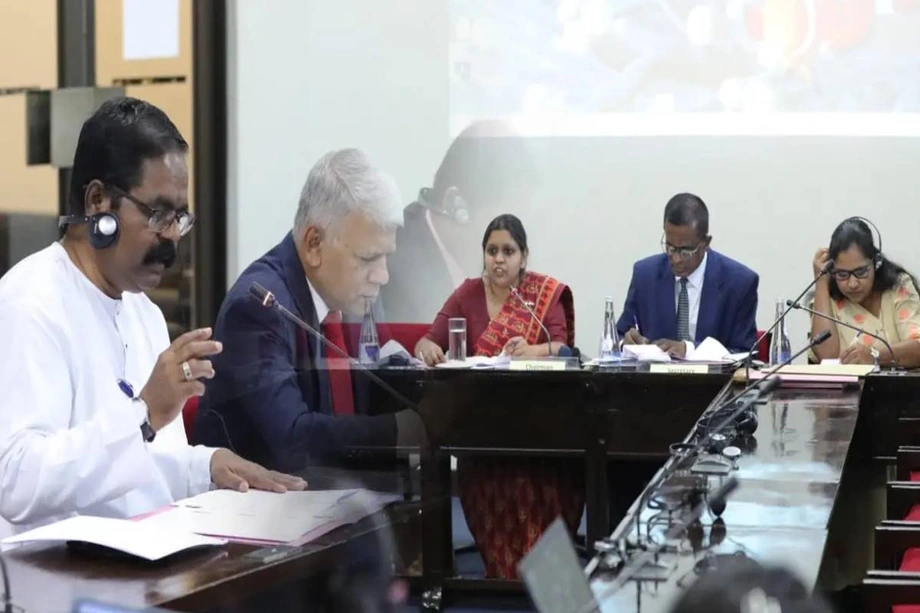
The Sectoral Oversight Committee on Economic Development and International Relations approved the bill after discussions chaired by MP and lawyer Lakmali Hemachandra. Committee member Sivagnanam Shritharan opposed it. Officials told the committee that the proposed offences include planning and preparing terrorist activities, participating in them, and providing or receiving terrorist training.
According to Parliament's committee approval notice, the bill would implement United Nations Security Council Resolution 2178, adopted on September 24, 2014, to address threats posed by foreign terrorist fighters. Its central purpose is to prevent people from travelling abroad to join terrorist groups or take part in terrorist activities.
The Minister of Foreign Affairs, Foreign Employment and Tourism presented the bill for its first reading on October 20. Committee approval moves the proposal forward, but the remaining parliamentary legislative procedures must be completed before it becomes law.
What conduct would the bill cover?
Officials described a proposal that reaches beyond participation in an attack. Engaging in terrorist activities, planning them, preparing for them and taking part in them would all fall within the offences outlined to the committee.
Providing terrorist training and receiving it would also be covered. In practical terms, the proposed law seeks to reach both the person teaching skills for terrorist activity and the person learning those skills. Its focus therefore includes preparation before a planned act takes place.
The distinction matters for understanding the bill's purpose. A law directed at foreign terrorist fighters needs to address the steps through which a person becomes involved in terrorist activity abroad, as well as the activity itself. The committee's account places planning, preparation and training within that proposed legal response.
For people travelling overseas, the conduct described by officials is the central issue: involvement in terrorist activities or related preparation and training. Officials also addressed concerns about whether Sri Lankans living outside the country could be targeted because of their ethnicity.
How could Sri Lanka prosecute acts committed abroad?
Sri Lankan citizens and citizens of other countries could face legal action in Sri Lanka for offences committed within or outside its territory, officials told the committee. For the circumstances they described, the act must also constitute an offence under the law of the relevant country.
That condition means authorities would need to consider the law in the country connected to the conduct, alongside the proposed Sri Lankan legislation. Where an alleged offence takes place abroad, whether that country also treats the act as a crime becomes part of the legal assessment.
The proposed reach across national borders is central to the bill. Someone could undertake training or participate in terrorist activity outside Sri Lanka, while the legal response could take place in Sri Lanka. Citizenship would not be the sole basis described for deciding who could face proceedings, because officials expressly included foreign nationals.
The committee discussion therefore sets out two important parts of the proposal together: specified conduct overseas could come within Sri Lanka's legal reach, and the condition concerning the other country's law would apply in the circumstances officials explained.
Officials address concerns about Sri Lankans overseas
Government officials told the committee that the provisions had not been introduced on an ethnic basis or with the intention of targeting Sri Lankans residing abroad. That assurance directly addresses the position of overseas communities whose family and personal ties extend across national borders.
Shritharan nevertheless expressed opposition to the bill, according to Parliament's notice. The committee approved the proposal following what the notice described as an extensive discussion.
Hemachandra chaired the meeting, which was also attended by MPs Suranga Rathnayake, Thilina Samarakoon and Wijesiri Basnayake. Representatives of the Ministry of Foreign Affairs, Foreign Employment and Tourism, the Ministry of Defence, the Attorney General's Department and the Legal Draftsman's Department participated.
The presence of those departments reflects the different responsibilities involved: foreign affairs handles international commitments, defence deals with security policy, and the legal departments work on the form and application of legislation. Their participation brought those responsibilities into the committee's examination of the proposal.
Why the government set a March 2026 deadline
The Cabinet's legislative drafting decision, listed in its press briefing dated May 26, 2025, connects the bill to Sri Lanka's international commitments on money laundering, terrorist financing and proliferation financing. Proliferation financing means funding connected to the spread of weapons of mass destruction.
Sri Lanka belongs to the Asia-Pacific Group on Money Laundering, through which countries undergo reviews of their compliance with standards developed by the Financial Action Task Force, or FATF. These reviews examine both the legal rules a country has adopted and how effectively it applies them.
The Cabinet statement says members undergo a mutual evaluation every six years. A mutual evaluation is a review by other members of how a country's arrangements measure up against the agreed standards.
Under the action plan for Sri Lanka's third evaluation, the ministries responsible for foreign affairs and defence were required to give domestic legal effect to Resolution 2178. The Cabinet said Sri Lanka was obligated to enact legislation on foreign terrorist fighters before March 2026.
The President, acting as Minister of Defence, and the Minister of Foreign Affairs, Foreign Employment and Tourism jointly proposed instructing the Legal Draftsman to prepare the legislation. Cabinet approved that proposal. The deadline therefore comes from an action plan tied to an international assessment, while Parliament's procedures determine how the bill becomes domestic law.
A 2018 proposal shows earlier attention to overseas offences
Sri Lanka had considered provisions dealing with terrorist activity abroad before the current bill. The 2018 Counter Terrorism Bill, presented by the Minister of Foreign Affairs on October 9, 2018, included offences involving overseas preparation and participation in prohibited organisations.
Section 9(a) of that bill covered acts organising, preparing for or giving effect to a plan to commit an offence under the proposed law outside Sri Lanka. Section 9(b) addressed serving as a leader, member or cadre of a terrorist organisation proscribed under the United Nations Act, No. 45 of 1968, as well as recruiting members or cadres.
Section 10(a) addressed recruiting, enticing or encouraging people to join proscribed terrorist organisations or movements whose objectives included an offence under that bill. Section 10(b) covered joining, supporting or representing a proscribed terrorist organisation for the purpose of aiding and abetting an offence. A proscribed organisation is one formally prohibited under the applicable legal process.
The comparison shows that overseas preparation, recruitment and membership have appeared in Sri Lankan legislative proposals before. The current bill's stated purpose is more specifically tied to foreign terrorist fighters and implementation of Resolution 2178. The 2018 provisions describe an earlier bill, while the present committee decision concerns a different legislative proposal.
The dates behind the proposal
The legislative effort connects a United Nations resolution adopted in 2014, an earlier domestic proposal in 2018 and the Cabinet's drafting decision in 2025. The main steps are:
- September 24, 2014: The United Nations Security Council adopted Resolution 2178 on threats posed by foreign terrorist fighters.
- October 9, 2018: The Minister of Foreign Affairs presented the Counter Terrorism Bill, including provisions on overseas preparation and proscribed organisations.
- May 26, 2025: A Cabinet press briefing listed approval to instruct the Legal Draftsman to prepare legislation on foreign terrorist fighters.
- October 20: The Minister of Foreign Affairs, Foreign Employment and Tourism presented the Prevention of Foreign Terrorist Fighters Bill for its first reading.
- Following committee consideration: The Sectoral Oversight Committee approved the bill, with Shritharan expressing opposition.
- Before March 2026: The Cabinet's stated deadline for legislation under the action plan for Sri Lanka's third FATF standards evaluation.
Parliament's notice does not specify the year of the October 20 first reading or the precise committee meeting date. It also gives no date for the next parliamentary stage. The remaining legislative procedures are the next step before the proposal can take effect.
Key Points
- A parliamentary oversight committee approved the Prevention of Foreign Terrorist Fighters Bill, while MP Sivagnanam Shritharan opposed it.
- The proposal covers terrorist activity, planning, preparation, participation, and providing or receiving terrorist training.
- Officials described legal action in Sri Lanka for specified acts committed at home or abroad, including by foreign nationals, subject to a condition involving the relevant country's law.
- Officials said the provisions were not intended to target overseas Sri Lankans on ethnic grounds.
- The Cabinet linked legislation before March 2026 to Sri Lanka's third evaluation against FATF standards.
- The bill must complete the remaining parliamentary procedures before becoming law.