Challenge grows over arrests, detention and judicial control
Sri Lanka's proposed Protection of the State from Terrorism Bill faced 36 constitutional petitions by 21 October 2026, after Speaker Jagath Wickramaratne told Parliament he had received copies of 11 additional challenges beyond the 25 previously announced. The legislation would replace the Prevention of Terrorism Act of 1979 while extending search and arrest powers to the armed forces and Coast Guard in specified circumstances.
Contents
- Challenge grows over arrests, detention and judicial control
- How the court challenge developed
- What the terrorism definition actually says
- Where protest and expression protections apply
- When soldiers and Coast Guard officers could act
- Who would control detention and release?
- Presidential powers and the government's response
- Repeal would leave parts of the old framework operating
- Key Points
Lawyer Kumaravadivel Guruparan argued before the Supreme Court that the replacement threatens fundamental rights guaranteed by the Constitution. Appearing for lawyer Siva Punniyam Abilash, with assistance from lawyer Janani Ayyathurai, he said there was widespread agreement that the old law should go, but argued that the proposed replacement was worse.
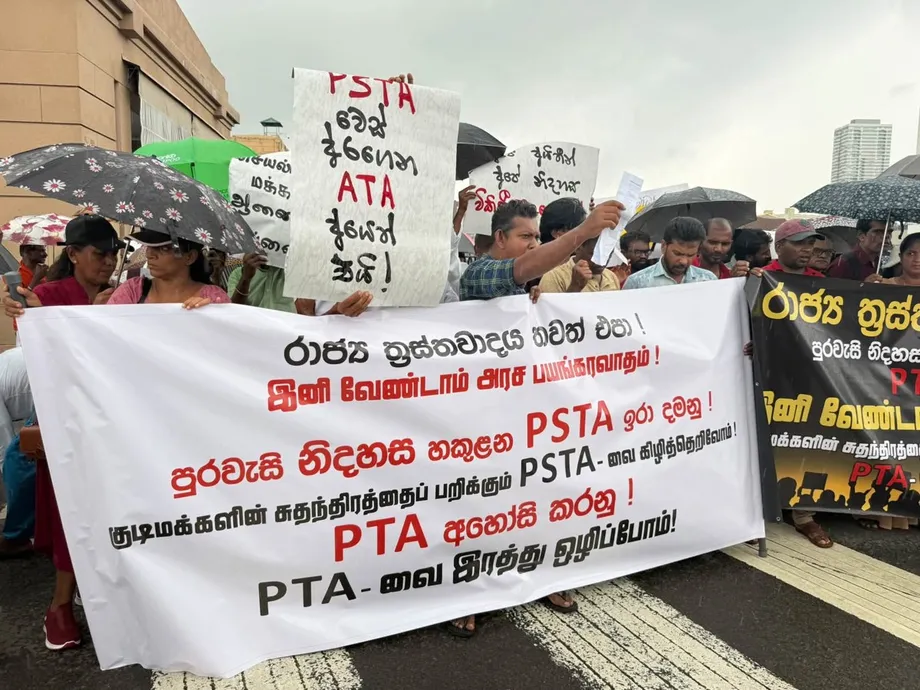
The government's published terrorism bill, issued as a Gazette supplement on 22 September on the orders of the Minister of Justice and National Integration, contains express protections for protest and peaceful expression. Its critics argue that those protections sit alongside broad offences, executive detention powers and limits on the authority of magistrates.
The dispute concerns decisions that directly affect people's lives: who may stop and search them, who may order their detention, and whether a judge can release them without approval from the Attorney General. The government says it intends to protect national security while safeguarding human rights.
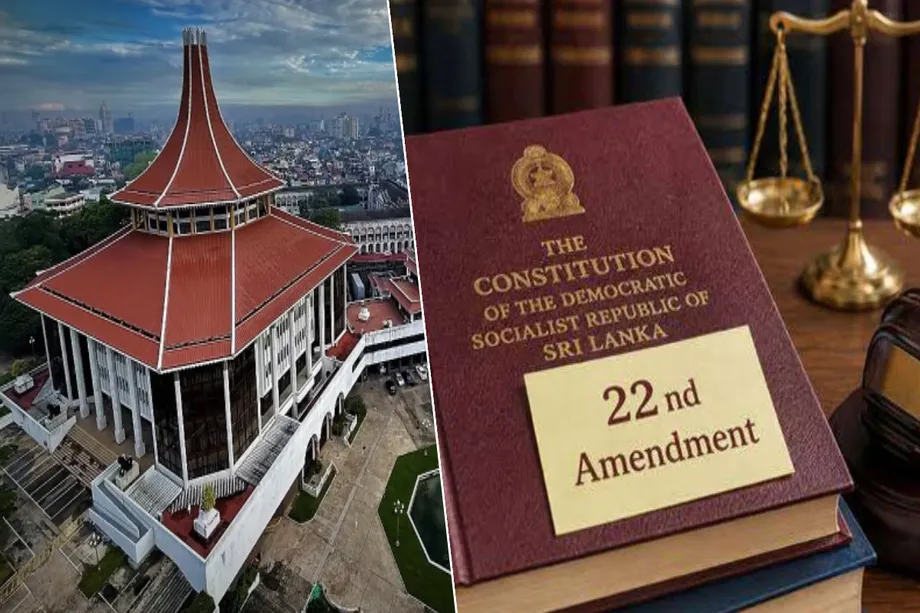
The Supreme Court began hearing 25 petitions on 20 October. No determination or date for a ruling was announced in the accounts of the proceedings.
How the court challenge developed
Chief Justice Preethi Padman Surasena led the bench hearing the challenges, alongside Justices Achala Wengappuli and Sampath Abayakoon. Additional Solicitor General Nerin Pulle, appearing for the Attorney General, told the court on 20 October that 25 petitions had been filed and that the Speaker's Office had been informed.
The Speaker's announcement the following day brought the number covered by his notices to 36. The 11 additional petitions increased that total by 44 percent from the earlier 25. The announcements concern petitions filed under Article 121(1) of the Constitution, through which proposed legislation can be challenged before enactment.
- 22 September 2026: The bill was issued as a Gazette supplement.
- 7, 8 and 20 October: The Speaker's notices referred to a total of 25 petitions challenging it.
- 20 October: The Supreme Court began hearing those 25 petitions.
- 21 October: The Speaker announced receipt of copies of 11 additional petitions, bringing the announced total to 36.
Petitioners asked the court to determine that disputed provisions would require approval by a two thirds majority in Parliament and by voters at a referendum. Their request places the constitutional requirements for passing the bill at the centre of the proceedings.
What the terrorism definition actually says
Guruparan argued that the bill fails to define terrorism clearly enough. Section 3 nevertheless sets out a definition with several connected elements: a person must act intentionally or knowingly, cause a specified consequence, and pursue a political or ideological objective through one of two stated purposes.
Those purposes are provoking terror among the public or a group of people, or unduly compelling a government or international organisation to act or refrain from acting. The listed consequences include death, grievous injury and hostage taking, as well as certain forms of serious damage to property, infrastructure, the environment and electronic systems.
Several damage provisions require a likelihood of danger to life or substantial economic loss. Damage to cultural property can also qualify through serious loss of cultural heritage of national or international significance. The definition therefore reaches beyond attacks that kill or physically injure people.
President's Counsel Ali Sabry, appearing for former minister and Professor G.L. Peiris, argued that the wording was broad and could bring conduct that was not inherently criminal within terrorism offences. He said the definition drew on legislation in Canada, New Zealand and Australia, and questioned its suitability for Sri Lanka given allegations of past misuse of legal powers.
Where protest and expression protections apply
Section 3(4) says participation in protest, advocacy, dissent, strikes, lockouts or other industrial action is insufficient by itself to infer the intention, knowledge or consequences required for terrorism. It gives a similar protection to humanitarian and medical activities conducted by humanitarian organisations in accordance with written law.
Section 6 addresses intentional membership, recruitment, funding and other specified support for a proscribed organisation, meaning an organisation formally banned under the law. It includes exceptions for the mere expression of opinion, belief or sympathy, and for peaceful expression, association or assembly without material support or active participation. It also protects an Attorney-at-Law's lawful professional duties.
These clauses matter to demonstrators, journalists, aid workers and lawyers because they identify activities the legislation expressly protects. The dispute is over whether the wording of the offences and the powers used to investigate them leave those protections strong enough in practice.
Transparency International Sri Lanka, in its statement on the bill, argued that the requirements concerning intention and the likelihood of serious harm were insufficiently strict. It warned that conduct better addressed through ordinary criminal law could fall within terrorism offences, with related risks for expression and association.
Pulle told the Supreme Court that the government did not intend to curtail freedom of expression. Sabry challenged Clause 51, arguing that it could allow the executive to prohibit meetings, press conferences and other activities considered threats to national security. He said decisions of that kind should rest with magistrates.
When soldiers and Coast Guard officers could act
Guruparan warned that extending powers normally exercised by police could deepen militarisation and create further opportunities for abuse. He referred to allegations already made against members of Sri Lanka's military. His submission also referred to the Civil Security Force; the cited search and arrest provisions in the published bill expressly name the armed forces and Coast Guard.
Section 19 extends police powers relating to the search and arrest of suspects to armed forces members and Coast Guard officers for offences under the proposed law, subject to Section 24. Section 20 lists powers to stop and search people and vehicles, question suspects, enter and search premises or land, and seize items connected with suspected offences.
Section 24 permits military or Coast Guard search and arrest in specified exceptional circumstances. These include the absence of a police officer when securing one immediately is not reasonably practicable, the need to prevent an imminent terrorist act, or lawful deployment for public order or operations against terrorism.
An arrested person must be handed to the nearest police station's officer in charge, or another designated police officer, immediately and in any event within 24 hours. Section 42 also requires preventive measures to be taken in good faith, proportionately and only as far as necessary.
Lawyer Hejaaz Hizbullah argued that the expanded arrest powers could expose people to abuse. Transparency International Sri Lanka raised related concerns about accountability, including the clarity of safeguards and chains of command when military personnel exercise law enforcement powers. The practical dispute is who supervises an officer's decision to intervene and how a person can challenge that decision.
Who would control detention and release?
Hizbullah challenged Clauses 27 and 28, arguing that they would allow detention without a court order. Transparency International Sri Lanka said the proposed framework permits the Secretary to the Ministry of Defence to issue an initial detention order lasting two months, while limiting a magistrate's independent assessment of whether detention is necessary.
Sabry told the court that a suspect could face detention for up to one year followed by a further year on remand. Remand means custody while a criminal case proceeds. His argument concerned the possible combined duration, while the institution's concern about two months referred to the initial executive detention order.
Clause 37 was another focus of Hizbullah's submissions. He argued that requiring the Attorney General's consent before a magistrate could discharge a suspect would restrict judicial authority when evidence was insufficient to proceed. He cited the discharge of former student leader Wasantha Mudalige and Deputy Inspector General Nalaka Silva as examples of magistrates exercising that authority under the existing law.
Hizbullah, who was himself detained for 22 months under the Prevention of Terrorism Act, represented petitioners including journalists and former detainees. He also challenged Clause 60, saying it would permit restriction orders based on allegations that a person was preparing to commit an offence.
Transparency International Sri Lanka said a proposed Review Committee would have limited authority because the minister could reject its recommendations. For a detainee and their family, the central concern is whether an independent court can effectively review the reasons for continued custody and order release.
Presidential powers and the government's response
Hizbullah argued that Clause 59 would grant excessive presidential powers, potentially violating Articles 3 and 4 of the Constitution. Transparency International Sri Lanka separately warned that presidential orders banning organisations would have no specified time limit, affecting their ability to operate, raise money, hold meetings and conduct advocacy.
President's Counsel M.A. Sumanthiran argued that the bill continued the approach of the Prevention of Terrorism Act while further restricting personal liberty and judicial authority. Sabry urged close examination before enactment, pointing to Sri Lanka's lack of a comparable system for reviewing the constitutionality of legislation after it becomes law.
Sabry, the lawyer representing G.L. Peiris, told the court:
We do not have post-enactment review like other countries. Once laws are enacted, they become law. Your Lordships' Court now has a historic opportunity to carefully examine these provisions and make a determination,
Cabinet spokesperson Dr Nalinda Jayatissa defended the proposed framework at the 20 October Cabinet briefing and encouraged constitutional challenges to disputed provisions. Responding to concerns about arrests based on appearance, including those raised publicly by President's Counsel Saliya Pieris, Jayatissa rejected the claim that long hair or tattoos alone would justify arrest.
Jayatissa described the Supreme Court as the appropriate forum for testing such concerns:
If such provisions exist, anyone can go to the SC and challenge them. That is the best course of action,
Justice Minister Harshana Nanayakkara told Parliament that Section 4(2) concerned rebuttable presumptions about membership in a criminal organisation. He said references to hairstyles, tattoos, hand signs, attire or language associated with known members were indicators that could be challenged. A rebuttable presumption allows an inference to be contested with evidence. His explanation focused on how membership might be assessed, while the court challenges address the wider reach of the proposed law.
Repeal would leave parts of the old framework operating
Section 72 would repeal the Prevention of Terrorism (Temporary Provisions) Act, No. 48 of 1979. Section 73, however, preserves substantial parts of the existing legal framework for pending cases, earlier alleged offences and regulations. Replacing the statute would therefore involve a transition rather than an immediate end to all proceedings under it.
Pending investigations, trials, appeals and applications would generally continue under the old Act, including its rules on procedure and evidence. For some alleged offences committed before the new law's appointed date, prosecutions would be brought under the old Act, with proceedings concluded as nearly as practicable under the new legislation.
Existing regulations banning organisations would also continue unless changed or withdrawn. The bill specifically lists regulations concerning the Liberation Tigers of Tamil Eelam, the Tamil Rehabilitation Organization and extremist organisations, alongside regulations dealing with detainees, remandees and rehabilitation.
These transition clauses connect Sumanthiran's criticism of continuity with a concrete part of the text: people already facing proceedings and organisations already subject to bans would continue to be affected by measures originating under the old law. Transparency International Sri Lanka has called for withdrawal of the bill and repeal of the Prevention of Terrorism Act, alongside clear limits on executive authority and effective safeguards against arbitrary detention.
Key Points
- The Speaker's announcements covered 36 constitutional petitions against the bill by 21 October 2026, including 11 newly announced challenges.
- The Supreme Court began hearing 25 petitions on 20 October before a bench led by Chief Justice Preethi Padman Surasena.
- Guruparan and other petitioners challenged the terrorism definition, expanded arrest powers and restrictions on judicial control.
- The published bill protects specified peaceful activities and requires military or Coast Guard officers to hand arrested suspects to police within 24 hours.
- Lawyers argued that detention and remand could together last up to two years and challenged limits on magistrates' power to discharge suspects.
- The government defended the legislation as a framework for national security and human rights; Transparency International Sri Lanka called for its withdrawal.
- Repeal provisions would preserve pending proceedings and several regulations made under the existing Prevention of Terrorism Act.