A Currency Defence Paired With More Room to Lend
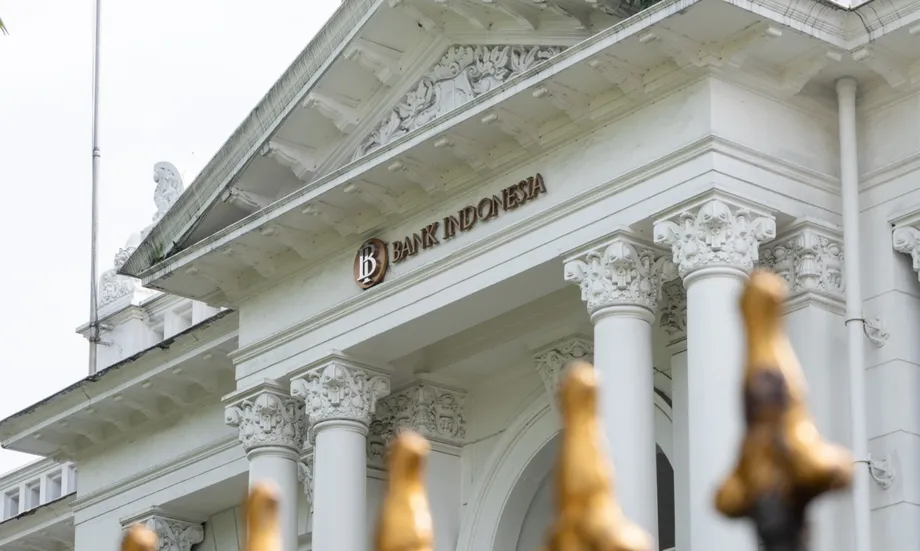
Bank Indonesia held its benchmark interest rate at 5.75% on October 21, 2026, raised the rate it pays on overnight bank deposits to 5.00% and announced reserve cuts expected to release 190 trillion rupiah, about $10.56 billion, into the banking system. The package seeks to steady the rupiah while giving banks more money to lend.
Contents
- A Currency Defence Paired With More Room to Lend
- What the Three Interest Rates Do
- How the Reserve Cuts Release 190 Trillion Rupiah
- Why the Market Selloff Matters
- Cheaper Currency Protection for Foreign Investors
- Economists See a Difficult Balancing Act
- Inflation Leaves Some Room, Currency Pressure Less
- Budget Concerns and Independence Remain in Focus
- The Dates Behind the Decision
- Key Points
The decision followed a record two days of losses in Indonesian stocks and renewed currency pressure after index provider MSCI warned that it could move Indonesian equities to Standalone Market status. The rupiah, which had lost more than 7% against the US dollar this year, weakened slightly after the announcement.
Governor Destry Damayanti announced the measures after the Board of Governors met in Jakarta on October 20 and 21. The benchmark remained unchanged for a fourth consecutive policy review, while the rate banks pay to borrow overnight from the central bank stayed at 6.50%.
Conventional banks will see their reserve requirement fall from 9% to 8% by the beginning of November, then to 7% on December 1. Bank Indonesia also announced a reduction for Islamic banks, from 7.5% to 5.5%.
Deputy Governor Solikin M. Juhro explained why the central bank was moving different instruments in different directions:
Because we are addressing multiple challenges, we need to address them with different policies,
For businesses and households, the central question is whether those measures can encourage lending without adding to pressure on the currency. A weaker rupiah makes imports more expensive, while tighter borrowing conditions can hold back investment and hiring.
What the Three Interest Rates Do
The benchmark rate, the seven day reverse repurchase rate, is Bank Indonesia's main signal for borrowing conditions across the economy. Keeping it at 5.75% avoids another broad increase after the central bank raised rates by a combined one percentage point in three moves during May and June.
The deposit facility serves a different purpose. It pays banks for placing surplus funds overnight with Bank Indonesia. Raising that rate by 25 basis points, or 0.25 percentage points, to 5.00% makes that option more attractive and helps support short term market interest rates.
The lending facility works in the opposite direction: banks needing overnight funds can borrow from the central bank at 6.50%. Together, the deposit and lending rates help guide the price at which banks lend money to one another.
The deposit rate increase narrowed its gap with the benchmark from one percentage point to 0.75 percentage points. Bank Indonesia is therefore adjusting conditions in the money market even though its headline rate has stayed still.
Economists were closely divided before the decision. Of 29 surveyed, 15 expected the benchmark to remain unchanged and 14 expected an increase of at least 25 basis points. The hold matched a narrow majority forecast, while disappointing those who wanted a stronger rate response to the selloff.
How the Reserve Cuts Release 190 Trillion Rupiah
Reserve requirements determine how much of their deposit base banks must keep at the central bank rather than use elsewhere. Reducing the requirement leaves banks with more funds available for loans, investments or other payments.
For conventional banks, the move from 9% to 7% means the required reserve against every 100 rupiah of the relevant deposit base falls from nine rupiah to seven. The reduction comes in two stages, allowing banks to adjust before the full change takes effect on December 1.
Islamic banks, which operate under financial rules that prohibit conventional interest payments, will receive a reduction of the same size: two percentage points, from 7.5% to 5.5%. A separate implementation schedule for that change was not specified.
Damayanti put the funds released by the reserve measures at 190 trillion rupiah. Solikin said the cuts would give banks greater flexibility to lend and support job creation. Bank Indonesia will also adjust its liquidity incentive mechanism, another tool used to influence the funds available to banks.
Indonesia has faced difficulties turning plentiful bank funds into actual borrowing. In August 2025, credit grew 7.56% from a year earlier, while more than 2,372 trillion rupiah in approved loans remained undrawn by late in the third quarter. Those figures, discussed during the earlier push to expand lending, show why borrower demand matters alongside the supply of funds.
Why the Market Selloff Matters
MSCI's warning brought a fresh shock to markets already dealing with currency weakness. Its classifications help international investment funds decide which countries belong in their portfolios. A move from Emerging Market to Standalone Market status could change Indonesia's place in investment products that follow those classifications.
Foreign investors selling Indonesian shares may then exchange the rupiah proceeds for dollars to move their money abroad. That connects falling stock prices with pressure on the currency, while selling in government bonds can increase the government's borrowing costs.
During the October 16 market selloff, the rupiah moved beyond 18,000 per dollar and the Jakarta Composite Index suffered losses exceeding 11% in morning trading. Bank Indonesia intervened in currency and bond markets as pressure spread across assets.
The latest two days of stock losses were steeper than any recorded during the Asian financial crisis. By the October policy meeting, the rupiah remained emerging Asia's weakest currency for the year, with a decline exceeding 7% against the dollar.
MSCI's classification process has further dates ahead: its consultation is scheduled to close on April 30, 2027, with a final decision due by June 30, 2027. Investors therefore face months of uncertainty about Indonesia's eventual market status.
Cheaper Currency Protection for Foreign Investors
Bank Indonesia is also trying to make rupiah investments more attractive by reducing the cost of protecting them against currency movements. Damayanti said earlier discounts on foreign exchange hedging had attracted $9.9 billion in capital inflows.
Hedging allows an investor to arrange protection against an unfavourable exchange rate. Someone buying an Indonesian asset may earn a return in rupiah but receive fewer dollars when selling it if the currency weakens. A hedge helps manage that risk, although the protection carries a cost.
Damayanti said the central bank would provide further incentives through Domestic Non-Deliverable Forward instruments, known as DNDFs. These contracts settle the difference between an agreed exchange rate and a later reference rate, rather than requiring delivery of the full underlying currency amount.
The governor said the measures aim to attract foreign capital, stabilise the rupiah and deepen domestic money and foreign exchange markets. Alongside interest rates and reserve requirements, the hedging incentives give Bank Indonesia another way to influence demand for rupiah assets.
Economists See a Difficult Balancing Act
Gareth Leather, senior Asia economist at Capital Economics, questioned whether the policy package could support growth and the currency at the same time. He described the moves as "very confusing" and explained his concern:
I think they are trying to do two things at once (support the rupiah and boost growth), which I am not sure is possible,
Leather also warned that the approach risked weakening the central bank's credibility. The rupiah's slight decline after the announcement illustrated the immediate challenge of persuading investors that the combination would work.
Irman Faiz, an economist at Bank Danamon in Jakarta, offered an explanation for how the instruments could fit together. He said the higher deposit facility rate could help stop the additional funds released by the reserve cuts from pushing money market rates too low and reducing the attraction of holding rupiah.
The two assessments focus on the same tension. Banks are receiving more usable funds, which can ease lending conditions, while the central bank is paying more on overnight deposits to support market rates. The results will depend on where banks place the money and how investors respond.
Inflation Leaves Some Room, Currency Pressure Less
Indonesia's annual inflation rate reached 3.28% in September, its highest level in three months. Core inflation, which measures a narrower set of prices to help track underlying pressure, eased to 2.84%.
Both figures were within Bank Indonesia's target range of 1.5% to 3.5%, expressed officially as 2.5% plus or minus one percentage point. September's headline rate was 0.22 percentage points below the upper limit.
Damayanti said the one percentage point of rate increases delivered in May and June was sufficient to anchor inflation. Bank Indonesia retained its 2026 economic growth forecast of 4.9% to 5.7% and said its inflation target would remain the same in 2026 and 2027.
The benchmark is now one percentage point above the 4.75% level maintained during the January rate hold. That change shows how currency pressure has shifted monetary policy during the year, even as officials continue looking for ways to support economic activity.
For households, the exchange rate matters through the cost of imported food, fuel and production materials. For businesses, interest rates influence the cost of financing equipment, stock and expansion. Bank Indonesia is trying to manage both channels without another benchmark increase.
Budget Concerns and Independence Remain in Focus
Investors have also been concerned about Indonesia's public finances, expensive fuel subsidies and President Prabowo Subianto's spending plans. These concerns affect confidence in rupiah assets alongside the immediate disruption caused by MSCI's warning.
Central bank independence is another part of that debate. Investors want confidence that decisions about inflation and interest rates remain under Bank Indonesia's control, even as it coordinates with a government seeking faster growth.
Damayanti addressed that issue in her October defence of rate autonomy, saying the central bank alone decides whether to raise or lower interest rates or use other incentives. The latest package places that authority under fresh scrutiny because it combines currency support with measures intended to encourage lending.
Bank Indonesia's next practical test is the release of additional bank funds in November and December. Its market measures must operate while the MSCI consultation continues and concerns about government finances persist.
The Dates Behind the Decision
The October announcement follows months in which Bank Indonesia moved from holding rates to raising them, then paused while adding other tools. The sequence helps explain why the latest response extends beyond the benchmark.
- January 21, 2026: Bank Indonesia held its benchmark at 4.75% amid pressure on the rupiah.
- May and June 2026: Three increases lifted the benchmark by a combined one percentage point to 5.75%.
- October 16, 2026: The rupiah moved beyond 18,000 per dollar as stocks fell sharply.
- October 20 and 21, 2026: The Board of Governors agreed to hold the benchmark, raise the deposit facility rate and reduce reserve requirements.
- Beginning of November 2026: Conventional banks' reserve requirement is scheduled to fall from 9% to 8%.
- December 1, 2026: The requirement is scheduled to fall again, to 7%.
- April 30 and June 30, 2027: MSCI's consultation is scheduled to close, followed by the deadline for its final classification decision.
The immediate changes are therefore in overnight deposit returns and the amount of funds banks can use. The longer test is whether those measures help keep foreign capital invested in Indonesia while supporting domestic credit.
Key Points
- Bank Indonesia held its benchmark rate at 5.75% for a fourth consecutive review.
- The overnight deposit facility rate rose to 5.00%; the lending facility rate stayed at 6.50%.
- Reserve cuts are expected to release 190 trillion rupiah into the banking system.
- The rupiah had lost more than 7% against the dollar this year amid renewed stock market turmoil.
- September inflation was 3.28%, within the central bank's target range.
- Further hedging incentives aim to attract foreign investment as MSCI reviews Indonesia's market classification.