Indonesia faces a bigger break with global stock funds
Indonesia faces a proposed removal from MSCI's Emerging Markets category, with investor feedback due by April 30, 2027, and a final decision expected by June 30, 2027. The proposed move to Standalone status would take Indonesian shares out of both the emerging and frontier market benchmarks used by international investment funds.
Contents
- Indonesia faces a bigger break with global stock funds
- What Standalone status changes
- Argentina returned to Emerging, then lost access
- Argentina's possible return divides investors
- Russia moved from exclusion to index closure
- Pakistan shows another route through Standalone
- The key dates across three precedents
- Indonesia's problem centres on ownership and trading
- How the pressure could spread beyond shares
- Key Points
The announcement on October 15, 2026, followed concerns about opaque share ownership, suspected coordinated trading and inadequate enforcement. Indonesia remains an Emerging Market during the consultation. MSCI is seeking evidence that reforms have improved how the market works before deciding whether to proceed.
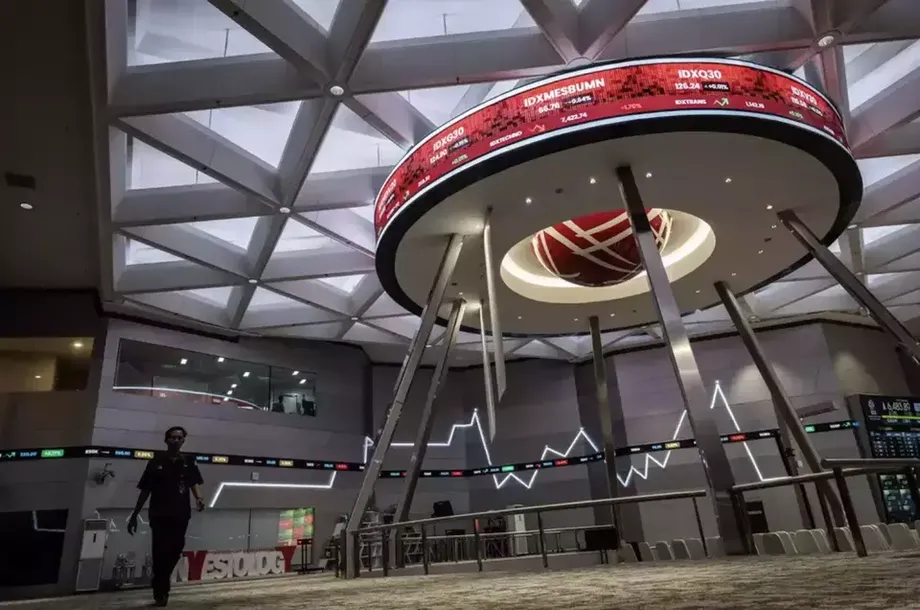
Investors reacted sharply on October 16. The Jakarta Composite Index fell 11.6%, wiping about $65 billion from share values. During the first trading session, it had reached 5,193.22, a decline of about 11%, and trading was temporarily halted. Foreign investors sold Rp2.92 trillion in shares during that session.
Argentina's downgrade in 2021 and Russia's removal in 2022 illustrate how serious a move to Standalone can be. Their cases involved different obstacles: Argentina restricted the movement of investment money, while sanctions and trading restrictions made Russia inaccessible to many international investors.
Pakistan adds an older precedent. It moved directly from Emerging to Standalone at the end of 2008 before entering Frontier Markets in May 2009. That history matters because Standalone can lead to several outcomes: a return to broader indexes, a prolonged period outside them, or the eventual closure of a country's indexes.
What Standalone status changes
MSCI's market classification framework assesses market accessibility, the size of eligible companies and how easily their shares can be traded. Economic development is another criterion, used specifically when deciding whether a market qualifies as developed.
Standalone indexes sit outside MSCI's Emerging Markets and Frontier Markets indexes. A country may still have its own MSCI index, but funds tracking those broader benchmarks would no longer include it through their normal allocations.
MSCI says severe deterioration in accessibility or in size and liquidity can lead to Standalone status. Liquidity means how easily investors can buy or sell without causing a large change in price. Accessibility includes the practical ability to trade, exchange currencies and move investment proceeds.
Index funds generally buy shares according to a benchmark's composition. Removing a country can therefore require them to sell its stocks. Managers who choose investments themselves may also withdraw if their mandates restrict them to emerging markets. A move to Frontier can attract some frontier fund demand; Standalone offers no equivalent place in either broad MSCI category.
Argentina returned to Emerging, then lost access
Argentina's 2021 downgrade followed an earlier cycle of restrictions, reopening and renewed restrictions. MSCI had moved it from Emerging to Frontier in May 2009 after controls made it harder for investors to move money into and out of the country.
Argentina began removing capital and foreign exchange restrictions in December 2015. Investors wanted time to see whether the changes would last. MSCI decided in June 2018 to restore Emerging status, implementing the change in May 2019.
Capital controls returned in September 2019, only months after that restoration. Such controls govern how money can enter or leave a country, including whether investors can convert local currency and transfer proceeds abroad.
MSCI's 2021 classification review, published on June 24, announced Argentina's direct move from Emerging to Standalone with the November 2021 index review. Foreign listings still allowed investors to follow the Argentina index, but the restrictions inside the country remained a central concern.
Craig Feldman, MSCI's Global Head of Index Management Research and a member of its Index Policy Committee, explained the decision:
Despite the fact that the MSCI Argentina Index remains replicable given that only foreign listings are eligible for inclusion to the index, the prolonged severity of capital controls with no resolution is not in line with the Market Accessibility criteria of the MSCI Emerging Markets Index.
Argentina's Emerging status lasted about two and a half years after its May 2019 return. Its experience shows why MSCI examines whether investors can consistently use a market, including when they want to withdraw their money.
Argentina's possible return divides investors
Argentina has remained Standalone since the 2021 downgrade. President Javier Milei's government has since eased foreign exchange access and rules on transferring dividends abroad, while continuing to remove some restrictions gradually.
Important limits affecting foreign institutional investors remain. Assessments ahead of a June 23 classification review showed how differently investment firms viewed the prospects for a return.
Morgan Stanley estimated that eventual Emerging Market inclusion could attract about $5 billion, with Argentina potentially receiving a 0.28% weight in the emerging benchmark and 4.1% in the Latin America index. Its strategist Nikolaj Lippmann forecast possible inclusion in early 2028. Those figures describe a potential outcome, rather than an announced MSCI decision.
Argentina's trading scale makes the estimate substantial: daily share trading in that assessment averaged less than $60 million. A potential $5 billion inflow would exceed 83 times that daily average, although investment would arrive over time rather than in a single session.
Ezequiel Fernández, head of equity research at Argentine broker Balanz Capital, expected Argentina to remain Standalone. He identified continuing controls on money seeking short term investment returns as the main obstacle:
The kickstart of a revision for EM inclusion is still possible, but capital controls for hot money remain the key issue.
Russia moved from exclusion to index closure
Russia's reclassification unfolded much faster. After its invasion of Ukraine in February 2022, international investors faced sanctions, restrictions on selling shares, the closure of the Moscow Exchange and difficulties exchanging rubles for foreign currency. Some Russian banks were also excluded from the SWIFT financial messaging network.
MSCI opened a consultation on February 28, 2022. Most participants said the Russian equity market was inaccessible for investment and supported removing its stocks from the Emerging Markets benchmark.
MSCI announced the move on March 2, making it effective after the close of trading on March 9. Russia initially retained indexes in the Standalone category, while its shares left the broader emerging benchmark.
Persistent access problems led to a further step. MSCI announced in November 2022 that it would discontinue all indexes containing only Russian securities, effective March 1, 2023. Russia consequently spent almost a year as a Standalone market before those indexes ended.
Argentina and Russia therefore followed different paths after exclusion. Argentina retained a country index and a possible route back into broader benchmarks. Russia's continuing restrictions led MSCI to stop calculating its dedicated indexes.
Pakistan shows another route through Standalone
Pakistan's first direct move from Emerging to Standalone came during the global financial crisis. In August 2008, the Karachi Stock Exchange imposed a floor preventing shares from trading below their August 27 closing prices.
The rule stopped prices adjusting downward as investors tried to sell. Trading nearly froze for months, making it difficult for investors to exit holdings and retrieve their money.
MSCI announced Pakistan's removal from Emerging Markets on December 10, 2008, effective after trading on December 31. It retained the Pakistan index as Standalone. After the price floor was lifted and trading began recovering, MSCI consulted on Frontier inclusion in February 2009 and implemented that change in May.
Pakistan returned to Emerging Markets in May 2017 following a June 2016 decision. Its next downgrade, to Frontier in November 2021, had a different cause: too few stocks met the required size and liquidity standards.
MSCI's 2021 review said no securities in its Pakistan coverage had met Emerging size and liquidity requirements since November 2019. Special continuity rules had been used since November 2018 to maintain the required three index constituents. Pakistan still met the accessibility requirements at that time.
Estimates associated with the later reclassification put expected selling by passive Emerging Market funds at $100 million to $150 million. Foreign net selling before the change exceeded about $730 million. Morocco provides another example of a downgrade driven by weak liquidity: it moved to Frontier in 2013 and remains in that category.
The key dates across three precedents
Argentina, Russia and Pakistan reached Standalone through different sequences. The dates show both the speed of Russia's exclusion and the longer process through which Argentina lost its recently restored status.
- December 31, 2008: Pakistan leaves Emerging Markets and becomes Standalone after trading restrictions.
- May 2009: Pakistan enters Frontier Markets; Argentina also moves from Emerging to Frontier.
- May 2017: Pakistan returns to Emerging Markets.
- May 2019: Argentina returns to Emerging Markets, before capital controls resume in September.
- November 2021: Argentina becomes Standalone; Pakistan moves from Emerging to Frontier.
- March 9, 2022: Russia's move from Emerging to Standalone takes effect after trading closes.
- March 1, 2023: MSCI discontinues all indexes containing only Russian securities.
Indonesia's proposed timetable is longer than Russia's emergency process. Feedback runs until April 30, 2027, with a decision due by June 30. MSCI normally publishes its annual accessibility review in June, shortly before its annual classification review.
Indonesia's problem centres on ownership and trading
Indonesia has been an MSCI Emerging Market since 1989. The proposed Standalone classification follows an earlier, less severe proposal to move it to Frontier status.
MSCI's concerns focus on whether investors can identify who really owns shares, how many shares are genuinely available for trading and whether market prices reflect independent transactions. Suspected coordinated trading and inadequate enforcement complicate those judgments.
Free float is the portion of a company's shares available for public trading, rather than held by controlling owners or other holders whose stakes are excluded under index rules. If apparently separate shareholders are connected, the amount genuinely available to investors may be smaller than it appears.
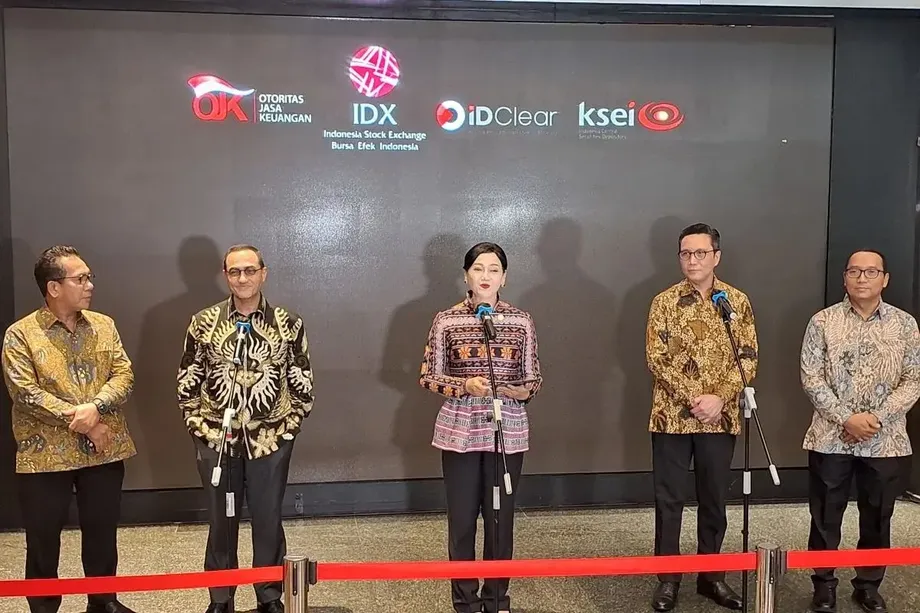
Indonesian authorities have tightened disclosure requirements and outlined plans to increase minimum free floats. On October 16, the regulator also announced sanctions linked to alleged manipulation in three stocks. MSCI's consultation seeks evidence that improvements are working across the market.
India offers a comparison on public shareholding requirements. Its rules require a minimum public shareholding of 25%, increased from 10%, alongside changes to ownership disclosure and foreign investment access. India's weight in MSCI's Emerging Markets Index rose from 8.5% in 2019 to 15.3% in 2025, an increase of 6.8 percentage points. Index weights also change with share prices, company size and developments in other markets.
How the pressure could spread beyond shares
Banks estimate Indonesia's proposed removal could generate $3 billion to $6 billion in passive fund outflows. JPMorgan's estimate is $4.8 billion, while UBS warned that active investors could withdraw another $15 billion. The estimates depend on the decision and subsequent investor behaviour.
Indonesia's benchmark weight had already fallen from 1.2% at the end of 2025 to 0.46%, according to JPMorgan. Argentina's weight when it was removed was 0.12%. Indonesia's current share is therefore about 3.8 times Argentina's at removal, giving its exclusion a larger starting footprint in the benchmark.
The October 16 reaction reached currencies and government debt. The rupiah weakened past Rp18,000 per US dollar. Government bond yields rose, with the yield on debt maturing in one year up 9.1 basis points to 6.8%, and the yield on debt maturing in 10 years up 3.2 basis points to 7.28%. A basis point is one hundredth of a percentage point.
Bond prices fall as yields rise. A sustained increase in yields can raise the cost of new government borrowing, while a weaker rupiah makes imports priced in dollars more expensive. Indonesian equities had already experienced Rp110.7 trillion in foreign outflows during the year.
Companies could also face more expensive financing. Citi warned that difficulties raising money for companies linked to the state could leave the government carrying more spending itself or reducing investment.
Irman Faiz, an economist at Bank Danamon Indonesia in Jakarta, described the main channel through which the shock could reach the economy:
We expect the broader economic impact to be predominantly indirect, with external financing representing the most immediate transmission channel.
Indonesia's immediate task is to demonstrate reliable ownership information, credible trading and effective enforcement before the consultation closes. Argentina's restrictions, Russia's blocked access and Pakistan's trading freeze show the practical issues MSCI has acted on before. Indonesia's decision will turn on whether investors can use its market with confidence under the conditions MSCI is examining.
Key Points
- Indonesia remains an Emerging Market while MSCI consults on a move to Standalone.
- Feedback is due April 30, 2027, with a final decision expected by June 30, 2027.
- Standalone indexes are excluded from MSCI's broad Emerging Markets and Frontier Markets indexes.
- Argentina became Standalone in November 2021 after prolonged capital controls.
- Russia became Standalone in March 2022; its dedicated MSCI indexes ended in March 2023.
- Pakistan moved directly to Standalone in December 2008, then entered Frontier in May 2009.
- Banks estimate Indonesia could face $3 billion to $6 billion in passive outflows if removal proceeds.