Government Agrees to Remove Clauses as Court Review Ends
Sri Lanka's government has agreed to remove provisions on tattooing and the reporting of organised crime from its proposed Organised Crime Prevention Bill, while reducing a proposed detention period from 72 hours to 48 hours. The changes were presented during Supreme Court proceedings involving 26 petitions challenging the bill's constitutionality.
Contents
- Government Agrees to Remove Clauses as Court Review Ends
- What Is Being Removed?
- Detention Would Fall From Three Days to Two
- Why Did 26 Petitions Reach the Supreme Court?
- How the Review Unfolded
- Excise and Copyright Provisions Also Face Changes
- Parliament Is Where the Amendments Must Be Made
- What Happens After the Hearing?
- Key Points
The Supreme Court concluded the hearings on November 9, 2026, and said its determination would be communicated to the President and the Speaker of Parliament as soon as possible. The government expects to introduce its amendments during the bill's committee stage in Parliament, when lawmakers examine and change individual provisions.
Viraj Dayaratne, the lawyer representing the Attorney General, submitted a document containing proposed amendments. A bench headed by Chief Justice Preethi Padman Surasena indicated that further revisions were needed beyond those the government had already proposed. Dayaratne agreed to consider the court's suggestions and make the necessary changes.
The proposed revisions reach beyond tattoos and news publication. They also cover detention orders, provisions concerning offences under the Excise Ordinance, and copyright provisions under intellectual property law. Changes involving bail were also under consideration.
What Is Being Removed?
The Attorney General informed the court that the provisions concerning the offence of tattooing would be removed entirely. The disputed wording concerned tattoos and other marks on a person's body used to identify connections with criminal groups.
The gazetted bill text, titled Prevention of Organised Crimes, sets out the tattoo-related wording in section 4(2)(c). Section 4(2) states: "In determining whether any person is or acts as a member of an organised criminal group under subsection (1), the matters which a court may consider include, but are not limited to the following: -" Paragraph (c) reads: "whether that person adopts the style of dress, hand signs, language or tattoos used by known members of the organised criminal group;" This wording lists tattoos among matters a court may consider when determining membership of an organised criminal group.
The government also agreed to remove a provision requiring prior court approval to publish information about cases involving serious crime. That would take a proposed permission requirement out of the bill, directly affecting how information about those cases could reach the public.
Both changes concern conduct beyond the central acts of organised crime: bodily markings in one instance and publishing information in the other. Removing the clauses would narrow the activities addressed by the proposed law.
Detention Would Fall From Three Days to Two
The government told the Supreme Court that it would reduce the proposed detention period for people arrested under the bill from 72 hours to 48 hours. In everyday terms, the proposed period would fall from three days to two.
The reduction is 24 hours, or one third of the original 72 hours. For a person arrested under the proposed legislation, that is a substantial difference in the amount of time covered by this particular detention provision.
Dayaratne also informed the court that provisions concerning detention orders would be amended. A detention order is a legal direction authorising authorities to keep someone in custody. Its wording matters because it sets the conditions under which that power can be used.
Changes to detention orders and provisions concerning bail were being considered following discussions with policymakers. Bail allows an accused person to remain outside custody under conditions while a case proceeds. The detailed replacement wording for these provisions was not announced.
Why Did 26 Petitions Reach the Supreme Court?
The Bar Association of Sri Lanka was among those who filed petitions against the bill. The 26 petitions asked the Supreme Court to determine whether certain provisions were inconsistent with the Constitution.
A constitutional challenge asks whether proposed legislation fits within the country's highest legal rules. Here, the petitions concerned the legal powers and restrictions Parliament was being asked to approve, rather than a criminal case against a particular suspect.
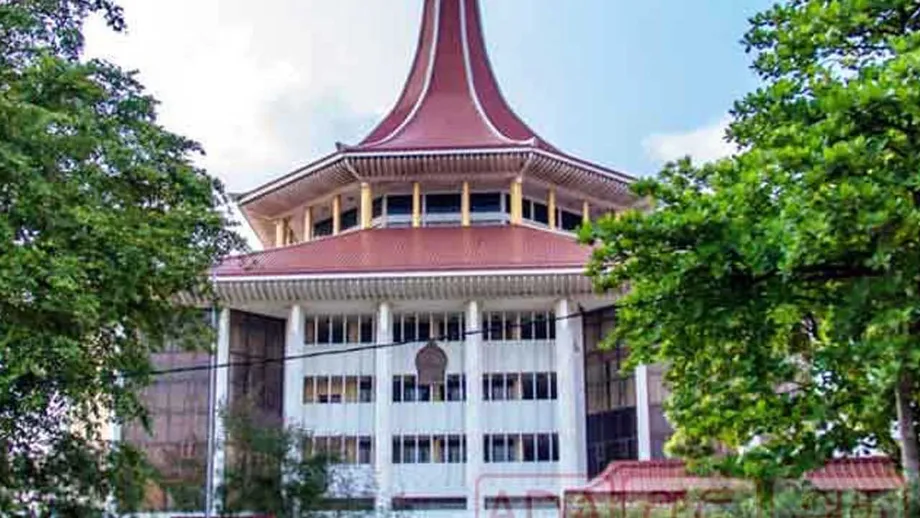
Chief Justice Preethi Padman Surasena heard the petitions alongside Justices Achala Wengappuli and Sampath Abeykoon. During the proceedings, the government presented its proposed amendments, and the bench identified the need for further changes.
The court's consideration therefore extended to both the bill being challenged and the revisions the government offered in response. Its determination is the next formal document expected in the process.
How the Review Unfolded
The bill was published in the government gazette on October 6. It appeared in a supplement to Part II of the Gazette dated October 2, 2026, issued on October 6, 2026. Gazetting makes a proposed legal text publicly available through an official publication. The constitutional proceedings subsequently brought its disputed provisions before the Supreme Court.
The hearings continued across several dates, with petitioners presenting arguments before the government outlined changes. The main steps were:
- October 6: The proposed Organised Crime Prevention Bill was published in the government gazette.
- November 4: Lawyers for the petitioners presented arguments during a hearing that continued into the evening.
- November 5: The court set this deadline for petitioners to submit written arguments on the bill's constitutionality and the proposed amendments.
- November 9, 2026: Hearings resumed, the government presented proposed revisions, and the court concluded its hearing of the 26 petitions.
The written submissions gave petitioners a further opportunity to set out their objections and address the amendments under discussion. By the end of the hearings, the government had agreed to several changes, including the shorter detention period and the removal of disputed clauses.
Excise and Copyright Provisions Also Face Changes
The Attorney General also informed the court that provisions relating to offences under the Excise Ordinance would be removed entirely. Excise law deals with duties and controls on regulated goods, including alcohol.
Copyright provisions under intellectual property law would be amended rather than removed altogether. Copyright concerns legal rights over creative works, such as books, music and films, including who may copy or distribute them.
The government's proposed approach therefore differs between these two areas. Offences under the Excise Ordinance would be taken out of the bill's relevant provisions, while the treatment of copyright would be rewritten.
These changes matter to the bill's reach. A law addressing organised crime must specify which offences fall within it, as well as what powers authorities may use. Revising that list changes the kinds of cases that can come within the proposed framework.
Parliament Is Where the Amendments Must Be Made
The government expects to introduce the revisions at the committee stage in Parliament. At that stage, lawmakers examine a bill in detail and can amend its individual clauses before the final legislative decision.
Dayaratne's submission placed the proposed changes before the Supreme Court during its constitutional review. The parliamentary stage is where the government intends to put those changes into the legislative text.
The court's request for further revisions adds another task before that process is complete. The government must address the suggestions raised by the bench alongside the amendments it had already prepared.
For people potentially affected by the legislation, the final wording will matter most: the detention period Parliament approves, the conditions attached to detention orders and bail, and the offences and publication restrictions that remain in the bill.
What Happens After the Hearing?
The Supreme Court said its determination on the bill's constitutionality would be sent to the President and the Speaker of Parliament as soon as possible. It gave no specific date for that communication or for Parliament's committee stage consideration.
The immediate sequence is therefore a judicial determination followed by parliamentary consideration of the proposed changes. The government has committed to removing several provisions, but the legislative process still has to produce the text that Parliament will decide on.
The revisions presented so far would make the bill narrower in several concrete ways. They would remove the tattooing provisions, drop the requirement for court permission before publishing information about serious crime cases, shorten the proposed detention period by a day, and change the treatment of excise and copyright offences.
The central development is the breadth of the government's response to the constitutional challenges. The proposed changes affect personal liberty, publication of case information and the range of offences covered, rather than a single isolated clause.
Key Points
- The government agreed to remove provisions concerning tattooing and prior court permission to publish information about serious crime cases.
- The proposed detention period would fall from 72 hours to 48 hours, a reduction of one third.
- The Supreme Court heard 26 constitutional petitions, including one filed by the Bar Association of Sri Lanka.
- Excise Ordinance provisions would be removed, while copyright provisions would be amended.
- The hearings concluded on November 9, 2026. The court said its determination would be sent to the President and parliamentary Speaker.
- The government plans to introduce the amendments at Parliament's committee stage.