177 guests mark a broader technology partnership
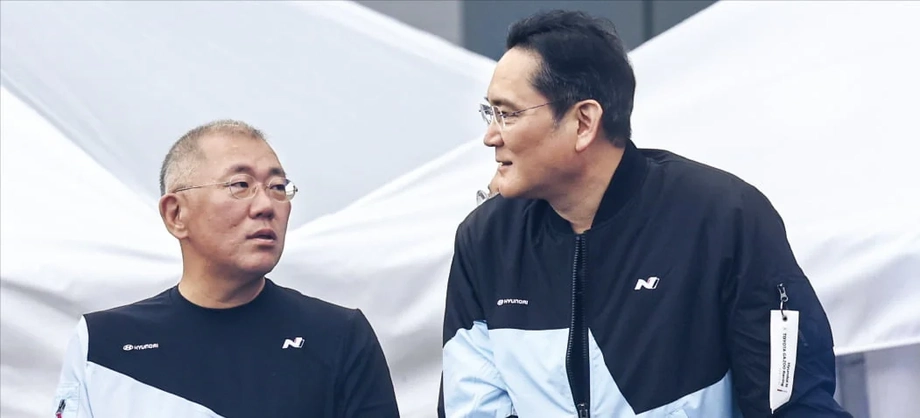
Samsung and Hyundai Motor Group are expanding their partnership from vehicle components into artificial intelligence, robotics and connected cars, bringing together 177 executives, senior managers and spouses at Samsung Electronics' Seocheon Training Center on November 9, 2026.
Contents
- 177 guests mark a broader technology partnership
- Who joined the gathering?
- How decades of contacts became business agreements
- Batteries connect electric cars and robots
- Chips and control systems support the software shift
- Connected services already reach drivers and homes
- Robotics could make cooperation flow both ways
- Factories offer a practical setting for physical AI
- Competition is pushing the groups closer
- Key Points
The gathering, called HMG Appreciation Day, followed the formation of a joint task force around April. Senior executives from both groups are working to connect Samsung's semiconductors, batteries and electronics with Hyundai's vehicles, software and robotics businesses.
The companies' existing agreements give that ambition a commercial foundation. A battery supply contract signed in 2023 covers 2026 through 2032, while connected services introduced in September 2025 and March 2026 already let customers control selected car functions from a phone and home appliances from a vehicle screen.
The next proposed step reaches into physical AI: artificial intelligence that uses cameras, sensors and machinery to understand its surroundings and act in the real world. A robot moving objects in a factory and a vehicle responding to traffic both need this connection between digital decisions and physical movement.
No new joint product, investment or major contract was announced at the event, and the companies gave no launch date for a jointly developed robot or AI platform. Their immediate commitment is to broaden cooperation across businesses that previously worked mainly through individual component contracts.
Who joined the gathering?
Samsung proposed the event to thank Hyundai Motor Group for their existing cooperation and explore further opportunities. Its theme, One Harmony for the Future, accompanied technology exhibits, a film about the companies' relationship, a musical performance and dinner.
Samsung Electronics Vice Chairman Jun Young-hyun, who leads the semiconductor division, hosted the gathering. Hyundai Motor Group Vice Chairman Jang Jae-hoon attended alongside executives responsible for research, vehicle platforms, manufacturing and group planning.
Samsung's delegation included Roh Tae-moon, head of its Device Experience division, and leaders from its chip design, foundry, battery, display and automotive electronics businesses. Hyundai's attendees included planning president Seo Gang-hyun, research and development chief Manfred Harrer and advanced vehicle platform chief Park Min-woo.
Jun described the companies as longstanding industrial partners and explained how their capabilities could fit together:
Our two companies are steadfast partners who have helped write South Korea's industrial history together. Let us bring together Hyundai Motor Group's vision for leading future mobility and Samsung Group's technological prowess, which spans everything from parts to finished products, to open up new possibilities together.
The range of executives present reflects the practical work involved. A connected vehicle or autonomous robot requires processors, communications equipment, batteries, software and manufacturing expertise to function together.
How decades of contacts became business agreements
Samsung and Hyundai's relationship stretches across three generations of their founding families. The commercial milestones became more concrete after Samsung Chairman Lee Jae-yong and Hyundai Motor Group Chairman Euisun Chung exchanged visits in 2020.
The main steps show how personal contacts developed into supplies of components and services used by customers:
- November 1985: Samsung founder Lee Byung-chul attended Hyundai founder Chung Ju-yung's 70th birthday celebration and presented a white porcelain gift.
- March 2001: Samsung Chairman Lee Kun-hee hosted Hyundai and Kia Chairman Chung Mong-koo for a private meeting at Samsung's Seungjiwon guesthouse.
- May and July 2020: Lee Jae-yong and Euisun Chung met at Samsung SDI's Cheonan plant and Hyundai and Kia's Namyang research center to discuss batteries and future mobility.
- 2023: Samsung SDI signed its first electric vehicle battery supply agreement with Hyundai. Samsung Electronics also announced plans to supply Exynos Auto V920 infotainment processors.
- September 2025 and March 2026: Home-to-Car and Car-to-Home services launched, connecting supported Hyundai and Kia vehicles with Samsung's SmartThings platform.
- Around April 2026: A joint task force began operating ahead of the November executive gathering.
The latest push changes the level at which cooperation is organised. Alongside individual supply deals, senior management is now considering how technologies from several affiliates can support shared projects.
Batteries connect electric cars and robots
Samsung SDI's 2023 agreement with Hyundai covers supplies of prismatic P6 batteries from 2026 through 2032, including production at its plant in Hungary. Prismatic batteries contain their materials inside rigid rectangular cases that can be assembled into larger battery packs.
The agreement serves Hyundai electric vehicles destined for Europe. Its seven calendar years of scheduled supply provide a longer commercial relationship than the November gathering alone suggests.
Samsung SDI supplies batteries for models including the Hyundai IONIQ 3, Kia EV2 and Genesis GV90. Jang arrived at the event in a Genesis GV90 equipped with Samsung SDI prismatic batteries, providing a visible example of the existing relationship.
Robotics adds a different engineering task. Samsung SDI, Hyundai and Kia began jointly developing batteries specifically for robots in 2025. Samsung handles materials and battery design, while Hyundai and Kia evaluate their use in robotic systems.
A robot's battery must fit its body and supply power as its motors move and handle loads. Designing the battery alongside the machine gives both sides a way to address those demands together.
Samsung SDI also displayed solid-state batteries at the gathering. These use a solid electrolyte, the material through which charged particles move inside a battery, instead of a liquid electrolyte. The technology is part of the groups' discussions about future electric vehicles as well as Samsung's wider mobility portfolio.
Chips and control systems support the software shift
Samsung's exhibition covered much of the electronics needed inside a modern vehicle. Its semiconductor division showed automotive chips, while Samsung Electro-Mechanics presented camera modules and automotive multilayer ceramic capacitors, known as MLCCs.
Cameras give a vehicle visual information about its surroundings. MLCCs are small electronic components that help manage electrical energy and keep circuits operating steadily. Both sit within a much larger system of sensing, computing and control.
Samsung Display and Samsung Harman presented vehicle displays, central control units and telematics control units. Central control units coordinate electronic functions, while telematics equipment connects a vehicle to outside networks and services.
Hyundai's transition toward software-defined vehicles makes those components increasingly relevant. In these vehicles, software controls more functions, and updates can improve or expand capabilities after purchase.
The Exynos Auto V920 supply plan announced in 2023 provides a specific example of chip cooperation in infotainment, the system handling functions such as navigation and entertainment. Samsung's foundry business has also reportedly secured an order to manufacture Hyundai autonomous driving chips.
Hyundai and its software company 42dot are developing the PLEOS platform and Gleo AI voice assistant. Combining the vehicle software effort with processors, displays and communications systems creates several possible points of cooperation beyond supplying individual parts.
Connected services already reach drivers and homes
Samsung, Hyundai and Kia have already put one part of their connected technology strategy into customers' hands. Home-to-Car, launched in September 2025, allows users to check vehicle status and operate selected functions through the SmartThings app.
Supported functions include climate control, remote starting, locking and unlocking doors, and starting or stopping electric vehicle charging. The service connects the vehicle to the same app that customers use for compatible home devices.
Car-to-Home followed on March 23, 2026. It lets drivers operate supported SmartThings appliances from a vehicle screen, including air conditioners, air purifiers, robot vacuums and lights.
Location based routines can prepare lighting and air conditioning as the car approaches home. After departure, a routine can switch off selected devices and start a robot vacuum.
At launch, Car-to-Home supported Hyundai and Kia vehicles produced after November 2022 with the connected car Navigation Cockpit, or ccNC, infotainment platform. Samsung planned software updates to extend availability.
For customers, this makes the partnership tangible: a car can become another place from which to manage the home, while a phone can manage selected vehicle functions. The groups' broader ambition is to extend these connections across vehicles, homes and eventually city systems.
Robotics could make cooperation flow both ways
Hyundai Motor Group brings robotics expertise through Boston Dynamics, including its Atlas humanoid robot. Samsung contributes processors, memory, cameras, sensors, batteries and AI technology that operates directly on a device.
Processing AI on a machine means it can interpret some information locally rather than sending every task to a remote computer. The proposed cooperation would combine those capabilities with Boston Dynamics' expertise in robot movement, manufacturing and control.
Samsung also established a dedicated robotics organisation, Samsung RX, in summer 2026. Its plans begin with industrial environments and could later extend to shops and homes.
Potential supplies could move in both directions. Samsung SDI batteries and Samsung Electro-Mechanics cameras could be used in Hyundai's robots. Hyundai Mobis could supply actuators for Samsung humanoids. An actuator turns a control instruction into physical movement, such as bending a robotic joint.
Professor Kim Pil-soo of Daelim University identifies components such as batteries with high energy capacity and actuators as areas requiring close technical cooperation. Their design must match the machine that will use them, giving suppliers and robot developers a reason to work together early.
Factories offer a practical setting for physical AI
Hyundai's factories provide a possible setting for combining the groups' technology. Areas under consideration include linking Samsung's private 5G networks and AI systems with Hyundai's Singapore innovation center, HMGICS, and smart factories in South Korea.
A private 5G network gives a factory dedicated wireless communications for connected equipment. Combined with sensors and AI, it can help machines exchange information as production or logistics work takes place.
Samsung's algorithms and Boston Dynamics' robotic control technology could also support shared software platforms for factory automation. The longer ambition extends to service robots in commercial spaces and homes.
The battery development agreement offers a concrete starting point because it already divides work between the companies. Broader robotics cooperation would bring together more parts of the machine: its power supply, electronic processing, sensing equipment and moving joints.
Competition is pushing the groups closer
Chinese manufacturers and global technology companies provide the competitive backdrop to the alliance. BYD competes in electric vehicles and batteries, while Midea, Haier and BOE challenge South Korean companies in appliances and displays.
Tesla is developing autonomous driving and humanoid robotics, while Google and Apple have extensive AI and operating system businesses. Samsung and Hyundai are responding by seeking closer links between their manufacturing strengths and the software that increasingly controls vehicles and machines.
The proposed partnership covers several layers of a product at once. Samsung can supply electronic components and systems; Hyundai can contribute vehicle engineering, manufacturing sites, mobility software and robotic platforms. Working across those layers gives the companies more opportunities to design parts around a shared application.
For drivers, the existing results include batteries, automotive electronics and connected home controls. For manufacturing operations, the proposed next step is equipment that can sense conditions, make decisions and carry out physical work. The joint task force is the mechanism intended to turn those separate capabilities into coordinated projects.
Key Points
- Samsung hosted 177 executives, managers and spouses at HMG Appreciation Day on November 9, 2026.
- A joint task force began operating around April to broaden cooperation across AI, vehicles and robotics.
- Samsung SDI's first Hyundai electric vehicle battery agreement covers supplies from 2026 through 2032.
- Home-to-Car launched in September 2025, followed by Car-to-Home on March 23, 2026.
- Samsung SDI, Hyundai and Kia are already developing batteries specifically for robots.
- Further possibilities include robotic components, factory automation and closer integration of vehicle software and electronics.
- The November gathering announced a broader strategic direction without a new joint product, major contract or specific investment plan.