A nuclear offer tied to financing, skills and technology
South Korea has offered to share about 50 years of commercial nuclear power experience with Vietnam, including for the Ninh Thuan 2 project, as Hanoi seeks a partner able to provide technology, affordable loans and training for Vietnamese engineers.
Contents
- A nuclear offer tied to financing, skills and technology
- Where Ninh Thuan 2 stands
- The price of a partnership
- How the programme returned
- Why electricity demand drives the decision
- Training and safety are central to the offer
- Smaller reactors and smarter factories
- Turning research into useful products
- The next dates to watch
- Key Points
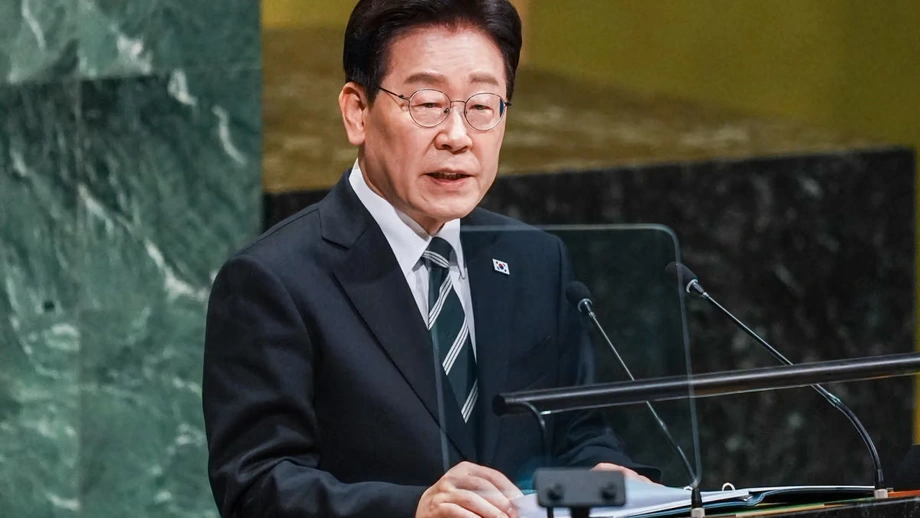
At a meeting on November 6, 2026, Vietnamese Minister of Science and Technology Vu Hai Quan and South Korean Ambassador Lee Miyon discussed nuclear cooperation alongside artificial intelligence, intellectual property and research. According to the ministry's November meeting statement, Lee said nuclear plants produce about 30% of South Korea's electricity and expressed interest in sharing technology and operating experience with Vietnam.
The offer comes with a demanding set of Vietnamese requirements. Hanoi wants a nuclear partner to support local participation of 30% to 60%, provide credit at interest rates below 3% and prepare workers through advanced training and experience at operating plants. South Korea has said it could provide sovereign loans covering up to 85% of the project's investment.
The talks also have a near deadline beyond the nuclear programme: the second phase of the Vietnam Korea Institute of Science and Technology, known as VKIST, is expected to finish in late November or early December 2026. Quan wants cooperation to move from buildings and agreements toward research projects and products that businesses can use.
For Vietnam, the nuclear discussion is therefore about more than buying a power station. Financing, domestic industrial capacity, safety regulation and a trained workforce must develop together if the country is to meet its target of completing its two Ninh Thuan plants by 2035.
Where Ninh Thuan 2 stands
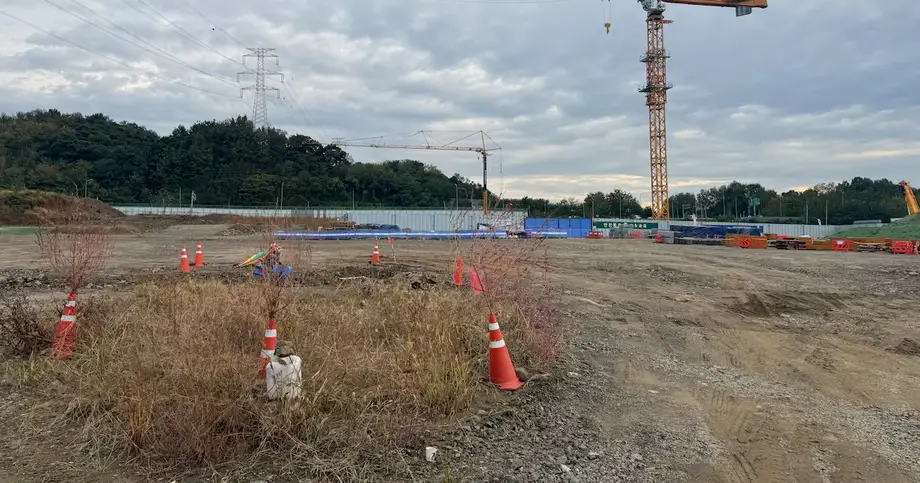
Ninh Thuan 2 is planned at Vinh Hai, near the separate Ninh Thuan 1 site at Phuoc Dinh. Vietnam assigned PetroVietnam as the investor for the second project and Electricity of Vietnam, or EVN, for the first in February 2025.
Japan withdrew from Ninh Thuan 2 in January 2026, citing the tight construction timetable, according to the World Nuclear Association's Vietnam country profile, updated on August 12. France, South Korea and the United States subsequently expressed interest.
On July 2, Deputy Minister of Industry and Trade Nguyen Hoang Long said negotiations between Korea Electric Power Corporation, or KEPCO, and PetroVietnam offered a basis for submission to Vietnamese authorities. The companies had signed a memorandum on April 22 covering potential nuclear development cooperation, including supply chains and project viability analysis.
Vietnam had planned to choose its partner during the third quarter of 2026, which ended in September. The November ministry statement recorded South Korea's interest without announcing a partner selection, an agreed reactor design or final financing terms.
The price of a partnership
Vietnam's requirements put three linked issues at the centre of negotiations: safe technology, financing and people. A supplier must commit to transferring technology and achieving local participation of 30% to 60%, meaning Vietnamese companies would undertake a substantial portion of the project's work or supply.
Hanoi also wants highly concessional loans, meaning borrowing on more favourable terms than ordinary commercial credit. Its stated requirements include interest below 3% and extended grace periods suited to the long period before a nuclear plant begins generating revenue.
South Korean Vice Minister Kang Kamchan said in July that Seoul was prepared to provide sovereign loans for up to 85% of project investment. The percentage describes how much of the investment could be financed; the interest rate describes the cost of borrowing. Vietnam needs both to fit its requirements.
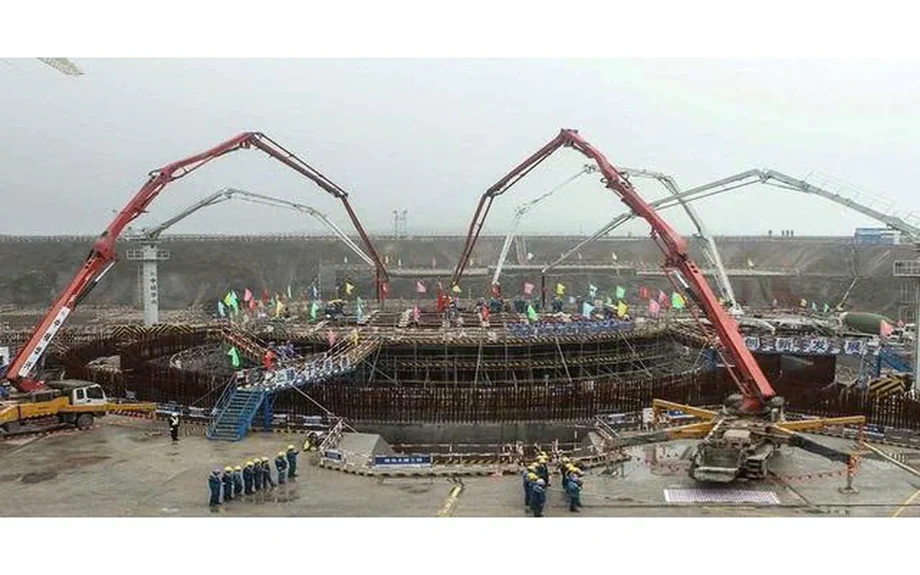
Kang also proposed cooperation involving Vietnam, South Korea and the United Arab Emirates, combining Korean nuclear technology with Emirati financial strength and energy resources. He cited the Barakah nuclear project in the UAE, South Korea's first overseas nuclear plant project, where construction began in 2009 and electricity generation started in 2020.
Vietnam has created a legal mechanism to move negotiations faster. Resolution No.189/2025/QH15, adopted on February 19, 2025, allows an intergovernmental agreement to be negotiated and signed while the project's investment policy is being revised, including before adjustments to total capital are finalised.
Deputy Minister Long explained the purpose of that mechanism during the July discussions:
"This special mechanism allows multiple procedures to be carried out simultaneously, thereby shortening the overall project implementation timeline," he said.
How the programme returned
Vietnam's latest negotiations follow a long interruption. The National Assembly postponed the nuclear programme indefinitely in November 2016, citing economic conditions and lower electricity demand projections. In November 2024, Resolution 174/2024/QH15 reversed that decision and restarted nuclear development in Ninh Thuan.
The main steps since the restart show how legislation, international agreements and commercial discussions have advanced together:
- November 2024: The National Assembly agreed to restart the Ninh Thuan nuclear programme.
- February 19, 2025: Resolution No.189/2025/QH15 introduced special investment procedures.
- June 2025: Vietnam passed a new Atomic Energy Law, effective from January 2026.
- January 2026: Japan withdrew from Ninh Thuan 2.
- March 23, 2026: Vietnam and Russia signed an intergovernmental agreement for Ninh Thuan 1.
- April 22, 2026: KEPCO and PetroVietnam signed their nuclear cooperation memorandum.
- November 6, 2026: Quan and Lee discussed sharing Korean nuclear expertise, including for Ninh Thuan 2.
The March agreement assigned Russia's Rosatom the development of Ninh Thuan 1 using two VVER-1200 reactors. Vietnam's strategy adopted that month targets completion of both Ninh Thuan plants by 2035 and nuclear generation of around 6% to 8% of national electricity by 2050.
Why electricity demand drives the decision
Vietnam generated 274 terawatt hours of electricity in 2023, according to figures from the International Energy Agency and World Bank reproduced by the World Nuclear Association. One terawatt hour equals one billion kilowatt hours, the unit commonly used on electricity bills.
Coal supplied 123 terawatt hours, or 45% of generation, while hydropower supplied 80.6 terawatt hours, or 29%. Solar and natural gas each supplied about 10%, and wind about 4%. Vietnam also imported a net 3.5 terawatt hours.
Electricity use has been growing at about 10% annually. Consumption per person reached roughly 2,400 kilowatt hours in 2023, more than eight times its level in 2000. Those figures explain why Hanoi is considering nuclear power alongside its existing energy sources: a growing economy needs additional electricity as well as the ability to supply it reliably.
South Korea's current nuclear share offers a useful comparison with Vietnam's ambition. The roughly 30% cited by Ambassador Lee is about four to five times Vietnam's target share of 6% to 8% for 2050. Vietnam is planning a smaller proportional role, even while undertaking the substantial task of establishing commercial nuclear generation.
Training and safety are central to the offer
Vietnam's nuclear regulator estimated in July 2026 that the two Ninh Thuan projects would need about 3,900 people for direct operations by 2030, including around 670 university graduates requiring training abroad. Those graduates represent roughly 17% of the projected operational workforce.
Quan asked South Korea to exchange experience and technology, particularly in radiation protection, nuclear safety and specialist training. His ministry has also submitted a proposal on developing atomic energy and the associated industry to the competent authorities.
Vietnam's revised Atomic Energy Law strengthens the framework for building and operating nuclear facilities, regulatory oversight and workforce development. Preparing a nuclear programme means training people who can operate equipment as well as those responsible for checking safety and enforcing rules.
South Korea and Vietnam already have a foundation for this work. They signed a nuclear cooperation agreement in March 2012, began a joint preliminary feasibility study in June 2013 and signed a KEPCO–PetroVietnam workforce development memorandum in August 2025.
Terrence Matsuo, a nonresident fellow at the Korea Economic Institute of America, argued in a June policy analysis that South Korea's prospects depend heavily on financing, fuel supply and meeting Hanoi's timetable. He recommended stronger workforce training and exchanges. He also identified differing exposure to international sanctions as a factor in competition with Russia, whose nuclear industry has an established construction and fuel supply business.
Smaller reactors and smarter factories
Nuclear cooperation extends beyond the proposed large plants. At an October 1 meeting in South Korea, Quan and Deputy Prime Minister Bae Kyung-hoon, who also heads South Korea's science and information technology ministry, discussed joint research on small modular reactors, semiconductor chips and Physical AI.
The Vietnamese ministry's October cooperation statement records those proposals. Small modular reactors, or SMRs, are smaller nuclear generating units designed around modular construction. Vietnam's March energy strategy calls for at least one project using SMR technology, alongside its large plant programme.
Physical AI refers to artificial intelligence used in machines that interact with the physical world, such as robots or industrial equipment. That research connects with another proposal raised in both October and November: a demonstration centre for a smart factory in Vietnam, where businesses could examine applications of AI and digital production systems.
Bae said South Korea planned to double its AI development budget in 2027 and pursue its own AI models, large data centres, semiconductors and Physical AI. Lee said in November that South Korea aims to become one of the world's top three AI powers.
The next proposed steps include forming an AI working group, identifying organisations to carry out the work and moving toward a research and development agreement. South Korea is also assessing Vietnamese needs for AI support through official development assistance, or ODA, government funding intended to support development.
Turning research into useful products
VKIST is expected to provide an institutional base for more applied cooperation. With its second phase nearing completion in late November or early December, Quan wants the institute's attention to move from infrastructure investment to research and products with practical uses. Lee said South Korea would help prepare the conditions for VKIST to operate sustainably.
The two countries signed a broader science and technology cooperation framework in April 2026. Quan has also proposed bringing Korean policy specialists to Vietnam to share experience in designing and implementing science and technology strategies.
Intellectual property is another part of the effort to turn research into economic activity. The November talks covered patent commercialisation, intellectual property data, AI applications, protection of rights and action against counterfeit goods. Commercialisation means finding a practical market for an invention, for example through licensing it to a manufacturer.
Lee proposed examining South Korea's K-Brand initiative to protect company brands. Quan also suggested studying Korea's model of developing a distinctive product for each locality or commune. Both proposals connect technological cooperation with the ability of businesses and communities to sell recognisable, protected products.
The next dates to watch
Vietnamese students account for about 25% of international students studying science and engineering in South Korea, according to Lee. That is roughly one in four of the foreign students in those fields, giving the countries an existing pool of people familiar with both education and research environments.
The South Korean embassy plans events in December 2026 to connect Vietnamese researchers and technology specialists who studied in South Korea, alongside a Vietnam–South Korea startup networking day. The planned activities would bring businesses into contact with investment funds and technology partners.
Quan proposed meetings every three to four months to review progress, resolve difficulties and agree on new work. Such a schedule would give both sides recurring opportunities to check whether working groups, training arrangements and research proposals are moving into implementation.
Vietnam and South Korea also aim to renew a mutual recognition agreement for information technology and telecommunications in 2027. The discussions cover recognising test results and product certification, which can reduce repeated assessment when products enter another market. Alongside VKIST's approaching completion milestone, these dates provide concrete tests of the broader promise to turn bilateral commitments into working programmes.
Key Points
- South Korea offered nuclear technology and operating experience, including cooperation on Ninh Thuan 2, at talks on November 6, 2026.
- Vietnam wants 30% to 60% local participation, loans at interest below 3% and extensive workforce training.
- South Korea has proposed sovereign lending covering up to 85% of project investment.
- Russia is developing Ninh Thuan 1; Vietnam targets completion of both Ninh Thuan plants by 2035.
- The two projects are expected to need about 3,900 people for direct operations by 2030.
- Cooperation also covers SMRs, AI, smart factories, intellectual property and applied research through VKIST.
- Research networking events are planned for December 2026, with renewal of a technology mutual recognition agreement targeted for 2027.