A costly option unavailable to most Tesla owners
Tesla charged South Korean buyers 9.043 million won for Full Self-Driving (Supervised), yet only about 20% of its vehicles registered in the country can legally use the software, according to parliamentary testimony by Tesla Korea country manager Seo Young-deuk. A consumer group plans to file a deceptive marketing complaint on November 5, 2026, seeking restrictions on advertising, administrative fines and a referral to state investigators.
Contents
- A costly option unavailable to most Tesla owners
- Why the factory location matters
- How Tesla's sales boom widened the gap
- What buyers paid and what the advertising promised
- The dates behind the certification dispute
- What the consumer group wants regulators to do
- A refund lawsuit has already been dismissed
- What Full Self-Driving requires from a driver
- Why the dispute matters beyond South Korea
- Key Points
Citizens United for Consumer Sovereignty alleges that Tesla continued selling and promoting the driver assistance package despite knowing that most locally sold vehicles were ineligible. The Korea Fair Trade Commission (KFTC) has already opened an investigation into the advertising and received written responses from Tesla.
The dispute turns on where the cars were manufactured and which safety approval process applies. Vehicles made in the United States can use FSD through recognition of American safety standards under a trade agreement, according to the complaint. Most Teslas sold in South Korea come from Shanghai and require a different approval route.
Tesla data submitted to the National Assembly show how large that gap has become: 99% of new Teslas sold in South Korea in 2025 could not legally use FSD. Tesla did not respond to requests for comment on the allegations.
Why the factory location matters
Seo told lawmakers in October that the roughly 20% of registered Teslas eligible to use FSD were vehicles manufactured in the United States. The complaint says those cars meet American vehicle safety standards recognised by South Korea under its free trade agreement with the United States.
Vehicles manufactured in China do not benefit from the same arrangement. For their owners, access depends on securing approval under the applicable South Korean rules. The problem therefore reaches beyond installing software: the vehicle and its driving functions must have legal permission to operate.
South Korea's transport ministry told a lawmaker that FSD does not comply with local safety requirements, including a rule requiring drivers to keep their hands on the steering wheel. Tesla began seeking certification for vehicles manufactured in China only recently, after collecting payments for the software for more than three years.
The ministry's position places a concrete safety requirement at the centre of the delay. Customers who bought the option for an ineligible vehicle face a wait tied to regulatory approval, rather than simply the arrival of a software update.
How Tesla's sales boom widened the gap
Tesla has sold more than 170,000 vehicles produced in Shanghai in South Korea since 2023, according to company figures submitted to the National Assembly. Sales of vehicles manufactured in China that could not legally use FSD grew more than fivefold between 2023 and 2025.
The 2025 sales figures show that just one in every 100 new Teslas sold in the country was legally eligible for FSD, while 99 were not. Seo's estimate that about 20% of registered Teslas could use it covers the broader fleet, including cars bought in earlier years. The two percentages describe different groups of vehicles.
Tesla surpassed BMW in 2026 to become South Korea's leading imported car brand, according to import data. That growth has made the eligibility issue relevant to a much larger population of owners, even as the proportion of newly sold cars able to use FSD remained very small.
The number of customers who actually paid for FSD on ineligible vehicles, and the amount Tesla collected from them, remain unknown. The consumer group alleges that tens of thousands were misled.
What buyers paid and what the advertising promised
Tesla marketed FSD in South Korea for years, often charging a single payment of 9.043 million won. In August 2026, it switched to a subscription costing 150,000 won a month.
At that monthly rate, 60 months of subscriptions would cost 9 million won, close to the former purchase price. The comparison shows the size of the original expense: buyers paying upfront committed roughly five years' worth of the current monthly fee.
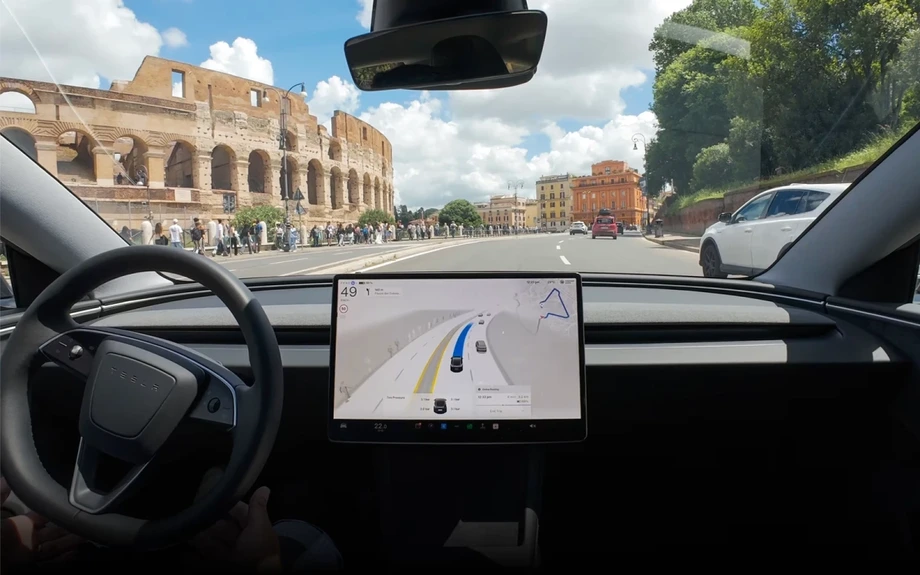
The complaint alleges that Tesla promoted FSD in 2025 as "coming soon" and released a demonstration video filmed in South Korea without clearly explaining that only a small fraction of the cars it was selling could legally use the system. It says the company knew about the restrictions but continued marketing the option to all customers.
Choi Young-suk, who leads automotive issues at Citizens United for Consumer Sovereignty, described the group's objection in terms of what buyers received for their money:
Tesla generated substantial revenue by selling an expensive driver-assistance system to mass-market buyers who cannot use it for even a single day.
The group's central allegation concerns the information customers received before paying. A demonstration on South Korean roads could show the technology operating locally, while buyers still needed a clear answer about whether their particular vehicle was eligible.
The dates behind the certification dispute
Seo's parliamentary testimony put Tesla's approval efforts under scrutiny. At an October 8 hearing, he said the company had not formally requested FSD testing from the transport ministry. Tesla applied for certification two weeks later, in late October.
The sequence brings together years of sales, the advertising campaign, the existing regulatory investigation and the company's recent application:
- Since 2023: Tesla sold more than 170,000 vehicles manufactured in Shanghai in South Korea.
- During 2025: Tesla promoted FSD as "coming soon," according to the consumer group's complaint. FSD became available in South Korea late that year for eligible vehicles.
- Earlier in 2026: The KFTC opened an investigation into Tesla's FSD advertising.
- August 2026: Tesla moved to a subscription priced at 150,000 won a month.
- October 8, 2026: Seo told lawmakers Tesla had not formally requested FSD testing from the transport ministry.
- Late October 2026: Tesla applied for certification for vehicles manufactured in China.
- November 5, 2026: The consumer group plans to submit its complaint to the KFTC.
No date has been announced for a certification decision or a conclusion to the advertising investigation.
What the consumer group wants regulators to do
Citizens United for Consumer Sovereignty is asking the KFTC for a temporary cease-and-desist order covering FSD marketing to owners and buyers of ineligible vehicles. In practical terms, the requested order would stop that promotion while the dispute is addressed.
The group also wants administrative fines and a referral to state investigators. Those requests concern different forms of enforcement: restrictions on advertising, financial penalties and possible further investigation.
A KFTC official confirmed that the commission began examining Tesla's FSD advertising earlier in 2026 and had received the company's written responses. The official declined to provide further details. The planned complaint would add the consumer group's allegations and requested remedies to an issue already under regulatory review.
Tesla's certification application concerns permission to use FSD in the affected vehicles. The advertising investigation concerns how the company described and sold that capability to customers. For owners, both processes matter: one addresses access to the feature, while the other addresses the sales practices surrounding it.
A refund lawsuit has already been dismissed
The Seoul Central District Court dismissed a lawsuit on October 29 brought by 88 Tesla owners seeking refunds for the FSD option. The owners argued that Tesla had failed to deliver the driver assistance system, which was not activated in South Korea until late 2025.
The lawsuit was filed in 2024. The owners said Tesla Korea had been unable to implement FSD in South Korea for more than eight years since it began selling the option around March 2017.
The court rejected their claim, saying regulatory and legal restrictions had limited Tesla's ability to introduce further functions. Its decision shows that restrictions on rollout have already been considered in a dispute over customer payments.
The court found that Tesla had not breached its contractual obligations: the FSD option did not promise fully autonomous driving without human intervention, known as Level 5 automation, and Tesla had already supplied some of the package's functions. Further features depended on technological advances and regulatory approvals, and buyers had been aware that some could take considerable time to become available.
The court also found that Tesla had supplied basic Autopilot and Enhanced Autopilot functions, while a recent software update had added traffic-light and sign recognition and city-driving capabilities to older vehicles equipped with Hardware 3 computers. It held that Tesla could not be held responsible for delays caused by compliance with domestic and overseas regulations.
The consumer group's planned complaint focuses on deceptive marketing, including the alleged failure to clearly disclose which vehicles were eligible. Refund pressure is a financial risk for Tesla, while the remedies requested in this complaint are a marketing halt, administrative fines and referral to investigators.
What Full Self-Driving requires from a driver
Full Self-Driving (Supervised) is a driver assistance system that requires active human supervision. The person behind the wheel must remain attentive and responsible for monitoring the vehicle. The product name sits alongside years of promises by Tesla chief executive Elon Musk that Teslas would become fully driverless.
South Korea's requirement for drivers to keep their hands on the wheel is one of the specific rules cited by the transport ministry. Supervision describes the driver's responsibility; certification determines whether the system can legally be used in a particular vehicle in the country.
For a customer considering the option, the immediate practical issue is eligibility. Paying for the software and owning a Tesla are only part of the transaction. The vehicle's manufacturing origin and the applicable approval process also determine access.
Why the dispute matters beyond South Korea
Tesla has sought to expand FSD beyond North America, including in Europe, where it has pressed regulators for permission to introduce the technology. South Korea illustrates how international software sales depend on local approval rules as well as the company's ability to develop and distribute a product.
FSD gives Tesla a way to earn money after selling a vehicle, through upgrades and recurring subscriptions. Advertising restrictions could limit its ability to sell that option in South Korea. Refund demands would create another potential cost, particularly if customers in other markets with vehicles manufactured in China pursued similar claims.
For South Korean owners, the immediate stakes are more direct: whether a feature they paid for will become usable, and whether regulators decide the sales pitch adequately explained the restrictions. Tesla's recent certification application and the KFTC's existing investigation now place those issues before two different regulatory processes.
Key Points
- A consumer group plans to file a deceptive marketing complaint against Tesla on November 5, 2026.
- Tesla Korea's country manager said about 20% of registered Teslas could legally use FSD, covering vehicles manufactured in the United States.
- Company data show 99% of new Teslas sold in South Korea in 2025 were ineligible.
- FSD previously cost 9.043 million won upfront. Tesla switched to a monthly subscription of 150,000 won in August 2026.
- The KFTC already has an advertising investigation underway, and Tesla applied for certification for vehicles manufactured in China in late October.
- The group seeks a temporary marketing halt, fines and referral to state investigators.