Shenzhen talks would bring three nuclear powers to one table
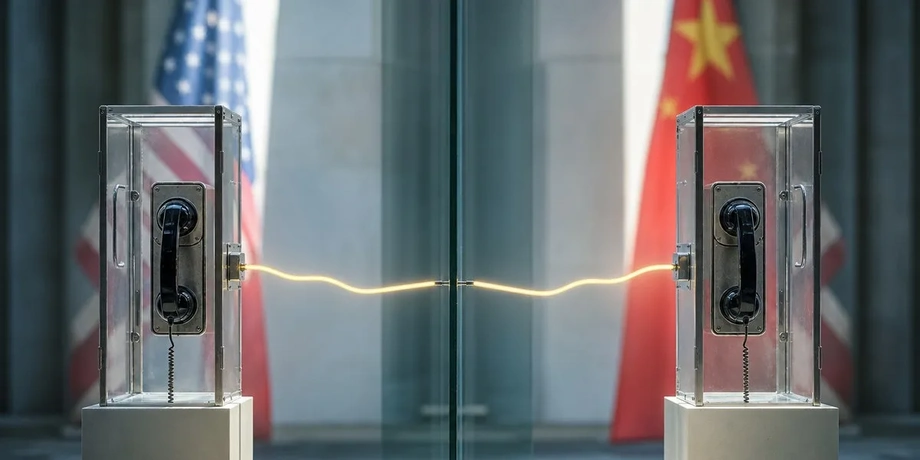
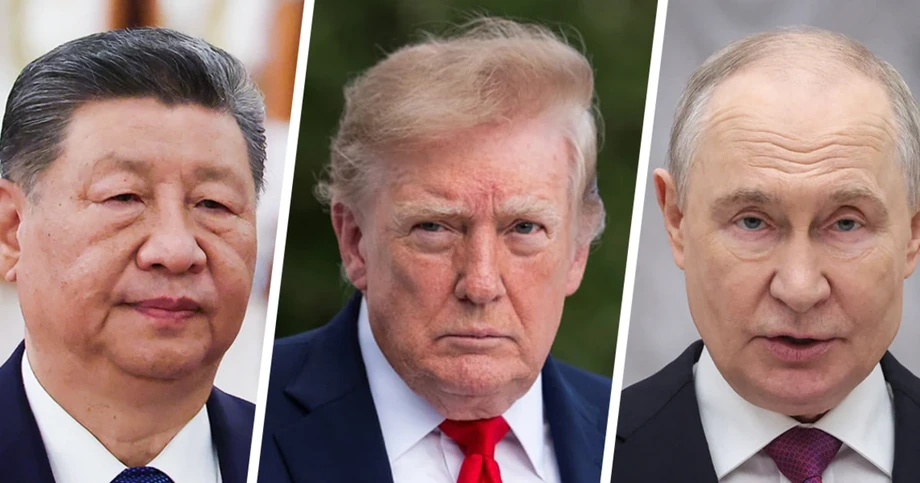
President Donald Trump plans to meet Chinese President Xi Jinping and Russian President Vladimir Putin in Shenzhen on November 19 for the first trilateral meeting between the leaders of the three countries, according to the White House. Washington wants nuclear arms reductions and the war in Iran on the agenda, while warning that no agreement is expected.
Contents
- Shenzhen talks would bring three nuclear powers to one table
- Why Washington expects a beginning rather than a deal
- China resists joining talks as New START expires
- Iran is on the agenda, while Ukraine divides expectations
- Kyiv fears decisions without Ukraine
- Xi and Putin bring a much deeper partnership
- Trade commitments will test the Trump-Xi meeting
- Manila comes before the Shenzhen summit
- A security gathering could overshadow APEC
- Key Points
The announcement, made on Friday, November 13, puts an unusual security meeting alongside an Asia-Pacific Economic Cooperation summit bringing together 21 economies. Trump is scheduled to meet Xi separately for talks and a working lunch on Thursday afternoon before the gathering with Putin at the conclusion of his China visit.
White House spokesperson Olivia Wales described the planned meeting and Trump's nuclear priorities during a call with reporters.
The president has made it clear that, among other topics, he will discuss the reduction of nuclear weapons in the world. This proliferation, President Trump believes, is very dangerous.
Beijing and Moscow had not publicly confirmed their participation when Washington announced the plans. The White House itinerary places the gathering after Trump's Thursday meeting with Xi, although it has not given an exact time.
All three leaders attended the G20 summit in Osaka in 2019 without meeting as a group. Bringing them together now would create a new diplomatic format at a moment when Washington and Moscow have lost their last major nuclear arms treaty and China is expanding its much smaller arsenal.
Why Washington expects a beginning rather than a deal
A senior U.S. official described the planned conversation as an opening step, with the administration seeking to draw China into discussions that Washington and Moscow have conducted for decades.
We do not expect to get to any kind of agreement. I would characterize this as the entry point, the first conversation, certainly at the leader level, between these countries.
The Pentagon estimates that China has more than 600 nuclear warheads, compared with inventories exceeding 5,000 each for the United States and Russia. Washington's concern combines the size of those existing arsenals with the speed of China's expansion, which a senior U.S. official described as the fastest in the world.
Those figures help explain the disagreement over who should make concessions. Washington wants a future arrangement to include all three countries. Beijing argues that the two countries holding far larger stockpiles should take responsibility for reductions first.
Nuclear arms control means negotiating rules governing weapons, their delivery systems or their deployment. Reductions are one possible result. Before leaders can agree to cuts, their governments must decide what to count, what limits to accept and how compliance would be checked. The Shenzhen meeting is being presented as a chance to begin that political conversation.
China resists joining talks as New START expires
China's Foreign Ministry stated its objection in October, saying it would be neither fair, reasonable nor realistic to ask Beijing to join trilateral nuclear disarmament negotiations at this stage. Chinese officials also described Xi as reluctant to discuss either nuclear arms or Ukraine at the proposed gathering.
A Chinese official, explaining Beijing's resistance to pausing its nuclear buildup, described the policy in stark terms.
It is a matter of survival.
New START, signed by the United States and Russia in 2010, expired in February. It limited deployed strategic nuclear warheads and launchers, meaning certain weapons and the systems used to deliver them. Those categories are narrower than the total national inventories cited in comparisons with China.
The treaty's expiry removed the last major agreed limits between the two largest nuclear powers. Putin proposed maintaining the limits for another year, while Trump called for a replacement involving China.
Trump's push for negotiations also follows his announcement in late 2025 that the United States would resume nuclear testing. The planned tests were subsequently described as involving no nuclear explosions. Around the same time, Putin instructed his government to assess the feasibility of possible nuclear weapons tests.
Iran is on the agenda, while Ukraine divides expectations
Trump intends to raise the U.S.-Israeli war against Iran with Xi and Putin. Russia has deepened its military, intelligence and diplomatic relationship with Tehran, while both Moscow and Beijing maintain ties with Iran that make them relevant to any discussion of ending the conflict.
U.S. officials did not describe a specific proposal Trump would bring or explain what assistance he might seek from the two leaders. His recent public statements have combined an interest in ending the war with threats of further military action.
Ukraine presents a more immediate disagreement about the meeting itself. A senior U.S. official said Trump did not intend to discuss Russia's war against Ukraine because Washington was pursuing a separate negotiation process involving Kyiv and Moscow.
The official explained why the administration wanted to keep that process outside the trilateral session.
China is not really a part of that track, so it doesn't seem appropriate to have the Ukraine discussion there.
Kremlin foreign policy aide Yuri Ushakov, however, said Trump and Putin would continue discussing a settlement of the Ukraine war during their encounter at APEC. Washington has scheduled no separate meeting between the two presidents, leaving their stated expectations for contact in Shenzhen at odds.
Kyiv fears decisions without Ukraine
Ukrainian President Volodymyr Zelenskyy has expressed concern that the gathering could become a platform for discussing a settlement without Kyiv. European governments also oppose decisions about Ukraine being made without Ukrainian participation.
Those concerns follow renewed negotiations elsewhere. Russian and Ukrainian delegations resumed talks mediated by the United States in Abu Dhabi earlier in the week, after a gap of more than eight months. Putin then held approximately two and a half hours of talks in Moscow with U.S. envoys Steve Witkoff and Jared Kushner.
Edgard Kagan, a former U.S. ambassador to Malaysia now at the Center for Strategic and International Studies, said the symbolism of the Shenzhen meeting mattered to Putin.
I think the key for Putin was that this was very much about signaling a desire to talk to the president and talk to Chairman Xi in a way that suggests that they're making decisions on Ukraine, which obviously the Ukrainians and the Europeans don't like.
The planned gathering has drawn comparisons with the 1945 Yalta Conference, where U.S., British and Soviet leaders agreed on occupation arrangements for Germany and Berlin and advanced plans for the United Nations. Kremlin spokesperson Dmitry Peskov rejected the comparison, saying agreements reached in Shenzhen could not be imposed on other countries.
Xi and Putin bring a much deeper partnership
Xi and Putin have met more than 40 times since Xi became China's president in 2013. Trump and Putin have met in person seven times, most recently in Alaska in August 2025, while Trump and Xi have held eight such encounters, including Xi's September visit to Washington.
China is Russia's largest trading partner. Since Russia launched its full invasion of Ukraine in February 2022, Beijing has increased purchases of Russian energy and supplied technology, including components used by Russia's weapons industry, as Western governments sought to isolate Moscow economically.
Xi and Putin declared a "no-limits friendship" before the invasion. China describes itself as neutral on the war while blaming Kyiv's Western allies for helping provoke Russia's actions. Moscow has repeatedly backed Beijing's position on Taiwan.
Trump has sought warmer relations with both leaders. He recently waived sanctions to permit sales of millions of tons of Russian diesel and blamed Ukrainian attacks on Russian refineries for rising energy prices. The Iran war has also disrupted the energy outlook that the three leaders will face in their discussions.
For Putin, appearing beside the U.S. and Chinese presidents offers a chance to present Russia as a power with an equal place in major international decisions. Xi gains the opportunity to host two historic rivals on Chinese soil.
Trade commitments will test the Trump-Xi meeting
Trump's separate meeting with Xi is expected to focus on implementing their trade agreement rather than announcing new tariff changes. One senior U.S. official described it as a stocktaking exercise after the truce in their trade dispute.
Rare earth supplies are a central American complaint. These minerals are used in products ranging from advanced electronics to defense equipment, and China plays a major role in refining them. Delays can affect manufacturers that depend on a steady supply.
A senior U.S. official said shipments were falling short of Washington's expectations.
We're not getting them at the pace and at the level that we would like to be receiving them at.
The official linked that frustration to the decision to extend the Busan agreement for two months rather than six. The shorter extension gives the governments a nearer checkpoint for reviewing implementation, and Trump is expected to raise compliance directly with Xi.
Advanced semiconductor technology is another sensitive issue. U.S. officials said American export controls were national security decisions rather than terms to be negotiated with China. Such controls determine which sensitive products companies may sell abroad and to whom.
The administration also said an espionage investigation involving an alleged Chinese intelligence agent and Nvidia executive Jensen Huang was not expected to feature in the leaders' discussions. China's Foreign Ministry spokesperson Mao Ning rejected the spying allegations and urged Washington to pursue cooperation rather than further technology restrictions.
Manila comes before the Shenzhen summit
Trump's Asia itinerary combines security meetings, trade negotiations and presidential diplomacy. His stop in the Philippines precedes the APEC meetings in southern China.
- Monday, November 16: Trump is scheduled to leave Washington for Manila.
- Tuesday, November 17: He is due to arrive in the Philippines, with a Quad leaders' meeting and a special U.S.-ASEAN summit among the planned events.
- Wednesday, November 18: Trump is scheduled to travel to Shenzhen for APEC events.
- Thursday, November 19: The itinerary includes APEC discussions, a bilateral meeting and working lunch with Xi, followed by the planned trilateral gathering.
The Quad brings together the United States, Japan, India and Australia. ASEAN is the Association of Southeast Asian Nations. The Manila meetings give Trump opportunities to discuss regional security and commerce before sitting down with China and Russia.
Trump is also expected to sign a trade agreement with Thailand and meet Philippine President Ferdinand Marcos Jr. Maritime security in the South China Sea, commercial agreements and investment are among the expected subjects.
Officials said no meeting with North Korean leader Kim Jong Un was planned. One White House official said North Korea could nevertheless arise in the discussions in China.
A security gathering could overshadow APEC
Shenzhen, a technology and manufacturing center, is hosting representatives of 21 APEC economies. China wants the event to display its economic strength and support for international trade, but the gathering of three nuclear powers could dominate attention.
Hoo Tiang Boon, a professor of Chinese foreign policy at Nanyang Technological University, said the trilateral meeting could work against Beijing's effort to present itself as a defender of multilateral cooperation. A meeting centered on three powerful countries carries a different message from a forum bringing together economies of very different sizes.
Elon Musk, the chief executive of Tesla and SpaceX, will accompany Trump during parts of the China visit. Officials said he would be the only business leader in the presidential delegation and would attend neither the official meeting with Xi nor the trilateral session.
Other American executives are expected at the APEC CEO Summit in their own capacity. Their presence will keep business interests visible, even as nuclear weapons, Iran and competing expectations over Ukraine shape the political agenda.
Washington has set a modest immediate objective: opening a conversation. Whether the gathering produces a continuing negotiation will depend on resolving the disagreement already visible before the leaders meet, particularly China's resistance to joining nuclear reduction talks.
Key Points
- The White House plans a Trump-Xi-Putin meeting in Shenzhen on November 19, after Trump's separate talks with Xi.
- Nuclear arms reductions and Iran are expected subjects, with no agreement anticipated.
- China has more than 600 nuclear warheads, compared with inventories exceeding 5,000 each for the United States and Russia.
- Washington says Ukraine belongs to a separate negotiation process; Moscow has indicated Trump and Putin would discuss a settlement at APEC.
- Rare earth supplies and implementation of trade commitments will be central to the Trump-Xi meeting.
- Trump will visit Manila before China, while Musk will join parts of the China visit without attending official talks.