Manila and Ottawa target a larger trading relationship
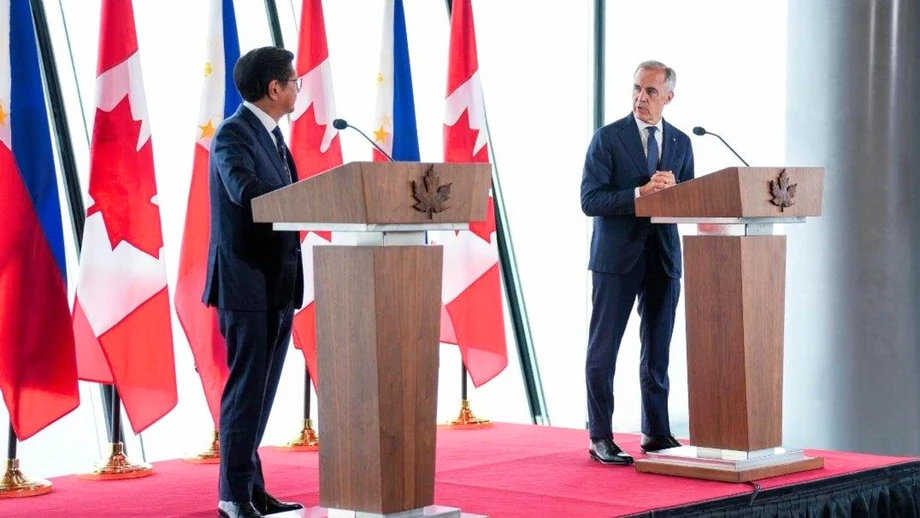
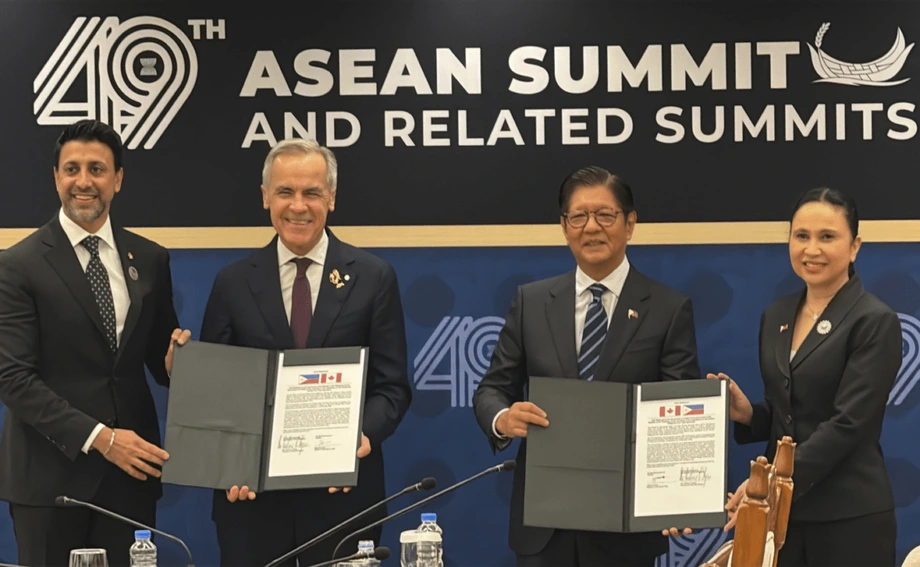
The Philippines and Canada have concluded negotiations on a free trade agreement that they aim to sign in 2027, with Ottawa seeking to roughly triple annual trade to more than $10 billion by 2035. President Ferdinand Marcos Jr. and Canadian Prime Minister Mark Carney announced the breakthrough during their November 14, 2026, meeting in Manila, alongside the 49th ASEAN Summit and Related Meetings.
Contents
- Manila and Ottawa target a larger trading relationship
- What happens between finishing talks and opening markets?
- A trading relationship with room to grow
- Pork puts the agreement to an early practical test
- How the negotiations reached this point
- Canada seeks more customers beyond the United States
- The Philippines faces a slowdown as investment matters more
- People and security ties support the commercial push
- Labour, rights and climate remain part of the debate
- Key Points
The agreement would become the Philippines' first bilateral free trade pact with a North American country once signed. For businesses, its practical importance will depend on the rules governing access to each market, investment and restrictions affecting particular products, including Canadian pork.
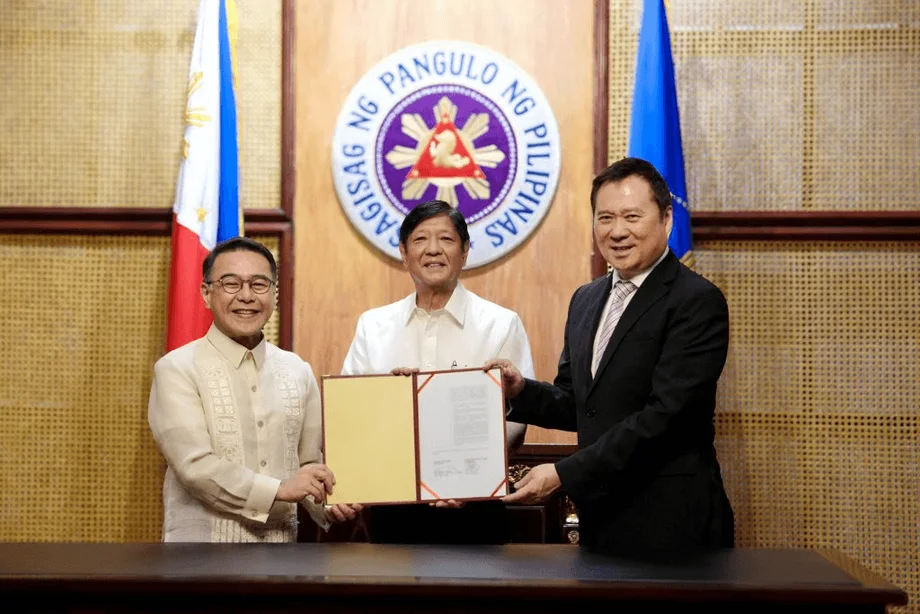
Philippine Trade Secretary Maria Cristina Aldeguer-Roque and Canadian International Trade Minister Maninder Sidhu signed the joint statement formalizing the conclusion of negotiations. Descriptions of the ceremony also identify Marcos and Carney as signing a declaration following their meeting.
Carney, Canada's prime minister, set out an ambitious timetable in prepared remarks released for the Manila visit:
Today, we have successfully concluded negotiations on a Canada-Philippines Free Trade Agreement. We will move just as fast to finalize the deal and bring it into force next year.
The announcement brings a lengthy diplomatic effort closer to a binding agreement. It also arrives at a difficult economic moment for the Philippines, where growth slowed sharply in the third quarter of 2026, and as Canada seeks more customers beyond the United States.
What happens between finishing talks and opening markets?
Canada and the Philippines have completed negotiations, while formal signing is planned for 2027. The governments are working through the remaining steps needed to bring the agreement into force, meaning the point when its obligations begin to apply.
A free trade agreement sets binding rules for commerce between its members. Those rules can cover tariffs, which are taxes charged on imported goods, as well as investment and other restrictions. Businesses need the final provisions and implementation dates to calculate how their costs and market access will change.
The full terms had not been released at the time of the announcement. No exact signing or entry date was given, and Canada's treatment under Philippine pork import restrictions remained unresolved publicly.
Canadian implementation would involve legislation in Parliament. That makes the trade pact a different kind of commitment from a memorandum of understanding or a broad declaration of partnership: it is intended to create obligations governing how the two countries trade and invest.
A trading relationship with room to grow
Bilateral merchandise trade reached $3.4 billion in 2025. Canadian exports to the Philippines included mineral ores, meat, cereals, fertilizers and aircraft. Canadian imports from the Philippines included cooking oils, leather products and rubber products.
Canada's merchandise exports to the Philippines amounted to $1.1 billion that year. Separately, Philippine export figures placed Canada as the country's 18th largest export market, receiving $1.31 billion in Philippine goods, or 1.5 percent of total Philippine exports.
The $10 billion ambition points to a much larger relationship. Using the $3.4 billion merchandise figure as a starting point, tripling that amount would produce $10.2 billion. Reaching that scale would require about $6.8 billion more in annual trade than the 2025 merchandise total.
Ottawa's target extends to 2035, giving the countries roughly a decade from that baseline to expand commerce. Lower trade barriers would be one part of that effort. Companies would still need buyers, investment and reliable arrangements for producing and shipping goods.
Carney also said the agreement could encourage investment in the Philippines and promote fair trade. For Philippine businesses, the opportunity includes selling more into Canada and attracting Canadian capital into local operations, alongside greater competition from Canadian suppliers.
Pork puts the agreement to an early practical test
Canada exported about $279 million in pork products to the Philippines in 2024, making access for meat producers a concrete commercial issue. Canadian exporters face longstanding restrictions, while Manila was considering further barriers affecting many pork imports later in November.
Producers will be watching whether the agreement changes those conditions or provides a way to resolve disputes over access. A tariff reduction lowers the tax on an import; permission to sell the product is another essential part of reaching customers.
Kyle Larkin, president and chief executive of the Canadian Meat Council, welcomed the conclusion of talks:
the conclusion of negotiations toward a Canada-Philippines free trade agreement is an encouraging development for Canada's pork industry and the longstanding relationship between our two countries.
Canadian federal officials also described commercial opportunities beyond shipping raw agricultural goods. These include technology that increases the protein content of lentils or improves pork quality. Such sales could connect Canadian expertise with food production and processing in the region.
How the negotiations reached this point
Canada and the Philippines have discussed a bilateral trade agreement since 2015. Carney and Marcos restarted the effort about a year before the Manila announcement, turning a longstanding proposal into a renewed negotiating process.
The conclusion followed a broader improvement in relations, including a strategic partnership agreed during Marcos' visit to Vancouver in July 2026. That partnership called for greater labour mobility and projects addressing climate resilience.
- 2015: Canada and the Philippines began discussions about a bilateral trade agreement.
- About a year before November 2026: Carney and Marcos restarted the effort.
- July 2026: The countries agreed on a strategic partnership during Marcos' Vancouver visit.
- November 14, 2026: The leaders announced the conclusion of trade negotiations in Manila. It was still November 13 in Canada.
- 2027: Both governments aim to sign the agreement, with Carney also seeking implementation that year.
- 2035: Ottawa's target year for annual bilateral trade to reach more than $10 billion.
Marcos, the Philippine president, described the change in relations while recalling the Vancouver visit:
We have made a great deal of progress in that visit, and we have moved on from just the diplomatic relations to strategic partnership.
Canada seeks more customers beyond the United States
Carney described the Philippines agreement as the fourth trade deal concluded since he took office, following agreements with Indonesia, the United Arab Emirates and Ecuador. The push supports his goal of doubling Canadian exports to countries other than the United States by 2035.
The United States remains far larger than these newer markets. Canadian merchandise exports there exceeded $560 billion in 2025, accounting for more than 70 percent of Canada's goods exports. Canadian merchandise exports to the Philippines were $1.1 billion in the same year.
Those figures put the scale of the task in plain terms: Canada's goods exports to the United States were more than 500 times its exports to the Philippines. Expanding trade with Manila would add another market to Canada's portfolio, while the American market would remain central to Canadian businesses.
Carney explained his government's purpose in his prepared remarks:
We are developing a dense web of reliable partners to create more opportunities for our business and more choice for Canadians, while reducing our reliance on the United States.
The Philippines pact also sits alongside negotiations for a broader Canada-ASEAN agreement. ASEAN has nearly 700 million consumers and a combined economy of about US$6 trillion. Ottawa said trade with the bloc reached $52.3 billion in 2025, about 20 percent more than the previous year.
The Philippines faces a slowdown as investment matters more
The Philippine economy grew 2.1 percent in the third quarter of 2026, a slowdown for a country long counted among Southeast Asia's faster growing economies. International institutions expected growth to recover above 5 percent in 2027.
A country of more than 110 million people offers Canadian companies a large potential customer base. For the Philippines, attracting investment and expanding export markets could help businesses find additional sources of demand during an uncertain period.
The commercial relationship already spans food, farm inputs, industrial materials and aircraft. That range matters because an agreement could affect several kinds of businesses rather than a single commodity. Changes in access could influence what firms sell, where they buy supplies and whether they invest in operations across the Pacific.
Vina Nadjibulla, cofounder of the Centre for Strategic Statecraft, argued that Canada's ambitions in Asia need to extend into production networks. She said Canada should participate more deeply in the region's supply chains, the linked businesses that make and move a product from raw material to finished goods.
Her broader view of partnership also included cooperation in defence industries, digital trade, mobility and education. Those connections could give companies and workers more lasting roles in the relationship than individual export sales alone.
People and security ties support the commercial push
Nearly one million people in Canada claim Filipino ancestry. Marcos cited the Filipino community as a foundation of the countries' friendship, giving the strategic partnership a substantial human connection alongside its trade goals.
Canada's diplomatic presence in Manila has also expanded to about 300 positions, including local staff and personnel from federal departments, provincial governments and public corporations. Global Affairs Canada figures place it second only to Washington among Canadian missions by staffing.
Export Development Canada opened an office in Manila in 2024. Canada also established its Indo-Pacific Agriculture and Agri-Food Office at the embassy that year to promote food exports. Immigration operations in Manila handle cases for the Philippines and other countries.
Security cooperation has grown alongside this commercial infrastructure. Canada shares satellite information through its Dark Vessel Detection program to help the Philippines identify illegal fishing vessels. That information also assists Manila in waters where it faces disputes with China.
Canada appointed Lieutenant-General Derek Macaulay as its first senior military representative for the Indo-Pacific in 2026. His role includes building military relationships across the region and aligning Canadian Armed Forces activities with Ottawa's priorities. Marcos and Carney reaffirmed defence cooperation during their Manila meeting.
Labour, rights and climate remain part of the debate
Corporate participants in consultations broadly supported an agreement that would increase trade. Civil society groups raised concerns about the Philippines' record on the environment, labour and human rights, putting standards for economic cooperation alongside the push for market access.
Stéphanie Martel, a Queen's University professor who studies ASEAN and international diplomacy, said Canada's approach under Carney had become more concentrated on trade and military cooperation. She argued that Southeast Asian governments take a wider view of security.
Martel described that regional approach:
These countries all have a very strong tradition, in government and in their military, to look at security in what they call a comprehensive way.
Her explanation connected security with climate change, economic growth, political stability and women's participation in military and security matters. The July strategic partnership's commitments on climate resilience and labour mobility therefore address areas that extend beyond merchandise trade.
The immediate task for both governments is to turn completed negotiations into a signed, operating agreement. Businesses will be looking for workable market access, while workers and civil society groups will be looking at the protections and commitments that accompany it.
Key Points
- The Philippines and Canada announced the conclusion of free trade negotiations in Manila on November 14, 2026.
- Both countries aim to sign in 2027, and Carney wants the agreement operating that year.
- Bilateral merchandise trade totaled $3.4 billion in 2025; Ottawa seeks annual trade above $10 billion by 2035.
- Canadian pork exports to the Philippines were worth about $279 million in 2024, making import access a major business concern.
- The agreement would be the Philippines' first bilateral free trade pact with a North American country.
- The trade push accompanies deeper cooperation on investment, labour mobility, climate resilience and defence.