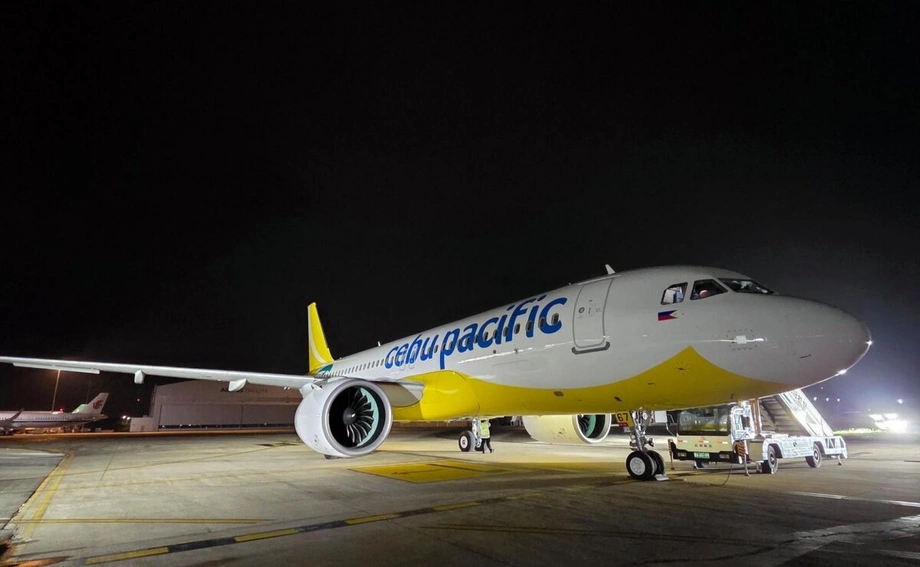
More passengers, higher sales and a deeper loss
Cebu Pacific carried 20.77 million passengers in the first nine months of 2026, but rising fuel bills and a weaker peso pushed its parent company, Cebu Air Inc., to a P12.84 billion loss attributable to shareholders. A year earlier, it had earned P9.46 billion.
Contents
- More passengers, higher sales and a deeper loss
- Fuel absorbed nearly two fifths of operating spending
- A weaker peso added another layer of costs
- The third quarter intensified the damage
- Passenger demand remained a source of strength
- Extra services and cargo grew, but other bills rose too
- Why the comparison with 2025 is especially sharp
- Holiday bookings and aircraft deliveries shape the next stage
- Key Points
Revenue rose 9.8 percent to P96.23 billion in January through September. Operating expenses climbed much faster, increasing 24.3 percent to P99.23 billion. The airline spent about P103 on operations for every P100 it earned, compared with about P91 a year earlier.
Fuel was the biggest source of pressure. Aviation fuel expenses rose 62.4 percent to P39.1 billion, while net foreign exchange losses reached P5.03 billion. Together, those pressures overwhelmed gains from passenger growth, extra services and cargo.
The P12.84 billion figure measures the loss attributable to shareholders of the parent company. Cebu Air's consolidated net loss, which also accounts for interests outside the parent shareholders, was P12.78 billion.
Cebu Air's quarterly financial report for the period ended September 30, 2026, confirms a nine month net loss after tax of P12.784 billion and a loss attributable to parent shareholders of P12.842 billion. It lists gross revenue of P96.228 billion and gross expense of P99.231 billion.
The reversal leaves the Philippines' largest budget carrier trying to turn strong demand into profitable flying. Its domestic market share reached 63 percent in the third quarter, up from 55 percent a year earlier, even as losses accelerated.
Fuel absorbed nearly two fifths of operating spending
Cebu Air attributed the sharp increase in jet fuel prices to the escalation of the Middle East conflict on February 28. Chief executive Michael Szucs said fuel exceeded $200 per barrel during the second quarter, which he described as the most challenging operating period since the pandemic.
The airline's fuel bill increased by P15 billion from P24.1 billion a year earlier. Fuel accounted for 39.4 percent of operating expenses, up from 30.2 percent. That means almost two pesos out of every five spent on operations went toward fuel.
Flying operations, the wider expense category that includes fuel, rose 51.6 percent to P44.13 billion from P29.12 billion. During the third quarter alone, fuel expenses increased 65 percent from a year earlier.
The Civil Aeronautics Board shortened its fuel surcharge monitoring and adjustment cycle from once a month to every 15 days until market conditions stabilize. Fuel surcharges are charges airlines may collect to help cover fuel costs. More frequent adjustments allow those charges to respond sooner when fuel prices change, affecting the amount passengers pay.
The interim measure covers passenger and cargo fuel surcharges on domestic and international flights and remains in place until conditions stabilize or the cycle is revised or revoked. For its initial implementation, the board set Level 8 for April 1 to 15, 2026, up from Level 4 for March. Airlines wishing to collect the surcharge must file an application with the board on or before the applicable period takes effect. Under CAB Resolution No. 25 (2022), the surcharge is optional and separate from the basic airfare.
At Level 8, domestic passenger fuel surcharges rise to P253 to P787 from P117 to P342. For international flights originating from the Philippines, they increase to P835.05 to P6,208.98 from P385.70 to P2,867.82, depending on distance. Domestic cargo surcharges rise to P1.30 to P3.80 per kilogram from P0.60 to P1.76, while international cargo surcharges increase to P4.29 to P31.92 per kilogram from P1.98 to P14.74.
A weaker peso added another layer of costs
The peso stood at P62.64 per US dollar at the end of September, compared with P58.79 at the end of 2025. Buying one dollar therefore required P3.85 more, an increase of about 6.5 percent in peso terms.
Airlines are exposed to exchange rate changes because major expenses and financial obligations can be priced in dollars. When the peso weakens, a dollar bill costs more in local currency. The peso value of dollar debts and other balances can also increase when financial statements are prepared.
Cebu Air's net foreign exchange losses rose 302 percent to P5.03 billion from P1.25 billion. Some of the pressure came from foreign exchange translation, the accounting process of expressing balances in the currency used for the company's financial statements.
Financing costs also rose 7.9 percent to P6.05 billion from P5.61 billion, reflecting additional aircraft and engine deliveries. Those costs sit alongside the expense of operating flights, helping explain why the final loss was much larger than the P3 billion operating loss.
The third quarter intensified the damage
Cebu Air recorded a P6.93 billion loss attributable to parent shareholders in July through September, reversing a P485.55 million profit a year earlier. Third quarter revenue increased 14 percent to P27.66 billion, but operating expenses rose 26.9 percent to P30.96 billion.
The quarterly filing puts the third quarter net loss after tax at P6.911 billion and the loss attributable to parent shareholders at P6.931 billion.
The resulting quarterly operating loss was about P3.3 billion. The third quarter, historically a lean travel period, accounted for more than half of the loss attributable to shareholders during the first nine months.
Szucs, Cebu Pacific's chief executive, described the pressures on the business:
The third quarter remained a challenging period, as elevated fuel prices, a weaker peso and broader macroeconomic pressures continued to affect our operations.
The financial deterioration developed over several months:
- February 28: The escalation of the Middle East conflict drove the increase in jet fuel prices cited by Cebu Air.
- January through June: The airline recorded a P5.89 billion net loss, reversing an P8.97 billion profit a year earlier.
- July through September: The loss attributable to parent shareholders reached P6.93 billion, despite higher revenue.
- January through September: The loss attributable to parent shareholders totaled P12.84 billion.
First half revenue of P68.56 billion had slightly exceeded operating expenses of P68.28 billion. The third quarter's operating loss then pushed the nine month operating result into negative territory.
Passenger demand remained a source of strength
Cebu Pacific's passenger count increased 4 percent to 20.77 million in the first nine months. Its passenger mix included about 15.7 million domestic travelers and 5.1 million international travelers, making domestic journeys roughly three quarters of its traffic.
Passenger revenue rose 9.5 percent to P65.31 billion from P59.66 billion. Revenue from passengers therefore grew faster than the number carried, consistent with the airline's statement that yields were improving. Yield describes the revenue earned for carrying passengers relative to the traffic flown.
Domestic market share also expanded. Cebu Pacific's internal estimates put its share at 60 percent by June, against 55 percent a year earlier. Its third quarter share reached 63 percent, an increase of eight percentage points from the corresponding period in 2025.
Szucs said the airline was seeing benefits from its response to the difficult conditions:
Nevertheless, we are encouraged by the early results of the actions we have taken, including the return to passenger growth.
Alexander Lao, Cebu Pacific's president and chief commercial officer, projected that passenger traffic would exceed 27 million in 2026. That would surpass the airline's previous record of 26.88 million passengers in 2025, although the final total would depend on travel during the remaining months.
Extra services and cargo grew, but other bills rose too
Ancillary revenue increased 10.2 percent to P25.07 billion from P22.76 billion. This category covers income beyond the basic fare, such as optional baggage allowances and seat selection. It contributed about 26 percent of total revenue, showing how much the airline earns outside ticket fares alone.
Cargo revenue rose 12.6 percent to P5.84 billion from P5.19 billion. Passenger fares remained the largest business, providing about 68 percent of total revenue, while cargo contributed about 6 percent.
Cebu Pacific also lent aircraft to Vietnam Airlines from July through September, using fleet capacity to pursue another source of revenue during the Philippine travel industry's lean season.
Several other expenses increased. Repairs and maintenance rose 14.8 percent to P17.51 billion, while depreciation and amortization increased 7 percent to P15.38 billion, mainly because of aircraft and engine acquisitions. Depreciation spreads the cost of assets such as aircraft over their expected useful lives.
Aircraft and traffic servicing costs rose 7.7 percent to P12.41 billion, including higher charges from airport operators. General and administrative expenses moved in the opposite direction, falling 9.7 percent to P3.51 billion as the company reduced costs. Those savings were much smaller than the increase in fuel spending.
Why the comparison with 2025 is especially sharp
Cebu Air's 2025 earnings benefited from P5.99 billion in other income arising from five engines supplied free of charge. The engines were provided as support for problems that had left aircraft grounded. Their fair value was recognized as income, lifting the earlier year's financial result.
No equivalent income appeared in the 2026 period. The swing from profit to loss therefore reflects both worsening operating conditions and the absence of that earlier benefit.
The company's core result also deteriorated. Core loss before tax reached P8.58 billion, compared with core profit before tax of P2.92 billion a year earlier. This measure helps show the direction of the business after the company's adjustments for items outside its core performance.
Earnings before interest, taxes, depreciation and amortization, known as EBITDA, stayed positive at P12.38 billion but fell from P22.17 billion. The EBITDA margin declined to 12.9 percent from 25.3 percent, leaving the airline with roughly half as much of this measure of earnings for each peso of revenue.
EBITDA leaves out financing costs, taxes and the accounting expense of using aircraft and other assets. Cebu Pacific could therefore report positive EBITDA while still recording a substantial net loss after those costs were counted.
Holiday bookings and aircraft deliveries shape the next stage
Cebu Pacific is looking to holiday travel and the first quarter of 2027 for stronger revenue. Szucs described the booking outlook:
Looking ahead, forward bookings for the holiday season and into Q1 2027 are healthy, and the ongoing improvement in yields gives us greater confidence in the revenue outlook for the fourth quarter and beyond.
The airline planned seven aircraft deliveries in 2026 and seven aircraft with a single aisle in 2027. An Airbus A330neo was expected by December. Cebu Pacific operates more than 2,190 weekly flights, with its first half network covering 35 domestic destinations and 26 foreign cities.
The fleet figures accompanying its updates need clarification: the year end delivery projection described a fleet of 100 aircraft, while the first half update put the fleet at 102. No explanation was given for the difference.
For passengers, the next few months bring the prospect of more capacity alongside fuel surcharges that can be reviewed more frequently. For the airline, stronger bookings provide an opportunity to earn more, while fuel prices, exchange rates and financing expenses continue to determine how much of that revenue reaches the bottom line.
Key Points
- Cebu Air posted a P12.84 billion loss attributable to parent shareholders in the first nine months of 2026, reversing a P9.46 billion profit.
- Revenue rose 9.8 percent to P96.23 billion, while operating expenses increased 24.3 percent to P99.23 billion.
- Fuel expenses reached P39.1 billion, and net foreign exchange losses rose to P5.03 billion.
- Cebu Pacific carried 20.77 million passengers and increased its third quarter domestic market share to 63 percent.
- The airline expects annual passenger traffic above 27 million and says holiday bookings into early 2027 are healthy.