Growth falls short as pressure builds on households
The Philippine economy grew 2.1% in the third quarter of 2026, the Philippine Statistics Authority announced on November 9, extending a slowdown to five consecutive quarters as agricultural production fell, investment remained weak and rising prices squeezed household spending.
Contents
- Growth falls short as pressure builds on households
- What the GDP figures show
- Families spend more cautiously as prices climb
- Farm losses hit food supplies and rural incomes
- Construction remains weak amid infrastructure investigations
- Investment shrinks despite gains in exports
- The central bank faces competing pressures
- The annual target requires a sharp turnaround
- The dates behind the slowdown
- Key Points
Growth slowed from a revised 2.4% in the second quarter and 4% in the same period of 2025. Excluding the pandemic years, it was the weakest expansion since the 1.8% recorded in the fourth quarter of 2009. The latest result was also the weakest since the economy contracted 3.8% in the first quarter of 2021.
The figures leave President Ferdinand Marcos Jr.'s government facing a steep climb toward its revised annual growth target of 3.5% to 4.5%. Economy Secretary Arsenio Balisacan said the economy would need to expand about 6.3% in the final quarter to reach even the bottom of that range.
Inflation reached 7.8% in October, while the central bank has raised interest rates to contain prices. Families are consequently facing more expensive essentials at the same time that borrowing costs are increasing and economic activity is losing momentum.
What the GDP figures show
Gross domestic product, or GDP, measures the value of goods and services produced within a country. The 2.1% annual increase means the Philippines produced more than in the same quarter last year, but the pace of expansion weakened considerably.
Across the first nine months of 2026, growth averaged 2.5%, compared with 4.9% in the corresponding period of 2025. That is a decline of 2.4 percentage points, leaving the pace at roughly half its level a year earlier.
Economists had expected a stronger third quarter. Forecast medians across three surveys ranged from 2.7% to 3.1%, all above the actual result. The second quarter's annual growth figure had been revised upward to 2.4% from an initial 2.3% before the latest release.
Compared with the immediately preceding quarter, GDP grew just 0.1%, down from 0.6% in the second quarter. These figures are seasonally adjusted, meaning recurring patterns such as holiday spending are accounted for to make consecutive quarters easier to compare. Together, the annual and quarterly readings show an economy still expanding, but with very little momentum.
Families spend more cautiously as prices climb
Household spending grew 2.4% in the third quarter, down from 2.9% in the second. It was the fourth consecutive quarter of slowing growth in consumer spending, a major driver of the Philippine economy.
Spending on transportation fell 5.3%, while spending on food and non-alcoholic beverages increased only 1.6%. For families whose budgets must first cover meals, transport and electricity, higher prices leave less room for other purchases.
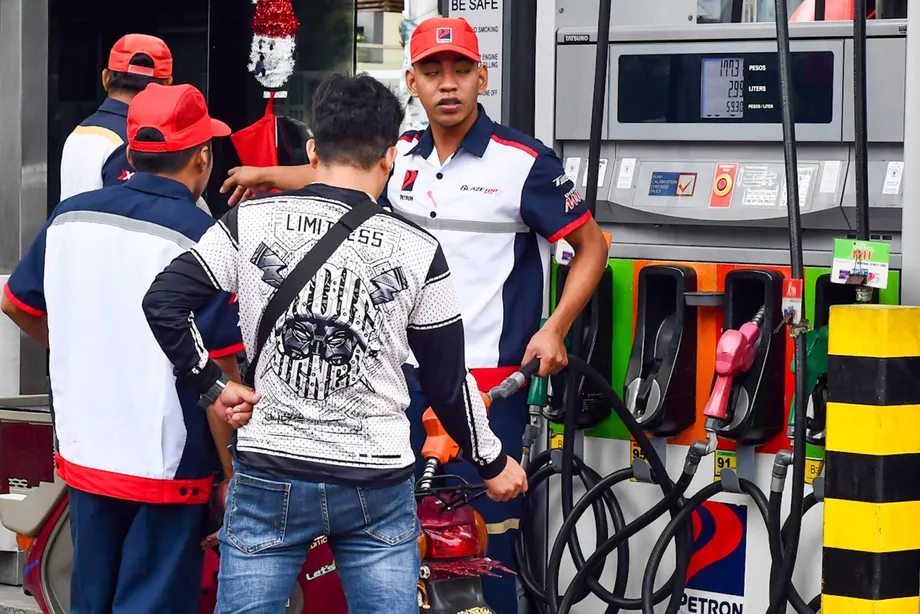
Balisacan linked the pressure on prices partly to conflict in the Middle East, which has pushed up oil costs. The Philippines depends heavily on imported oil, so increases abroad feed into domestic fuel bills and the cost of moving goods.
A weaker peso adds another strain because imports priced in dollars become more expensive in local currency. The peso had fallen almost 7% during the year, making it Asia's second worst performing currency at the time of the release.
October's 7.8% inflation rate means the average price of the measured basket of goods and services was that much higher than a year earlier. With food and fuel costs still elevated, Balisacan said a strong rebound in household spending was unlikely soon.
Farm losses hit food supplies and rural incomes
Agriculture, forestry and fishing contracted 4.8% in the third quarter, reversing growth of 2.9% in the second quarter. The sector accounts for about 7% of the economy, but its influence extends into household food bills, transport and businesses that process agricultural products.
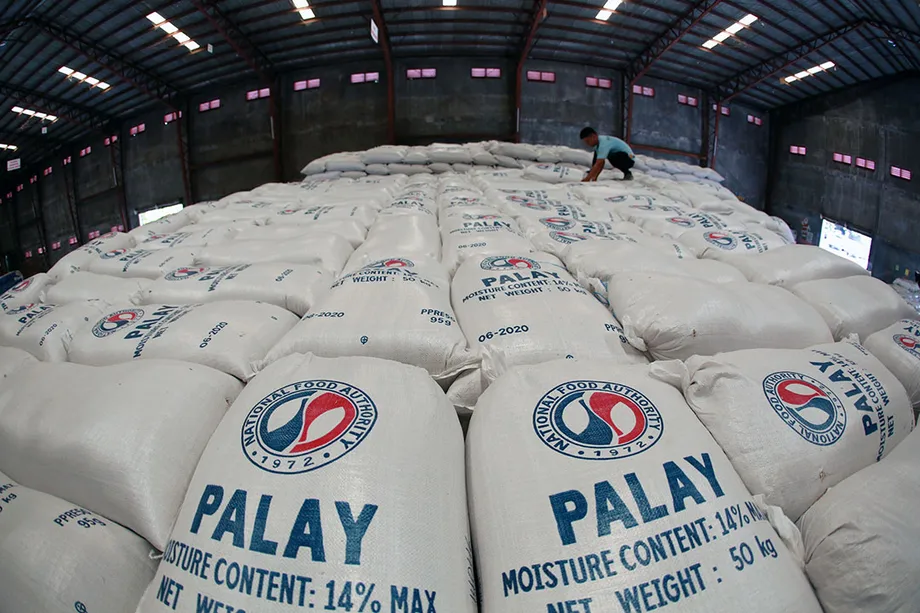
Palay production, the output of rice before milling, fell 17.8%, while corn output dropped 17.4%. Fishing and aquaculture declined 8.5%. These losses affected several sources of food and rural earnings at once.
Typhoons and monsoon disruption damaged production, while El Niño added to concerns about agricultural conditions. Balisacan identified weather disruptions as one of the reasons for the wider economic slowdown.
Farm losses create pressure from two directions. Farmers and fishing communities have less output to sell, reducing their income. Reduced supplies also put pressure on food prices, making household budgets tighter even outside the affected production areas.
Construction remains weak amid infrastructure investigations
Construction output contracted 4%, while construction spending fell 3.5%. Government construction spending dropped 15.1%, and construction spending by companies and households barely grew.
The decline in government infrastructure spending was smaller than the 33.4% fall recorded in the second quarter, but it still marked a sixth consecutive quarter of contraction. A smaller fall means spending was deteriorating less rapidly, while remaining below its level a year earlier.
Balisacan said agencies had become cautious about proceeding with projects amid concerns about involvement in infrastructure scandals. Investigations into alleged corruption in flood control projects delayed some public expenditure and damaged business confidence.
The slowdown also extended beyond construction. Government consumption, which includes spending on public services, grew 6.8%, down from 8.3% in the preceding quarter. Public spending therefore provided less support to growth as household demand weakened.
The government said it would work to resume infrastructure projects and rebuild investment confidence. For construction workers, suppliers and communities awaiting public works, the practical issue is when approved projects can move forward. No detailed timetable for restarting delayed projects was announced.
Investment shrinks despite gains in exports
Gross capital formation declined 0.2%, its fifth consecutive quarterly contraction. This measure covers spending that builds productive capacity, including machinery, buildings and changes in business inventories.
Net foreign direct investment inflows totaled $4.07 billion in the first seven months of 2026, down 23.9% from the same period a year earlier. Such investment usually involves a lasting business interest, such as establishing or expanding an operation, rather than simply buying shares for a short period.
Balisacan said foreign direct investment helps expand domestic investment, bring in technology and expertise, modernize industries and increase productive capacity. Its decline therefore matters both for current activity and for the resources businesses can use to produce more later.
Services remained the main source of economic growth, expanding 3.7%, although that was slower than the 5.5% recorded a year earlier. Industry was almost unchanged, slipping 0.003%, compared with growth of 0.7% in the same quarter of 2025.
Electronics exports and business services exports increased, providing some support amid weak domestic demand. Gross national income, which includes net primary income from abroad alongside domestic production, grew 2.7%. Net primary income increased 6.6%, helping national income grow faster than GDP.
The central bank faces competing pressures
The Bangko Sentral ng Pilipinas raised interest rates by a total of 125 basis points from April through October, including an increase of 50 basis points in October. One hundred basis points equals one percentage point, so the cumulative increase was 1.25 percentage points.
The Monetary Board's October 22, 2026 decision brought the benchmark target reverse repurchase rate to 5.50%, marking its fourth consecutive increase that year. BSP Governor Eli Remolona Jr. said the decision reflected expectations that inflation would accelerate further because of oil prices, transport fares and the potential effects of El Niño on food prices.
September inflation had risen to 7.2% from 6.1% in August, above the BSP's 2% to 4% target range. Core inflation, which excludes selected volatile food and energy items, reached 4.7%, its highest level in three years. The BSP raised its forecast for average inflation in 2027 to 6.0% from 5.4%; before the October decision, it had forecast average inflation of 6.1% for 2026.
Higher rates make borrowing more expensive, which can slow purchases and investment. They are intended to cool price pressures and help keep expectations about future inflation under control. For an economy already growing slowly, that creates a difficult balance.
Balisacan, the economy secretary, said successful efforts to bring inflation expectations back toward the central bank's target could support spending and investment:
If the BSP actually succeeds in anchoring the inflation expectation back to the target, then that actually will impact positively consumption and investments," he said. "It's not necessarily bad for growth.
Inflation had remained above the central bank's 3% goal since March. If people and businesses expect prices to keep rising rapidly, those expectations can influence wage demands and pricing decisions, making inflation harder to bring down.
Emilio Neri Jr., lead economist at the Bank of the Philippine Islands, said the weak growth figures could influence the size of the next rate increase:
"While we think they should still deliver more jumbo hikes, they may opt for a smaller hike in December because of growth concerns," he said.
Neri warned that a smaller increase could put further pressure on the peso and make inflation expectations harder to control. December was the next policy period identified in his assessment, rather than an announced decision on the size of a rate move.
The Monetary Board's final scheduled policy meeting for 2026 was set for December 17. Remolona said the board remained open to further rate increases if necessary.
The annual target requires a sharp turnaround
A fourth quarter expansion of about 6.3% would be three times the 2.1% pace recorded in the third quarter. That is the acceleration Balisacan said would be needed to reach the government's minimum annual target of 3.5%.
Balisacan described the difficulty of reaching the target while expressing hope for an improvement:
very challenging at this point given the current environment but we are hoping that the fourth-quarter performance will be better.
Other annual forecasts also point to a subdued year. The World Bank projected growth of 3.7% for 2026, while the ASEAN+3 Macroeconomic Research Office lowered its forecast to 3.3%, below the government's target range.
The peso fell 0.3% after the GDP release, and the benchmark stock index dropped as much as 0.7%. The reaction added immediate market pressure to the government's broader challenge of restoring confidence and restarting delayed expenditure.
Balisacan said the government's growth target of 5% to 6% for 2027 remained achievable, provided investment strengthened, price pressures eased and business confidence recovered. The government also pledged to strengthen food and energy security and create jobs.
The dates behind the slowdown
The latest figures bring together several developments across 2026: rising borrowing costs, weaker investment inflows, slowing production and a further jump in inflation after the third quarter ended.
- April to October 2026: The central bank raised interest rates by a cumulative 125 basis points.
- January to July 2026: Net foreign direct investment inflows totaled $4.07 billion, down 23.9% from a year earlier.
- July to September 2026: GDP grew 2.1% from a year earlier and 0.1% from the preceding quarter after seasonal adjustment.
- October 2026: Inflation reached 7.8%, and the central bank raised rates by 50 basis points to 5.50% on October 22.
- November 9, 2026: The Philippine Statistics Authority announced the third quarter GDP figures.
- December 2026: Neri identified the month as a possible point for a smaller rate increase because of growth concerns. The Monetary Board's final scheduled meeting of the year was set for December 17.
For households and businesses, the immediate pressures are concrete: costly essentials, more expensive credit, lost farm output and delayed construction work. Export gains offer some support, but a stronger recovery requires improvement across several of those areas together.
Key Points
- Philippine GDP grew 2.1% in the third quarter of 2026, slowing for a fifth consecutive quarter.
- Growth averaged 2.5% over the first nine months, compared with 4.9% a year earlier.
- Agriculture contracted 4.8%, while household spending growth slowed to 2.4%.
- Government construction spending fell 15.1% amid delays linked to infrastructure investigations.
- October inflation reached 7.8%, complicating interest rate decisions as economic activity weakened. The BSP raised its benchmark rate to 5.50% on October 22, citing oil prices, transport fares and potential El Niño effects on food prices.
- Balisacan said fourth quarter growth of about 6.3% was needed to reach the minimum annual target of 3.5%.