November 3 brings a sharp split in fuel prices
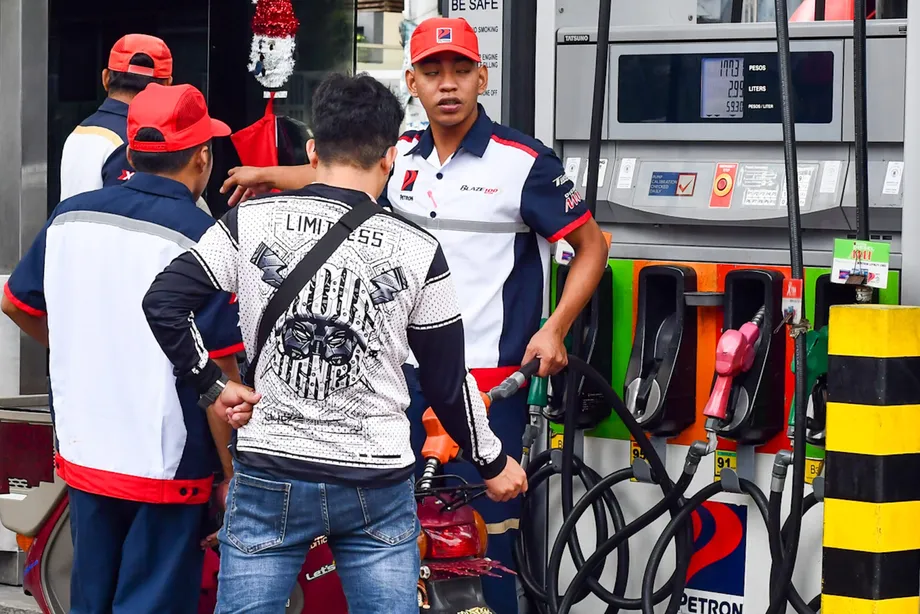
Gasoline prices in the Philippines rise by P3.50 per liter on Tuesday, November 3, 2026, while diesel falls by P1 and kerosene by P1.90. The adjustment reverses the previous week's direction for all three fuels, bringing higher costs for gasoline users and some relief for people buying diesel or kerosene.
Contents
- November 3 brings a sharp split in fuel prices
- How the adjustment compares with last week
- What motorists could pay in Metro Manila
- Why gasoline rose while diesel fell
- Earlier forecasts pointed to smaller changes
- Prices remain far above levels before the conflict
- Fuel supply covers nearly 53 days of demand
- Tax relief applies to kerosene and LPG
- Public transport assistance reaches 109,561 beneficiaries
- Key Points
Shell, Seaoil, PetroGazz and Jetti Petroleum raised gasoline prices by P3.50 per liter and reduced diesel prices by P1. Shell and Seaoil also lowered kerosene prices by P1.90. The Department of Energy's permitted adjustments for November 3 to 9 specified a gasoline increase of up to P3.50, a diesel reduction of at least P1 and a kerosene reduction of at least P1.90.
For a motorist buying 40 liters of gasoline, the increase adds P140 to the bill. A purchase of 40 liters of diesel costs P40 less, while 10 liters of kerosene costs P19 less. Those changes apply to the cost of the fuel alone, with the final bill depending on the station's starting price.
The opposing movements reflect different conditions in Asian fuel markets. Diesel supplies have become more available, while gasoline remains under pressure from tight supply and the cost of imported crude oil. Philippine prices also remain exposed to transport expenses and changes in the peso's value because the country imports much of its petroleum as finished fuel.
How the adjustment compares with last week
Gasoline had fallen for two consecutive weeks before the November 3 increase. In the most recent adjustment, on October 27, gasoline dropped by P0.30 per liter, while diesel rose by P1.20 and kerosene by P0.50.
Across those two adjustments, gasoline is now P3.20 per liter higher, diesel is P0.20 higher and kerosene is P1.40 lower. For gasoline users, the latest increase is more than 11 times the previous week's P0.30 reduction.
The key dates show how preliminary expectations developed into the latest pump price changes:
- October 27: Gasoline fell by P0.30 per liter, diesel increased by P1.20 and kerosene increased by P0.50.
- October 29: Government fuel subsidy disbursements reached P1.17 billion.
- October 30: DOE supply figures showed petroleum coverage of 52.95 days; an industry forecast pointed to a smaller gasoline increase and diesel reduction than the eventual adjustments.
- November 3 to 9: The DOE adjustment period brings a gasoline increase of up to P3.50, a diesel reduction of at least P1 and a kerosene reduction of at least P1.90.
What motorists could pay in Metro Manila
Projected Metro Manila retail prices show a wide gap between the cheapest and most expensive stations. The estimates use the DOE's prevailing prices for October 27 to November 2, adjusted for the latest increases and reductions. Actual prices vary by station.
- RON91 gasoline: P78.60 to P95.80 per liter.
- RON95 gasoline: P79.00 to P101.70 per liter.
- RON97 gasoline: P83.89 to P104.30 per liter.
- Diesel: P88.90 to P98.30 per liter.
- Diesel plus: P93.50 to P101.00 per liter.
- Kerosene: P114.10 to P143.94 per liter.
RON, or research octane number, describes gasoline's resistance to unwanted ignition inside an engine. Motorists should use the grade specified for their vehicle. The projected figures show that the price paid also depends heavily on where fuel is bought, even within the same grade.
For RON95, the projected gap between the lowest and highest prices is P22.70 per liter. On a 40 liter purchase, that represents P908. These are endpoints across monitored prices, so a driver's nearby stations may offer a much narrower choice.
Why gasoline rose while diesel fell
Jetti Petroleum president Leo Bellas linked the diesel reduction to an improving supply outlook. More fuel available for export can ease competition among buyers and put downward pressure on prices.
Bellas described the developments supporting diesel supply:
"Diesel softened on easing supply outlook, supported by stock releases, Chinese exports, and Russian diesel exports," Bellas said.
China issued a fourth batch of export quotas covering gasoline, diesel and jet fuel. Such quotas determine how much fuel companies are allowed to sell abroad. South Korea also eased restrictions on diesel exports, while Russian diesel and gasoline exports peaked during a pause in confirmed Ukrainian refinery strikes.
Gasoline faced a different balance between supply and demand. Bellas said the extra Chinese export allowances had not removed the pressure on the Asian gasoline market:
"However, Asian gasoline balances remained tight despite the release of Chinese export quotas as higher imported costs of crude weigh on regional refining economics," he added.
Refineries buy crude oil and turn it into products such as gasoline and diesel. When crude becomes more expensive, the cost of producing those fuels rises. Each finished product also has its own buyers, stock levels and trade flows, allowing gasoline and diesel prices to move in opposite directions.
Earlier forecasts pointed to smaller changes
Bellas forecast on October 30 that gasoline would rise by P2.90 to P3.20 per liter and diesel would fall by P0.40 to P0.60. The subsequent DOE adjustments allowed a larger gasoline increase of up to P3.50 and a deeper diesel reduction of at least P1.
The October 30 estimates used Asian market movements and the foreign exchange trend available at that point. Bellas said they excluded weekly changes in ocean freight and insurance, both of which contribute to the cost of bringing fuel into the Philippines.
A weaker peso adds another source of pressure because imported petroleum is generally priced in US dollars. When more pesos are needed to buy each dollar, the local currency cost of a shipment rises even if its dollar price stays unchanged. The figures given do not break down how much of this week's adjustment came from fuel prices, exchange rates, freight or insurance.
Prices remain far above levels before the conflict
DOE monitoring for October 27 to November 2 put the common Metro Manila price at P84.20 per liter for RON95 gasoline, P83.30 for RON91, P94.50 for diesel and P123.90 for kerosene. These were the monitored prices before the November 3 adjustment.
In the last full week before fighting involving Iran and US and Israeli forces began on February 28, the corresponding prices were P56 for RON95, P54.70 for RON91, P55 for diesel and P83.47 for kerosene.
Comparing those two periods, RON95 was P28.20 per liter higher, an increase of about 50%. RON91 was P28.60 higher, or about 52%. Diesel had risen P39.50, nearly 72%, while kerosene was P40.43 higher, about 48%.
Diesel's P1 reduction therefore arrives after a much larger increase from its earlier P55 level. For transport operators buying fuel repeatedly, a lower weekly price helps with current expenses, but their fuel budget still has to accommodate prices well above those before the conflict.
Bellas also warned that possible escalation in the Iran war after the US midterm elections could bring further oil price volatility. That warning concerns a possible development, while regional supply conditions, shipping costs and currency movements continue to affect the prices importers pay.
Fuel supply covers nearly 53 days of demand
The DOE put total expected available petroleum supply at 52.95 days as of October 30, measured against average daily demand of 73.61 million liters. The figure describes how long the available supply could cover consumption at that demand rate.
Coverage varied considerably by product. Gasoline stood at 52.29 days and diesel at 56.68 days. Liquefied petroleum gas had the shortest coverage, at 35.12 days, followed by gasoline, diesel, jet fuel at 58.86 days and fuel oil at 63.30 days. Kerosene had the longest coverage, at 148.55 days.
Available stocks give the country a buffer when deliveries are disrupted. Pump prices also respond to what the next shipment will cost. Importers still have to purchase replacement fuel in regional markets and pay for shipping, insurance and foreign exchange, even while existing supplies remain available.
Tax relief applies to kerosene and LPG
Executive Order No. 125, issued by President Ferdinand Marcos Jr. in September, suspended excise taxes on liquefied petroleum gas and kerosene. Gasoline and diesel are outside that relief.
An excise tax is a tax charged on a particular product. Suspending it removes that tax component from the covered fuel. Market prices can still change as the cost of purchasing and delivering the product changes.
Kerosene buyers therefore have two relevant developments: the continuing excise tax suspension and the P1.90 per liter reduction beginning November 3. Gasoline users face the P3.50 increase without the tax suspension, while diesel users receive the P1 price reduction without that tax measure.
Public transport assistance reaches 109,561 beneficiaries
The government's fuel subsidy program had disbursed P1.17 billion to 109,561 public utility vehicle beneficiaries as of October 29. Government figures also showed that 4,005 gasoline stations nationwide had recorded successful subsidy transactions.
The program is intended to help qualified public transport operators and drivers manage fuel expenses. Its reach matters because regular fuel purchases turn even small changes per liter into recurring operating costs.
A driver buying 50 liters of diesel saves P50 per purchase under the latest adjustment. A gasoline user buying the same volume pays P175 more. The different movements mean the immediate effect on a transport operator depends on the fuel the vehicle uses, how much it consumes and whether the operator qualifies for assistance.
The November 3 to 9 price period offers modest relief for diesel and kerosene buyers while sharply increasing gasoline costs. For households and drivers planning their next purchase, the station's actual posted price remains the most useful figure, particularly given the wide projected ranges across Metro Manila.
Key Points
- Gasoline rises by P3.50 per liter on November 3, while diesel falls by P1 and kerosene by P1.90 at the named companies.
- The gasoline increase follows two consecutive weeks of reductions.
- Across the October 27 and November 3 adjustments, gasoline is P3.20 higher, diesel P0.20 higher and kerosene P1.40 lower per liter.
- Improving diesel availability contrasts with tight Asian gasoline supply and higher crude import costs.
- DOE figures put petroleum supply coverage at 52.95 days as of October 30.
- Excise tax relief covers LPG and kerosene, while the public transport fuel subsidy program had disbursed P1.17 billion by October 29.