A record closing rate ahead of the BSP decision
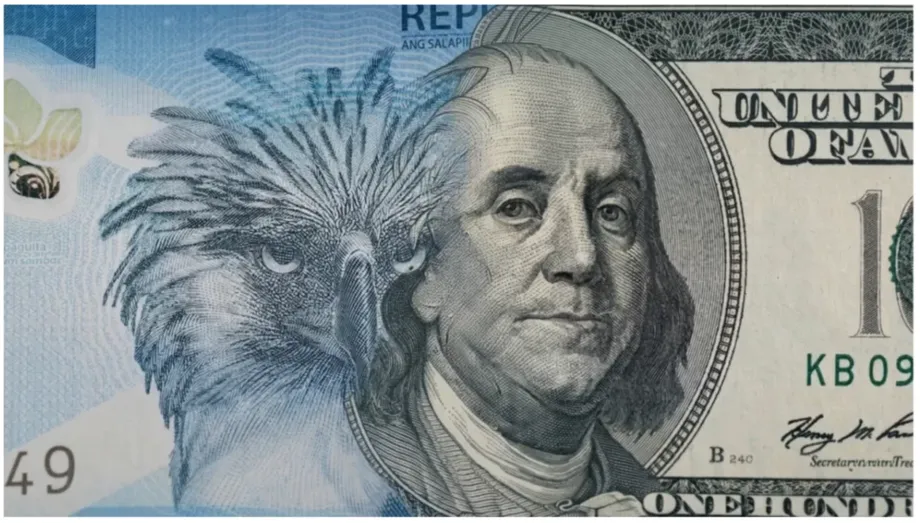
The Philippine peso closed at 63.361 against the US dollar on October 21, 2026, its 29th record low of the year, as investors prepared for an expected interest rate increase that economists said might slow the currency's decline without reversing it. The fall came as the country's deficit in payments with the rest of the world approached the central bank's forecast for the entire year.
Contents
- A record closing rate ahead of the BSP decision
- Why a quarter point may bring only brief relief
- The payments deficit is close to the annual forecast
- Imports are growing faster than dollar earnings
- Reserves have fallen, but the BSP says coverage is sufficient
- Oil and US interest rates add pressure
- The argument for a larger BSP increase
- Stocks and bonds show different strains
- What the weaker peso means for families
- Key Points
Bankers Association of the Philippines data put the peso's weakest point during Wednesday's trading at 63.373 per dollar. It opened at 63.01 and briefly strengthened to 63.00 before finishing 27.1 centavos, or about 0.43 percent, weaker than the previous close of 63.09.
The Bangko Sentral ng Pilipinas (BSP) faces an uncomfortable combination at its October 22 meeting: inflation of 7.2 percent in September, oil above $110 a barrel, declining foreign reserves and slowing economic growth. Raising interest rates can help contain prices and make peso investments more attractive, but it also increases borrowing costs for businesses and households.
A poll of 20 economists found that all expected a rate increase. Eighteen forecast a rise of 25 basis points, taking the benchmark rate from 5 percent to 5.25 percent. Two expected an increase of 50 basis points, which would take it to 5.5 percent. A basis point is one hundredth of a percentage point.
The central question is how much a widely anticipated decision can accomplish when expensive imports and persistent demand for dollars continue to weigh on the currency.
Why a quarter point may bring only brief relief
Alyssa Nuñez, a former economist at the University of Asia and the Pacific who now works for a private commercial bank, said an increase to 5.25 percent could provide limited support. She described a market in which investors had already adjusted their positions for that decision.
"A brief relief bounce is possible, but we would not count on a real rebound," Nuñez said.
When a rate increase is already priced into the market, traders have bought or sold assets in anticipation of it. Delivering the expected increase therefore gives them less new information than a surprise decision would. Nuñez said the move was "unlikely to change the peso's direction."
Singapore's Oversea-Chinese Banking Corp. (OCBC) reached a similar conclusion in its October 20 commentary. Its research team linked peso weakness to deteriorating external balances, slower investment inflows and expensive oil.
"BSP tightening may temper depreciation, but a sustained recovery requires improvement in oil prices and external flows," OCBC Group Research said.
Higher Philippine rates could encourage investors to hold assets denominated in pesos. Importers, however, still need dollars to pay overseas suppliers, while foreign debt payments create further demand. Those transactions help explain why a rate increase and a weak peso can occur together.
The payments deficit is close to the annual forecast
The BSP put September's balance of payments deficit at $3.144 billion, up from $596 million in August and a reversal of the $82 million surplus recorded in September 2025. September's shortfall was more than five times August's.
The balance of payments records the country's transactions with the rest of the world. A deficit reflects a net outflow across those transactions. The January to September deficit reached $9.087 billion, compared with about $5.3 billion in the same period of 2025, an increase of roughly 71 percent.
By the end of September, the deficit was only $113 million below the BSP's forecast of $9.2 billion for all of 2026. That left little room for further deficits during the final three months without exceeding the projection. The central bank had previously reduced that forecast from $10.7 billion and projected a deficit of $8.5 billion for 2027.
The BSP attributed the cumulative shortfall to the deficit in goods trade and net outflows from foreign portfolio investments. Remittances, government borrowing abroad, services trade and foreign direct investment provided partial offsets.
Robert Dan Roces, group economist at SM Investments Corp., described the practical challenge facing the economy.
"The real challenge is not simply defending the peso, but generating enough dollars to support it," Roces said.
Imports are growing faster than dollar earnings
Philippine Statistics Authority figures put merchandise imports at $105.60 billion in January to August, up 19.1 percent from $88.69 billion a year earlier. Merchandise exports totaled $64.04 billion, leaving a goods trade gap of $41.56 billion for those eight months.
Oil, production inputs and capital equipment all contribute to the demand for foreign currency. Some purchases support future production, but they still require payment now. Remittances, business process outsourcing revenues and tourism receipts bring dollars into the country, yet their inflows have not fully covered the import bill.
The BSP's preliminary balance of payments table puts the current account deficit for January to June 2026 at $8.968 billion and the overall balance of payments deficit at $5.588 billion. Those figures cover the first half of the year; September's figures cover a later period.
The current account tracks trade, income and transfers such as remittances. The broader balance of payments also includes investment and other financial transactions. This explains why the two deficit measures have different totals.
The same BSP table records personal remittances of $19.123 billion during the first half, up 2.4 percent from $18.672 billion a year earlier. Cash remittances passing through banks reached $17.149 billion, also up 2.4 percent. Dollar earnings from Filipinos abroad continued to grow while the country faced a substantial external financing need.
Reserves have fallen, but the BSP says coverage is sufficient
Gross international reserves fell to $99.5 billion at the end of September, their lowest monthly level since September 2023. That compared with $104.85 billion in August and $109.1 billion a year earlier. The September total was revised down from the initial $99.997 billion announced on October 8.
The BSP attributed the decline to foreign exchange operations, lower valuations of gold and other reserve assets, and government withdrawals of foreign currency for debt payments and other requirements. These factors can reduce the reserve total through both transactions and changes in the market value of assets.
The central bank said the remaining reserves covered 6.2 months of imports of goods and payments for services and primary income. They were also equivalent to 3.1 times external debt falling due within the relevant short period, measured by residual maturity, meaning the time left before repayment.
An unnamed currency trader described intervention in the peso market as limited. The BSP has said it generally allows the exchange rate to move with market conditions and intervenes during extreme volatility. No amount for intervention during Wednesday's session was disclosed.
Emilio Neri Jr., lead economist at Bank of the Philippine Islands, said the reserve decline strengthened the case for another rate increase. He said the uncertain duration of the Middle East conflict made preserving a sufficient buffer especially important if the conflict continued into 2027.
Oil and US interest rates add pressure
Brent crude rose 1.5 percent to $110.40 a barrel on Wednesday, while US West Texas Intermediate crude increased 1.5 percent to $99.27. Renewed concerns about Middle East supplies and falling US inventories supported prices.
Michael Ricafort, chief economist at Rizal Commercial Banking Corp., linked the peso's weakness to dollar strength and Brent's rise above $110 following ship attacks by Iran in the Strait of Hormuz. The Philippines imports more petroleum than it exports, so higher oil prices increase its dollar requirements.
For importers, expensive crude and a weaker peso work together. A barrel costs more dollars, and each dollar costs more pesos. Fuel costs can then reach households through transport fares, deliveries and the cost of moving food from farms to shops.
Hotter than expected US inflation also encouraged expectations of another Federal Reserve rate increase. Higher US rates can make dollar investments more attractive, drawing money away from currencies such as the peso.
OCBC expected the Fed to hold rates steady at its October 28 meeting before delivering a final increase in December. An analyst poll also pointed to a pause in October followed by a December increase. These were forecasts ahead of the decisions.
The argument for a larger BSP increase
Former BSP Deputy Governor Diwa C. Guinigundo urged an increase of 50 basis points on October 22. September's headline inflation had risen to 7.2 percent from 6.1 percent in August, while core inflation reached 4.7 percent. Core inflation excludes selected volatile items to give a clearer view of broader price pressures.
Guinigundo warned that expensive oil, peso depreciation and possible food supply disruptions associated with El Niño could push prices higher. He argued that a stronger response could limit the spread of inflation into more goods, services and expectations about future prices.
Guinigundo, who served as deputy governor from 2005 to 2019, described the decision as a balance between containing inflation and preserving access to credit.
"Ultimately, the BSP must weigh the risks of allowing inflation to become entrenched against the cost of tighter financial conditions on growth and credit," Guinigundo said.
The BSP had already raised its benchmark rate by 75 basis points through three increases of 25 basis points each. The remaining scheduled meetings for 2026 were October 22 and December 17.
The main policy and market developments were:
- April 23, June 18 and August 27: Three rate increases brought the benchmark to 5 percent.
- October 19 and 20: The peso closed at 63.09 per dollar.
- October 21: The currency weakened to a closing record of 63.361.
- October 22: The Monetary Board was scheduled to decide on Philippine rates.
- October 28: The Fed was expected to announce its next policy decision.
- December 17: The BSP's final scheduled policy meeting of the year.
Stocks and bonds show different strains
Philippine shares rose even as the peso fell. The Philippine Stock Exchange Index gained 15.34 points, or 0.26 percent, to 5,821.51 on Wednesday. Foreign investors were net buyers of 503.33 million pesos, with market turnover of 6.30 billion pesos.
Gains were uneven: decliners outnumbered advancers 18 to nine. Services rose 1.53 percent, while financials fell 0.61 percent. Ayala Land gained 3.09 percent to 16 pesos, while PLDT dropped 4 percent to 1,200 pesos. Mynt closed at 6.59 pesos, just below its initial public offering price of 6.60 pesos.
Government borrowing showed the cost of caution ahead of the BSP meeting. The average yield on Treasury bonds maturing in five years rose to 7.83 percent from 7.438 percent at the September 22 auction. Investors demanded higher returns before committing their money.
The Treasury accepted 21.378 billion pesos out of a planned 30 billion pesos, with total bids of 27.578 billion pesos. Jean Olivia De Castro, head of fixed income at Manulife Investments Philippines, said investors were cautious before the Monetary Board decision and preferred to keep funds available or buy securities with shorter maturities.
The Treasury also planned auctions of bills totaling 42 billion pesos the following week. Higher yields increase the price of new government borrowing, adding another channel through which inflation and monetary policy affect public finances.
What the weaker peso means for families
Families receiving dollars from overseas get more pesos when the currency weakens. At 63.361 per dollar, a transfer of $100 converts to 6,336.10 pesos before fees, compared with 6,309 pesos at 63.09. The gain from that day's movement is 27.10 pesos.
Households paying more for fuel, transport and imported goods can lose some of that benefit through higher expenses. Businesses using imported inputs face similar pressure, which can lead to higher selling prices or smaller profits.
John Paolo Rivera, senior research fellow at the Philippine Institute for Development Studies, warned that prolonged depreciation could raise import costs and inflation while eroding household purchasing power. The effect depends on how long the weakness lasts and how much of the extra cost businesses pass to customers.
About a third of Philippine sovereign debt is owed to foreign creditors. For debt denominated in foreign currency, a weaker peso increases the peso amount needed for repayment. Exporters earning dollars can receive more pesos for their sales, though imported materials may absorb part of the gain.
China Banking Corp. group chief economist Domini S. Velasquez offered a more positive currency forecast, expecting about 62.50 pesos per dollar at year end as the remittance season approached. OCBC remained cautious, looking for lower oil prices and stronger external financing before a sustained recovery.
Guinigundo argued that lasting currency strength also required better export capacity, productive investment, credible institutions and sound economic management. Those changes would help replenish the dollars the country uses, while the BSP's immediate decision would influence borrowing costs and inflation expectations.
Key Points
- The peso closed at a record 63.361 per dollar on October 21, after touching 63.373 during trading.
- Eighteen of 20 economists expected the BSP to raise its benchmark rate to 5.25 percent on October 22; two expected 5.5 percent.
- The January to September payments deficit reached $9.087 billion, only $113 million below the BSP's annual forecast.
- Foreign reserves fell to $99.5 billion, with the BSP saying they still covered 6.2 months of imports and related payments.
- Oil above $110 a barrel and expectations of higher US rates continued to pressure the peso.
- Dollar remittances convert into more pesos, while higher import costs threaten household purchasing power.