A hotter dry season could strain water and electricity supplies
Myanmar faces the prospect of shrinking drinking water supplies, reduced hydropower generation and greater heat related illness as a strengthening El Niño threatens to carry unusually hot and dry conditions into 2027. The danger links three everyday needs: water for households, irrigation for farms and electricity from reservoirs.
Contents
- A hotter dry season could strain water and electricity supplies
- From weak conditions in June to a stronger October outlook
- What the Pacific measurements mean
- Why smaller water reserves affect so many people
- Hydropower could weaken as electricity demand rises
- Heat and unsafe water bring separate health risks
- Farms face pressure on crops and livestock
- The dates that matter through the 2027 monsoon
- Preparation needs to cover more than drought
- Key Points
The United States Climate Prediction Center, in its October ENSO discussion issued on 8 October 2026, put the probability of strong to very strong El Niño conditions continuing through January to March 2027 at more than 83%. Myanmar's Department of Meteorology and Hydrology has warned that irregular rainfall, higher daytime temperatures, unusual storm activity and drought are possible consequences.
For Myanmar, the practical concern is a squeeze on both water and energy. Less water entering reservoirs can reduce the amount available for electricity generation, while hotter weather can increase demand for power. Falling levels in rivers, lakes, wells and ponds can also leave households and farmers competing for smaller supplies through the coming winter and summer.
Preparations being urged include conserving drinking and irrigation water, reducing avoidable losses from storage systems, arranging places where people can escape dangerous heat and protecting food production. The planning period extends beyond the expected peak of El Niño toward the start of the 2027 monsoon.
From weak conditions in June to a stronger October outlook
Myanmar's meteorological department described a much earlier stage of the event in its June El Niño bulletin, issued at 07:00 on 11 June 2026. At that point, sea surface temperatures near the equator in the tropical Pacific indicated weak El Niño conditions. Forecasts from international meteorological agencies suggested that strong conditions could develop toward the end of 2026.
The department described the conditions observed in June:
The Sea Surface Temperature (SST) over the Tropical Pacific Ocean near the equator indicate weak El Niño conditions.
By October, the Climate Prediction Center described an ocean and atmosphere system in which El Niño had strengthened further during the previous month. Its outlook pointed to continued strengthening through the end of the year, followed by a strong to very strong event into early 2027.
The sequence matters for preparation: June brought an early warning about possible strengthening, while October brought a forecast of a powerful event lasting into the next year. Myanmar's warning identifies November and December 2026 as the possible peak period.
What the Pacific measurements mean
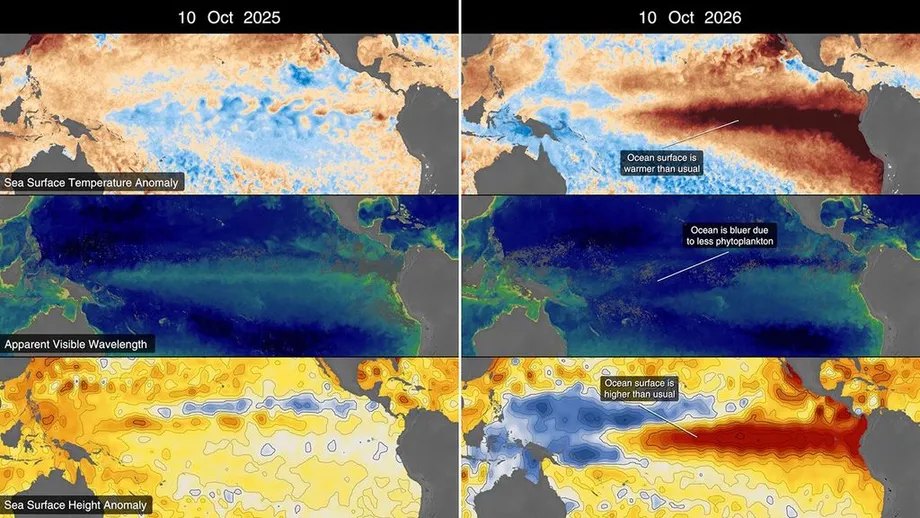
El Niño develops when an unusually warm stretch of the equatorial Pacific interacts with the atmosphere, changing winds and the location of tropical rainfall. Those changes can affect weather far from the ocean where the warming begins, including rainfall and daytime temperatures in Southeast Asia.
The October assessment recorded sea surface temperatures more than 4.0°C above average in parts of the eastern equatorial Pacific. The Niño-3.4 index, a measure covering a central Pacific monitoring area, reached 2.1°C above average. The Niño-3 and Niño-1+2 indices reached 3.0°C and 3.9°C above average respectively.
These figures describe departures from the usual ocean temperature for those areas. The accompanying changes in winds and rainfall showed that the atmosphere was responding too: rainfall remained stronger from the central to eastern Pacific and weaker over Indonesia.
The Climate Prediction Center also estimated an 83% probability that October to December would reach its threshold for a historic event, compared with 54% for September to November and 70% for November to January. That threshold is a value of at least 2.5°C on its RONI index over three months, placing the event among the strongest in a record extending back to 1950.
Why smaller water reserves affect so many people
Myanmar's warning describes a chain of possible shortages beginning with lower water levels in rivers, lakes, wells and ponds. Households may have less drinking water, while farms may receive less irrigation water. Groundwater depletion is another concern as hot and dry conditions continue.
Some townships are already experiencing temperatures above normal. Higher temperatures can increase water needs just as supplies become harder to replenish. Communities that depend on wells or small ponds may face particular pressure when those sources fall during the dry season.
Reservoirs serve several purposes, including storing water for irrigation and generating electricity. When less water flows into them, decisions about how much to release become more difficult. Water used now is water that cannot remain in storage for later needs.
The warnings do not give projected reservoir losses, a count of households likely to face shortages or an estimate of how much electricity generation could fall. Those missing figures leave the scale of the local impact uncertain, even as the seasonal outlook supports early preparation.
Hydropower could weaken as electricity demand rises
Hydropower depends on moving water turning turbines to generate electricity. Reduced inflows into dams can limit the water available for that process, creating the risk of lower generation during a period when heat may increase demand for cooling.
Myanmar's warning connects these pressures directly: less reservoir water could reduce hydropower production while electricity requirements rise. A tighter power supply could then affect other activities that depend on reliable electricity.
Water and electricity planning therefore need to happen together. Reservoir managers must consider irrigation needs alongside generation, while other sectors need to prepare for the possibility that both resources will be under pressure at the same time. The warning calls for preparations across the relevant sectors as El Niño develops.
Heat and unsafe water bring separate health risks
Children, older people and people with chronic illnesses are among those identified as especially vulnerable to extreme heat. Myanmar's warning lists dehydration and heatstroke as possible consequences of hotter conditions during the coming winter and summer.
Dehydration occurs when the body loses more water than it takes in. Heatstroke is a medical emergency in which the body becomes dangerously hot. A shortage of accessible drinking water can make it harder for people to protect themselves during prolonged hot weather.
Water scarcity can also increase the risk of diarrhoea and other infectious diseases when people have less safe water for drinking and hygiene. This creates a second health problem alongside the direct effects of heat, particularly in communities where supplies are already strained.
Proposed preparations include opening shelters where people can find relief from heat and conserving drinking water before shortages become severe. These measures address different needs: people require somewhere cooler during dangerous temperatures, as well as enough safe water throughout the day.
Farms face pressure on crops and livestock
Farmers could face reduced irrigation supplies if water levels decline in dams, reservoirs and other storage facilities. Irregular rainfall adds another difficulty because the timing of rain matters as much as the total amount when crops need water at particular stages of growth.
Preparations being urged include cultivating late monsoon crops to support production targets, storing water and using irrigation supplies efficiently. Reducing unnecessary losses from storage and delivery systems would help preserve water for use later in the dry season.
Livestock operations are also part of the preparedness call. Keeping them running through hot weather and water shortages requires planning alongside crop production, rather than treating them as a separate concern after supplies have fallen.
Recommendations also include stockpiling food and fruits that can be stored for extended periods. Together, the measures aim to protect both agricultural output and the availability of food while households and producers face a potentially prolonged period of heat and dryness.
The dates that matter through the 2027 monsoon
The forecast points to several months of preparation and monitoring. The strongest ocean warming is expected around the end of 2026, while strong conditions and their weather effects may extend further into 2027.
- 11 June 2026: Myanmar's meteorological department recorded weak El Niño conditions and warned that strong conditions could develop toward the end of the year.
- 8 October 2026: The Climate Prediction Center forecast strong to very strong El Niño conditions through January to March 2027, with a probability above 83%.
- 12 November 2026: The next ENSO Diagnostic Discussion is scheduled for release.
- November to December 2026: Myanmar's warning identifies this period as the possible peak of the event.
- March to May 2027: Weather effects could continue, with preparedness urged through the onset of the 2027 monsoon.
Myanmar's meteorological department says it will continue issuing updates as El Niño develops. Each update will help authorities and communities judge how the seasonal outlook is changing and whether preparations need to be adjusted.
Preparation needs to cover more than drought
Myanmar's June bulletin also identifies irregular rainfall and abnormal storm activity among the possible effects of El Niño. Planning therefore needs to account for uneven weather as well as prolonged heat and water shortages.
The strongest practical connection across the warnings is the need to conserve usable water before demand becomes more difficult to meet. Protecting drinking supplies, retaining reservoir water, limiting losses and coordinating irrigation with electricity generation all address parts of the same problem.
Communities may experience these pressures differently depending on their water sources, local temperatures and dependence on agriculture or hydropower. The immediate task is to prepare for a dry season in which several essential services could come under strain together, while continuing to track the forecasts into 2027.
Key Points
- Myanmar faces possible drinking water shortages, reduced irrigation supplies and lower hydropower generation as El Niño strengthens.
- The October forecast gives a probability above 83% of strong to very strong conditions continuing through January to March 2027.
- Myanmar's June bulletin recorded weak conditions at that earlier stage and anticipated possible strengthening toward the end of 2026.
- Heatstroke, dehydration and illnesses associated with unsafe water are among the health risks identified.
- Preparations include water conservation, heat relief shelters, food storage and measures to sustain crops and livestock.
- The next ENSO Diagnostic Discussion is scheduled for 12 November 2026, with preparedness urged through the start of the 2027 monsoon.