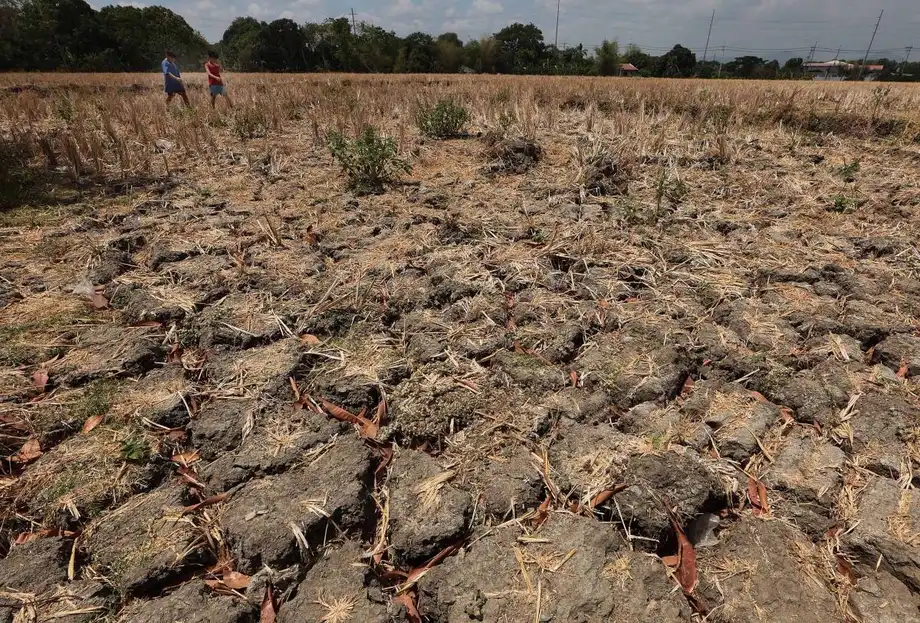
Farm losses put the 2027 agriculture budget under pressure
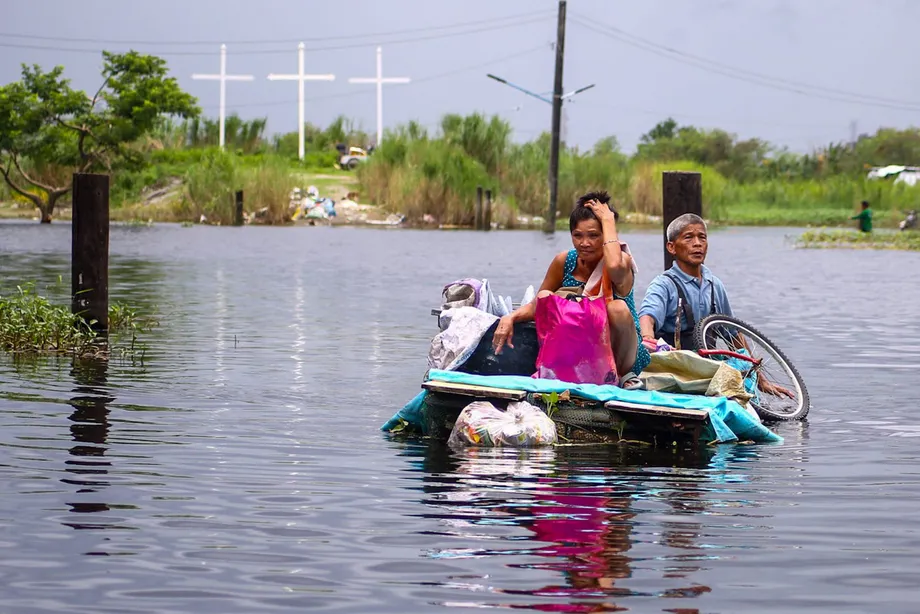
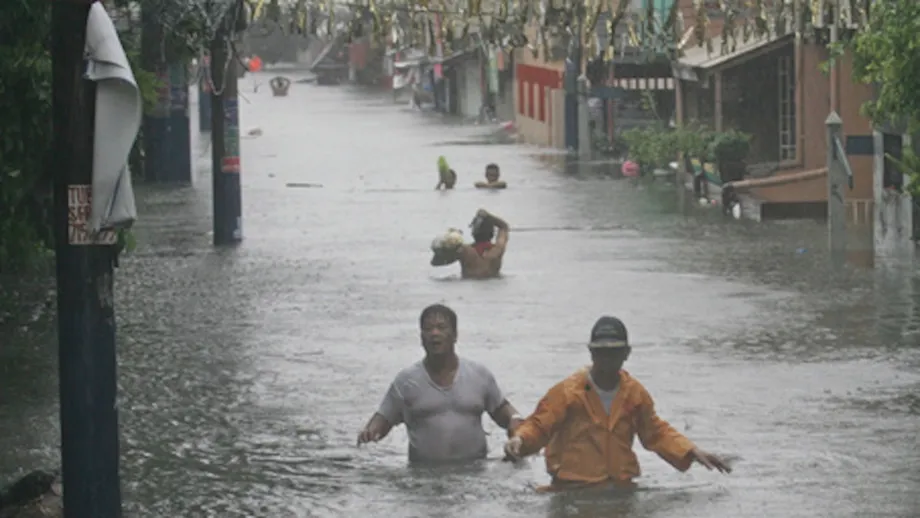
The Department of Agriculture has recorded P6.87 billion in El Niño damage across 249,028 hectares, with more than 223,000 farmers affected, as senators press for a response that can protect the next harvest as well as help communities already losing crops.
Contents
- Farm losses put the 2027 agriculture budget under pressure
- What the damage figures show
- PAGASA expects drought to spread into 2027
- Rice supplies face a longer test
- What is inside the P61.99 billion proposal?
- Water projects must reach farms and fishponds
- Central Visayas shows the local cost
- Assistance and the call for a calamity declaration
- The dates that shape the response
- Key Points
At an October 21, 2026 hearing on the department's proposed P171.3 billion budget for 2027, Senate President Sherwin "Win" Gatchalian requested a comprehensive contingency plan covering the climate forecast, agricultural damage, emergency measures and the money needed to carry them out.
The request comes as the department prepares for potential agricultural losses of P20 billion across 350,000 hectares. Agriculture Secretary Francisco Tiu Laurel Jr. said extreme heat and limited rainfall could affect between 2.8 million and 4.8 million farmers and fisherfolk.
The immediate concern is water: how much remains available, where it can reach farms and whether assistance will arrive before planting and harvesting decisions become unavoidable. The Philippine Atmospheric, Geophysical and Astronomical Services Administration (PAGASA) expects El Niño to strengthen and persist through the first half of 2027.
The agriculture department has already proposed a P61.99 billion response package. Gatchalian's request places the focus on how those measures, existing assistance and the proposed annual budget will work together over several planting cycles.
What the damage figures show
The department's assessments from 14 regions put production losses at 163,812 metric tons, covering rice, corn, cassava, other valuable crops, livestock and poultry. The figures remain subject to validation as field teams check the extent of the damage.
Gatchalian cited approximately 249 hectares affected during the hearing, while the department's detailed assessment listed 249,028 hectares. The larger figure is the one accompanying its national breakdown of production losses.
Corn accounted for 126,883 metric tons of lost production, about 77 percent of the total recorded losses by weight. Against the government's corn production target of 8.80 million metric tons for 2026, the department put that loss at 1.44 percent.
The same assessment recorded rice losses of 25,196 metric tons, about 0.12 percent of the annual target of 20.29 million metric tons. Tiu Laurel separately cited 63,000 tons of rice losses already recorded during the year at the budget hearing.
The national assessment covered 14 regions. Senator Francis "Kiko" Pangilinan highlighted five affected regions in his appeal for stronger intervention: Ilocos, Cagayan Valley, Bicol, Calabarzon and Soccsksargen.
For farming households, the damage reaches beyond the weight of missing grain. A failed crop reduces income available for food, debt payments and the seeds and fertilizer needed for the next planting.
PAGASA expects drought to spread into 2027
PAGASA's September 23 El Niño climate advisory said a strong El Niño was active in the tropical Pacific. Climate models projected that it would become very strong during the September to December 2026 period and continue through the first half of 2027.
El Niño is a climate pattern involving unusually warm surface water in the central and eastern equatorial Pacific. It changes weather patterns across a wide area and generally brings hotter conditions and less rainfall to much of the Philippines.
PAGASA's later outlook projected drought in six provinces in Luzon and the Visayas during October and November, expanding to 17 areas in December, 45 in January 2027, 78 in February and 84 in March. The bureau defines drought as three consecutive months of rainfall far below normal.
Science and Technology Secretary Renato U. Solidum Jr. urged local governments and sectors exposed to changing weather to use forecasts before damage becomes more severe.
"Climate information must be utilized before a crisis strikes," said Secretary Solidum.
Solidum pointed to adjusting farming schedules and using PAGASA's localized projections and CliMap. Those tools provide historical climate information and projections down to the municipal level, helping officials match preparations to conditions in individual communities.
PAGASA also warned that tropical cyclones and other weather systems can still bring heavy rain to particular places during El Niño. Its later outlook forecast three to five tropical cyclones entering or forming within the Philippine area of responsibility from October 2026 through March 2027.
Rice supplies face a longer test
Tiu Laurel told senators that rice production could fall by 700,000 to 1 million tons. Pangilinan estimated a decline of about 700,000 metric tons of palay, or rice before its husk is removed, during the second half of the year because of El Niño and other weather shocks.
The agriculture secretary said the country would need to obtain 863,000 tons of rice to secure supplies and maintain a buffer stock. A buffer stock is a reserve that can help bridge a gap between the food people need and the amount arriving from harvests and other sources.
Tiu Laurel described the available rice supply as adequate for 80 days. He also cited pork supplies equivalent to 170 days of consumption, chicken supplies for 135 days and enough red onions to last until March 2027.
Those stock estimates describe the immediate supply position. The planning challenge extends into the next harvests because PAGASA expects the climate event to continue into 2027, potentially reducing production while existing stocks are being consumed.
The department's P20 billion potential loss estimate is 25 percent higher than the P16 billion that Tiu Laurel cited for the 2023 to 2024 El Niño. A regional briefing put losses during that earlier event at P15.3 billion.
What is inside the P61.99 billion proposal?
The agriculture department presented its proposed P61.99 billion action plan to President Ferdinand Marcos Jr. at the National El Niño Task Force meeting on October 13. Undersecretary for Operations Roger V. Navarro outlined the proposal in a memorandum on the meeting.
The package includes P6.2 billion under the Unified Package for Livelihoods, Industry, Food and Transport (UPLIFT) program. The department described fuel and fertilizer subsidies among the support measures, while the meeting account said the P6.2 billion had been released and monthly livelihood payouts would run through December.
The department also identified P371 million in additional interventions that remained unfunded, including cloud seeding and controls for red-striped soft scale insects affecting sugarcane. Cloud seeding involves treating suitable clouds to encourage rainfall.
Marcos ordered a detailed accounting of cloud seeding, including coverage areas and budget allocations. He also directed the department to study importing rice seeds from India that can better tolerate drought, subject to feasibility and implementation requirements.
Tiu Laurel said farmers would need access to suitable seeds and other inputs as conditions worsened. The proposed response therefore combines immediate income support with measures intended to keep farms producing during a longer dry period.
The full P61.99 billion package remains a proposal, with P371 million specifically identified as unfunded. Its relationship to the P171.3 billion annual budget under discussion will be central to understanding which activities have money available and which still require approval or additional funding.
Water projects must reach farms and fishponds
The agriculture department is accelerating irrigation projects that use solar power and seeking funds for more pumps, irrigation equipment and paddle wheels for fishponds. Paddle wheels stir pond water and help add oxygen for fish.
Tiu Laurel also called for small water storage facilities, deeper ponds and pond liners that retain water. These measures address different needs: pumps move water, storage holds it for later use and liners reduce losses through the pond bottom.
Pangilinan, who is sponsoring the department's budget, argued that spending priorities should reflect the growing shortage of water. He described irrigation and storage as central to the response.
"Water and irrigation should be at the center of the DA's 2027 budget," the senator stressed.
The department said it had installed 338 water pumps across several regions. It also reported cloud seeding in agricultural and watershed areas in Cagayan Valley, including Magat Dam, and the distribution of 23,459 native chickens as part of assistance.
Dam conditions vary by location. Tiu Laurel described dams as near full during the hearing, while the department's detailed update placed Pantabangan Dam 8.72 meters below its target level and San Roque Dam above its normal high water level. Central Visayas irrigation officials separately reported falling levels in their smaller regional dams.
Central Visayas shows the local cost
Central Visayas had recorded more than P222 million in crop and livestock damage by October 20, affecting about 4,000 farmers and 4,246 hectares. Regional officials described preparations for both water shortages and further losses.
Gerry Avila, chief of the agriculture department's regional field operations division, said two rounds of cloud seeding totaling about 62 hours were being prepared. Operations could begin in late October or November. The department also urged farmers to enroll with the Philippine Crop Insurance Corp. to obtain financial protection.
Rainfall in Central Visayas fell 52 percent in September. For Cebu, projected rainfall was 57.9 percent of normal in November and 35.6 percent in February 2027, pointing to a prolonged shortage rather than a brief interruption.
Maria Donesa A. Autida, a section chief at the National Irrigation Administration's regional office, said the small capacity of local dams meant irrigation water availability would decrease as levels dropped. The agency was mapping areas vulnerable to drought and coordinating livelihood programs with the social welfare and labor departments.
Joel Clapano, the Cebu provincial fishery officer of the Bureau of Fisheries and Aquatic Resources, said fuel subsidies were being provided to fishers. The Metropolitan Cebu Water District also warned that rationing could become necessary if conditions worsened, extending the concern from farms to household water supplies.
Assistance and the call for a calamity declaration
The agriculture department reported P10.96 billion in interventions, including P10.53 billion in production support such as seeds, fertilizers and soil conditioners. The Philippine Crop Insurance Corp. had released P427.07 million in indemnities to 42,383 affected farmers.
Pangilinan pointed to a wider gap in assistance delivery. As of October 6, he said, 2.53 million farmers and fisherfolk had received help against a target of 11.12 million. That is about 23 percent of the target, leaving approximately 8.59 million intended beneficiaries still to be reached.
On October 21, the senator urged the executive branch to consider declaring a national state of calamity. He argued that a declaration could unlock emergency funds, trigger price freezes on basic goods and make loans without interest available to affected sectors.
The National Disaster Risk Reduction and Management Council reported that 106 cities and municipalities were already under local states of calamity. A national declaration would bring the response to a broader level; the government's decision on Pangilinan's request had not been announced.
Marcos also directed the agriculture department to prepare a priority beneficiary list and strengthen market surveillance and price monitoring to guard against manipulation and profiteering. He ordered information campaigns tailored to local conditions so affected communities could learn about assistance and how to access it.
The dates that shape the response
The response now spans both the remaining months of 2026 and the first planting cycles of 2027. Gatchalian said the Senate would hold a hearing on El Niño preparations and response, bringing the department's forecasts, spending and delivery plans under further scrutiny.
The key milestones connect the weather warning to funding decisions and assistance deadlines:
- September 23, 2026: PAGASA warned that strong El Niño conditions could intensify and persist through the first half of 2027.
- October 6: Assistance had reached 2.53 million of a target 11.12 million farmers and fisherfolk, according to Pangilinan.
- October 13: The agriculture department presented its P61.99 billion action plan to the National El Niño Task Force.
- October 20: Central Visayas officials outlined damage, cloud seeding preparations and water shortages.
- October 21: Senators examined the proposed P171.3 billion agriculture budget and pressed for a contingency plan and a national calamity declaration.
- December 2026: Monthly UPLIFT livelihood support payouts are scheduled to continue through this month.
- March 2027: PAGASA's outlook projects drought spreading to 84 areas.
The practical test is whether support, irrigation equipment and water storage can reach vulnerable communities before further production is lost. For consumers, the same timetable matters because weaker harvests would require the government to replenish food supplies while protecting households from price manipulation.
Key Points
- The agriculture department recorded P6.87 billion in damage across 249,028 hectares, affecting more than 223,000 farmers.
- Potential agricultural losses could reach P20 billion across 350,000 hectares.
- Gatchalian requested a comprehensive El Niño contingency plan during the October 21 budget hearing.
- PAGASA expects El Niño to persist through the first half of 2027, with drought spreading to more areas.
- The department proposed a P61.99 billion response package and identified P371 million in additional unfunded interventions.
- Pangilinan urged a national calamity declaration and greater priority for irrigation, water storage and assistance delivery.