Emergency borrowing targets transport, household bills and returning workers
The Philippines has signed a 236.64 billion Japanese yen loan, worth about $1.5 billion or P90.8 billion, with the Asian Development Bank (ADB) to help finance its response to the Middle East conflict. The money will support measures ranging from fare discounts and fuel subsidies to cash assistance and help for overseas Filipino workers returning home.
Contents
- Emergency borrowing targets transport, household bills and returning workers
- What the financing will pay for
- How the response developed
- Why fuel and fertilizer matter so much
- What assistance has already reached households
- What drivers said about fuel subsidies
- Why overseas workers are part of the package
- How ADB is financing the response
- Relief spending comes with a borrowing cost
- Key Points
Finance Secretary Frederick Go signed the agreement on October 6, 2026, following ADB approval on September 24. The Department of Finance announced the financing on October 20, placing it within the government's external financing program for 2026.
The borrowing comes as the conflict puts pressure on a country that imports nearly all its fuel, relies heavily on imported fertilizer and receives billions of dollars from Filipinos working in the Middle East. ADB has lowered its Philippine growth forecast for 2026 to 3.3 percent, from the 3.8 percent forecast issued in July, citing higher inflation and the prolonged conflict.
The loan finances the Assistance for Greater Resilience and Alleviation of Poverty program, known as AGAPAY. It will support the government's Unified Package for Livelihoods, Industry, Food, and Transport, or UPLIFT, which brings several relief measures under one response.
What the financing will pay for
UPLIFT covers measures to secure fuel and electricity supplies, keep public and commercial transport affordable, and provide targeted assistance to vulnerable households. ADB identified fare discounts, fuel and fertilizer subsidies, assistance to small electric cooperatives, medical relief and cash assistance among the measures the program can help fund.
Public transport operators and drivers, farmers working on a small scale, fisherfolk and households with low incomes are among the intended beneficiaries. The support also aims to keep food, medicines, health services and power within reach as higher energy costs spread through the economy.
Go, the finance secretary, described the purpose of AGAPAY when announcing the agreement:
AGAPAY will help the government sustain its response to the economic impact of the Middle East crisis and fund measures that support vulnerable sectors, protect livelihoods, and help Filipino families cope with these challenges.
The financing provides budgetary support. In simple terms, it helps the government pay for its response through the national budget, rather than financing a single construction project. The announcement did not specify allocations for each measure, the disbursement schedule, or the loan's interest rate and repayment period.
How the response developed
President Ferdinand Marcos Jr. declared a state of energy emergency lasting one year through Executive Order No. 110 in March. The order cited threats to the availability and stability of energy supplies and adopted UPLIFT as a response involving government agencies across several sectors.
The borrowing follows months of expanded assistance and discussions with ADB. The main steps were:
- March 2026: Marcos declared the energy emergency through Executive Order No. 110 and adopted UPLIFT.
- May 2026: ADB President Masato Kanda offered Marcos $1.75 billion in additional support to address the economic effects of Middle East tensions.
- July 2026: Marcos expanded UPLIFT cash assistance to cover 7.5 million vulnerable families.
- September 24, 2026: ADB approved the $1.5 billion crisis response package.
- October 6, 2026: Go signed the financing agreement.
- October 20, 2026: The Department of Finance announced the agreement.
The sequence shows how the response moved from emergency measures and expanded benefits to a signed borrowing agreement. Government assistance was already being distributed while the financing arrangements were being completed.
Why fuel and fertilizer matter so much
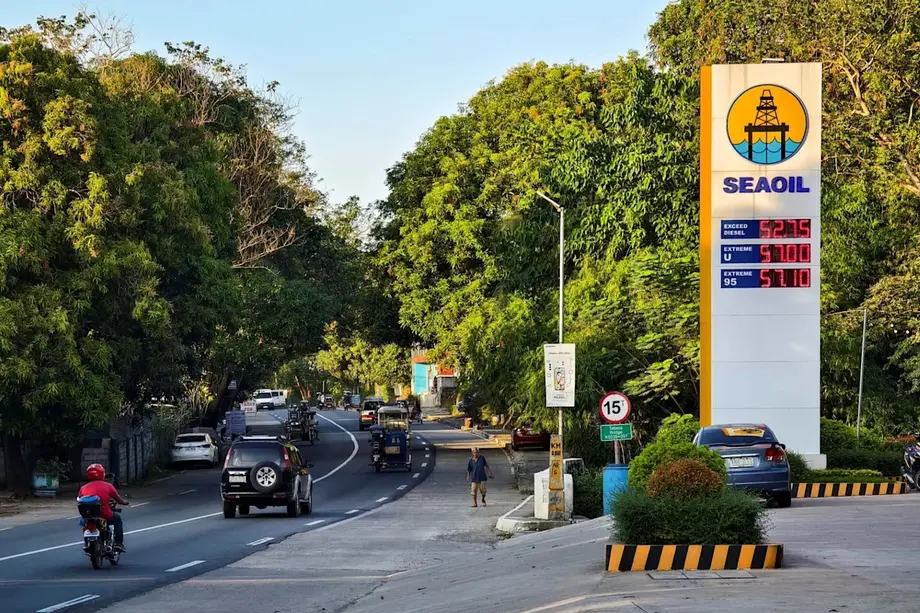
The Philippines imports nearly all its fuel and depends heavily on imported fertilizer, according to ADB. When international prices rise or shipments face disruption, the country must spend more to obtain supplies used in transport, electricity generation, farming and fishing.
A driver facing a higher fuel bill has less money left from the day's fares. A farmer paying more for fertilizer faces higher production costs. Moving food from farms and fishing ports to markets can also become more expensive, putting pressure on both producers and shoppers.
UPLIFT addresses several points in that chain. Fuel subsidies help eligible workers meet operating expenses, fertilizer assistance supports agricultural production, and fare discounts reduce passengers' travel costs. Aid to small electric cooperatives addresses another part of the response, maintaining access to electricity.
The Philippines had prepared similar transport assistance during earlier tensions. In June 2025, the government was readying a P2.5 billion fuel subsidy under that year's budget, with another P617 million available from the 2024 budget. Officials then identified an average global crude price above $80 per barrel as the release trigger. The 2026 agreement supports a broader package that also covers household assistance, health needs and returning workers.
What assistance has already reached households
Malacañang said more than 16 million Filipinos affected by rising fuel prices had received assistance under government aid programs. The Office of the Executive Secretary also gave a more specific progress measure: as of October 7, the first tranche of assistance had reached 6.49 million Filipinos, with P19.55 billion distributed.
The larger figure covers assistance across government programs, while the 6.49 million figure refers to the first tranche described by the office. Separately, the July expansion set coverage at 7.5 million vulnerable families. Those figures use different measures, including individual people, families and a particular round of payments.
Assistance has been delivered through the Department of Social Welfare and Development's expanded Pantawid Pamilyang Pilipino Program, commonly called 4Ps, and the Walang Gutom Program. UPLIFT also includes fuel and rice subsidies and service contracting for public utility vehicle drivers and operators.
Service contracting means the government pays operators or drivers to provide transport services. Alongside direct subsidies, it gives the response a way to support transport operations as well as the people who use them. The new loan will help sustain a package whose delivery was already under way before the October announcement.
What drivers said about fuel subsidies
A survey commissioned by the Australian government's Social Protection, Inclusion, and Gender Equality program, known as SPRING, offers a closer look at transport assistance. Among 1,200 fuel subsidy recipients surveyed, 96 percent said the P5,000 subsidy helped them remain on their routes or return to work.
For those respondents, the payment helped meet an immediate cost of earning a living. Keeping vehicles operating also matters to commuters who depend on regular services to reach workplaces, schools, markets and health facilities.
Executive Secretary Ralph G. Recto said the government would use the findings to adjust how assistance reaches workers:
We will use the insights gained from this survey to improve the delivery of assistance and connect more workers to programs that provide stronger protection during times of need.
The survey gives officials feedback from people receiving one specific benefit. UPLIFT's wider delivery task spans several groups with different needs, from drivers buying fuel to families buying food and workers returning from overseas.
Why overseas workers are part of the package
About 1.1 million Filipino workers were deployed to the Middle East in 2025, according to ADB. Remittances from the region represented about 18 percent of the Philippines' $35.6 billion in total remittances that year.
That share amounts to approximately $6.4 billion, calculated from the figures cited by the bank. The scale helps explain why the government's response includes both repatriation, bringing affected workers home, and reintegration, helping them settle back into life and work in the Philippines.
A worker returning because of conflict may need travel assistance immediately and help finding a new source of income afterward. A family receiving money from abroad can also face pressure if the worker's employment is interrupted while food, transport and electricity become more expensive at home.
UPLIFT therefore connects domestic relief with assistance for overseas Filipino workers. Its stated goals include supporting affected returnees while protecting household budgets and livelihoods within the Philippines.
How ADB is financing the response
ADB is providing the $1.5 billion loan through its Countercyclical Support Facility, a mechanism that helps countries respond to economic crises. Countercyclical support means making resources available to sustain spending when an economic shock is putting pressure on households, businesses and government finances.
Kanda, the ADB president, described the strain on people with limited resources when discussing the financing:
Every week this crisis continues to ask more of people who have little left to give.
He said the bank was backing the Philippine government's efforts to protect its people:
They have a right to expect that the institutions serving them will meet their struggle with equal resolve. With this financing, we are backing the Philippines' determination to keep its people secure and its future within its own hands.
ADB has also increased financing for the Build Universal Health Care Program Subprogram 3 by $250 million, bringing that program's total to $750 million. The increase came as the conflict widened the government's financing needs. At the regional level, the bank announced a further $3 billion in tourism financing across Southeast Asia over the next three years.
Relief spending comes with a borrowing cost
The emergency package is a loan, so the government must account for repayment as well as the immediate benefits of relief spending. National government debt stood at P19.61 trillion at the end of August, up 1.12 percent from the previous month.
The government's projection for the end of 2026 is P19.77 trillion, comprising P13.23 trillion in domestic debt and P6.54 trillion in external debt. The AGAPAY borrowing forms part of the government's stated external financing program for the year.
The weaker growth forecast adds pressure to those budget decisions. ADB's revision from 3.8 percent to 3.3 percent is a reduction of 0.5 percentage points. Higher inflation makes everyday purchases more costly, while slower growth makes it harder for households and businesses to increase their incomes.
The Department of Finance has also endorsed suspending excise tax on liquefied petroleum gas and kerosene, but not on diesel or gasoline. Excise tax is a tax charged on specified goods. The endorsement is another part of the policy response, alongside subsidies and direct assistance, with support directed at particular fuels rather than all petroleum products.
The immediate task is to sustain assistance while managing the cost to the budget. For commuters, drivers, farmers and returning workers, the practical effect will depend on which benefits reach them and how regularly that support arrives.
Key Points
- The Philippines signed a 236.64 billion yen loan, worth about $1.5 billion or P90.8 billion, with ADB on October 6, 2026.
- The financing supports UPLIFT measures including fare discounts, fuel and fertilizer subsidies, medical relief, cash assistance and help for returning overseas workers.
- The Office of the Executive Secretary said P19.55 billion in first tranche assistance had reached 6.49 million Filipinos by October 7.
- About 1.1 million Filipino workers were deployed to the Middle East in 2025. The region accounted for about 18 percent of Philippine remittances that year.
- ADB lowered its Philippine growth forecast for 2026 to 3.3 percent from 3.8 percent, citing inflation and the prolonged conflict.
- The government is funding relief through additional borrowing while national debt stood at P19.61 trillion at the end of August.