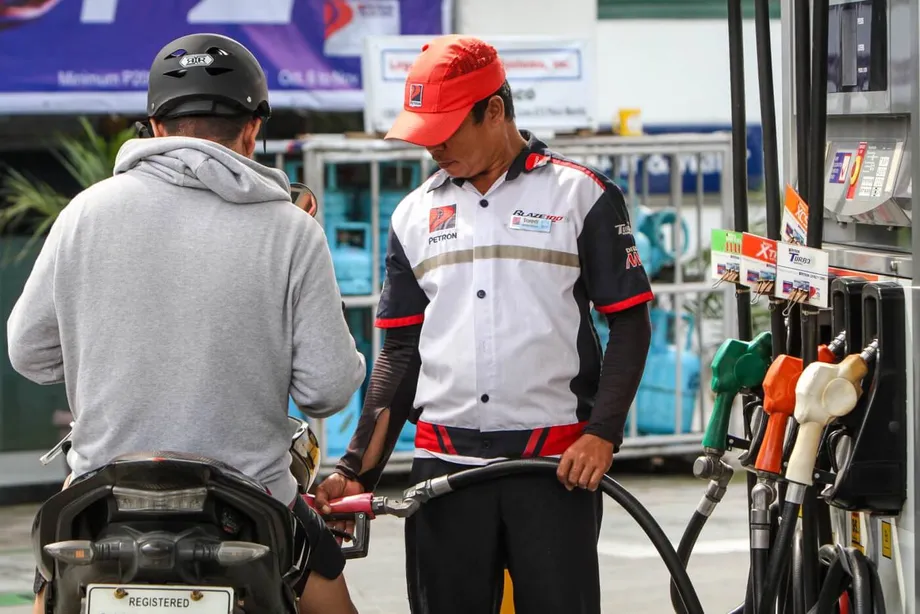
P2.5 Billion in Fuel Aid Awaits an Oil Price Trigger
The Philippines is preparing a P2.5 billion fuel subsidy program under the 2025 General Appropriations Act as fighting between Israel and Iran threatens to raise the cost of imported oil. Another P617 million is available from the 2024 budget. As of June 26, 2025, officials are finalizing distribution guidelines and beneficiary lists so assistance can reach transport workers when the conditions for release are met.
Contents
- P2.5 Billion in Fuel Aid Awaits an Oil Price Trigger
- Why a Distant Conflict Reaches Philippine Pumps
- What Must Happen Before Subsidies Are Released?
- Who Is Included, and How Will Payments Reach Them?
- Farmers and Fisherfolk Face Two Cost Pressures
- Commuter Fares and Fuel Bills Are Being Managed Together
- Why the Peso Matters Alongside the Oil Price
- Fuel Stocks and Alternatives Address Different Risks
- Filipino Safety and the Next Government Decisions
- Key Points
The program's stated trigger is an average global crude oil price above $80 per barrel. Prices in mid-June were around $73 to $79 per barrel, below that threshold. Brent crude briefly reached $79 before stabilizing after a ceasefire announcement, although the possibility of renewed fighting continues to create uncertainty.
President Ferdinand Marcos Jr. and his economic team are monitoring the conflict because the Philippines imports much of the oil it needs. Higher international prices can raise expenses for drivers, farmers and fisherfolk, then spread through the economy as moving passengers, transporting goods and producing food become more expensive.
More than 1.1 million people are expected to benefit from transport assistance. The listed groups include 258,712 public utility vehicle operators and drivers, 723,695 tricycle drivers and 150,000 drivers using ride-hailing applications. Officials are also preparing assistance for agriculture and fisheries, where fuel costs directly affect livelihoods and food supply.
The government's response combines several measures: preparing subsidies, holding back fare increases, asking oil companies to spread pump price increases across two tranches, and maintaining fuel inventories. These steps address different pressures. Subsidies help eligible workers pay their bills, while inventories help keep fuel available and staggered increases spread the immediate expense over time.
Why a Distant Conflict Reaches Philippine Pumps
The Middle East is a critical source of crude oil for the Philippines and much of the world. Israeli airstrikes on Iranian military and nuclear sites, followed by Iranian retaliation, have raised fears that the fighting could spread and disrupt oil shipments.
The Strait of Hormuz is central to those concerns. The narrow waterway between Iran and Oman carries about one-third of global seaborne oil trade and around 20% of liquefied natural gas shipments. Liquefied natural gas is gas cooled into liquid form so it can be transported by ship.
A blockade or military escalation around that route could interrupt supplies and push international energy prices higher. For a country that relies on imported oil, the effects can reach local filling stations even though the fighting is far away.
President Marcos acknowledged the risk, saying oil prices would be affected if the Strait of Hormuz were blocked:
certainly be affected.
Brent's brief rise to $79 per barrel and subsequent stabilization after a ceasefire announcement show how quickly prices can move as expectations change. The government is watching prices daily because renewed conflict could bring another surge.
What Must Happen Before Subsidies Are Released?
The 2025 General Appropriations Act provides P2.5 billion for fuel subsidies. That law sets out the national government's budget for the year. The additional P617 million available from the 2024 budget gives officials another pool of funding as they prepare assistance.
The current guidelines tie release to the average global crude oil price breaching $80 per barrel. An average measures prices across a period, rather than taking only a single moment's price. The government is monitoring the market and preparing to activate the program if the threshold is crossed.
Transportation Secretary Vince Dizon said the administration was ready to implement the transport subsidy under the budget law:
The Marcos administration is fully prepared to implement the Fuel Subsidy Program for the public transport sector, in accordance with the 2025 General Appropriations Act.
Marcos has convened his economic team to assess developments and determine the appropriate timing for assistance. Officials also say they are prepared to respond if local pump prices rise sharply. No release date has been given, and the amount each farmer or fisherfolk beneficiary would receive is still being determined.
Who Is Included, and How Will Payments Reach Them?
The transport program covers public utility vehicle drivers and operators, including jeepneys, buses, taxis and ride-hailing services. Tricycle drivers and delivery platform drivers are also included among the intended recipients.
The three listed beneficiary groups add up to 1,132,407 people:
- 258,712 public utility vehicle operators and drivers.
- 723,695 tricycle drivers.
- 150,000 drivers using ride-hailing applications.
Tricycle drivers account for about 64% of that total, calculated from 723,695 out of 1,132,407. Their large share makes the preparation of accurate local beneficiary lists particularly important to the rollout.
The Department of Transportation and the Land Transportation Franchising and Regulatory Board are finalizing eligibility lists. Those lists will be verified and certified at the regional level before assistance is distributed, with the aim of ensuring that payments reach the intended recipients.
Several payment channels are being prepared. They include existing Pantawid Pasada fuel cards, registered electronic wallets such as GCash and Maya, transfers between bank accounts, and cash distribution through the Land Bank of the Philippines. Using several channels is intended to make distribution faster and more efficient for people with different ways of receiving money.
Farmers and Fisherfolk Face Two Cost Pressures
Farmers and fisherfolk are included in the government's preparations because rising fuel prices can make their daily work more expensive. The assistance is intended to help them maintain their livelihoods and keep food supply chains operating.
The agricultural funding figures given in the preparations include a separate P150 million allocation, divided into P75 million each for agriculture and fisheries, as well as a stated P600 million set aside for farmers and fisherfolk. How those two amounts relate has not been explained. The transport allocation is P2.5 billion, with the additional P617 million available from the previous year's budget.
Fertilizer supplies are another concern. The Philippines imports a substantial portion of its nitrogen-based fertilizer from the Middle East, particularly Qatar. Nitrogen is a nutrient that crops need to grow, so an interruption in fertilizer supplies could affect agricultural production and food prices.
The Department of Agriculture is exploring alternative suppliers, including Brunei, to reduce the risk of shortages. Officials believe the risk of a prolonged fertilizer shortage is low while key sea lanes remain open, but they are monitoring the situation and preparing contingency plans.
Commuter Fares and Fuel Bills Are Being Managed Together
The Land Transportation Franchising and Regulatory Board has been instructed not to approve fare increases while the fuel subsidy program is being prepared. The measure is intended to protect commuters from an immediate rise in the cost of their journeys.
Transportation Assistant Secretary Mon Ilagan explained the government's priority in preparing assistance before allowing additional costs to reach passengers:
prioritize the release of the fuel subsidy
Drivers still face the expense of buying fuel while fares are being held steady. The planned subsidy is meant to help them manage that pressure and continue providing transport without immediately passing higher costs to the riding public.
Fuel retailers have also agreed to implement price increases in two tranches. A tranche is one part of a larger amount, so the approach spreads an increase across two steps. The Department of Energy is negotiating with oil companies over staggered adjustments to ease the burden on consumers.
Selected filling stations are offering discounts for public utility vehicles. The energy department is also monitoring unjustified price increases, described as "price gouging," as officials work to keep the response coordinated across transport and fuel supply.
Why the Peso Matters Alongside the Oil Price
The Philippine peso's value against the US dollar can add to the cost of imported oil. When the peso weakens, more pesos are needed to pay the same bill in dollars. Local fuel prices can therefore face pressure from both the international oil price and the exchange rate.
In recent weeks, the peso fell to P57.45 per dollar. That depreciation contributed an estimated P0.75 per liter to fuel price increases, adding another expense alongside movements in global oil markets.
Higher fuel bills also affect businesses that move goods. Logistics means the work of transporting, storing and delivering products. When that work becomes more expensive, the added cost can reach shops and households through higher prices for goods and services.
Palace Press Officer Claire Castro warned that the effects would extend beyond people receiving direct fuel assistance:
the impact will also be felt in logistics and trading.
Inflation is the rise in prices across the economy. Fuel can contribute to it because transport is involved in moving many everyday products. The government's concern therefore includes commuters' fares, workers' earnings and the cost of supplying businesses and households.
Fuel Stocks and Alternatives Address Different Risks
The Department of Energy has required oil companies to maintain a fuel inventory covering 30 days. Keeping those stocks is intended to help stabilize local supply if deliveries are disrupted. The requirement works alongside the effort to stagger price increases.
Government preparations also include longer term efforts to reduce dependence on imported oil. Economists and energy analysts are urging a faster transition to renewable energy, electric vehicles and other alternatives, linking the current crisis to repeated exposure to disruptions abroad.
An unnamed energy analyst described the argument for accelerating the move to electric and hybrid vehicles:
Periodic crises in the Middle East should compel government to expedite the transition to electric or hybrid vehicles in order to protect the public from the acute but severe impact of regional tensions.
Electric vehicles use electricity for power, while hybrid vehicles combine an electric system with an engine that uses fuel. Investment in renewable energy, liquefied natural gas infrastructure and energy efficiency is also being considered part of building greater resilience. Energy efficiency means using less energy to do the same work.
The immediate subsidy and those longer term investments serve different needs. Assistance helps eligible workers handle current expenses. Changes in energy supply and consumption are intended to reduce the country's vulnerability to future disruptions, making energy security an economic and strategic concern.
Filipino Safety and the Next Government Decisions
The government is monitoring the safety of around 30,000 Filipinos in Israel and 1,200 in Iran. As of June 26, there is no mandatory repatriation order. Voluntary evacuation is being arranged for people who want to return home.
Migrant Workers Secretary Hans Leo Cacdac has been dispatched to Jordan to coordinate evacuation efforts. That work is taking place alongside the economic response, with officials addressing both the safety of Filipinos in the affected region and the costs reaching households at home.
The developments leading to the current preparations can be summarized as follows:
- In mid-June, global crude oil prices were around $73 to $79 per barrel, below the stated $80 subsidy trigger.
- Following Israeli airstrikes on Iranian military and nuclear sites and Iranian retaliation, fears grew over possible disruptions to regional oil shipments.
- Brent crude briefly reached $79 per barrel before stabilizing after a ceasefire announcement.
- By June 26, the government was preparing subsidy guidelines, verifying beneficiaries, coordinating fuel price measures and arranging voluntary evacuation assistance.
The Department of Transportation, Department of Energy, Department of Agriculture and other agencies are coordinating the rollout of assistance. Marcos and his economic team are continuing to assess oil prices and the conflict, while fuel retailers prepare increases in two tranches and officials monitor local pricing.
Key Points
- P2.5 billion is allocated for fuel subsidies under the 2025 budget, with another P617 million available from the 2024 budget.
- The stated release trigger is an average global crude oil price above $80 per barrel.
- The three listed transport beneficiary groups total 1,132,407 people, including 723,695 tricycle drivers.
- Payments are being prepared through fuel cards, electronic wallets, bank transfers and Land Bank cash distribution.
- Agricultural assistance figures include P150 million split equally between agriculture and fisheries, and a stated P600 million for farmers and fisherfolk. Their relationship has not been explained.
- Fare increases are being held back while subsidies are prepared, and fuel retailers have agreed to increases in two tranches.
- The peso's fall to P57.45 per dollar added an estimated P0.75 per liter to fuel price increases.
- Officials are monitoring fertilizer supplies, maintaining fuel inventory requirements covering 30 days and arranging voluntary evacuation for Filipinos in the affected region.