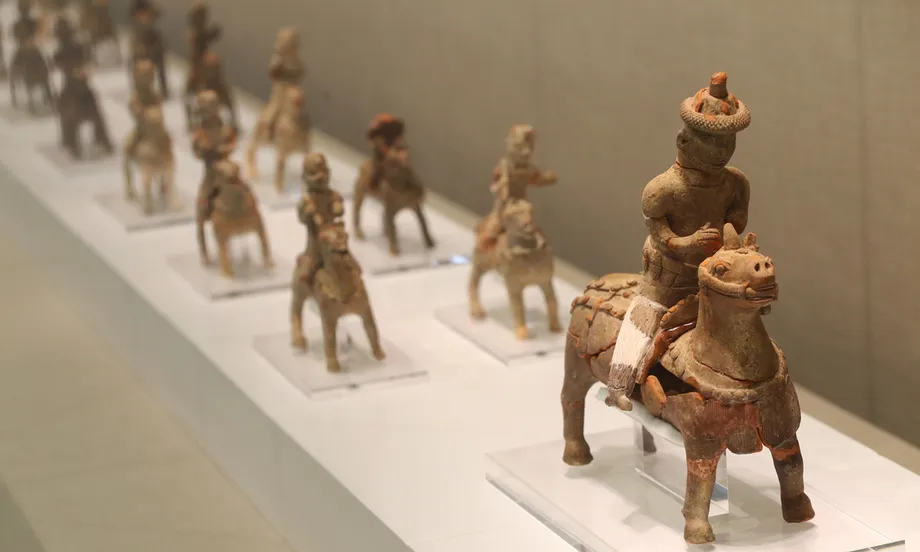
A national inventory will put museum collections under closer scrutiny
China will survey movable cultural relics held by state collection institutions during 2026-2030, combining a national inventory with tighter museum controls, restoration work and support for more than 6,000 small and medium museums. The program comes as the handling of five donated paintings at the Nanjing Museum has drawn public scrutiny of how museums protect their collections.
Contents
- A national inventory will put museum collections under closer scrutiny
- What will the survey record?
- Preparations began before the October announcement
- Why the Nanjing Museum controversy matters
- More resources will go to fragile objects
- Museum growth changes the task ahead
- New museums will face closer planning checks
- More than 6,000 smaller museums are a priority
- A wider heritage plan sets the 2030 goal
- Key Points
Deng Chao, deputy head of the National Cultural Heritage Administration, outlined the measures at a State Council Information Office news conference on October 20, 2026. They include checking museum storerooms, improving records, assessing the cultural importance of objects and directing more resources toward preserving the objects themselves.
The administration's heritage development plan, dated July 20 and published July 29, gives the survey a defined scope: state owned movable relics held by different kinds of state collection institutions. It also calls for a national database and a system that keeps collection information updated as circumstances change.
Movable relics are objects that can be transported, such as paintings and other collection items, rather than buildings or archaeological sites. Checking them requires more than counting objects. Museum staff need reliable records connecting each object to its identity, classification, condition and movements through storage or exhibition spaces.
The announcement joins two priorities that directly affect visitors: protecting what museums already hold and making better exhibitions available beyond major cities. China's museum network reached 7,188 institutions during 2021-2025, up from 5,788, while recording more than 6.2 billion visits over those five years, according to Deng.
What will the survey record?
The second national survey of movable cultural relics will investigate and register state owned objects held by state collection institutions. The July plan pairs that work with comprehensive classification of museum relics and continuing management of their records.
Classification assesses an object's cultural importance and helps institutions organise protection work. An inventory check answers a more immediate question: whether the objects physically present match the museum's records. Both tasks are included in the administration's collection management program.
The plan calls for rules covering collection registers, objects entering and leaving storage, and physical stock checks. It also requires documentation and registration of museum relics, alongside supervision throughout the process of managing a collection.
A national movable relics database will form part of a larger cultural heritage data system known as China Cultural Relics Cloud. The plan connects this data infrastructure with applications for safety risk supervision, scientific research and public presentation. For museums, the practical goal is to make collection information usable across institutions and administrative boundaries.
Preparations began before the October announcement
The October briefing followed earlier action on collection safety and survey preparations. Wu Min, deputy director of the administration's Museums and Social Heritage Department, described that work at a Beijing briefing on May 11.
The sequence shows how the inventory fits into a wider program of museum reform:
- February 2026: The administration launched a nationwide campaign on the safety management of relics in state owned museum collections.
- May 11, 2026: Officials announced that preparations for the second national movable relics survey were under way.
- July 20, 2026: The administration issued its heritage development plan for 2026-2030; publication followed on July 29.
- October 20, 2026: Deng set out the survey, conservation and museum service priorities at the State Council Information Office briefing.
- By 2030: China's broader cultural heritage protection and transmission plan aims to establish a comprehensive picture of heritage resources.
The survey falls within the 2026-2030 planning period. Officials have not given a precise launch date, a separate completion deadline or a total number of objects expected to be registered.
Why the Nanjing Museum controversy matters
The Nanjing Museum case has brought collection management into public view. An investigation found irregularities in the transfer and sale of five donated paintings at the institution in Jiangsu Province. Other institutions and individuals responsible for violations or failures in oversight were also held accountable.
Xu Huping, the museum's former head, was sentenced to three years in prison for accepting bribes. The controversy has placed particular attention on decisions involving objects entrusted to museums and the procedures used when items leave a collection.
At the May briefing, Wu said the administration was working to revise the Measures for the Administration of Museum Collections. The planned changes include stricter conditions and procedures for removing items from collections, together with requirements governing collection management from beginning to end.
Deng's October measures also include stronger professional ethics education and public participation in oversight. The July plan calls for a dedicated national campaign on collection safety at state owned museums and continued access to the 12359 platform for reporting cultural relic violations.
More resources will go to fragile objects
Deng placed the collections themselves at the centre of the museum program. At the October briefing, the deputy head of the National Cultural Heritage Administration explained their role:
Collections are the foundation of a museum.
The July plan turns that principle into specific conservation tasks. Museums are to investigate deterioration, assess preservation conditions and restore precious objects that are endangered or made from fragile materials. Daily care and monitoring of storage environments are also part of the program.
For relics classified at the highest level, the plan sets out condition surveys, assessments of damage and the collection of images with a high level of detail. It also calls for suitable cabinets, shelving and protective containers, together with monitoring and control of temperature and humidity.
These measures address different stages of protection. Restoration treats existing damage; preventive care seeks to keep deterioration from developing. A fragile object may need a stable storage environment and regular checks as well as specialist treatment. The administration plans to direct more resources toward this work on the relics themselves.
Museum growth changes the task ahead
China added 1,400 museums during the 2021-2025 planning period, an increase of about 24%, based on Deng's figures of 5,788 and 7,188 institutions. Museums held 224,000 exhibitions and organised 2.25 million educational activities across those five years.
The July plan supplies a separate annual measure of demand. Museum visits increased from 1.227 billion to 1.56 billion during the previous planning period, a rise of about 27%. Its target for 2030 is 1.6 billion annual visits, about 2.6% above the 2025 figure.
Visits count entries, so someone attending several exhibitions can appear several times in the total. For museums, this measure helps describe the volume of public use and the demands placed on visitor services.
The plan explains its 2030 attendance target by referring to recent rapid growth, museum development cycles, venue capacity and digital technology. It pairs the target with support for smaller institutions, better exhibitions and improvements to the visiting experience.
Original temporary exhibitions have their own target: 15,000 a year by 2030, compared with 14,000 in 2025. This category covers exhibitions that museums research and create mainly from their own collections. It measures the production of new exhibitions rather than every display a visitor might see.
New museums will face closer planning checks
The administration plans to develop Museum Construction Standards and strengthen scrutiny of proposed museums. Deng said construction should be based on sound planning, appropriate scale and careful use of resources, with institutions developing distinct identities rather than repeating nearby projects.
Wu's May announcement described assessments of whether a museum is necessary, feasible and capable of sustaining operations. These checks connect construction decisions with the continuing cost of running a museum, maintaining its collections and employing staff.
The July plan also addresses museum establishment, registration and exit procedures, as well as quality management and performance assessments. Suitable historic buildings and industrial heritage sites may be used as museums, making use of existing heritage spaces.
For local authorities, the policy places collection care and operating capacity alongside the decision to build. A museum's work continues long after its doors open, through storage, conservation, research, exhibitions and education.
More than 6,000 smaller museums are a priority
The small and medium museum improvement plan will target more than 6,000 institutions. Deng said major national and provincial museums would be encouraged to support smaller museums through partnerships, touring exhibitions and closer professional cooperation.
The July plan gives the initiative a practical list of tasks: improving facilities, replacing equipment, upgrading displays and carrying out construction where genuinely necessary. Support will also cover collection registration, classification, documentation, restoration, preventive care and digital preservation.
Staff development is another part of the program. The administration plans stronger professional training for museums at city and county level, alongside assistance with collection management and exhibition planning. Partnerships are intended to share skills as well as objects.
The support network will connect larger museums with smaller ones, institutions at higher administrative levels with local museums, and museums in eastern China with those farther west. The July plan specifically calls for greater assistance to smaller institutions in central and western China, border areas and ethnic minority regions.
For residents outside provincial capitals and other major cities, the intended change is concrete: more substantial exhibitions closer to home, supported by local institutions with better equipment, records and trained staff.
A wider heritage plan sets the 2030 goal
The museum measures sit within China's broader Cultural Heritage Protection and Transmission Plan for the 15th Five-Year Plan period. At the October briefing, officials described a goal of comprehensively identifying cultural heritage resources by 2030, improving regulation and strengthening the workforce.
The wider program links several kinds of heritage work. Officials plan to use the results of the fourth national cultural relics survey to improve protection of immovable heritage, while conducting the second survey of movable relics. The Ministry of Culture and Tourism also plans a second national survey of intangible cultural heritage.
Buildings and archaeological sites, museum objects, and living cultural traditions require different forms of protection. The shared planning framework seeks more coordinated supervision while keeping measures suited to each category. Its stated principles include putting protection first, using heritage reasonably and keeping intervention to a minimum.
For museums, the next stage combines rule changes with everyday work: checking objects against records, assessing their condition, strengthening storage controls and sharing exhibitions. The July plan also calls for better reservation arrangements, closer cooperation with schools and wider access to collection resources. Visitors will experience the program through both the objects preserved and the services available locally.
Key Points
- China plans its second national survey of movable cultural relics during 2026-2030, covering state owned objects held by state collection institutions.
- The program includes collection inventories, classification, updated records and a national movable relics database.
- Planned rule changes will tighten collection management, including conditions and procedures for removing objects.
- Conservation work will focus on precious, endangered and fragile relics, with condition assessments and better storage monitoring.
- A museum improvement initiative will target more than 6,000 small and medium institutions through upgrades, training and partnerships.
- China had 7,188 museums by the end of the previous planning period and aims to reach 1.6 billion museum visits annually by 2030.