Trade costs run 20% above the ASEAN average
The Philippines faces trade costs estimated at 20% above the ASEAN average, according to the World Trade Organization Secretariat's 2026 Trade Policy Review, putting import paperwork, transport links and regulatory requirements at the center of efforts to attract investment and expand exports.
Contents
- Trade costs run 20% above the ASEAN average
- Why tariffs tell only part of the story
- Paperwork and island transport add to the bill
- A record export month masks uneven results
- Building capabilities beyond electronics
- Electricity and skills shape investment choices
- Investment approvals rise as July inflows fall
- New Clark City and Bulacan enter the AI supply chain
- What is scheduled, and what still needs a decision?
- Key Points
WTO Secretariat officials identified import licensing and labeling requirements among the barriers that can make goods more expensive to move across borders. They acknowledged Philippine progress on investment and tariff reforms, while saying the government would choose which changes to prioritize next.
The recommendation comes as electronics power a sharp rise in Philippine exports and the country seeks a larger role in manufacturing equipment for artificial intelligence. September merchandise exports reached $9.87 billion, up 35.6% from a year earlier, according to preliminary Philippine Statistics Authority figures. Electronics, particularly semiconductors, drove much of that growth.
Other export industries had a weaker month. Shipments of processed tropical fruit, pineapple products and minerals all declined. The contrast shows why reducing trade costs matters beyond the technology sector: factories, farms and processors all depend on affordable transport, reliable electricity and predictable border procedures.
Philippine Ambassador and Permanent Representative to the WTO Manuel Antonio Teehankee also identified domestic infrastructure as a priority. Goods must reach ports and warehouses before they can reach foreign buyers, making movement between the country's islands part of its international competitiveness.
Why tariffs tell only part of the story
The Philippines' simple average most-favored-nation applied tariff was 5.9% in 2025, according to WTO data. This measure gives each product tariff equal weight. The trade-weighted average, which gives more weight to goods imported in larger amounts, was 6% in 2024.
Most-favored-nation, or MFN, tariffs are the standard duties applied to trading partners covered by that treatment. Preferential trade agreements can provide different rates. WTO figures show that 13.6% of Philippine imports entered without duties under MFN terms.
Businesses also face costs beyond these taxes. Import licenses, labeling rules and checks on products can require additional documents, staff time and processing. WTO officials identified those requirements as an area for further reform after the country's progress on tariffs and investment rules.
For a manufacturer importing components and exporting finished products, delays can affect production schedules as well as shipping bills. Lower tariffs address one expense; faster, more coordinated procedures address the time and administrative work needed to move the same goods.
Paperwork and island transport add to the bill
WTO officials also cited technical verification before goods cross the border, electronic invoicing across borders and a national single window that is not yet fully operational. A single window is intended to let traders submit information through one system for the government agencies involved in clearing goods.
Fragmented regulations and logistics pass-through fees add further costs. Pass-through fees are charges transferred along the transport chain and ultimately paid by businesses or customers. When several services are needed to move a shipment, those charges can accumulate.
The Philippines' geography creates another challenge. Its 7,641 islands mean goods may need several transport stages before reaching an international port. Roads, shipping services, warehouses and connections between them all affect the final cost.
Teehankee described the infrastructure needed to improve that movement:
"Improved infrastructure for inter-island transport and rail is very important for moving goods inside the country because import-export is also dependent on internal logistics and warehousing. So that's the other big area of infrastructure that we should develop," he said.
The estimate that Philippine trade costs exceed the ASEAN average therefore covers a wider problem than customs duties alone. Geography, domestic transport and administrative procedures all contribute to the expense of connecting Philippine producers with overseas customers.
A record export month masks uneven results
September's $9.87 billion in merchandise exports was the highest value since the statistical series began in 1991, according to preliminary PSA data. The 35.6% annual increase was also the strongest growth since April 2021, when exports jumped 74.23%.
Electronics and semiconductors accounted for much of the latest strength. Semiconductor components are used in products ranging from computers to industrial machinery, connecting Philippine factories to manufacturing networks that span several countries.
Other industries moved in the opposite direction. Processed tropical fruit exports fell 20.9% to $31.47 million. Pineapple and pineapple product exports dropped 58.6% to $30.93 million, while mineral exports declined 20.7% to $333.93 million.
These figures describe a strong export month with gains concentrated in technology products. Agricultural producers and mineral exporters were dealing with falling shipment values even as the national total reached a record.
Reliance on electronics also ties export earnings closely to decisions about technology investment abroad. Developing more competitive industries would give the Philippines a wider range of products and customers alongside its established semiconductor business.
Building capabilities beyond electronics
Leonardo A. Lanzona, an economics professor at Ateneo de Manila, called for investment in technology, research, worker training and the development of local suppliers. He argued that promoting products alone would leave deeper production weaknesses unresolved.
Lanzona described the change he wants:
"The strategy is not simply to find new markets for traditional exports, but to build the capabilities that will enable these industries to compete, innovate, and move up the value chain," he said.
Moving up the value chain means doing more of the work that makes a product valuable, such as processing, design or advanced manufacturing, rather than mainly supplying raw materials. Lanzona said agriculture faces low productivity, fragmented production and limited processing capacity, while technology transfer and foreign investment have helped electronics expand.
Connecting competitive companies with local producers could spread technical knowledge and create opportunities for Philippine suppliers. For example, a local business may need better equipment, consistent quality and trained workers before it can supply a larger manufacturer regularly.
Victor A. Abola, a senior economist at the University of Asia & the Pacific School of Economics, called for incentives supporting agricultural exports. He said support should reach farmers, cooperatives and larger companies, citing demand for coconut products used in industry and for pineapple in Europe and other advanced economies.
Electricity and skills shape investment choices
Miguel Chanco, chief emerging Asia economist at Pantheon Macroeconomics, identified high logistics costs, expensive and sometimes unreliable electricity, and major skills shortages as constraints on exports. He also pointed to underinvestment in public education and the loss of skilled workers through migration.
These constraints connect the border reform debate to decisions inside factories and farms. A company can complete its import documents efficiently and still struggle to meet an order if power interruptions halt production or it cannot recruit workers with the necessary skills.
WTO Secretariat officials said the Philippines could strengthen industrial clusters and train workers for semiconductor jobs. A cluster brings related companies, suppliers and workers closer together, making it easier for them to obtain services, exchange knowledge and organize production.
Services remain another Philippine strength, particularly business process management. That industry includes work performed for companies elsewhere, such as customer support and business administration. WTO officials saw room to build on those exports while also expanding manufacturing.
The practical agenda spans several institutions: agencies handling trade procedures, infrastructure planners, electricity providers, schools and employers. Improving one part can help, but producers still need the other parts to deliver goods reliably and compete for contracts.
Investment approvals rise as July inflows fall
Bangko Sentral ng Pilipinas figures put net foreign direct investment inflows at $689 million in July. That was down 44.1% from $1.23 billion in the same month a year earlier, but up 54.1% from $447 million in June.
The monthly figures show two different comparisons: foreign investment increased from June while remaining below its level a year earlier. Foreign direct investment generally involves a lasting ownership interest in a business, including equity investment, reinvested earnings and certain lending between related companies.
The Board of Investments recorded P900.06 billion in approved investments from January to September, up 53.05% from the corresponding period a year earlier. That brought approvals to about 90% of its P1 trillion annual target.
Domestic investors accounted for P808.96 billion, or 89.88% of the reported total. Foreign investors accounted for P90.40 billion. Domestic businesses therefore supplied the large majority of investment commitments recorded by the agency.
BOI approvals concern projects authorized for investment, while central bank inflow figures track investment transactions. A project can receive approval before its planned spending takes place, so the two measures describe different stages of business activity.
New Clark City and Bulacan enter the AI supply chain
The Philippines plans to host a hub under Pax Silica, a United States initiative to build an allied supply network for critical technologies and minerals. The proposed hub would occupy 1,600 hectares within the 9,450 hectares of New Clark City in Tarlac, about 17% of the development's area.
Bulacan is also being considered as a regional gateway where components could be gathered, assembled into AI computing equipment such as server racks, and shipped to global markets. Server racks hold the computing equipment used in data centers, including systems that run AI applications.
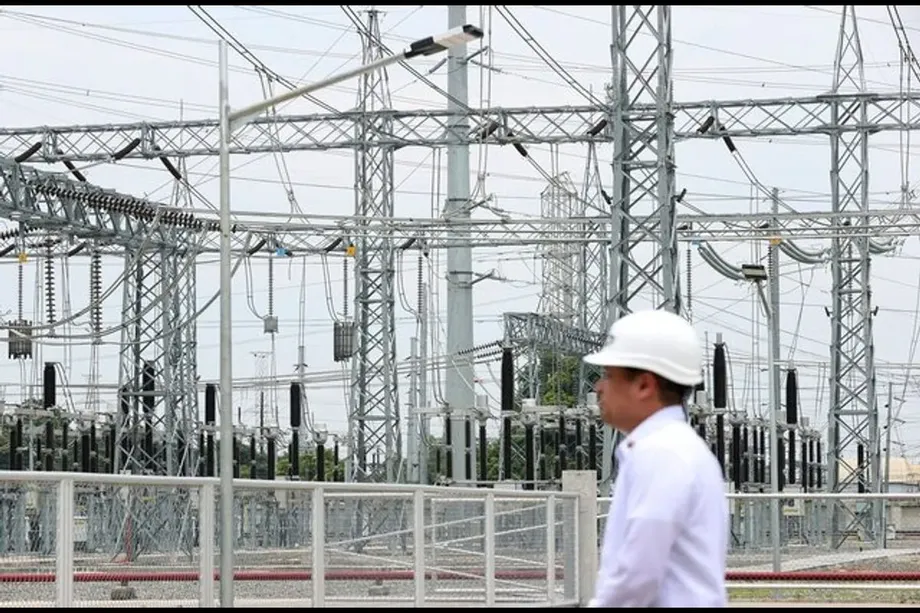
The proposed activities would place Philippine sites at different stages of a technology supply chain: receiving components, assembling equipment and exporting finished products. Import processing, dependable power, warehouse capacity and shipping connections would directly affect how efficiently those operations could function.
The New Clark City proposal also faces concerns over land and resource use. In October, Aeta land concerns centered on a survey by Syracuse University professor Arnisson Andre Ortega that found planned construction would encroach on land used by at least three existing Aeta villages.
Gloria Capiz-Estabillo, an elder of the Aeta Hungey tribe, said the Bases Conversion and Development Authority had told community members to leave. BCDA President and Chief Executive Officer Joshua Bingcang denied that the project would displace anyone and pointed to the absence of a formal ancestral domain title.
Bingcang also estimated electricity demand at about 3 gigawatts and water consumption at 16 million to 24 million gallons daily. Those projected requirements make power, water and community protections central to the proposed development, alongside its industrial ambitions.
What is scheduled, and what still needs a decision?
The government has not announced which WTO reform recommendations it will prioritize. The Bulacan assembly gateway remains under consideration, while the New Clark City initiative has a stated target for a partnership agreement.
Key dates show how the trade review and technology plans fit together:
- 2024: The Philippines' trade-weighted MFN tariff average was 6%.
- 2025: The simple average MFN tariff was 5.9%.
- April 20, 2026: BCDA announced Philippine participation in the Pax Silica Declaration and the allocation of land in New Clark City.
- September 2026: Merchandise exports reached $9.87 billion, driven mainly by electronics and semiconductors.
- October 2026: Aeta land concerns and the project's expected electricity and water needs became part of the public debate.
- Before the end of 2026: Palace Press Officer Claire Castro said a Pax Silica partnership agreement was expected.
For businesses, the concrete priorities identified across the trade review and economic assessments are closely connected: simpler procedures, better transport, reliable electricity and workers with suitable skills. For communities near planned industrial sites, decisions about land, water and consultation also affect how those investments proceed.
Key Points
- The WTO Secretariat's 2026 review cited estimates placing Philippine trade costs 20% above the ASEAN average.
- Officials identified import licensing, labeling, fragmented rules and incomplete trade processing systems as areas needing attention.
- September exports rose 35.6% to $9.87 billion, while several agricultural and mineral categories declined.
- Economists called for better electricity, logistics, training, technology investment and local supplier development.
- July net FDI inflows were $689 million; BOI investment approvals reached P900.06 billion from January to September.
- The proposed Pax Silica hub would occupy 1,600 hectares in New Clark City, where Aeta land concerns and large resource requirements remain part of the debate.