A technology hub meets a dispute over land and resources
A proposed industrial hub covering 4,000 acres in New Clark City, Tarlac, has placed the Philippines' ambitions for artificial intelligence and semiconductor manufacturing against the land claims of thousands of Indigenous Aetas. The government promises tens of thousands of jobs. A survey by Syracuse University professor Arnisson Andre Ortega found that planned construction would encroach on land used by at least three existing Aeta villages.
Contents
- A technology hub meets a dispute over land and resources
- What the government has committed to Pax Silica
- How the project reached the agreement stage
- Aeta families face a title process stretching back decades
- Promises of jobs meet concerns about who can get them
- Electricity demand approaches an entire sector's annual use
- Water storage and mineral waste add environmental pressure
- What will actually be built remains under discussion
- Clark's history shapes the protests today
- Key Points
The Bases Conversion and Development Authority (BCDA), which manages the site, has submitted a legal framework to President Ferdinand Marcos Jr. for the project under Pax Silica, a United States initiative to secure supplies of critical minerals, semiconductors and technologies used in artificial intelligence. Palace Press Officer Claire Castro said a partnership agreement is expected before the end of 2026.
The scale extends beyond the land itself. BCDA President and Chief Executive Officer Joshua Bingcang estimated electricity demand at about 3 gigawatts and water consumption at 16 million to 24 million gallons daily. At continuous operation, that electricity demand would amount to about 26.3 terawatt-hours a year, close to the 28 terawatt-hours consumed by the entire Philippine service sector in 2024.
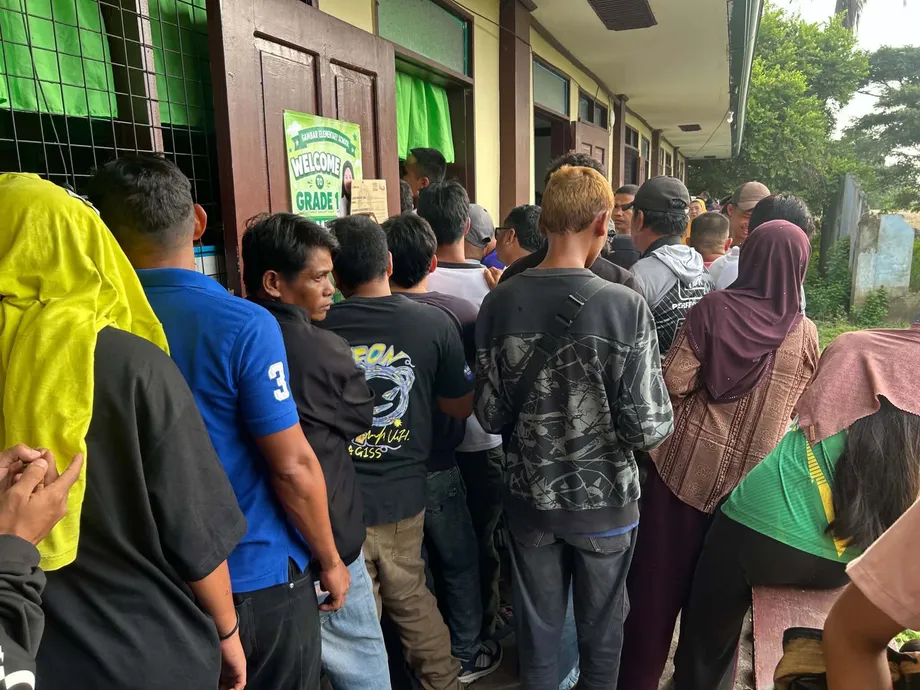
Gloria Capiz-Estabillo, a 76-year-old elder of the Aeta Hungey tribe, said BCDA had already told community members to leave. Bingcang denied that the project would displace anyone, pointing to the absence of a formal ancestral domain title. Those competing accounts place a basic issue at the center of the development: who gets to decide how land occupied and cultivated by Indigenous families will be used?
Marcos says cultural concerns are part of government discussions. Aeta residents and opposition groups want protection for homes, crops and burial grounds while officials negotiate the terms of the industrial park.
What the government has committed to Pax Silica
BCDA's April 20 statement, published in 2026, announced that the Philippines had formally joined the Pax Silica Declaration. It allocated a 4,000-acre property in New Clark City for the initiative's first Coordination Office, designated a Golden Node.
The name describes a planned hub where technology companies, researchers and government agencies would work together. BCDA presents it as an industrial ecosystem built around artificial intelligence, advanced manufacturing and secure supply chains. A supply chain is the sequence of businesses and facilities that turns raw materials into finished products, such as the minerals, components and factories needed to make a computer chip.
Finance Secretary Frederick Go said participation would give the Philippines a larger role in producing technologies rather than simply supplying resources.
"By joining Pax Silica, the Philippines is ensuring that our mineral resources and strategic location are not simply supporting global industries from the margins, but are actively harnessed to build the industries of the future," Go said.
BCDA will provide a grace period of two years on lease payments as an unconditional contribution in kind. The annual lease rate from the third year will be set through a subsequent agreement. The arrangement gives the project an initial financial concession while leaving a central commercial term for later negotiation.
The proposed Advanced Manufacturing Park is also described by the Palace as covering 1,620 hectares, approximately the same area as 4,000 acres. Within the 23,350-acre New Clark City development, it would occupy about 17% of the planned city's area.
How the project reached the agreement stage
The Luzon Economic Corridor began in 2024 as an initiative involving the Philippines, the United States and Japan. Pax Silica, formed in December 2025, connects the corridor to a wider effort to build technology supply chains less dependent on China. The Philippines joined in April 2026 as the initiative's 13th signatory.
The project's public milestones show how an international commitment has moved toward a proposed agreement governing a specific piece of land:
- 2024: The Philippines, United States and Japan unveiled the Luzon Economic Corridor.
- December 2025: Pax Silica was formed.
- April 2026: The Philippines joined the declaration, and BCDA announced the allocation of 4,000 acres in New Clark City.
- July: U.S. Secretary of State Marco Rubio visited Manila and affirmed bilateral commitment to the project.
- September 10: Marcos addressed investors at the Luzon Economic Corridor forum in Manila while opponents protested outside.
- Before the end of 2026: The Palace expects the partnership agreement to be signed.
Earlier plans pointed to a November signing, potentially during the next Association of Southeast Asian Nations summit. Castro subsequently gave the broader deadline of before the end of 2026. Negotiations over detailed terms could continue for two years.
Castro said BCDA submitted the legal framework through proper channels while continuing discussions with its U.S. development partner. She had not clarified whether Marcos had personally received and reviewed the draft. The framework and the detailed partnership terms therefore remain central to understanding how the land will be used.
Aeta families face a title process stretching back decades
Aetas in Clark have sought a certificate of ancestral domain title since 1994. The certificate, issued through the National Commission on Indigenous Peoples, formally recognizes an Indigenous community's ancestral territory. Applicants must assemble a detailed map, a population census, elder testimonies and genealogies covering three generations for at least five clans.
For communities with limited money and administrative support, completing those requirements has proved difficult. Ortega, a member of Countermapping Ph, said delays involving BCDA and the commission have prolonged the process for decades. His land survey identified at least three existing Aeta villages affected by planned construction.
Bingcang, speaking as BCDA chief, cited the lack of a certificate when denying displacement.
"There is no ancestral domain title in that area," Bingcang said.
Capiz-Estabillo described a different situation on the ground, saying the authority had begun telling Aetas to leave. She spoke about the threat to both housing and crops.
"They're setting up right in the middle of our land. Where are we going to live? How about our crops? Where will they take us, just drop us in the ocean?" Capiz-Estabillo said in Filipino.
Opposition groups also warn that construction could cover traditional burial sites. Their concerns extend beyond the number of households moved: ancestral territory holds farmland, family history and places of cultural importance.
The Investor's Lease Act, signed by Marcos in September, allows foreign businesses to lease commercial and industrial land for up to 99 years. That prospect of lengthy commercial tenure stands beside an Indigenous title application process that began more than three decades ago.
Promises of jobs meet concerns about who can get them
Marcos says the project is expected to create tens of thousands of jobs and place the Philippines deeper in the supply chain of the digital economy. BCDA similarly promises better employment opportunities and greater participation by Philippine enterprises in technology industries.
Residents of Capas, Tarlac, raised a practical concern in 2019 when they faced displacement for New Clark City: they said they would not qualify for the jobs that development projects were expected to bring. That earlier experience gives the current employment debate a local dimension. A factory job may require different skills from the farming and other livelihoods families already depend on.
Marcos said Indigenous cultural concerns are being discussed by the government.
"We are very sensitive about such cultural concerns and those are very much part of the discussions," Marcos said.
The government has also said Philippine laws will apply to the hub and foreign investors will receive no immunity. Authorities have promised consultations with affected communities.
For residents, the practical value of the employment promise depends on access to training, recruitment and suitable work, alongside protection of existing livelihoods. For Philippine businesses, it depends on opportunities to supply goods and services, work with universities and acquire the knowledge needed to produce more complex technologies.
Electricity demand approaches an entire sector's annual use
Bingcang described 3 gigawatts as a conservative estimate of the facility's electricity needs. A gigawatt measures the rate at which electricity is used or generated. A terawatt-hour measures the amount consumed over time.
If the hub used 3 gigawatts continuously throughout a year, it would consume about 26.3 terawatt-hours. Against the service sector's 28 terawatt-hours in 2024, that is roughly 94%. The calculation shows why the proposed power supply matters well beyond the industrial park.
BCDA says the development would be green and mainly powered by solar energy. Bingcang pointed to the area's sunshine when explaining that ambition.
"We are blessed with 300 days of sunshine," Bingcang said.
Solar generation depends on daylight and weather, while factories may need electricity through the night. Meeting continuous demand would require a combination of generation, storage or other power supplies. The project's final operating pattern would determine actual annual consumption.
Giovanni Tapang, former dean of the University of the Philippines' College of Science and a convenor of the Network Opposed to Pax Silica, questioned the land needed for solar installations and the allocation of new electricity between the hub and Philippine consumers.
"How many thousands of hectares will they be taking from farmers to build solar panels? And if we're generating all this clean energy, why let the U.S. use it instead of local households?" Tapang said.
Water storage and mineral waste add environmental pressure
Bingcang estimated daily water needs at 16 million to 24 million gallons, supplied by rainwater collected through an impounding dam. Such a dam holds water in a reservoir so it can be used after rainfall has stopped.
He also said available technology could increase supply to 300 million liters, approximately 79 million gallons, a day. That potential capacity is more than three times the upper end of the stated daily demand estimate. Maintaining stored supplies through dry months is a separate operational task from increasing delivery capacity.
Tapang pointed to the Philippine dry season, from December to May, when irrigation needs could coincide with reduced rainfall.
"This is the same period where farmers need their water for irrigation," Tapang said.
BCDA also plans to accommodate mineral processing technology. Processing converts mined materials into substances suitable for industrial use, potentially allowing the Philippines to earn more from its resources than it would by exporting them raw. It also creates waste that must be handled according to the materials and methods used.
Thony Dizon of BAN Toxics said the government had yet to disclose how it would manage the resulting waste. He framed the concern around the condition of the land after decades of operation.
"How will the government ensure that after 30 years, we are not left with a contaminated environment and depleted natural resources?" Dizon said.
What will actually be built remains under discussion
BCDA initially said data centers could form part of Pax Silica. Bingcang and the president's office later said they would not be included at the site, describing it instead as a semiconductor facility. Authorities have acknowledged that data centers would be built elsewhere in Luzon.
A document circulated at the investors' forum listed data centers among New Clark City's planned infrastructure without locating them inside or outside the Pax Silica hub. Broader descriptions of the Advanced Manufacturing Park have also included artificial intelligence infrastructure, semiconductors, energy and logistics.
Artificial intelligence systems rely on powerful computers, which are commonly housed in data centers. Semiconductor facilities manufacture chips used in those computers and many other devices. Both fit within a technology supply chain, but their buildings, operations and resource requirements differ. The final mix of facilities will shape the park's demand for power, water, land and workers.
U.S. Undersecretary of State for Economic Affairs Jacob Helberg described the project as a manufacturing ecosystem integrated with trusted nations. In social media posts, he also called it a "forward deployed industrial base" intended to secure essential supply chain inputs for American companies and allies.
Philippine investment tools supporting such projects include the CREATE MORE Act, Executive Order 18 and its Green Lanes for Strategic Investments, and the Public-Private Partnership framework. The policy package seeks to improve investment conditions and speed approvals. Practical measures of success would include capital committed, jobs created, Philippine suppliers securing contracts, technology transfer and new industrial capabilities.
Clark's history shapes the protests today
Clark became a U.S. military base in 1903, during American colonial rule. It remained under U.S. military control after Philippine independence in 1946 and was turned over to the Philippine government in 1991, after the Senate rejected the U.S. bases treaty. It later became a commercial area and special economic zone.
Capas also carries a history of military occupation and war. Camp O'Donnell held prisoners after the World War II death march, and thousands died there. Parts of Capas and Bamban were later incorporated into New Clark City, initially envisioned as a government center and alternative capital. Sports facilities were constructed for the 2019 Southeast Asian Games.
Aeta claims reach further back than those developments. For Indigenous residents, the current project concerns territory occupied by their communities before the military base and the planned city.
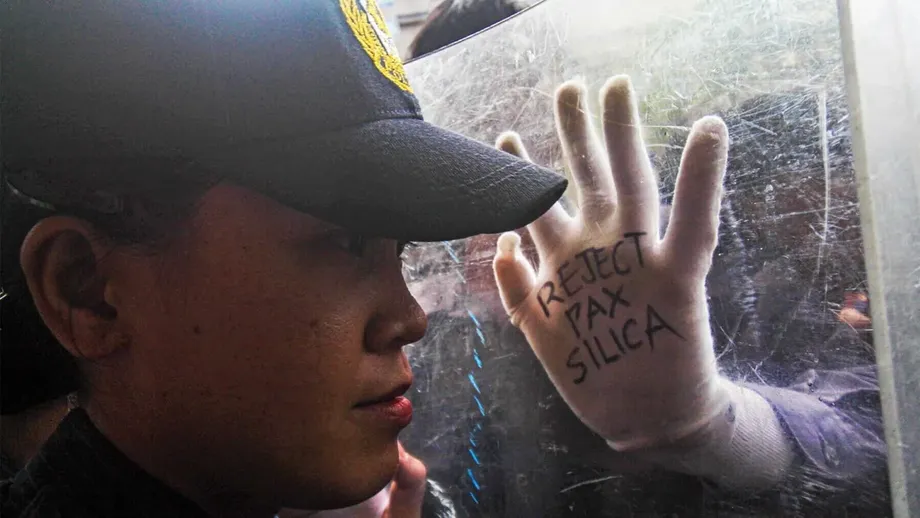
At the September 10 investors' forum outside the Grand Hyatt Manila, police confronted hundreds of protesters with riot shields and batons. Activists said at least 27 protesters were injured and five arrested; police reported minor cuts and injuries to 16 personnel.
Jona Yang, a member of the activist scientist group AGHAM, said she was arrested while trying to negotiate with police to reduce tensions. She explained the protest's purpose.
We want the Marcos government and investors to see the outrage all of this has caused," Yang said. "They're taking away our resources and our lands.
Protests continued when investors visited New Clark City on the forum's second day, joined by nearby Aeta communities. Support for economic cooperation also extends beyond the dispute: a June 2026 Pulse Asia survey commissioned by the Stratbase Institute found that 71% identified the United States as the most important economic security partner, followed by Japan at 52% and Australia at 35%. At the project site, the immediate decisions concern land, access to resources and how promised economic gains will reach residents.
Key Points
- BCDA allocated 4,000 acres, approximately 1,620 hectares, in New Clark City for the Pax Silica hub.
- The Palace expects a partnership agreement before the end of 2026; detailed negotiations are continuing.
- A land survey identified at least three Aeta villages affected by planned construction. BCDA denies displacement, while an Aeta elder says residents have been told to leave.
- Aetas in Clark have sought formal recognition of their ancestral domain since 1994.
- BCDA estimates electricity demand at 3 gigawatts and daily water consumption at 16 million to 24 million gallons.
- The government projects tens of thousands of jobs and promises protection for Indigenous cultural concerns.
- Lease payments will receive a grace period of two years, with the rate from the third year to be negotiated separately.