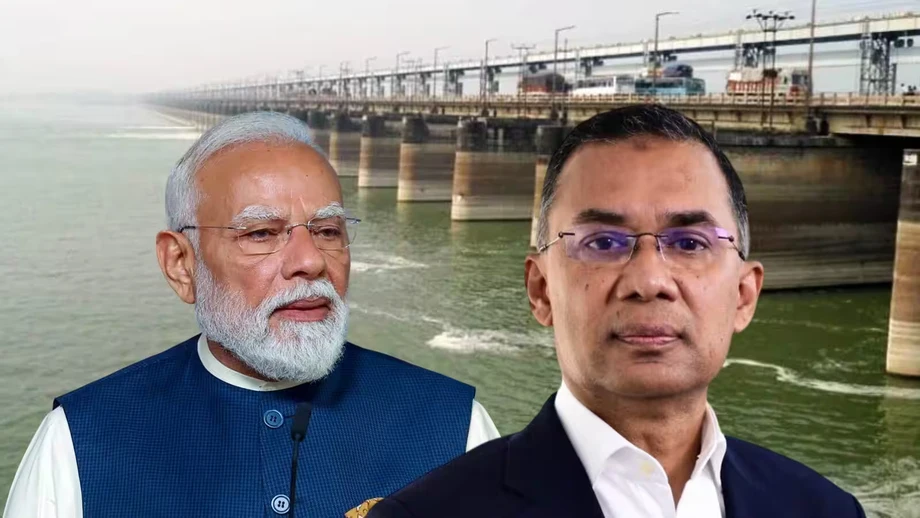
A routine river meeting meets an urgent deadline
A four member Indian delegation led by Sharad Chandra is due in Dhaka from November 21 to 23 for a meeting on how India and Bangladesh are carrying out their 1996 Ganges water sharing treaty. The talks come less than three weeks before the agreement expires on December 12, 2026, after its 30 year term.
Contents
The meeting is not authorised to renew the treaty or agree to an interim extension. Its job is to check how the existing rules are working. That leaves a larger decision to the two governments' political leaders: whether to extend the current arrangement, replace it with a new one, or allow it to expire without a successor. No date for formal negotiations has been announced.
The distinction matters because the treaty sets out how water is divided during the dry months, when river levels are lower and demand is high. If the agreement ends without another arrangement, the two countries will enter the next dry season without its agreed allocation schedule and joint monitoring framework.
The Dhaka meeting is the Joint Committee's 91st, and is expected to be its third and final meeting of the year. The committee meets three times annually, alternating between the two countries. Its officials can review implementation and report problems, but cannot make the political decision needed to renew the treaty.
What can the committee decide?
Mohammad Abu Sayed, director of Bangladesh's Joint Rivers Commission, said the committee's remit is limited to putting the current treaty into practice. He described renewal or extension as outside its jurisdiction.
"Its sole responsibility is to ensure that the existing treaty is being implemented properly," Sayed said.
The committee monitors water allocation and the operation of the Farakka Barrage, the structure in West Bengal where the treaty measures Ganges flows for sharing between the countries. Under the treaty, it also examines difficulties in implementation and sends an annual report to both governments. If a dispute cannot be resolved through the committee, it can be referred to the Joint Rivers Commission, the wider bilateral body established in 1972.
The Indian delegation is led by Chandra, a commissioner in the Department of Water Resources, River Development and Ganga Rejuvenation. The listed members include Central Water Commission chief engineer Sanjay Kumar Gangwar, senior joint commissioner Ramesh Raj Sambharia and Under Secretary Kanneluru Gautam. The meeting is also expected to finalise the committee's annual report.
A previous round of technical discussions in Kolkata in March 2025 covered measuring river flow, flood forecasting and sharing information. The two sides also discussed forming a joint technical committee to prepare for negotiations. A Bangladeshi delegation visited Farakka Barrage and nearby inspection sites on March 3 and 4, and a later meeting was held in Kolkata on May 22.
How the treaty divides water
The agreement applies from January 1 to May 31, using periods of 10 days to calculate water availability at Farakka. The share each country receives depends on the recorded flow:
- At 70,000 cusecs or less, India and Bangladesh receive equal shares.
- Between 70,000 and 75,000 cusecs, Bangladesh receives 35,000 cusecs and India receives the remainder.
- Above 75,000 cusecs, India may take 40,000 cusecs and Bangladesh receives the remainder.
A cusec is one cubic foot of water flowing each second. The treaty also sets out alternating 10 day periods from March 11 to May 10 when each country is entitled to 35,000 cusecs. If the flow at Farakka drops below 50,000 cusecs in any 10 day period, the governments must hold immediate consultations on emergency adjustments.
That consultation rule is not the same as a guaranteed minimum supply. The treaty does not set a fixed allocation for Bangladesh when the river is exceptionally low. Bangladesh says it wants a new agreement with a binding assurance of water during the dry season, rather than simply extending the existing formula unchanged.
Dhaka presses for talks and a stronger guarantee
Bangladesh has asked India to begin formal negotiations, including requests in June and August. Water Resources Minister Shahiduddin Chowdhury Anee also wrote to his Indian counterpart seeking discussions. Dhaka has formed a senior technical group and asked India to name its negotiating team, but a timetable for formal talks has not followed.
Bangladesh has said it wants a new treaty rather than a straightforward renewal. Its priorities include a dependable dry season share and a rule for dividing shortages if river flows fall. A previous 1977 agreement guaranteed Bangladesh at least 80 per cent of its scheduled allocation in exceptionally low flow conditions. Dhaka wants a protection of that kind restored.
Bangladesh has also sought a broader discussion of shared rivers. A proposal made during earlier talks included water arrangements for 14 rivers, alongside the Ganges agreement. One reported Bangladeshi request was an average allocation of 40,000 cusecs. That figure remains a negotiating position, not an agreed amount.
Bangladesh's government adviser Rashed Al Mahmud Titumir has said the Ganges and Padma dependent region covers about one third of Bangladesh and is home to more than 50 million people. Agriculture, fishing, livelihoods and freshwater ecosystems, including the Sundarbans, depend on water moving through the region.
India's External Affairs Ministry spokesperson Randhir Jaiswal said on November 3 that he had no new information about a proposed Joint Rivers Commission meeting. India has said the commission is the established forum for discussions on shared rivers, while New Delhi has also consulted West Bengal and Bihar about their water needs.
States on both sides have interests at stake
West Bengal has asked to take part in treaty discussions. Chief Minister Mamata Banerjee wrote to Prime Minister Narendra Modi that water diverted at Farakka helps maintain navigation to Kolkata Port and that river changes have affected water availability in the state.
Banerjee's letter pointed to the eastward movement of the Ganges and Padma over many years. She said the Jalangi and Mathabhanga rivers had become disconnected from the Padma and that freshwater inflow to the Sundarbans had fallen. She also linked the construction of the Farakka project to the disconnection of the Bhagirathi from the Ganges.
Bihar has raised different concerns, including drinking water, farming, industry and the effects of Farakka on river flow and sediment. India has said Bihar's drinking water and industrial requirements were considered in internal consultations. At the same time, Janata Dal (United) leader and parliamentarian Sanjay Kumar Jha has called for ending the treaty in its present form.
For West Bengal, water in the Bhagirathi-Hooghly system is tied to navigation and port operations. For Bangladesh, flows downstream support farming and ecosystems. Negotiators therefore face competing needs within India as well as between the two countries.
What three decades of flow records show
A review of Joint Rivers Commission data covering 450 periods of 10 days from 1997 to 2026 found that recorded allocations generally followed the treaty formula. Only one period breached the treaty's 90 per cent threshold: April 1 to 10, 1997, when Bangladesh's recorded share was short by 4,863 cusecs. The review found no shortfall greater than one cusec after 2003.
The same records show recorded surpluses for Bangladesh totalling 3.66 billion cubic metres, compared with 0.143 billion cubic metres in shortfalls. One year accounts for much of the surplus: 2012 contributed 2.15 billion cubic metres. During several periods that year, India took less than 40,000 cusecs, and the data do not establish whether this reflected a limit at the barrage or feeder canal rather than an intentional change in allocation.
The figures also need to be understood in light of how availability was recorded. In all 450 periods, the recorded water available at Farakka equals the sum of the two countries' recorded releases. That makes it an accounting total for checking the allocation formula, rather than a separate measurement of the river's full flow. Hardinge Bridge, farther downstream in Bangladesh, provides another observation point.
At Hardinge Bridge, the flow was below the Farakka release in 88 of the 450 periods. The median increase between the two locations was about 11 per cent, as water enters the river along the way. Yet a comparison of the treaty's alternating guarantee periods found that Bangladesh's higher average release at Farakka did not translate into a similarly large difference at Hardinge Bridge. The paired difference there was 373 cusecs, compared with 5,234 cusecs at Farakka.
The figures show why two questions can be confused: whether the formula was followed at Farakka, and how much water reached a downstream location. They also show why both governments have reason to discuss where water is measured and how dry season protections should work. If no arrangement replaces the treaty, the 2027 dry season could be the first since 1996 without treaty based joint measurements.
Political tension narrows the space for a deal
Water negotiations are taking place while relations between Dhaka and New Delhi are strained. Disagreements over former prime minister Sheikh Hasina, who is in India, and Bangladesh's request for her extradition have complicated wider relations. A meeting between Prime Minister Tarique Rahman and Indian Prime Minister Narendra Modi has been presented by officials as a possible way to address differences, but no summit date has been announced.
The treaty itself does not renew automatically. Its renewal requires mutual agreement, so technical meetings alone cannot keep its rules in force after December 12. An interim extension of one or two years has been raised as a way to preserve the current arrangements while negotiators work on a longer term deal. A former Bangladeshi ambassador has also proposed a three to five year extension to allow time to prepare a new agreement.
Manjur Ahmed Chowdhury, a former chairman of Bangladesh's National River Conservation Commission, has argued that a lasting agreement should consider the whole river basin, including upstream withdrawals, tributaries, storage, power generation and downstream needs. He has also called for a clear shortfall sharing rule and an effective dispute process. The existing treaty focuses on water measured at Farakka and its main allocation schedule covers five months of the year.
A basin wide agreement would take more preparation and could involve Nepal, whose rivers contribute to Ganges flows, as well as discussion of the wider Ganges, Brahmaputra and Meghna systems. For the immediate deadline, however, the governments must first decide whether the current rules continue in some form. The Dhaka committee meeting can review implementation, but the decision on the treaty's future belongs to the political leadership.
Key Points
- The 1996 Ganges Water Sharing Treaty expires on December 12, 2026, and has no automatic renewal.
- A four member Indian delegation is due in Dhaka from November 21 to 23 for a routine implementation meeting.
- The Joint Committee can monitor the treaty but cannot negotiate its renewal or extension.
- Bangladesh seeks a new agreement with a dependable dry season water guarantee and a rule for sharing shortages.
- Flow records show broad adherence to the existing allocation formula, while downstream measurements reveal differences between Farakka releases and water at Hardinge Bridge.