Nearly five million displaced, with safe homes still out of reach
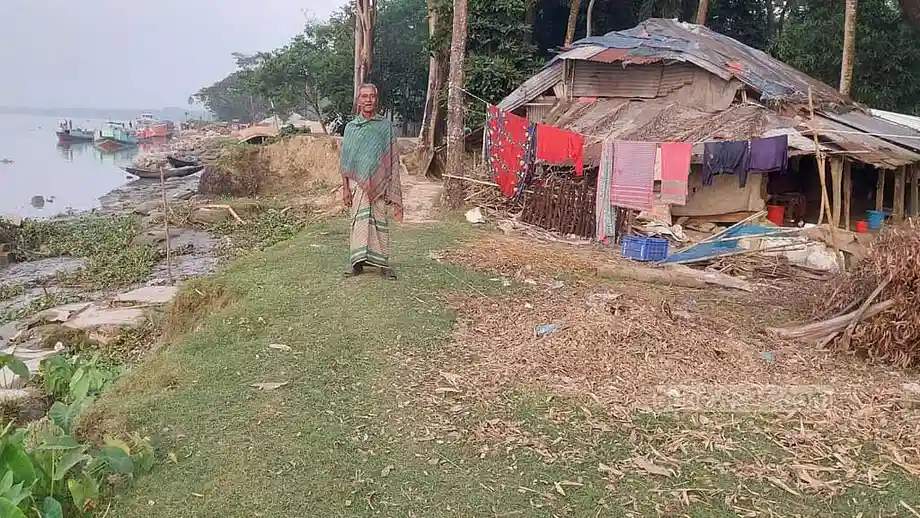
Bangladesh is taking a demand for climate grants to COP31 in Antalya, Turkey, as an official nationwide assessment puts the number of people living in displacement after natural disasters at 4,955,527. Behind that figure are families such as Peya Begum's, surviving around Barishal's launch terminals after river erosion took their land and home.
Contents
- Nearly five million displaced, with safe homes still out of reach
- What the displacement count reveals
- Broken embankments keep families exposed
- Salt and debt narrow the choices
- Reaching town does not end the emergency
- What grants have already supported
- Why the terms of finance matter
- Protection and recovery need different funding
- A larger global fund would still leave a gap
- The negotiating calendar and Bangladesh's next steps
- Key Points
The International Organization for Migration (IOM) collected the displacement data in September and October 2025. Its findings show that 63% of those displaced had left their homes before April 2020, revealing how an emergency can become years without a secure place to live.
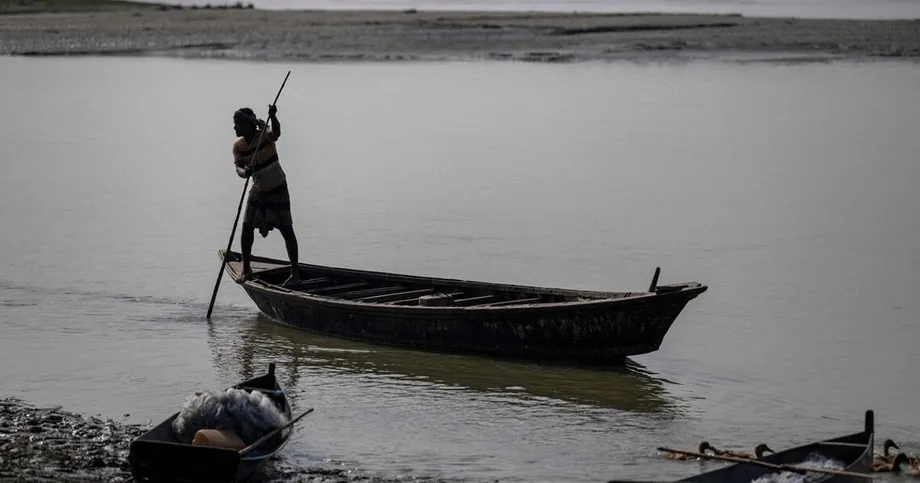
Peya, who is over 60, lost her home in Patahat, in Barishal's Mehendiganj. She moved near the river port with four daughters and her grandchildren, then lost that temporary refuge too. Vegetables collected from a wholesale market and her daughters' earnings help keep the family fed.
Peya described how losing one shelter led to another move:
The river swallowed our house. Where could I go? So I came and started staying at the launch terminal. Now they will not let us stay there either. We are staying at the new launch terminal.
COP31, scheduled for November 9 to 20, 2026, brings that struggle into a negotiation over who pays for protection and recovery. Turkey hosts the conference, while Australia leads the negotiations. Bangladesh wants more adaptation finance, easier access to funds and grants that help families recover without adding to the country's debt.
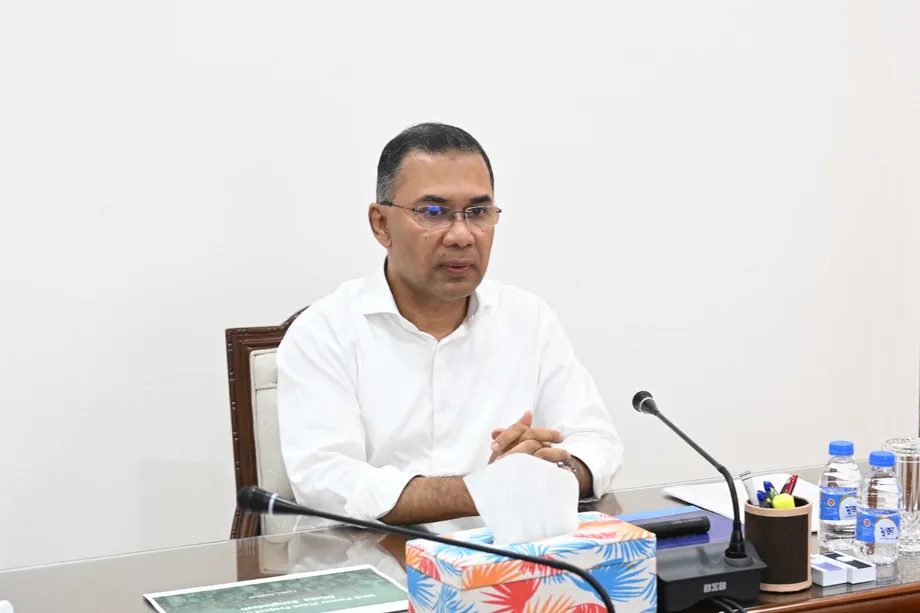
Environment Minister Abdul Awal Mintoo says Bangladesh faces an estimated $15.2 billion in annual economic damage from climate impacts. For displaced households, the immediate needs are more concrete: a secure home, drinking water, food and work.
What the displacement count reveals
IOM's nationwide displacement estimate, launched with the government on December 10, 2025, covers people displaced by floods, cyclones, river erosion and other natural hazards. Internal displacement means people have been forced from home but remain inside their own country.
The assessment covered all eight divisions and 64 districts, including 4,579 unions, 329 municipalities and 480 city corporation wards. IOM recorded 5,388 field visits. Its detailed assessment report specifies 6,524 collective interviews involving 29,117 key informants, people consulted for their knowledge of local communities.
Chattogram Division hosts approximately 1.21 million displaced people, followed by Dhaka with 790,000 and Rajshahi with 660,000. Barishal accounts for 12% of the national estimate. Chattogram, Sirajganj, Bhola and Noakhali districts together host a quarter of the total.
Despite the visible hardship around urban terminals and settlements, 85% of displaced people live in rural union areas. Housing, social protection and relocation services therefore need to reach villages as well as cities.
The timing also matters. Alongside the 63% displaced before April 2020, another 25% were displaced between April 2020 and April 2024, and 12% after April 2024. Most of the people counted were dealing with losses that had already lasted several years.
Broken embankments keep families exposed
Barishal relief and rehabilitation officer Ranjit Kumar Sarker says 20% of residents in four city slum areas arrived after river erosion. Housing assistance has reached some families, but many genuine beneficiaries have been left out. Further government measures are under consideration; no final decision has been announced.
Shirin and Motaleb have spent two years near the Barishal launch terminal with their three children. After losing their ancestral home in Kalaiya, Patuakhali, they have neither a house nor land of their own and live far from relatives.
In Patakata, Barguna, residents face repeated flooding while still living near damaged river defences. Jagadish Chandra Mistry, 70, remembers Cyclone Sidr's winds reaching 260 kilometres an hour and water rising 10 to 12 feet above normal tides.
The recorded toll described for Barguna was 68,379 homes destroyed, crops ruined across nearly 15,000 hectares and 1,435 people killed. Surges broke through embankments along the Payra, Bishkhali and Baleshwar rivers.
Residents say high tides still enter the area almost monthly through damaged stretches, carrying away food and household possessions. Kesto Chandra Howlader, 48, fears losing even his cooking pots. Their demand is for permanent, durable embankments so that staying at home becomes safer.
Salt and debt narrow the choices
Saltwater is also weakening the livelihoods that allow coastal families to remain where they live. The Soil Resources Development Institute's Soil Salinity Map of Bangladesh 2024 records 1.156 million hectares of affected cultivable land across 18 southern districts, compared with 1.056 million hectares in 2009.
That is an increase of 100,000 hectares, or about 9.5%. The affected area amounts to roughly two thirds of the districts' 1.703 million hectares of cultivable land. Institute officials say some locations reached eight times the tolerable salinity limit.
Shyamnagar households face several pressures at once: rising seas, cyclone surges and saltwater escaping from shrimp and crab farms. As farmland becomes harder to cultivate, families buy more food while losing agricultural income.
A Caritas Bangladesh survey of 270 households across six Shyamnagar unions in July 2025 found nearly 90% had loans. Average family debt was Tk 58,782. About three quarters of borrowing came from nongovernmental organisations and the rest from local moneylenders.
Afroza Begum, whose family in Datinakhali owes Tk 70,000, described the loss of a basic means of survival:
Nothing grows here because of high salinity. We have only one option: buying food from the market.
Climate analyst Malik Fida A Khan describes disasters and salinity as forces pushing people away, while the prospect of work pulls them towards cities. Migration becomes a household response to both physical danger and disappearing income.
Reaching town does not end the emergency
Satkhira's informal settlements show what happens when families find somewhere to stay but cannot secure enough food or work. The study Displaced and Deprived, published by Khani Bangladesh and the Participatory Research and Action Network, estimates that 7,573 displaced families live in 47 informal settlements across the municipality.
Among 358 families surveyed in 35 settlements, 74.9% faced severe food insecurity and 23.2% faced moderate food insecurity. More than half, 52.2%, sometimes went an entire day without eating. Adults in 95.2% of households reduced their own intake so children could eat.
Water and housing insecurity compound the problem. Some 96.9% relied at least partly on saline water or water contaminated with iron. Among families living on government land, 59% faced eviction or threats of eviction.
Only 7.5% of surveyed households received government social protection benefits, while 92.7% did not know where to complain if denied assistance. Those findings identify a practical gap between having support programmes and making them accessible to displaced residents.
Fatema Khatun, convener of the Forum for the Rights and Development of Climate-Displaced People, described the shortage of essentials:
We have no dustbins, no jobs, no water and no homes. There are no factories where people can work. Men have no jobs and return home expecting food, but there is no food because we have no income.
The study recommends permanent housing on government khas land, which is land owned by the state, and protection against eviction without rehabilitation. It also calls for funded local plans to implement the 2021 national displacement strategy, wider social protection and school access for children regardless of documentation.
What grants have already supported
Satkhira has also hosted a project designed to address several needs together. The European Commission's Lives in Dignity project committed €642,181 for work by Uttaran and the Education and Development Foundation, known as Educo, from July 2022 to June 2024.
The programme targeted 3,500 people in 697 households in municipal slums and another 3,500 people in Shyamnagar. Its planned work covered income, education, water, sanitation, displacement prevention and safer migration. Skills and viable income opportunities for 390 people were listed as expected results.
The Commission's project description records Satkhira Municipality's population rising from just over 113,000 in 2011 to nearly 170,000 in 2018, an increase of about half. Providing housing alone leaves growing communities needing schools, water systems and jobs as well.
On the Chattogram coast, Young Power in Social Action (YPSA) has combined replacement homes with livelihood assistance, supported through a Scottish government grant channelled through the Climate Justice Resilience Fund.
Noor Alam and his family lost their fragile home six times between 1998 and 2020. In 2021, they received a house with stronger walls, a secured roof and a toilet. YPSA said its homes were built on land elevated above previous flood levels.
A YPSA survey of 15,000 people in temporary roadside structures in 2019 found that half of displaced households had changed occupations because of cyclones and coastal erosion. Its support for 40 displaced women included livestock, sewing machines and training, connecting housing recovery with the ability to earn.
Why the terms of finance matter
Bangladesh's demand for grants reflects its experience with borrowing. A Change Initiative study identified $2.54 billion in climate finance for the energy sector between 2002 and 2023. Loans accounted for 92%, approximately $2.34 billion, while grants made up 8%, around $203 million.
Those shares mean roughly $11.50 in loans for every dollar in grants. A grant does not require repayment; a loan creates future repayment obligations, even when its interest rate is favourable.
M Zakir Hossain Khan, chief executive of Change Initiative, criticised the burden placed on vulnerable countries:
The most climate-vulnerable countries are being forced to borrow their way through a crisis they did not cause. This is not support; it is a second injury written into a contract.
The energy transition has substantial funding needs of its own. Bangladesh's Nationally Determined Contribution, its national climate commitment submitted to the UN, estimates required funding at $116.18 billion, including $90.23 billion dependent on international support.
The Renewable Energy Policy 2025 targets a 20% renewable share by 2030 and 30% by 2040. A World Bank assessment puts renewables at only 1.5% of electricity supplied to the national grid.
Zakir calls for grants, debt relief linked to climate action and transparent accounting. Moazzem Hossain, president of the Knowledge Hub Institute, also supports grants and suggests joint investment when grants are unavailable, reducing reliance on additional public borrowing.
Protection and recovery need different funding
Bangladesh's National Adaptation Plan for 2023 to 2050 identifies 113 interventions across 11 regions under climate stress, costing more than $230 billion. Nearly three quarters of that spending is needed by 2040. Planned measures include coastal polder management, sea dikes and cyclone shelters.
Adaptation means preparing for danger and reducing future damage, such as strengthening an embankment before another surge. Mitigation means reducing the emissions that warm the planet. Loss and damage addresses harms already suffered, including destroyed homes, lost income and losses that money cannot fully replace.
Ahmad Kamruzzaman Majumder, chairman of the Centre for Atmospheric Pollution Studies and dean of Stamford University Bangladesh's science faculty, says the government is nearing completion of a loss and damage framework. He argues that project design capacity needs to improve from ministries to city corporations so applications can meet international funding requirements.
Bangladesh already allocates about $4.2 billion annually to climate related items through its Annual Development Programme, according to Department of Environment director Mirza Shawkat Ali. International support remains central to implementing the much larger adaptation plan.
Mintoo says the country's $15.2 billion annual damage estimate, drawn from a World Bank assessment, will support its negotiating case. Bangladesh is seeking a larger Loss and Damage Fund for vulnerable countries rather than presenting a fixed national compensation bill.
A larger global fund would still leave a gap
The UN Environment Programme's 2026 Adaptation Gap Report puts developing countries' adaptation needs at about $305 billion annually by 2035. International public adaptation finance reached only $28.2 billion to $31.7 billion in 2024, according to the UN report summary.
UNEP says tripling support would generate approximately $85 billion to $120 billion annually. After inflation, that would cover only 20% to 29% of estimated needs. Including the private sector's own adaptation needs could double the required amount.
Bangladesh is pressing for a threefold increase in adaptation finance alongside the broader climate finance target of $300 billion annually by 2035 agreed at COP29. Its demands also include technology transfers for agriculture and water security, simpler applications and stronger support for loss and damage.
Climate scientist Ainun Nishat calls for independent monitoring to track whether funds reach communities. Majumder also distinguishes formal negotiations, where countries agree decisions by consensus, from the presidency's voluntary Action Agenda, which announces initiatives without creating new obligations for countries.
The difference matters to a family awaiting shelter: an announcement must be followed by an approved programme, funding, fair selection of beneficiaries and construction that meets local risks.
The negotiating calendar and Bangladesh's next steps
Bangladesh is coordinating with the Least Developed Countries group, the G77 and the Climate Vulnerable Forum. State Minister for Foreign Affairs Shama Obaed Islam has called for a common position among government, businesses, specialists and other participants.
The main dates connecting the assessment and negotiations are:
- September to October 2025: IOM collected data for the nationwide displacement assessment.
- December 10, 2025: IOM and government partners launched the estimate.
- November 7, 2026: Civil society groups called for adaptation support to continue after graduation from least developed country status.
- November 9 to 20, 2026: COP31 is scheduled in Antalya.
- November 10 to 12, 2026: Prime Minister Tarique Rahman's attendance is scheduled, with his presentation of Bangladesh's position expected on November 11 and 12.
The November 7 appeal, organised by the Center for Participatory Research and Development and Climate Justice Alliance-Bangladesh, calls for predictable grants and loans on highly favourable terms regardless of development classification.
CPRD chief executive Md Shamsuddoha also urged coordinated advocacy by Bangladesh, Bhutan and Nepal. The groups identify connected risks from Himalayan glacier retreat, changing monsoons and river flows, extreme rainfall, rising seas and saltwater intrusion.
For Bangladesh's coast, the practical priorities run from repaired embankments to secure housing and reliable income. Peya's repeated moves, Satkhira's food shortages and the families already helped into stronger homes give the negotiations a concrete measure: whether financing enables people to live safely and recover their livelihoods.
Key Points
- IOM estimates 4,955,527 people were living in disaster displacement in Bangladesh during its 2025 assessment.
- Some 63% had been displaced before April 2020, and 85% lived in rural union areas.
- A survey in Satkhira found severe food insecurity among 74.9% of 358 displaced families.
- Bangladesh seeks more adaptation finance, grants, simpler funding access and a larger Loss and Damage Fund at COP31.
- Loans accounted for 92% of identified energy sector climate finance received between 2002 and 2023.
- The national adaptation plan estimates needs above $230 billion through 2050.
- COP31 is scheduled for November 9 to 20, 2026, in Antalya, with Australia leading negotiations.