A December deadline for water, crops and livelihoods
Bangladesh is seeking a new water sharing agreement with India before their 30 year treaty expires on December 12, 2026, as shrinking dry season flows threaten farms, fisheries and freshwater supplies. The deadline comes as Bangladesh's largest irrigation project serves just 550 square kilometres of farmland, compared with the 955 square kilometres it was designed to water.
Contents
- A December deadline for water, crops and livelihoods
- What the current treaty actually shares
- Why Bangladesh wants a stronger guarantee
- Technical contacts continue amid political strain
- How the dispute reached this point
- Bihar presses India to protect its needs
- Farms, fisheries and the Sundarbans face connected pressures
- What a broader agreement could include
- A new barrage and a river that also floods
- Key Points
The Ganges treaty, signed on December 12, 1996, governs water sharing at India's Farakka Barrage, about 20 kilometres upstream of Bangladesh. It has no automatic extension clause, making a negotiated agreement necessary to keep an agreed allocation framework beyond December.
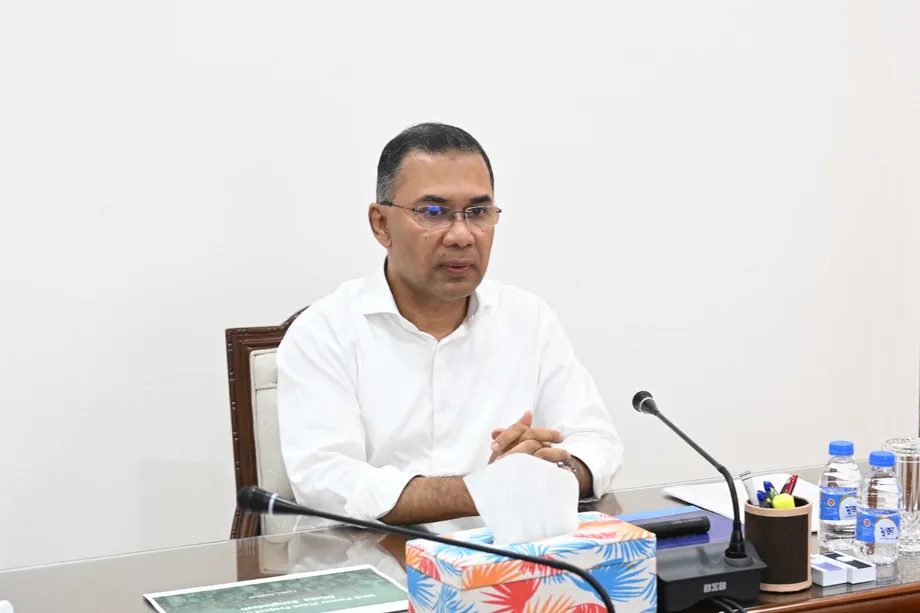
Rashed Al Mahmud Titumir, a prime ministerial adviser heading Bangladesh's technical committee on water sharing, has called for an agreement based on mutual benefit and respect. Dhaka wants stronger protection when water becomes scarce, while Indian states are pressing New Delhi to secure their own supplies.
The stakes reach far beyond the border. The Ganges, known in Bangladesh as the Padma, runs for 2,525 kilometres through a basin that the World Bank says is home to 655 million people, including more than 50 million in Bangladesh. A river basin is the land drained by a river and its tributaries.
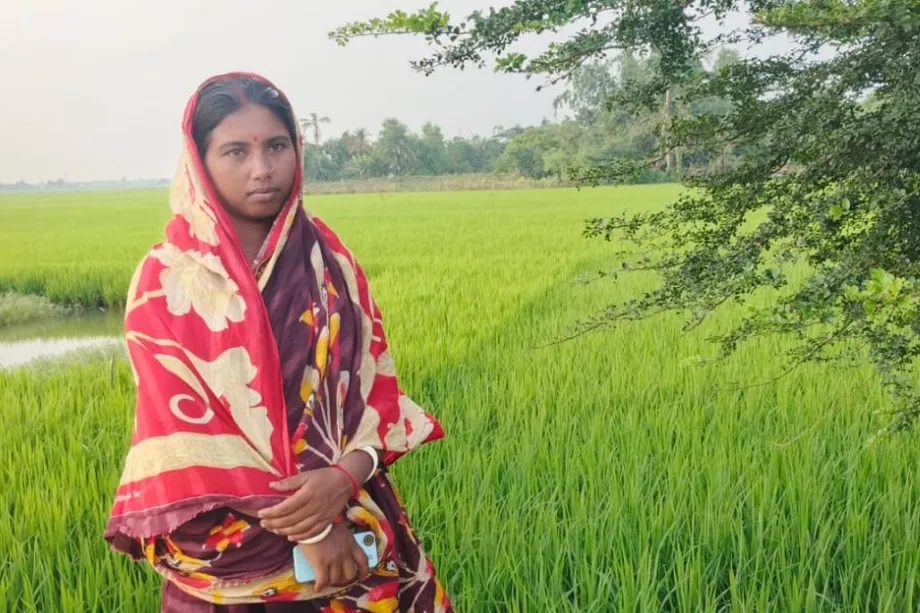
In the dry Barind region, Protestant priest Bikash Soren, 72, remembers large boats passing his village throughout the year. He now describes a river that nearly stops moving for part of the year.
"For almost three months a year, you hardly see the river flowing," he said.
Soren said two farmers died by suicide last season after falling water levels devastated their rice and wheat crops. His account illustrates the human pressure behind negotiations that otherwise revolve around flow measurements, allocation tables and diplomatic language.
What the current treaty actually shares
Farakka diverts part of the Ganges into the Bhagirathi-Hooghly river system to support navigation towards Kolkata's port. India describes it as a diversion structure, directing about 40,000 cusecs into a feeder canal while the remaining water continues towards Bangladesh.
A cusec means one cubic foot of water passing a point each second. It measures the speed of water supply by volume. An allocation of 35,000 cusecs is about 991 cubic metres per second.
The treaty uses different allocation rules according to how much water reaches Farakka:
- Below 70,000 cusecs, India and Bangladesh generally share the available flow equally.
- Between 70,000 and 75,000 cusecs, Bangladesh receives 35,000 cusecs and India receives the remainder.
- At 75,000 cusecs or more, India receives 40,000 cusecs and Bangladesh receives the remainder.
- Between March 11 and May 10, each country receives 35,000 cusecs in three alternating periods of 10 days.
- If flow falls below 50,000 cusecs in any period of 10 days, the governments must immediately consult on emergency adjustments.
Observer Research Foundation's treaty renewal analysis, published on October 23 by programme coordinator Sohini Bose, identifies this emergency consultation rule as a central negotiating issue. Bangladesh wants greater certainty during severe shortages; India values the flexibility to negotiate allocations when supplies fall.
Why Bangladesh wants a stronger guarantee
Bangladesh's demand concerns protection during exceptionally low flows. The current alternating allocation of 35,000 cusecs operates alongside a rule requiring consultations below 50,000 cusecs. Dhaka wants a firmer safeguard for that scarcity situation.
The 1977 agreement protected at least 80% of Bangladesh's scheduled allocation during each period of 10 days. A memorandum signed in 1982 replaced that protection with a system under which both countries shared shortages proportionately.
Water Resources Minister Shahiduddin Chowdhury Anee identified restoration of the earlier protection as a priority in October, when Bangladesh set out its demand for guaranteed water. A separate proposal in the renewal debate calls for a fixed minimum of 35,000 cusecs for Bangladesh throughout the dry season. Those proposals would create different obligations: one protects a percentage of a scheduled share, while the other sets a fixed volume.
Bangladesh also faces a longer decline in water availability. Historical figures cited in the renewal debate put average dry season Ganges flow at Hardinge Bridge at 2,451 cubic metres per second during 1934 to 1974, before Farakka began operating, compared with 1,295 during 1997 to 2010. The later figure is about 47% lower.
For a farmer, a guaranteed allocation offers a clearer basis for deciding how much land to plant. For negotiators, the difficult task is agreeing how both countries should share the burden when the river carries less water than their combined needs.
Technical contacts continue amid political strain
Bangladesh says India has not responded to its request to negotiate treaty renewal. India's foreign ministry has directed river matters to the Joint Rivers Commission (JRC), the bilateral body responsible for cooperation on shared rivers.
Technical contact has continued. A four day meeting began in Kolkata on May 20 as the commission's 90th Technical Committee Meeting, with joint measurements planned at Farakka. Bangladesh's delegation was headed by JRC member Md Anwar Kadir. Indian and Bangladeshi teams also visited the barrage in January for technical assessments.
The last officially confirmed meeting of the commission at ministerial level took place in 2022, following a gap of 12 years. The proposed Teesta water agreement has been stalled since 2011, illustrating how technical discussions can continue without producing a political settlement.
Relations deteriorated after Sheikh Hasina fled to India during Bangladesh's 2024 uprising. Her continued presence there, and Dhaka's push for Hasina's extradition following her conviction for crimes against humanity, complicate the diplomatic setting. Hasina has said she intends to return to Bangladesh in December. A possible visit to India by Prime Minister Tarique Rahman remains unconfirmed.
Indian officials have indicated a preference for negotiating a new accord that accounts for greater demand, glacier depletion and groundwater use, rather than simply extending the existing terms. No agreed timetable for concluding such an accord has been announced.
How the dispute reached this point
Farakka opened in 1975 after 14 years of construction. Bangladesh accused India of diverting too much water, and the dispute reached the United Nations before the countries agreed on a sharing arrangement in 1977.
The main milestones show why the prospect of another gap carries such weight in Bangladesh:
- 1975: India opened the Farakka Barrage to divert water towards the Bhagirathi-Hooghly system.
- 1977: India and Bangladesh agreed on water sharing, including protection for 80% of Bangladesh's scheduled allocation during shortages.
- 1982: A memorandum replaced that safeguard with proportionate sharing of shortfalls.
- 1985: The memorandum was extended for another three years, after which it lapsed.
- December 12, 1996: The countries signed the current treaty for 30 years.
- May 20, 2026: Technical officials began four days of meetings and joint flow assessments.
- December 12, 2026: The current treaty expires.
Sheikh Rokon of the Dhaka environmental group Riverine People says the years without an agreement brought severe damage to Bangladesh's river network.
"The Ganges suffered during the years without a treaty, and at least three rivers almost dried up," he said.
Rokon fears another lapse would be more damaging because freshwater demand has grown on both sides. His concern connects the treaty deadline to the practical question of how much water remains available for downstream communities.
Bihar presses India to protect its needs
Bihar wants its agricultural, industrial and drinking water requirements quantified and legally protected before India agrees to renewed terms. Deputy Chief Minister and Water Resources Minister Vijay Kumar Choudhary says the state's needs were overlooked in 1996.
Choudhary links Farakka to sediment accumulating upstream, flooding in Bhagalpur, Munger, Khagaria and Begusarai, and water stress during dry months. He says Bihar's concerns were raised with External Affairs Minister S Jaishankar and Finance Minister Nirmala Sitharaman during an August 21 delegation visit to Delhi.
Bihar reportedly seeks 2,000 cusecs during the lean period, while an internal committee recommended 900 cusecs. The difference is substantial: the state's request is more than twice the committee's recommendation.
Researchers dispute Bihar's explanation of the problem. Himanshu Thakkar, coordinator of the South Asia Network on Dams, Rivers and People, points to the state's lack of major facilities for storing Ganges water. Rajiv Sinha, an earth sciences professor at the Indian Institute of Technology Kanpur, identifies sediment as the main concern.
Sinha explains that sediment can choke channels and cause water to spread across a wider area. Sediment means the sand, silt and other material carried by a river. Its movement matters for channel depth, flood behaviour and farmland.
Bihar's Ganges water supply scheme, inaugurated in 2022, pipes water to Gaya and Rajgir. Its permitted withdrawal period is July to October, during the monsoon. India's negotiating challenge therefore includes both relations with Bangladesh and competing priorities among its own states.
Farms, fisheries and the Sundarbans face connected pressures
Bangladesh's Ganges-Kobadak Irrigation Project was designed to supply 955 square kilometres of farmland. Its reported coverage has fallen to 550 square kilometres, a reduction of 405 square kilometres, or about 42% of its intended area.
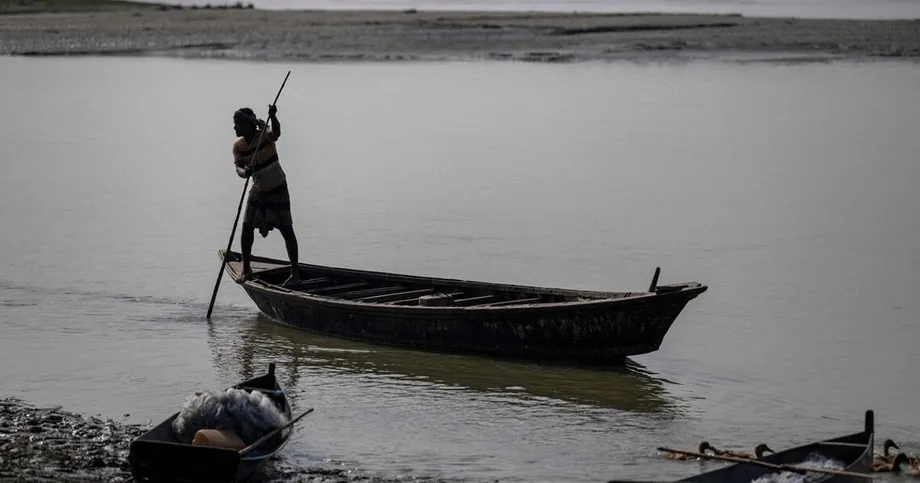
Fishers are also changing how they earn a living. Abu Bakar Siddique, 55, has moved from catching fish in the river to raising them in ponds as catches have declined.
Siddique described the loss of variety in the river catch:
I used to catch many kinds.
The Gorai carries Ganges freshwater towards the Sundarbans, the world's largest mangrove forest and a World Heritage site. Freshwater helps limit the spread of salty water inland. When that supply weakens, rising sea levels add to the pressure on coastal water and ecosystems.
Chowdhury Sarwar Jahan, a geology professor at the University of Rajshahi, warns that insufficient river flow could have disastrous consequences. Farms, fishing grounds and mangroves all depend on water moving through connected channels, so shortages can travel far beyond the main river.
What a broader agreement could include
Malik Fida A. Khan, a former Bangladeshi member of the JRC, says India has built additional dams upstream. He wants climate provisions and management of the entire basin included in a new agreement.
A basin approach would consider tributaries, groundwater, sediment and ecosystems alongside the division of water at Farakka. Groundwater matters because water beneath the land can feed rivers between rains; heavier pumping can reduce that support.
Proposals discussed by Bose include involving Nepal, whose Ghaghara, Gandaki and Koshi rivers contribute Himalayan water to the Ganges. A former chairman of Bangladesh's National River Conservation Commission has also suggested a renewal lasting three years rather than another 30. India has not endorsed those proposals.
Bangladesh's water diplomacy also includes accession to the United Nations Economic Commission for Europe's Water Convention. Other proposals urge it to join the separate 1997 UN Watercourses Convention, which addresses shared water use, harm to neighbouring states and ecosystem protection.
Opposition to Farakka has a history within India as well. Nitish Kumar called for its removal in 2016, and the 2017 Patna Declaration sought restoration of natural river flow. These demands broaden the debate from national allocations to the effects of the structure itself.
A new barrage and a river that also floods
Dhaka approved the $2.8 billion Padma Barrage project in May, with a planned hydropower plant of 113 megawatts. The project is intended to ease shortages, although critics in the renewal debate argue that another barrage could weaken Bangladesh's case for restoring natural river functions.
Bangladesh must manage destructive high water as well as dry season scarcity. The Water Development Board says the river widened by three kilometres in Chapainawabganj district in recent years, nearly doubling its width.
Rehana Khatun, 50, lost her home in Fielder Bazar village and now lives in a bamboo shelter. She described the force of the floodwater:
"The river turned wild and started swallowing everything along the bank," she said.
Khatun's experience and Soren's account of an almost motionless river describe different seasons of the same problem. Communities need reliable freshwater during dry months and protection from erosion and floods during heavy rains. Negotiators face pressure to address both as they decide what should replace the 1996 agreement.
Key Points
- The Ganges water treaty expires on December 12, 2026, with no automatic extension.
- Bangladesh wants stronger protection when flows become exceptionally low.
- The current treaty requires emergency consultations when Farakka flow falls below 50,000 cusecs.
- Bihar wants its water needs legally protected, while researchers identify storage and sediment concerns.
- Bangladesh's largest irrigation project serves about 42% less land than its designed coverage.
- Technical meetings have continued, but no timetable for a final agreement has been announced.
- Proposals include broader basin management, Nepal's involvement and a shorter renewal term.