A deadline for a reform delayed since 2004
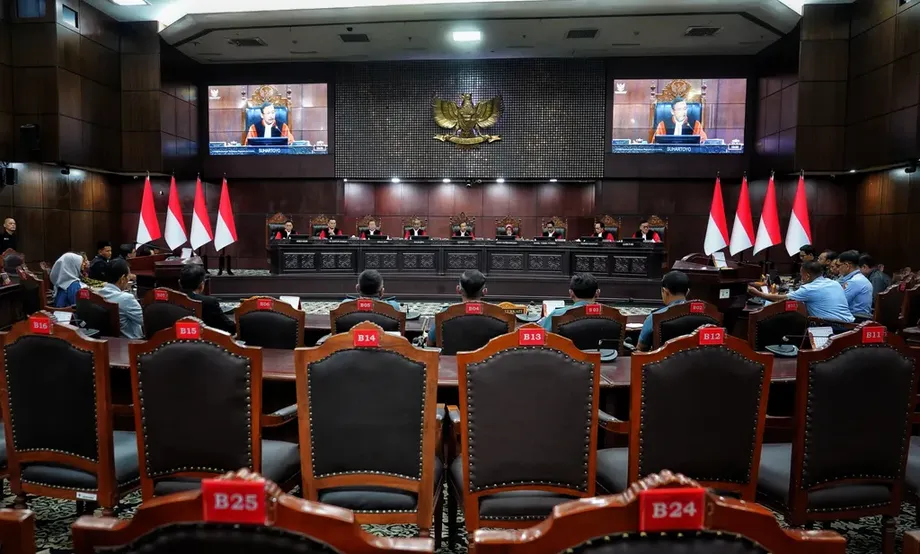
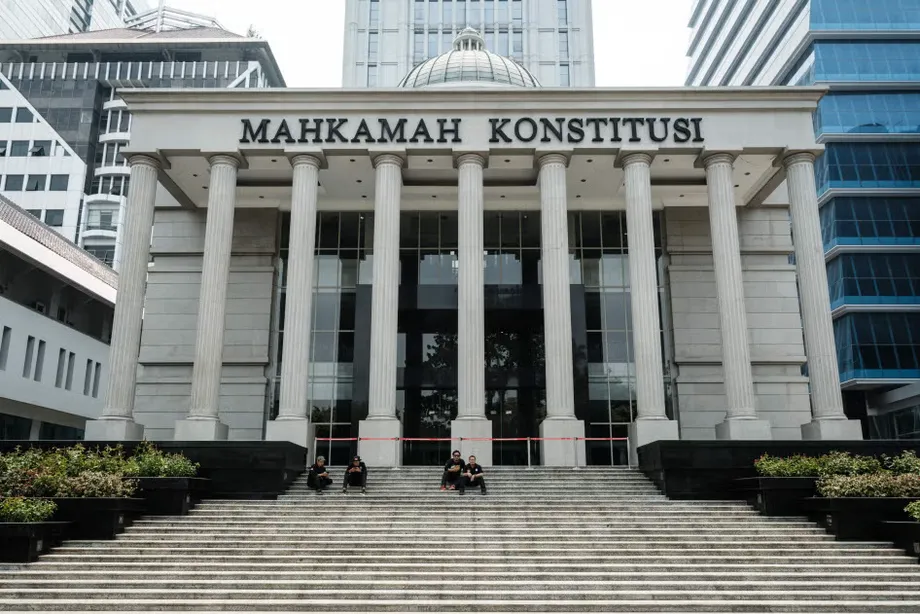
Indonesia's Constitutional Court has given the government and parliament until October 2028 to rewrite the country's military justice law, setting a deadline for a reform that has been waiting since 2004: allowing civilian courts to try soldiers accused of ordinary crimes.
Contents
- A deadline for a reform delayed since 2004
- Which crimes belong in which court?
- Why the 2004 promise never took effect
- The Medan case behind the petition
- A journalist's killing exposes an investigative divide
- The acid attack that renewed pressure
- What parliament and the ministry are preparing
- Reform must reach beyond the courtroom
- A wider military role makes accountability more urgent
- Key Points
The court's nine justices ruled unanimously on October 15, 2026, that Law Number 31 of 1997 on Military Justice is conditionally unconstitutional. Under Decision Number 260/PUU-XXIII/2025, the law will lose its binding legal force if lawmakers fail to amend it within two years.
The challenge brought together families whose experiences show how the choice of court affects access to justice. One petitioner is the mother of Michael Histon Sitanggang, a boy aged 15 whose fatal assault in Medan led to a soldier receiving 10 months in prison. Another is Eva Meilani, whose journalist father, Rico Sempurna Pasaribu, died with three relatives in an arson attack in North Sumatra.
Articles 24(1) and 28D(1) of Indonesia's 1945 Constitution protect judicial independence and equal treatment before the law. The court found that the military justice framework needed to change to meet those guarantees, including by drawing a clear boundary between military offenses and ordinary crimes.
For victims, the practical issue begins before a trial. Under the 1997 law, civilian police generally cannot investigate serving military personnel. Investigations, prosecutions and trials instead operate within a military structure whose judges are themselves serving soldiers. Reform must therefore address who can investigate a complaint, who decides whether it reaches court and which court hears it.
Which crimes belong in which court?
The petition targeted Article 9(1), specifically its broad reference to criminal offenses, alongside Article 43(3) and Article 127. The latter provisions concern the handling of disagreements between military prosecutors and authorities responsible for referring cases for trial.
The petitioners asked the court to narrow Article 9(1) so that military jurisdiction would cover military crimes. Jurisdiction means the legal authority to investigate or hear a case. Their argument was that a person's status as a soldier should not automatically place an ordinary criminal case inside the military system.
Justice Enny Nurbaningsih explained the danger when an offense has no military character but accountability remains within a structure based on military command:
there is a structural risk that military's institutional interests will conflict with the need to ensure independent and impartial legal proceedings.
The court called for clear definitions of military and ordinary crimes, boundaries between the two court systems and a mechanism for resolving disputes over where a case belongs. Those rules would give investigators and families a route to follow when institutions disagree, rather than leaving responsibility uncertain.
Why the 2004 promise never took effect
Indonesia's 2004 Armed Forces Law already provides that soldiers should face military courts for military offenses and civilian courts for ordinary criminal offenses. That provision was made dependent on the enactment of a new military justice law. Successive governments left the necessary revision unfinished.
The reform grew out of changes following the end of President Soeharto's authoritarian rule in 1998. A 2000 decree of the People's Consultative Assembly also set out the division between military offenses and ordinary crimes. By October 2026, more than two decades had passed since the Armed Forces Law incorporated that principle.
Muhammad Afif Abdul Qoyim, a lawyer with the Indonesian Legal Aid Foundation, urged lawmakers to act before the deadline in Human Rights Watch's statement of October 28:
There is no need to wait two years to revise the Law on Military Justice so that new rules are in line with the Constitutional Court's ruling.
The ruling turns a long deferred legislative promise into an obligation with a consequence: without amendment by October 2028, the existing law loses its legal force.
The Medan case behind the petition
Michael Histon Sitanggang was assaulted on May 24, 2024, near railway tracks between neighbourhoods in Medan, North Sumatra, during an intervention in a brawl. His mother challenged the military justice law after the prosecution of Sergeant Reza Pahlivi.
According to her account recorded in the court document, military investigators named the soldier as a suspect on January 7, 2025. The case reached the Medan military court on July 9, 2025. She said he remained free and continued serving throughout the investigation and trial.
The military court imposed 10 months in prison and ordered restitution of Rp12,777,100 to the mother, with three months of confinement as a substitute if the payment was not made. Restitution is compensation that a convicted person is ordered to pay a victim or the victim's family. Human Rights Watch said the offense carried a maximum penalty of 15 years.
The mother's challenge concerned both the sentence and the process that produced it. Her petition described delays, the absence of detention and the decision to handle an ordinary criminal offense in a military court. Those complaints put the family's experience at the centre of a broader constitutional argument about equal treatment.
A journalist's killing exposes an investigative divide
Rico Sempurna Pasaribu, a journalist aged 47 with Tribrata TV, died with his wife, son and grandson when their home in Kabanjahe, North Sumatra, was set on fire on June 27, 2024. Before the attack, he had received threats and demands to remove reporting about an illegal gambling operation allegedly run by Corporal Herman Bukit of the Army's 125th Battalion.
The court document records that three civilian defendants received life sentences. Pasaribu's daughter, Eva Meilani, sought an investigation into the alleged military involvement, filing reports with the Army Military Police Centre on July 12, 2024, and regional military police on July 18.
Meilani told the court that military investigators had taken no substantial investigative steps and had failed to provide updates despite receiving evidence from her. Military police under Regional Military Command I/Bukit Barisan said a closed investigation found insufficient evidence to name Bukit as a suspect.
The Committee to Protect Journalists, Free Press Unlimited and Medan Legal Aid Institute called for North Sumatra provincial police to reopen the murder investigation in their joint reform appeal on October 26. They also sought a transparent investigation using the relevant protections in Indonesia's Press Law.
The Alliance of Independent Journalists recorded 60 cases of intimidation involving military personnel between 2016 and 2025, according to the appeal. For journalists facing threats, the reform would change which investigators can pursue allegations involving soldiers and which court can hear any resulting prosecution.
The acid attack that renewed pressure
Andrie Yunus, a deputy coordinator at the Commission for the Disappeared and Victims of Violence, known as KontraS, suffered burns over 24 percent of his body in an acid attack on March 12, 2026. Human Rights Watch said the activist, aged 27, also faced possible loss of sight in his right eye.
A Jakarta military court convicted four soldiers in June, imposing prison terms ranging from 18 months to three years and dismissal from military service. On August 20, a military appeals court reduced the two longest sentences by six months each and overturned those soldiers' dishonorable discharges. The other two retained their shorter sentences.
The Judicial Commission alleged ethical violations by the panel that heard the case at first instance. Human Rights Watch also called for an independent investigation led by civilians into whether other people, including anyone who ordered or financed the attack, were involved.
The attack and appeal added urgency to demands for changes extending from investigation through sentencing. KontraS said the Constitutional Court ruling addressed a legal opening that had shielded soldiers from accountable law enforcement.
What parliament and the ministry are preparing
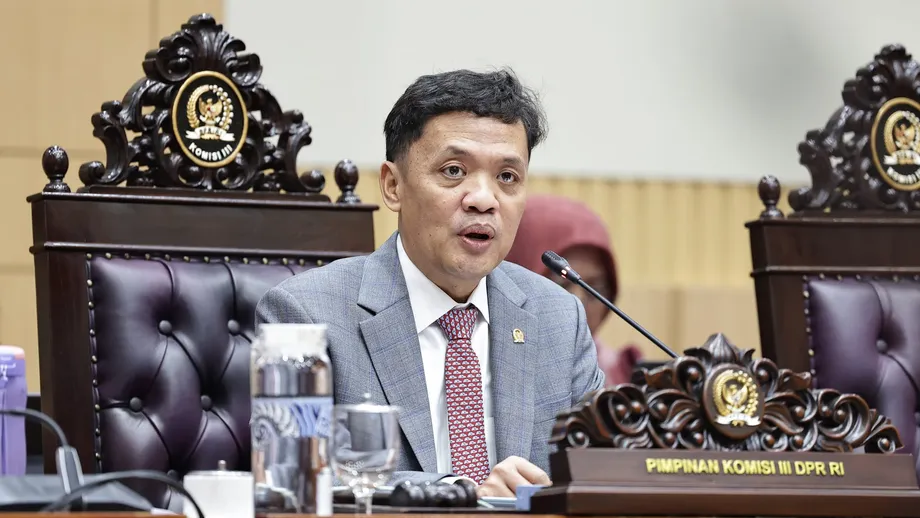
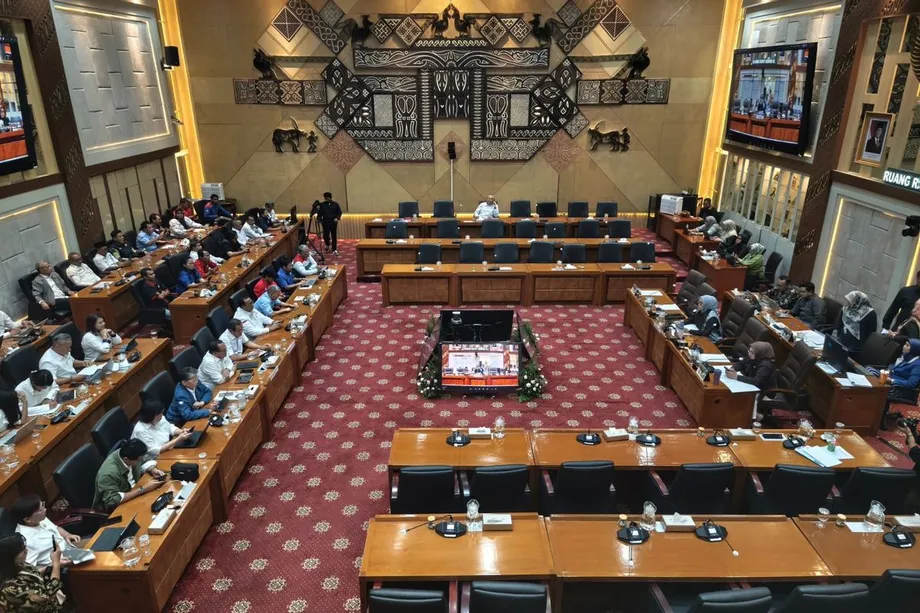
Dave Akbarshah Fikarno, also known as Dave Laksono, deputy chairman of the House of Representatives' Commission I, said on October 23 that the commission would coordinate with the House Legislation Body, known as Baleg, and the government to place the revision in the Priority National Legislation Program. The program identifies bills selected for priority consideration.
Dave called for work to begin well before the court's deadline. He said the revision should protect victims' rights and the rights of everyone involved in proceedings, while making the authority of each court clear. He also urged the Defense Ministry and the armed forces, known as TNI, to prepare substantive input in coordination with the Law Ministry.
Law Ministry Secretary General Nico Afinta said the ministry was examining the judgment before coordinating further action with the government and parliament. No date was announced for introducing a bill or completing parliamentary debate.
The main stages are:
- 2004: The Armed Forces Law sets out civilian jurisdiction over ordinary crimes by soldiers, subject to a new military justice law.
- December 15, 2025: The constitutional petition is filed, followed by an amended submission on January 20, 2026.
- October 15, 2026: The Constitutional Court orders amendment within two years.
- October 23, 2026: Dave calls for the revision to enter the priority legislative program.
- October 2028: The deadline expires for amending the law before it loses binding legal force.
Reform must reach beyond the courtroom
The court's directions extend beyond selecting a trial venue. They include full integration of military justice into the judicial system under the Supreme Court, rules for military courts operating in combat and changes to criminal procedure.
The government's submissions defended military justice as constitutionally equal to other branches of the judiciary. They pointed to existing Supreme Court supervision of judicial work and case administration, while arguing that distinct arrangements for military personnel and careers were compatible with judicial independence. Parliament also defended the challenged provisions as constitutional during the proceedings.
The court nevertheless called for fuller integration. Military judges remain serving soldiers, and the relationship between their judicial responsibilities and military careers is central to the independence concerns raised in the case.
Human Rights Watch urged lawmakers to specify investigative and prosecutorial powers and establish a way to transfer cases into the civilian system. In practical terms, investigators need authority to collect evidence, prosecutors need a clear route to bring charges and courts need rules for accepting transferred cases. Families need to know which institution is responsible for acting on a complaint.
Dave, Human Rights Watch and the press freedom organisations all called for public participation. Involving victims and civil society would allow lawmakers to address the delays and disputes described in the petition, alongside the institutional arrangements discussed by the government.
A wider military role makes accountability more urgent
President Prabowo Subianto's administration has expanded opportunities for serving military officers to hold civilian posts. Amendments to the Armed Forces Law in March 2025 increased the number of civilian institutions open to serving soldiers from 10 to 14, including the Supreme Court and the Attorney General's Office.
That is an increase of four institutions, or 40 percent, calculated from the earlier total of 10. Under the existing military justice framework, soldiers accused of ordinary crimes have remained subject to military jurisdiction even when serving in civilian institutions.
Victims in Papua also have a stake in the reform. CIVICUS Monitor's assessment highlighted its potential importance for people seeking accountability for alleged abuses by military personnel there. On September 28, 2026, Indonesia rejected allegations of systematic human rights violations in Papua at the United Nations General Assembly and said credible allegations were addressed through national institutions, including the National Commission on Human Rights.
Elaine Pearson, Asia director at Human Rights Watch, urged Prabowo and parliament to consult victims and rights groups. She described what the reform should deliver:
Justice for civilian victims of military abuses shouldn't be blocked by an unfair military court system.
The next concrete step is legislative: turning the court's instructions into rules that assign responsibility from the first complaint through investigation, prosecution and trial. The October 2028 deadline sets the outer limit for completing that work.
Key Points
- The Constitutional Court unanimously ordered reform of the 1997 Military Justice Law on October 15, 2026.
- The law will lose binding legal force if it is not amended within two years, by October 2028.
- The revision must distinguish military offenses from ordinary crimes and clarify the authority of military and civilian courts.
- The petition includes families affected by a boy's fatal assault in Medan and the arson killing of journalist Rico Sempurna Pasaribu and three relatives.
- Commission I is seeking priority legislative consideration, while the Law Ministry is examining the judgment.
- Victims' groups and press freedom organisations want prompt reform, public participation and clear powers for civilian investigations and prosecutions.