November hearings set the pace for a long awaited bill
Indonesia's House of Representatives is aiming to finish work on its asset forfeiture bill before December 2026, bringing forward an earlier target of December 15. Yet Commission III, which handles legal affairs, is still collecting public submissions and has neither completed a final draft nor begun examining the proposed law article by article.
Contents
- November hearings set the pace for a long awaited bill
- What the timetable actually involves
- Who has been shaping the proposal?
- Recovering criminal wealth when a trial cannot proceed
- Evidence and ownership rights remain central
- Who would supervise the authorities?
- State loss calculations need a clear legal basis
- Ships bring another set of legal questions
- Taking an asset is only part of recovering its value
- Key Points
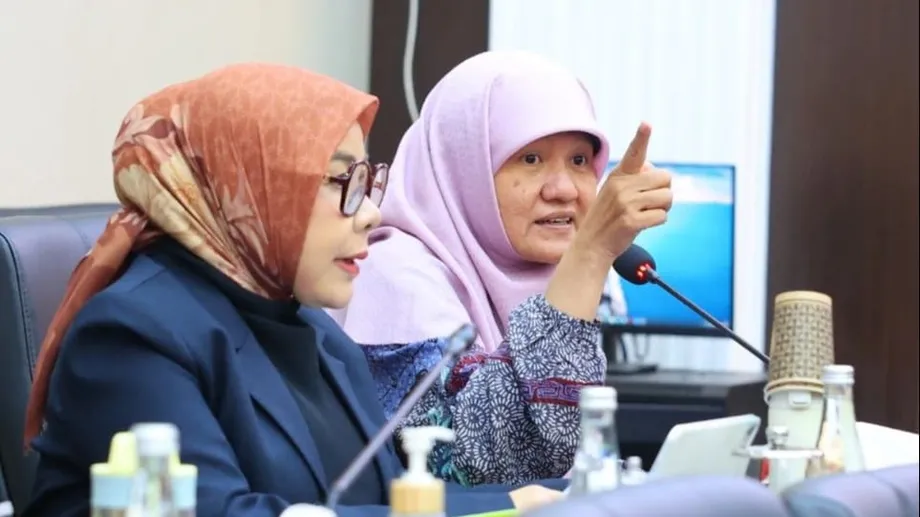
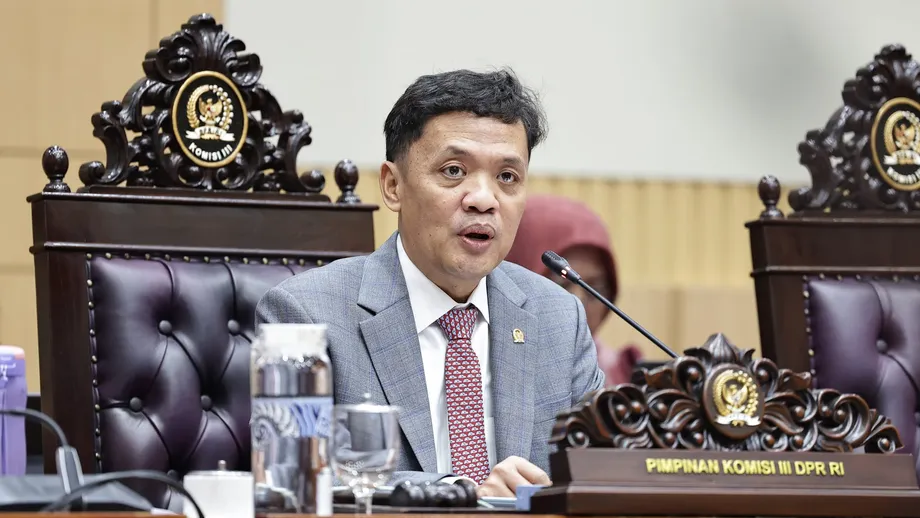
Deputy commission chair Ahmad Sahroni said public hearings would continue during the parliamentary recess, with sessions planned through November 5 and further hearings through November 11. The commission would assess the recommendations before deciding which provisions to include, after which he hoped deliberations could move faster.
The proposal concerns property connected to criminal offences: how authorities find it, prevent it from being moved or sold, and obtain legal authority to take it permanently. Its central purpose is to recover the financial benefits of crime, including assets that may remain after a corruption case has passed through investigation and trial.
Lawmakers have heard from 86 contributors, according to Sahroni. Their discussions have moved beyond whether Indonesia needs the legislation to practical questions about evidence, court supervision, the rights of legitimate owners and the value of property left in state custody.
The stakes are concrete. A vehicle worth Rp1 billion could eventually sell for only Rp300 million to Rp400 million if its value deteriorates during storage and management, one commission member warned. A ship linked to a case involving 1.16 tonnes of narcotics has also entered the debate over which assets the law should cover.
What the timetable actually involves
A working committee was formed on October 26 to accelerate a proposal first advanced in the early 2000s. Sahroni's ambition to finish before December would move completion ahead of the previously stated deadline of December 15, 2026.
The next scheduled steps concern consultation and preparation. No date has been given for the start of examination article by article or for a final parliamentary vote.
The sequence of developments shows how the consultation process has continued alongside the push for a deadline:
- July 13, 2026: Commission III chair Habiburokhman said intensive consultations had continued over three parliamentary sitting periods and the bill remained on the 2026 priority legislative programme.
- October 26: A working committee was formed to accelerate the bill.
- October 27: Legal experts and advocates attended a hearing on oversight, enforcement powers and asset management.
- October 28: Parliamentary publications detailed the discussions and listed further legal practitioners contributing to the hearings.
- November 5 and November 11: The consultation schedule identified by Sahroni extends through these dates.
- Before December: Sahroni's preferred completion target, ahead of the earlier December 15 deadline.
For people potentially affected by the legislation, the drafting stage matters because the commission is still considering the rules that would govern the use of state power over their property.
Who has been shaping the proposal?
Habiburokhman said in a July parliamentary statement that Commission III had never rejected the bill or removed it from the 2026 priority National Legislation Programme, known as Prolegnas. He described the hearings as preparation for a law that would affect both crime prevention and constitutional rights.
In its October 28 account of deliberations, parliament recorded his estimate that around 58 to 60 public hearings had already taken place, with roughly 23 more expected and about 80 elements of society to be involved. Those figures count meetings and participating groups, while Sahroni's figure of 86 counts contributors.
A separate parliamentary hearing agenda, published on October 28 at 8:57 a.m. Western Indonesian Time, names Professor Jamin Ginting, chair of AAI Nasional Bersatu, Amin Fahrudin and Ahmad Fikri Assegaf, general chair of the national leadership board of the Indonesian Advocates Association, PERADI.
Habiburokhman has argued that the law must fit Indonesia's economic, political and legal circumstances. That position sits alongside submissions urging Indonesia to strengthen asset recovery in line with international commitments.
Recovering criminal wealth when a trial cannot proceed
Former Corruption Eradication Commission leader Chandra M. Hamzah urged lawmakers to focus on recovering the proceeds of crime rather than treating forfeiture simply as another punishment. His starting principle was that crime should not leave an economic reward for offenders or their networks.
One mechanism under discussion is non-conviction based asset forfeiture, often shortened to NCB. It allows a legal process directed at property connected to crime without first obtaining a criminal conviction against a person. The evidence required and the court's role are central to how such a process operates.
Chandra identified circumstances in which that route could be appropriate: a suspect has died, fled or cannot be brought before a court. Legal expert Muhammad Rullyandi likewise urged that it be restricted to particular circumstances and subject to close judicial supervision.
Kurnia Ramadhana of Indonesia Corruption Watch said ordinary criminal proceedings should remain the main route whenever the alleged offender can still be prosecuted. He also called for sufficient preliminary evidence to support an application to take assets.
These recommendations address a practical gap: criminal wealth may remain available to others even when the person accused of obtaining it cannot face trial. The proposed mechanism would give authorities another route to seek recovery, with its limits set by the eventual law.
Evidence and ownership rights remain central
Kurnia linked the urgency of the bill to the United Nations Convention against Corruption, the United Nations Convention against Transnational Organized Crime and recommendations from the Financial Action Task Force. The conventions address corruption and organised crime, while the FATF develops international standards against money laundering and related financial offences.
His recommendation paired stronger recovery powers with an evidence requirement. Authorities seeking forfeiture would need sufficient preliminary evidence rather than suspicion alone.
Professor Hibnu Nugroho warned against an approach that treats wealth itself as grounds for suspicion. In his hearing remarks, he described the risk to human rights:
Seolah-olah setiap orang yang punya kekayaan dianggap bermasalah. Ini bisa melanggar hak asasi manusia,
His warning was that treating everyone who owns wealth as problematic could violate human rights. He called for protection of third parties acting in good faith, international cooperation and transparent, accountable management of recovered assets.
A third party acting in good faith is someone with a legitimate interest in property who was not knowingly involved in the wrongdoing. Protecting that interest matters when an asset connected to an investigation also has an innocent owner or another lawful claimant.
The law students' organisation PERMAHI supported a shift towards recovering state losses and preventing crime. It also called for accountability, judicial control and proportionality, meaning that the state's response should fit the circumstances, alongside protection for legitimate third parties.
Who would supervise the authorities?
Commission member Nasyirul Falah Amru, commonly known as Gus Falah, asked whether a special institution would be needed to supervise law enforcement officials using forfeiture powers. His concern was that expanded authority could be misused to target people unfairly.
Gus Falah also asked how the bill should regulate tracing, tracking and blocking assets. In everyday terms, these steps mean finding property, following its movement or ownership, and preventing it from being transferred while legal action proceeds.
He questioned whether detailed procedures should appear in the new law or draw on mechanisms already used by the Financial Transaction Reports and Analysis Centre, known as PPATK, in money laundering cases. The choice concerns how the proposed system would work alongside existing financial investigations.
Sahroni has separately warned that the bill must not become an instrument of political power or a way to pursue selected individuals. Rullyandi's call for strict court supervision addresses the same concern from a legal perspective: stronger powers need procedures through which their use can be examined.
Gus Falah also raised the relationship between participation in a crime and receiving its benefits. That issue matters when investigators follow assets beyond the original suspect to other people who may hold or benefit from them.
State loss calculations need a clear legal basis
Sahroni called for clarity about who may calculate losses to the state, pointing to existing law and Constitutional Court decisions concerning the authority of the Supreme Audit Agency, or BPK.
He cited corruption cases in which initial loss estimates reached hundreds of trillions of rupiah, while the amounts brought out in court were smaller. He gave no named case or exact comparison, but used the example to argue for legally grounded audit calculations.
The issue connects the financial investigation to the court process. Investigators may identify assets, auditors may calculate losses and judges may consider evidence about the offence. The bill needs rules that make those responsibilities work together without overlapping authority or conflicting interpretations.
Sahroni also called for mechanisms to trace and recover criminal assets left after a corruption case has already proceeded through investigation and trial. That concern places recovery of remaining wealth alongside prosecution of the person responsible.
Ships bring another set of legal questions
Commission member Hinca Panjaitan raised the ship Global 186, which was described in the hearing as connected to a narcotics smuggling case involving 1.16 tonnes. He asked whether a vessel used in a criminal offence could fall within the bill's forfeiture provisions.
Hinca also discussed sunken or abandoned vessels that owners have failed to remove. Such ships can threaten navigation and the marine environment, creating practical pressure for authorities to act.
The legal work for those vessels would involve ownership, any connection to an offence, and existing shipping and environmental rules. Lawmakers would need to address those matters when deciding the scope of the bill.
Hinca suggested examining whether assets beneath the sea could generate non-tax state revenue. He also said the potential economic return needed to be weighed against the costs of lifting and managing them.
For maritime authorities, that calculation could be decisive. An asset with a possible sale value also brings handling costs, and the hearing put both sides of that calculation into the debate.
Taking an asset is only part of recovering its value
Commission member Bimantoro Wiyono focused on what happens after officials obtain control of property. Storage, maintenance and sale arrangements can determine how much money the state eventually receives.
His illustrative example began with a vehicle valued at Rp1 billion. A later valuation could put it at Rp700 million, and inadequate management could leave a sale price of Rp300 million to Rp400 million. That final range would be only 30% to 40% of its starting value, a decline of 60% to 70%.
Bimantoro used the example to call for better management of seized and forfeited assets. It also gives substance to Gus Falah's question about how success should be measured: by the number of assets taken, their value or the number of people processed through the legal system.
The combined recommendations point towards a broader measure of recovery. Authorities would need to identify eligible property accurately, preserve its value, account for its handling and respect the rights of people entitled to it. Hibnu's call for transparent asset management and international cooperation extends that work beyond the initial seizure.
Commission III's immediate task is to turn those recommendations into a draft. The hearings scheduled through November 11 leave a short period before Sahroni's preferred December cutoff, with evidence rules, supervision, ownership protections and asset management all requiring decisions.
Key Points
- Commission III aims to finish the asset forfeiture bill before December 2026, ahead of an earlier December 15 target.
- Public hearings are scheduled through November 11. A final draft and examination article by article have yet to begin.
- Sahroni says 86 contributors have participated in the consultation process.
- Experts support recovery powers with sufficient evidence, court supervision and protection for legitimate owners.
- Forfeiture without a criminal conviction is being considered for limited circumstances, including death or flight of a suspect.
- Lawmakers are also examining audit authority, vessels linked to crime and how to preserve the value of recovered assets.