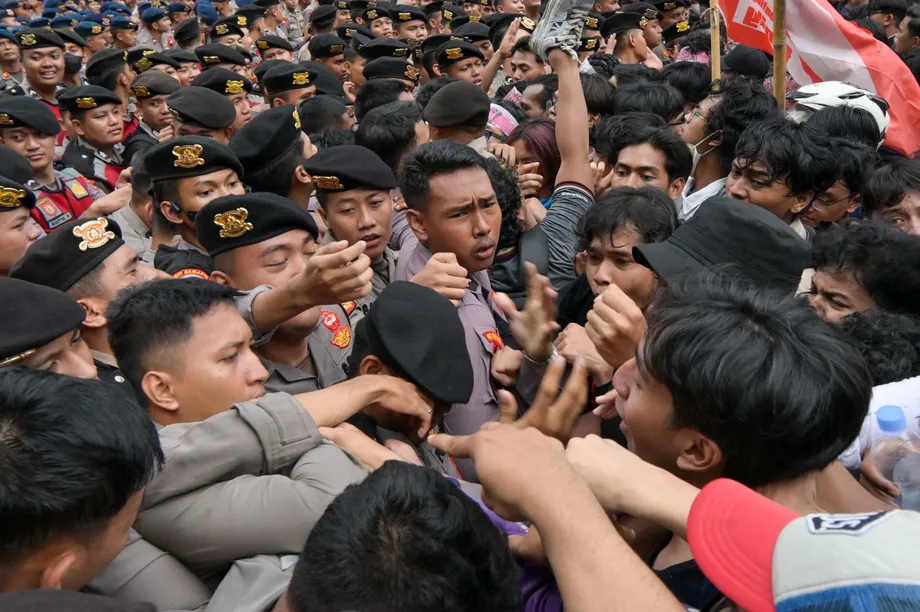
Smoke and spending fuel anger on the streets
Indonesia's wildfire crisis brought students and civil society groups onto the streets on October 28, 2026, as protesters demanded a national disaster declaration and challenged President Prabowo Subianto over public spending, rising prices and corruption. Deforestation monitor Nusantara Atlas said fires had destroyed more than 1.9 million hectares in the nine months through September.
Contents
- Smoke and spending fuel anger on the streets
- Why protesters want a national disaster declaration
- Families describe the health cost
- The budget figures behind the dispute
- Rising prices add pressure on households
- Blockades disrupt the planned Jakarta march
- What the government says it has done
- Haze carries the crisis beyond Indonesia
- How the latest protests developed
- Key Points
Thousands demonstrated across Jakarta and other cities, including hundreds who gathered in central Jakarta. Protests also took place in Bandung, Malang, Yogyakarta and Makassar, bringing complaints about toxic air together with demands for greater accountability and protection of human rights.
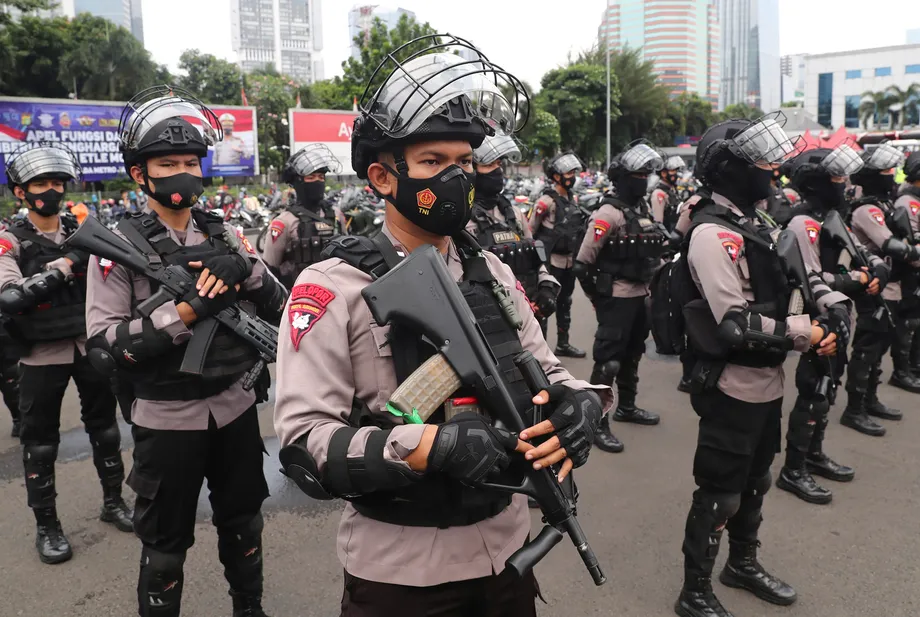
Police said about 14,000 officers, alongside soldiers, were deployed in Jakarta. Students who planned to march from the Hotel Indonesia roundabout toward the Presidential Palace encountered blockades, and minor scuffles broke out as some tried to pass through.
The demonstrations came as Indonesia faced its worst forest fires and haze in 11 years. Smoke had increased respiratory illnesses and spread into neighbouring Malaysia and Singapore, turning the emergency into a regional concern as well as a domestic political dispute.
The government's communications office said authorities had prosecuted companies linked to the fires, delivered aid to affected provinces and would continue monitoring the blazes. Protesters wanted a larger response, including more resources for firefighting and changes to spending priorities.
October 28 was also Youth Pledge Day, which commemorates a declaration of national unity made by young Indonesians in 1928. Students used that anniversary to challenge how the government was protecting people, managing public money and responding to criticism.
Why protesters want a national disaster declaration
Students from the University of Indonesia and other institutions called for the fires in Sumatra and Kalimantan, Indonesia's portion of Borneo, to be declared a national disaster. The organising committee SADAR, whose name means "aware" in Indonesian, called for a national emergency to unlock more resources.
Both demands sought a stronger response from the central government. Organisers argued that the scale of the fires required more help than affected communities were receiving. Demonstrations were organised under the hashtag #IndonesiaAware, with students announcing actions at several locations in Jakarta.
Nusantara Atlas put the area destroyed at more than 1.9 million hectares through September. Since one hectare equals 10,000 square metres, that amounts to more than 19,000 square kilometres.
El Niño, a climate pattern that can bring drier conditions to Indonesia, had worsened the crisis and left peatland vulnerable to burning. Peat is soil rich in partly decayed plant material. When it dries out, it can burn beneath the surface and release smoke that is difficult to stop.
Families describe the health cost
Annette Mau, 47, of the Indonesian Mothers' Alliance, described the haze as an urgent threat to families. She said tens of thousands of babies were suffering health problems, giving a much larger estimate for that group than the broader description of thousands sickened during the crisis. No official health tally was given.
Mau described the breathing difficulties affecting children:
Tens of thousands of babies are suffering from health problems. They cannot breathe
Some demonstrators wore gas masks as they gathered in Jakarta. Their signs connected the air pollution to their complaints about government conduct, including one that read: "No Clean Air Under Dirty Government".
Anggi Aurien, 28, said she was protesting over wildlife killed by the fires and had worn a gas mask for three hours at the roundabout. Other demonstrators carried pictures of orangutans, placing the destruction of animal habitats alongside concerns about human health.
Ezra Al Barra, a student from the University of Padjadjaran, said students had travelled from outside Jakarta. He described the fires as "our collective anger", capturing how the environmental emergency had brought together people with wider grievances.
The budget figures behind the dispute
Prabowo's free school meals programme became a central target of the demonstrations. Protesters called for spending on the programme and some other government initiatives to be halted, arguing that disaster response and other urgent needs deserved priority.
Senior officials running the meals programme said on July 21 that its budget for 2026 was 229 trillion rupiah, down from an earlier allocation of 268 trillion rupiah. The reduction was 39 trillion rupiah, or about 14.6 percent, and officials said further cuts were possible.
The National Disaster Mitigation Agency, known as BNPB, had faced a much smaller initial allocation. Its then chief, Suharyanto, said in February that the agency would receive 491 billion rupiah for 2026, a drop of nearly 75 percent from the previous year.
BNPB principal secretary Rustian said in September that regular funding had subsequently risen to 1.08 trillion rupiah. The agency also had 4.62 trillion rupiah in emergency funds ready for use.
Together, those September figures totalled 5.7 trillion rupiah. The revised meals budget of 229 trillion rupiah was about 40 times that amount. The comparison helps explain the spending priorities challenged by protesters: one programme pays for meals, while the disaster agency must prepare for and respond to emergencies.
The government had already increased BNPB funding from its initial allocation. Students were pressing for another political decision about how much money and attention the fires should receive.
Rising prices add pressure on households
Energy subsidies were another source of anger. A decision in late September reduced the allocation from 376.8 trillion rupiah in 2026 to 261 trillion rupiah for 2027, a fall of 115.8 trillion rupiah, or about 30.7 percent.
A subsidy is government spending that helps keep a price below what consumers would otherwise pay. Students protesting the reduction said households were already struggling with higher petrol prices and difficulty finding subsidised fuel.
Diana, a University of Indonesia student aged 20 who gave only her first name, connected the subsidy decision to pressures on household budgets:
The subsidy cut came as many are reeling from ballooning petrol prices and the scarcity of subsidised fuel because of the tensions in the Middle East,
Diana also criticised spending on the free meals initiative and village cooperatives. Her complaint reflected a broader demand running through the protests: public money should first address the costs and emergencies that people were experiencing directly.
Sekar, a protester aged 37, similarly described distress over people facing months of smoke while contending with a weakening currency and higher prices. The demonstrations joined those economic concerns to the immediate need for clean air.
Blockades disrupt the planned Jakarta march
Students gathered along Jalan Thamrin and Jalan Sudirman, major Jakarta roads lined with offices of Indonesian and foreign companies. Their intended route ran from the Hotel Indonesia roundabout toward the Presidential Palace, roughly three kilometres away.
Police blockades prevented some groups from reaching the roundabout, scattering students across different locations. A substantial police and military presence, including armoured vehicles, was visible in central Jakarta. Dozens of security personnel blocked some University of Indonesia students, with minor scuffles as demonstrators tried to advance.
Police put the deployment across Jakarta at about 14,000 officers, with soldiers also present. Students objected that the restrictions interfered with their freedom to express their views.
Sekar said she had come to protect the students who called the demonstration. She explained her reason for attending:
I came here from home with the intention of protecting the students
Demonstrators raised the three finger salute associated with The Hunger Games and carried signs borrowing language from the films. The symbols gave a shared visual expression to complaints ranging from forest destruction to corruption and political repression.
What the government says it has done
Syahganda Nainggolan, chief of the government's communications office, urged calm and said the government welcomed protests and was open to input. A statement issued late on October 28 described measures already taken against the fire crisis.
The office said authorities had prosecuted companies linked to fires and sent aid to provinces affected by haze. Indonesia had also tried modifying the weather to induce rain, an effort to increase rainfall where conditions allowed.
Organisers accused the administration of economic mismanagement, environmental exploitation and weakening democracy. Their demands extended beyond firefighting to stronger action against corruption, greater accountability and better protection of human rights.
SADAR set out its criticism of political power in a statement:
The oligarchy has placed its own interests above those of the people,
An oligarchy means a small, powerful group with substantial influence over decisions. Organisers used the term to argue that wealthy and politically connected interests were receiving priority over ordinary people. The government presented its prosecutions, aid deliveries and willingness to hear students as its response.
Haze carries the crisis beyond Indonesia
Malaysia and Singapore were also experiencing air pollution from the fires. Smoke crossing national borders meant that decisions about land and fire control in Indonesia were affecting people outside the country.
Singapore's foreign minister, Vivian Balakrishnan, was expected to meet Prabowo in Jakarta on October 28. The previous day, he directly addressed the cause of the haze.
Balakrishnan said the haze was "not a natural phenomenon" and described the fires in these terms:
were caused by human action
His remarks put attention on human responsibility for starting fires, while the dry conditions associated with El Niño helped explain why the burning had become so severe. For neighbouring governments, the immediate concern was pollution reaching their populations; for Indonesian demonstrators, it was also a question of accountability at home.
How the latest protests developed
October's demonstrations followed earlier unrest and protests in areas affected by smoke. Students had also demonstrated the previous week around the second anniversary of Prabowo's presidency.
- 2025: Weeks of nationwide unrest followed the police killing of a motorcycle taxi driver. Several more people died during the subsequent violence.
- August 2026: Hundreds of people were detained during major protests.
- September 2026: BNPB disclosed increased regular funding and emergency funds. Later that month, the government decided to reduce energy subsidies for 2027.
- The week before October 28: Demonstrations took place in Central Kalimantan and students protested around the presidential anniversary.
- October 28, 2026: Students and civil society groups demonstrated in Jakarta and other cities on Youth Pledge Day.
Surveys by Saiful Mujani Research and Consulting showed Prabowo's approval ratings declining steadily since late 2025. The latest rallies brought environmental anger into an existing dispute over prices, spending and the exercise of political power.
Demonstrations in Makassar and Bandung included students on motorbikes filling main roads. Protests in Sumatra and Borneo connected the demands heard in Jakarta with communities living closer to the fires.
Key Points
- Protests on October 28, 2026, demanded stronger action on wildfires, corruption and economic hardship.
- Nusantara Atlas said fires had destroyed more than 1.9 million hectares through September.
- Students and organisers sought a national disaster or emergency declaration to mobilise more resources.
- Protesters challenged spending on free school meals and a planned reduction of about 30.7 percent in energy subsidies.
- Police said about 14,000 officers were deployed in Jakarta, alongside soldiers. Blockades disrupted the planned student march.
- The government said it had prosecuted companies linked to fires, delivered aid and remained open to student input.
- Haze affecting Malaysia and Singapore added regional pressure to Indonesia's domestic crisis.