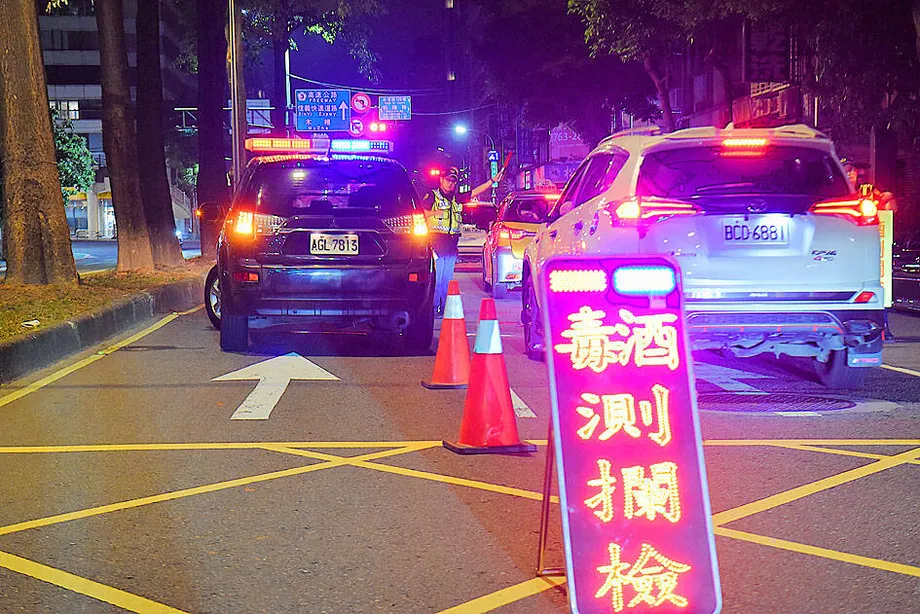
Higher fines and permanent bans take effect October 31
Taiwan will begin imposing tougher penalties for driving under the influence of drugs on October 31, 2026, with first offenses bringing fines of NT$120,000 for motorcycle riders and NT$150,000 for car drivers. Repeat offenses will carry progressively higher fines without a ceiling, while a second drug driving offense will mean losing the right to drive for life.
Contents
- Higher fines and permanent bans take effect October 31
- How the fines increase with each offense
- Refusing a test brings a separate escalating penalty
- Losing a license can mean years off the road
- Vehicle owners and adult passengers face consequences
- Preventive revocation adds treatment requirements
- Rapid saliva tests bring faster checks and disputes
- Small electric vehicles are next on the legislative agenda
- From Cabinet proposals to local enforcement
- Key Points
The changes to the Road Traffic Management and Penalty Act also introduce penalties for adult passengers, strengthen vehicle confiscation rules and allow preventive license revocation for people confirmed to have used narcotics or other controlled substances. Drivers who cause serious injury or death while under the influence will face permanent license revocation.
The Ministry of Transportation and Communications announced the October 31 start as Taiwan confronts rising deaths associated with drug driving. The ministry said 23 people were killed in related incidents during the first half of 2026, and deaths had increased in each of the past three years.
The measures extend beyond a larger fine at the roadside. They can remove a driver's license, take away a vehicle even when someone else owns it, and require treatment and education before some drivers can seek a new license. Separate proposals would extend tougher vehicle penalties to small electric two wheelers.
How the fines increase with each offense
First offenses will be punished at the statutory maximum: NT$120,000 for a motorcycle and NT$150,000 for a car. Each subsequent drug driving offense adds NT$90,000 to the applicable fine, with no upper limit.
The ministry's implementation plans specify that a second offense within 10 years brings a fine of NT$210,000 for a motorcycle or NT$240,000 for a car. Applying the same increase, a third offense would bring those amounts to NT$300,000 and NT$330,000 respectively.
The increase is especially steep for motorcycle riders. A second fine of NT$210,000 is NT$90,000, or 75 percent, above the first fine of NT$120,000. For car drivers, the rise from NT$150,000 to NT$240,000 is 60 percent.
License penalties operate alongside these financial penalties. A driver facing another fine can also face a permanent ban, rather than simply paying more and returning to the road.
Refusing a test brings a separate escalating penalty
Motorcycle riders and car drivers who refuse a drug test will face a first fine of NT$270,000. A second refusal within 10 years will cost NT$450,000, followed by an additional NT$180,000 for each subsequent refusal, without a cap.
The first refusal fine is NT$120,000 higher than the first drug driving fine for a car and NT$150,000 higher than the equivalent motorcycle fine. Under the announced sequence, a third refusal would cost NT$630,000.
The October implementation announcement sets the second refusal fine at NT$450,000; the July legislative passage announcement had put it at NT$540,000. The later implementation schedule uses NT$450,000, followed by increases of NT$180,000.
Refusal also brings license revocation and a three year ban on applying for a new license. Vehicle seizure and confiscation measures apply to refusal cases as well as drug driving.
Losing a license can mean years off the road
Drivers caught under the influence of drugs will have their licenses revoked and will be barred from applying again for three years. This replaces the previous penalty of suspending a license for one to two years.
A suspension temporarily removes permission to drive. Revocation cancels the license, so the driver must become eligible to apply for another one after the required period. Under the new rules, a second drug driving offense, or an offense causing serious injury or death, results in lifetime revocation.
People who drive after their licenses have been revoked for drug driving face an additional NT$36,000 penalty, with escalating amounts for repeat violations and vehicle confiscation. The ministry's October announcement gives the additional penalty as NT$36,000; an earlier implementation preview had listed NT$80,000.
A driver who violates drug driving rules while using another person's car or motorcycle during a license revocation period faces a further surcharge equal to half the imposed fine. Borrowing a vehicle therefore exposes the driver to another financial penalty and puts the owner's vehicle at risk.
Vehicle owners and adult passengers face consequences
Vehicles involved in drug driving or drug test refusal will be subject to confiscation regardless of whether the driver owns them. Police can take the vehicle at the scene. Taking custody of a vehicle is the immediate enforcement step; confiscation means the owner loses the vehicle through the applicable administrative process.
Owners who lend cars or motorcycles are therefore directly affected by the changes. The October announcement says ownership by someone other than the offending driver does not shield the vehicle from confiscation.
Passengers aged 18 or older face fines of NT$6,000 to NT$15,000. The legislative passage announcement specified that the penalty applies to passengers who know the driver is under the influence of narcotics.
The ministry's implementation preview also included powers to publish an offender's name and photograph and suspend the vehicle's license plates for two years when drug driving violations result in license revocation. These measures widen the consequences beyond the person holding the steering wheel or handlebars.
Preventive revocation adds treatment requirements
Authorities may also revoke licenses preventively when people are confirmed to have used narcotics or other controlled substances. This provision allows action before a drug driving conviction and bars the person from applying for a license for two years.
Eligibility to apply again requires more than waiting for the two years to pass. The legislative passage announcement says the person must complete drug addiction treatment and education programs and have a record of at least one year without drug use.
Driving after this preventive revocation also brings an additional NT$36,000 penalty under the announced rules, with escalating penalties for repeat violations. The vehicle is subject to confiscation even if it belongs to someone else.
These requirements create two separate conditions for returning to driving: the period of disqualification must end, and the person must satisfy the treatment, education and drug use requirements. For people who depend on a vehicle for work or family travel, the effect can continue well beyond the initial fine.
Rapid saliva tests bring faster checks and disputes
Police have been able to use rapid saliva tests since 2025, allowing officers to screen suspected drug driving more quickly. The transport ministry credited this change with improving enforcement, particularly against riders of small electric two wheelers.
Police have also raised concerns about false positive results and uncertainty over medicines. On October 28, Cheng Wei-hao, a deputy head at the Criminal Investigation Bureau's drug enforcement center, said the traffic law lacked a confirmation mechanism and did not clearly identify the controlled medicines covered by its provisions.
The bureau has asked the transport ministry to clarify the substances and standards used in enforcement. The ministry said it would arrange discussions soon, but gave no meeting date or timetable for revised rules.
A rapid screening test gives officers an initial result. A confirmation procedure provides a further check on what substance is present. Police said the current uncertainty makes decisions about separating drivers from vehicles, seizing vehicles and imposing penalties difficult, particularly when a driver has taken medication.
Recent incidents illustrate the immediate work facing officers. In Banqiao, New Taipei, a driver struck a streetlight and a fire hydrant early on October 28. Hsiao Yuan-chieh, a traffic unit commander at Haishan Precinct, said the uninjured driver tested positive in a saliva screen and was referred to prosecutors for investigation. In Taipei the previous evening, police stopped a driver on Jinzhou Street for unstable driving, found drugs and said he admitted using ketamine.
Small electric vehicles are next on the legislative agenda
National Police Agency figures show 580 drug driving cases involving micro electric two wheelers from January through September 2026, compared with 71 in the same period of 2025. That is 509 more cases, an increase of about 717 percent.
Alcohol driving cases involving these vehicles rose by 270, or 17 percent, while test refusal cases increased by 334, or 23 percent. The transport ministry linked the rise in detected drug driving cases to the introduction of rapid saliva screening and stronger roadside enforcement.
The ministry plans to submit a further amendment to the Executive Yuan by the end of November, before it goes to the legislature. The proposal would add vehicle confiscation and surrender of license plates for drug driving, refusal to stop for inspection and refusal of testing, following the approach used for cars and motorcycles.
The July amendments also set drug driving fines of NT$2,400 to NT$12,000 for operators of slow moving vehicles, including bicycles and qualifying electric bicycles with pedal assistance. Refusing a test carries a NT$24,000 fine and an immediate prohibition on continuing to ride. The November proposal addresses additional penalties for micro electric two wheelers.
Vehicle storage is another practical concern. Police said unclaimed vehicles occupy holding facilities and increase maintenance costs. A separate change scheduled for October 31 reduces the public notice period for unclaimed vehicles from three months to one month.
From Cabinet proposals to local enforcement
Premier Cho Jung-tai called for permanent license revocation for fatal, serious injury and repeat drug driving cases in June. Cabinet spokesperson Michelle Lee said he also instructed the Ministry of Justice to draft tougher criminal penalties. The traffic law changes concern fines, licenses and vehicles, while criminal investigations proceed through prosecutors and courts.
The main steps leading to implementation were:
- June 4: Cho outlined plans for lifetime license bans and discussion of a legal basis for rapid saliva testing.
- June 18: The Executive Yuan proposed the traffic law amendments.
- July 28: The Legislative Yuan passed the amendments.
- August 17: President William Lai promulgated the amendments.
- October 31: The tougher penalties are scheduled to take effect.
- By the end of November: The transport ministry plans to submit further changes covering micro electric two wheelers.
Chiayi City's Second Precinct began a targeted traffic enforcement operation on October 20. Precinct chief Lin Szu-miao reminded drivers that repeat drug driving fines would increase by NT$90,000 and that refusal penalties would also rise without a ceiling.
The precinct recorded 3,039 A2 traffic accidents, a category covering crashes involving injury, between January 1 and October 15, down 119 from the same period a year earlier. Recent weekly accident counts had nevertheless exceeded the previous year's weekly average for three consecutive weeks.
Since September 1, the precinct recorded 53 accidents on Zhongxiao Road, 45 on Wufeng South Road and 25 on Linsen East Road. Traffic officer Lu Rong-chi said enforcement also targets failure to yield from side roads, running red lights and failure to stop for pedestrians, alongside alcohol and drug driving.
Key Points
- Tougher drug driving penalties begin October 31, 2026, with first fines of NT$120,000 for motorcycles and NT$150,000 for cars.
- Repeat drug driving fines increase by NT$90,000 per offense without a ceiling.
- Test refusal starts at NT$270,000, rises to NT$450,000 for a second refusal within 10 years, then increases by NT$180,000 each time.
- A second drug driving offense, or one causing serious injury or death, brings lifetime license revocation.
- Vehicles face confiscation even when someone other than the driver owns them, and adult passengers who know the driver is under the influence can be fined.
- Police have requested clearer medicine definitions and confirmation procedures for drug testing.
- Further penalties for micro electric two wheelers are planned for submission to the Cabinet by the end of November.