Prison Acknowledges Guards Exceeded Limits on Force
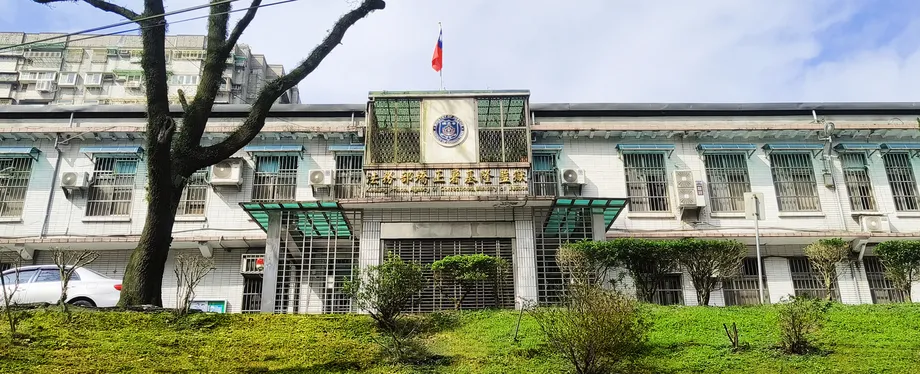
Keelung Prison in Taiwan has acknowledged that two guards used excessive force against a 55-year-old inmate who died less than two days after entering custody. The guards, identified by the surnames Yu and Yang, were reassigned, and prosecutors are investigating suspected injury resulting in death.
Contents
- Prison Acknowledges Guards Exceeded Limits on Force
- What the Prison Says Happened
- Family Describes Repeated Blows and Toilet Water
- Was Chen Resisting or Already Unconscious?
- A Timeline With Conflicting Arrival and Discovery Times
- Autopsy Must Establish the Cause of Death
- Reassignment and an Administrative Investigation
- What Is Established and What Is Still Undecided
- Key Points
Prison secretary Chu Chih-cheng confirmed on October 13 that a review of surveillance footage showed the guards had exceeded the principle of proportionality when restraining the inmate, identified by the surname Chen, on October 7. That principle requires the force used to be proportionate to the situation officers are addressing. The prison's admission establishes its finding of improper conduct, but the medical cause of Chen's death and any criminal responsibility remain under investigation.
Chen's family describes a much more violent encounter than the prison's initial account of restraint. His elder brother says surveillance recordings showed repeated punches, a collision with a wall and a guard throwing toilet water over Chen. Relatives also dispute whether Chen was conscious and capable of resisting when the guards intervened.
Following an examination of the body on October 9, prosecutors considered the two guards strongly suspected of injury resulting in death. They were released on bail of NT$200,000 and NT$150,000 respectively. An autopsy was conducted on October 12 with forensic physicians from the Institute of Forensic Medicine to establish the cause of death.
The case now involves two separate processes: a criminal investigation into the guards' actions and their possible connection to the death, and an administrative investigation into breaches of prison duties. Neither the bail decisions nor the prison's admission amounts to a criminal conviction.
What the Prison Says Happened
According to Chu, the confrontation began on the morning of October 7. The prison says Chen disobeyed instructions, argued with other inmates in his cell and provoked staff, disrupting prison order. Yu and Yang then restrained him and removed him from the shared cell.
An earlier account described Chen as lying on a bed and refusing to get up during admission procedures. The prison initially said he had failed to follow instructions and appeared to resist, while promising to examine whether the response complied with duty rules.
By October 13, the prison's position had become more definite. After reviewing the cell and surveillance recordings, it acknowledged that the guards' actions went beyond permissible restraint. That finding does not resolve every disputed detail, including Chen's condition when the encounter began or the sequence of alleged blows.
The distinction matters because an officer's reason for intervening and the amount of force subsequently used are separate issues. Even under the prison's account that Chen disrupted order, its own review found the response excessive.
Family Describes Repeated Blows and Toilet Water
Chen's elder brother says he viewed surveillance footage on the afternoon of October 8. He described a reception cell holding eight inmates and said his brother appeared curled up, possibly after taking medication. That explanation of Chen's condition is the brother's interpretation, not an established medical finding.
According to the brother, two staff members lifted Chen from either side and each punched him at least 20 times. He said they continued hitting Chen while holding him on the floor, then dragged him toward an individual cell and pushed him into a wall when its door opened.
The brother also alleged that, after the handcuffs were removed, one guard used a plastic bowl to scoop water from a toilet and throw it over Chen before leaving. Other descriptions of the footage similarly allege handcuffing, blows on the ground and a collision with a wall.
These are serious allegations requiring examination against the complete recordings and other evidence. The prison has acknowledged excessive force, but it has not publicly confirmed every action described by the family. It says all relevant material, including surveillance footage, has been handed to the Keelung District Prosecutors Office.
Was Chen Resisting or Already Unconscious?
The central factual dispute concerns Chen's ability to respond when force was used. The prison describes disobedience and possible resistance. Family members say the footage showed him already unconscious, making restraint unnecessary.
Those descriptions cannot be treated as interchangeable. Investigators need to establish Chen's condition at each stage: in the shared cell, during restraint, while being moved and after placement in the individual cell. A recording may show movements and staff actions, but medical evidence is also needed to assess consciousness and physical distress.
Chen's brother says his sibling became unwell late that night, with vomiting and incontinence, before losing signs of life at approximately 5 a.m. These details are family allegations about the period following the encounter. No completed forensic findings have been announced to establish what caused those symptoms.
The family also says it initially saw only footage of resuscitation efforts and discovered the alleged assault after requesting earlier recordings. The prison's statement that it supplied all material to prosecutors addresses the investigation's access to evidence, but does not settle the family's concerns about what it was first shown.
A Timeline With Conflicting Arrival and Discovery Times
The sequence spans October 6 through October 13, but reports differ on several hours within it. The prison's later account places Chen's admission at approximately 9 p.m. on October 6. His brother gives approximately 10 p.m. that evening. Another account places admission at approximately 7 a.m. on October 7, after police apprehended him the previous afternoon.
- October 6: Police reportedly apprehended Chen at approximately 5 p.m. and took him to prosecutors. The prison says he entered custody there at approximately 9 p.m.; his brother says approximately 10 p.m.
- October 7: A separate account places prison admission at approximately 7 a.m. The encounter with the two guards occurred that morning.
- October 8: Chen was found unresponsive in an individual cell. Accounts give approximately 5 a.m. or 7 a.m. He was reported to have died despite emergency treatment.
- October 9: A prosecutor and forensic physician examined the body. The two guards were subsequently released on bail.
- October 12: Forensic physicians conducted an autopsy to investigate the cause of death.
- October 13: Chu publicly confirmed that the prison had found excessive force and reassigned the guards.
Using the prison's 9 p.m. admission time and 5 a.m. discovery time gives an interval of approximately 32 hours. Using the alternative 7 a.m. admission and 7 a.m. discovery times gives approximately 24 hours. Both place the death within two days of admission, but custody and medical records are needed to resolve the exact chronology.
Autopsy Must Establish the Cause of Death
The October 12 autopsy is central to determining whether injuries from the encounter caused or contributed to Chen's death. The October 9 examination was conducted by prosecutor Chen Yi-yin with a forensic physician. The subsequent autopsy involved physicians from the Institute of Forensic Medicine.
The family says prison staff initially suggested a possible heart attack. Chen's brother also says a prison management official mentioned a record of heart medication. Neither a medication history nor an initial suggestion establishes the cause of death.
An earlier account also raised past heroin use as a possible medical consideration. There is no announced forensic conclusion connecting drug use to this death. Such possibilities must remain separate from findings supported by examination of the body, medical records and other evidence.
Some reporting described prosecutors as having determined that the guards beat Chen to death. That is stronger than the procedural facts establish: prosecutors treated the guards as serious suspects, granted bail and arranged an autopsy to clarify causation. Suspicion of injury resulting in death is not a completed medical conclusion or a court verdict.
Reassignment and an Administrative Investigation
The prison says the guards have three and four years of service respectively, with no previous duty violations identified. It also says its investigation found no personal dispute between either guard and Chen, responding to the family's concern that an earlier grievance might explain the alleged violence.
According to Chu, both guards expressed regret and apologized to the institution for problems caused by losing control of their emotions. The reported apology was directed to the institution; no apology to Chen's family was described.
The prison says it considered the guards unsuitable to continue serving in their original unit and completed their duty adjustments. Reassignment is not the same as dismissal or a final disciplinary sanction. No completed administrative penalty has been announced.
Chu also pledged cooperation with the judicial investigation. Administrative proceedings can examine whether staff breached duty rules, while prosecutors investigate whether the evidence supports a criminal charge and whether the alleged conduct caused the death. The two inquiries address related but distinct responsibilities.
What Is Established and What Is Still Undecided
Chen reportedly entered prison to serve a one-year sentence for a hit-and-run offense. Police had apprehended him in connection with outstanding cases involving drugs, leaving the scene of a traffic collision and unsafe driving. Those details explain the route into custody, but do not determine whether the guards' conduct was lawful.
Comments from a former inmate and a former prison employee, neither associated with this incident, described verbal communication, restraints and disciplinary scoring as methods used to maintain order. Those observations provide limited context, not evidence of what happened in Chen's cell or a finding about the rules applicable to the encounter.
The strongest established development is the prison's own admission that the response exceeded proportionality. The remaining issues include the full sequence of staff actions, Chen's level of consciousness, the handling of his reported illness overnight and the medical connection between any injuries and his death.
No autopsy result, charging decision, final disciplinary outcome or court hearing date has been announced in the accounts of the case. The next substantive developments will depend on forensic findings and the conclusions of the criminal and administrative investigations.
Key Points
- Keelung Prison acknowledged excessive force during the restraint of Chen on October 7.
- The 55-year-old inmate died within two days of entering prison, although accounts differ on exact admission and discovery times.
- His family alleges repeated punches, a collision with a wall and toilet water thrown over him.
- Two guards were reassigned and released on bail of NT$200,000 and NT$150,000.
- An autopsy took place on October 12; no final cause of death has been announced.
- Criminal responsibility and administrative penalties remain undecided.