Court orders detention after fatal attack in Bade
A court in Taoyuan has ordered a 36 year old man surnamed Lin detained for two months after he allegedly followed a 25 year old woman into her rented home, attacked her with a knife and set fires across two neighboring properties. The woman, surnamed Lu, died after being taken to hospital following the October 11, 2026, attack on Yongzhong Street in Bade District.
Contents
- Court orders detention after fatal attack in Bade
- A return home followed by an attack
- Firefighters find Lu with knife wounds and burns
- Three suspected ignition points across neighboring properties
- Surveillance and neighborhood searches lead to arrest
- What the vape evidence does and does not show
- Why the court accepted the detention request
- Investigation timeline and assistance for the family
- The evidence still needed
- Key Points
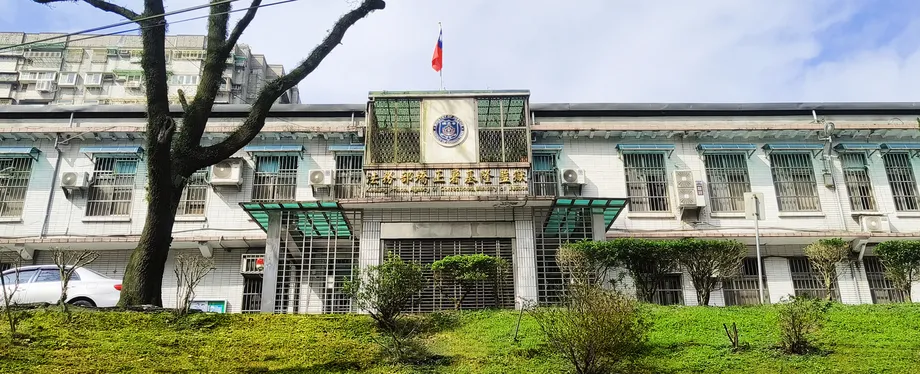
The Taoyuan District Court ordered detention beginning October 12 and prohibited visits and correspondence. According to accounts of the decision, the judge found a substantial suspicion of serious offenses and risks of flight, destruction of evidence and repeated offending. Lin may challenge the order within 10 days of receiving it.
The case initially drew attention to a suspected connection with an etomidate vape cartridge, commonly described locally as a zombie vape. Police recovered a cartridge when arresting Lin and collected samples for testing. Neither drug use at the time of the attack nor a causal connection between drugs and the killing has been established.
Later accounts of the court hearing also added a distinction missing from early descriptions of an apparently disoriented suspect. Lin reportedly admitted killing Lu and setting fire to an occupied residential property, while denying the aggravated robbery and killing allegation. The court described several alleged preparations for theft inside the home as sufficiently organized to cast doubt on an explanation based solely on impaired awareness.
Those findings concern whether detention is justified during the investigation. They are not a verdict. Investigators still need to establish why Lin entered the residence, whether a theft or robbery occurred, the sequence of the fires and the role, if any, of drugs.
A return home followed by an attack
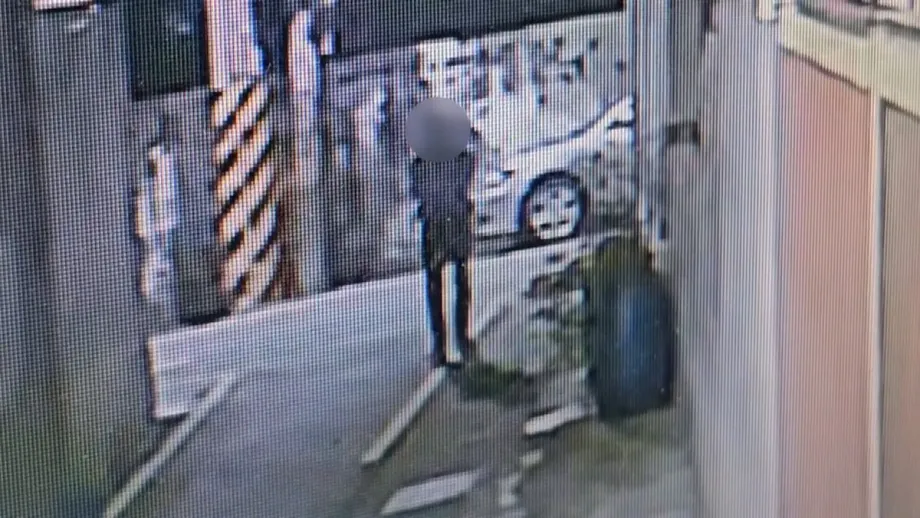
Lu worked in rental property management. Accounts of her final movements say she had met friends before taking a vehicle home and arriving near her residence at about 4 a.m. on October 11. Surveillance footage reportedly showed her walking alone into the lane leading to the property.
Lin was seen lingering near the entrance to the lane before allegedly following her. Police initially said the two did not know each other, making the footage central to their theory that he selected a stranger rather than arrived for a planned meeting. Whether there had been any previous contact remains subject to investigation.
One account places the attack in a rented suite on the second floor. Investigators suspect Lin demanded money and attacked Lu after she refused. That remains an investigative theory, not an established account of the exchange inside the room.
Police recovered cash as well as a vape cartridge when Lin was arrested. The reported recovery does not establish where the money came from or whether it belonged to Lu. That distinction matters because the alleged connection between taking property and using violence is central to the disputed robbery charge.
Firefighters find Lu with knife wounds and burns
Taoyuan firefighters received a report of a residential fire at approximately 6 a.m. A more precise account gives the notification time as 6:12 a.m. and says the flames were extinguished at 6:48 a.m., a 36 minute interval. The fire bureau dispatched 11 fire vehicles and 25 personnel.
During the search, responders found Lu inside the residence with a visible neck wound and extensive burns. Accounts describe her as having no signs of life when discovered. She was taken to Saint Paul's Hospital, where efforts to save her failed.
A later account places the formal declaration of death at approximately 10 a.m. that morning. The descriptions of her condition at the scene and the later hospital declaration refer to different stages of the emergency response, rather than necessarily conflicting accounts.
The reports identify both knife injuries and burns, but do not provide a final forensic determination of the cause of death or the contribution of each injury. Establishing that sequence will be important to reconstructing the attack and the subsequent fire.
Three suspected ignition points across neighboring properties
Investigators are examining three suspected ignition points. Early descriptions say Lin allegedly set one fire in Lu's rented home and two more in the neighboring residence, possibly to destroy evidence and confuse the response.
A neighbor's account describes the locations more specifically as the rented suite, an area inside the neighboring home and a tarp area. These descriptions broadly point to multiple fires across adjoining properties, but the precise locations and order have not been conclusively established.
Reports also differ on the route Lin allegedly took between the buildings. One describes him climbing from a third floor window. Another recounts a neighbor's belief that he moved along the roof edge, stepped across a sunshade and crossed a railing into the family's third floor balcony.
Those details should not be treated as a single verified escape route. Police have said they are still working out how the attack, ignition points and movements between the buildings fit together. The theory that the fires were intended to erase evidence or distract investigators also requires proof.
The neighboring household was drawn directly into the incident. Family members reportedly encountered an unfamiliar man on their balcony while the fire was burning. Their accounts describe an escape amid the emergency, rather than a successful attempt to restrain him.
Surveillance and neighborhood searches lead to arrest
Police expanded their review of surveillance recordings and searched around the scene before finding Lin nearby. Tsai Chih ming, deputy head of the Bade police investigation team, described the arrest as the result of checking additional cameras and conducting inquiries around the affected properties.
Accounts vary on the exact arrest location. One places Lin behind a water tank at ground level. Another says officers found him in a narrow space between neighboring buildings. Several describe him wrapped in a blanket, although they differ on whether he was wearing trousers or only underwear.
The consistent elements are that he was arrested close to the scene and was reportedly carrying cash and a vape cartridge. Police described him as disoriented. Initial reports say he either declined to explain what happened or denied involvement.
Later reports of his court appearance say he admitted the killing and arson while contesting the robbery allegation. These accounts describe different stages of questioning and should not be compressed into a claim that he either confessed immediately or consistently denied every allegation.
What the vape evidence does and does not show
Several accounts identify the recovered cartridge as containing etomidate. The term zombie vape is a colloquial label, not a laboratory finding about Lin's condition at the time Lu was attacked. Police collected biological samples to determine whether he had used drugs.
No test result is reported. Possession of a cartridge, observed confusion and a history of drug offenses are separate pieces of information. None alone establishes that Lin consumed the substance before the attack, how much he may have taken or how it affected his actions.
The court's reported reasoning adds another relevant point. The judge identified several alleged preparations for theft that showed a degree of precision and considered them inconsistent with the usual behavior of someone unaware of what they were doing.
That assessment does not replace toxicology testing or establish that Lin was unimpaired. It shows why the case cannot yet be reduced to a simple account of drug induced violence. Evidence about consumption, awareness, intent and the sequence of actions must be assessed together.
Forensic physician Kao Ta cheng offered a separate hypothesis that an attacker might target the neck out of concern that the victim would call for help. That was a personal interpretation of the reported injuries and circumstances, not a finding from this investigation. The actual reason for the attack remains unresolved.
Why the court accepted the detention request
After questioning Lin on October 12, prosecutors sought detention without visits or correspondence. Accounts of the application identify suspected offenses under Article 332 of Taiwan's Criminal Code involving robbery combined with intentional killing or arson, Article 173 concerning fire and public danger, and Article 306 concerning unlawful entry into a residence.
The disputed legal issue is broader than whether Lin attacked Lu. At the court hearing, he reportedly admitted killing her and burning a residence in use by other people, but denied the allegation described as aggravated robbery combined with killing under a legal category that can treat certain theft related violence as robbery.
In plain language, investigators must establish the relationship between any attempt to take property and the violence that followed. The reported cash recovery does not settle that question. The court nevertheless considered the alleged preparations for theft inside the residence sufficient to support a strong suspicion at the detention stage.
The judge also cited a recent prosecution of Lin in an intimidation case when assessing the risk of further offending. That prosecution is distinct from reported prior drug and theft offenses, and should not be described as another conviction.
Accounts of the ruling say the most serious suspected offense carries a maximum penalty of death. The court considered that exposure alongside risks of flight and destruction of evidence. The detention decision does not determine guilt or any eventual sentence, and Lin retains the presumption of innocence.
Investigation timeline and assistance for the family
The chronology now extends from Lu's return home to the court's detention order. Some times come from individual reports rather than a published reconstruction of the entire incident.
- October 11, about 4 a.m.: Lu reportedly arrived near her rented home after meeting friends. Lin allegedly followed her inside.
- October 11, 6:12 a.m.: The more precise emergency account places the fire notification at this time.
- October 11, 6:48 a.m.: Firefighters reportedly extinguished the flames after deploying 11 vehicles and 25 personnel.
- October 11, about 10 a.m.: A later account gives this as the time Lu was declared dead at hospital.
- October 11, afternoon: A prosecutor inspected the scene, conducted an examination of the body and took statements from family members.
- October 12: Prosecutors questioned Lin and sought detention. The court ordered two months of detention beginning that date, with visits and correspondence prohibited.
Taoyuan chief prosecutor Chang Chun hui assigned prosecutor Wang Chun jung to direct the task force working with Bade police. Their investigation includes the circumstances inside the rented suite, the neighboring fires and Lin's movements before his arrest.
The Taoyuan District Prosecutors Office also notified the Taoyuan branch of the Association for Victims Support to contact Lu's family and provide assistance. Her mother went to the hospital after receiving news of the incident.
Lin's previous employment has also attracted attention. He reportedly worked as a technician for a private ambulance company for more than seven years, and a former colleague confirmed that he had left about one to two years earlier. References to his temper in social media posts do not establish a motive for the attack.
The evidence still needed
The next substantive findings will need to address several separate questions: whether Lin used etomidate, why he entered Lu's home, whether property was taken or sought, and how the knife attack and three suspected ignition points were connected.
A complete reconstruction must also distinguish observations from inference. Surveillance can establish movements outside the residence, while forensic work, examination of the fire scene and testimony will be needed to establish what happened inside. The reported admissions do not resolve every disputed element of the alleged offenses.
No date has been announced for toxicology results, a further hearing or a trial. The concrete procedural deadline reported so far is the right to challenge the detention order within 10 days of receipt. The two month detention period begins on October 12; it is not a sentence.
The established outcome is that Lu died after suffering knife wounds and burns, and Lin is in custody while prosecutors investigate. The suspected robbery motive and drug connection remain matters to be proved, alongside the full sequence of the attack and fires.
Key Points
- Lu, 25, died after a knife attack and fires at her rented home in Taoyuan's Bade District on October 11, 2026.
- Firefighters deployed 11 vehicles and 25 personnel. The more precise response account records a 6:12 a.m. notification and extinguishment at 6:48 a.m.
- Police arrested Lin, 36, nearby and reportedly recovered cash and an etomidate vape cartridge.
- Later court accounts say Lin admitted killing and arson but denied the aggravated robbery and killing allegation.
- The court ordered two months of detention from October 12, prohibiting visits and correspondence.
- Drug test results, the motive, the origin of the cash and the precise sequence of three suspected ignition points have not been established.
- Prosecutors arranged contact between victim support personnel and Lu's family.