A final departure above ground, then an overnight switch
Tainan's last scheduled train from its surface platforms, southbound Tze-Chiang Express No. 145, is due to leave at 10:29 p.m. on October 16, 2026. Three long horn blasts will mark the farewell before the city's railway begins its first stage of underground operation on October 17, a milestone 17 years after Cabinet approval.
Contents
- A final departure above ground, then an overnight switch
- What changes for passengers overnight?
- Replacement buses and road restrictions
- A farewell to platforms used by generations
- The homes lost along the eastern route
- What will reconnect the city?
- The historic station keeps its place
- Twenty discoveries beneath the railway
- A higher bill and a timetable through 2031
- Further railway changes remain in planning
- Key Points
The change involves an 8.23 kilometer railway corridor and a new underground Tainan Station with two island platforms and four tracks. Taiwan's Ministry of Transportation and Communications has scheduled the critical track, signaling and overhead power changeover from 10 p.m. on October 16 until 6 a.m. the following morning. Eighteen train services are expected to be affected.
For passengers, the opening means new platforms beneath a familiar destination. For the city, it begins the removal of a railway barrier between eastern and western neighborhoods. For 340 households affected by demolition along the route, it also brings renewed attention to homes lost during a long dispute over moving the railway eastward.
President Lai Ching-te, who promoted the project while serving as Tainan mayor, has apologized to residents whose homes could not be preserved. The opening ceremonies therefore bring together two very different experiences: public celebration of a new railway and the lasting cost borne by people who lived beside the old one.
The underground opening is the first major operational step rather than the end of construction. Two additional stations, the removal of surface infrastructure, new public spaces and restoration work will follow, with full project completion scheduled for March 2031.
What changes for passengers overnight?
The transport ministry's track changeover notice identifies three systems that must be switched together: rails, signals and the overhead wires supplying electricity to trains. Signals control when trains can move, while the wires provide the power needed to run them.
Two services with reserved seating and 16 local or fast local services are expected to be affected. Some will be canceled; others will end before their usual destination, with road transport covering the interrupted journey. Taiwan Railway Corp. may add local trains as conditions require and advises passengers to check its website or booking app before traveling.
The underground station's island platforms each have tracks on both sides. Direction signs will use blue for northbound trains and green for southbound trains, introducing a color system similar to Taiwan High Speed Rail. Signs will also appear in Chinese, English, Japanese and Korean.
Passengers approaching from Beimen Road and the station roundabout will still be able to enter through the historic station and continue toward the underground concourse. Mayor Huang Wei-che has described retaining this familiar entrance as an important part of the design.
Replacement buses and road restrictions
Tainan's Transport Bureau has arranged replacement buses on the Yongkang to Baoan and Shalun to Tainan corridors. Transport Bureau Director Wang Ming-de has urged passengers to check both train changes and bus arrangements and allow extra time for transfers.
- October 16, Yongkang to Baoan: buses operate in both directions through Daqiao and Tainan. The first departure from Yongkang is at 10:30 p.m.; the first from Baoan is at 11:15 p.m.
- October 17, Tainan to Yongkang: buses begin at 5 a.m., operating in that direction.
- October 16, Shalun to Tainan: direct buses and services stopping along the route begin at 10:45 p.m.
- October 17, Tainan to Shalun: direct buses and services stopping along the route begin at 5 a.m.
Boarding points include the bus shelters outside Yongkang and Baoan stations, Tainan's station forecourt and Shalun's station plaza. The Daqiao stop is outside the Opel premises at 753 Zhonghua Road. Passengers at Chang Jung Christian University, Zhongzhou and Rende stations should use the station entrances.
Traffic controls on Beimen Road outside Tainan Station are scheduled for 10:30 p.m. to midnight on October 16 and 5 a.m. to 7 a.m. on October 17. People meeting passengers or taking taxis will need to account for the restrictions as well as the rail changes.
A farewell to platforms used by generations
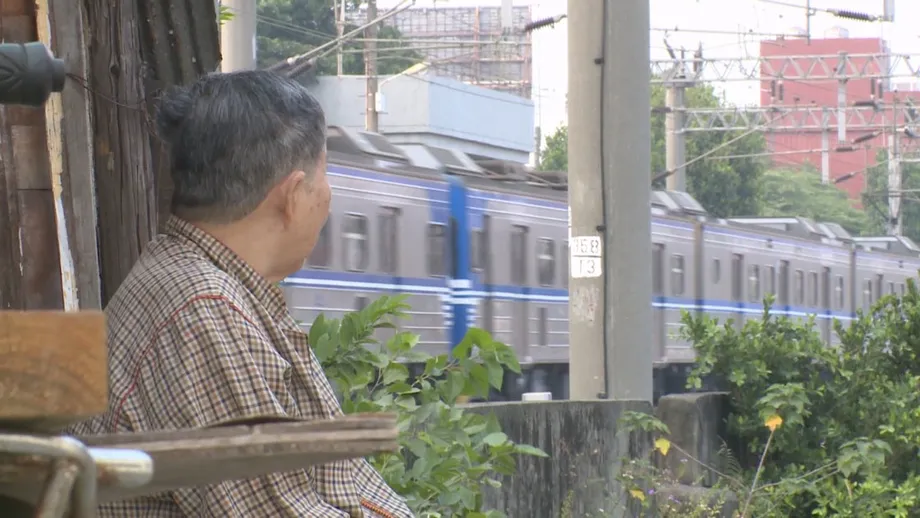
Tainan Station opened in 1900. Its surface platforms have served generations leaving for school and work, returning home and greeting relatives. On the final evening, visitors from across Taiwan gathered with cameras and phones, while some bought tickets for the last train as keepsakes.
The Railway Bureau arranged an opening ceremony for 6:30 p.m. on October 16, with Lai and Huang attending. The program included lighting and projection displays, a documentary and recognition for construction workers. Singer Hsieh Ming-yu was scheduled to perform the railway theme song Che Tou.
Taiwan Railway's separate farewell event was scheduled for 9 p.m. Under the planned ceremony, railway chairman Cheng Kuang-yuan, Huang and Transport Minister Chen Shih-kai would pass a historic railway token in sequence before handing it to the driver of No. 145. The three horn blasts would represent farewell, gratitude and the next stage of railway service.
The crowds also prompted safety warnings. Railway police said some people seeking photographs had crossed into tracks, bridges and other restricted areas. Jiang Yu-huang, deputy chief of the Tainan railway police station, cited Article 57, Paragraph 2, and Article 70, Paragraph 1, of the Railway Act: unlawful entry can bring fines of NT$10,000 to NT$50,000.
The homes lost along the eastern route
The Cabinet approved the underground project in September 2009. The adopted design placed permanent underground tracks east of the existing railway, bringing homes along that side into the demolition area. Some faced partial removal; others were to be demolished completely. The affected area crossed three administrative districts.
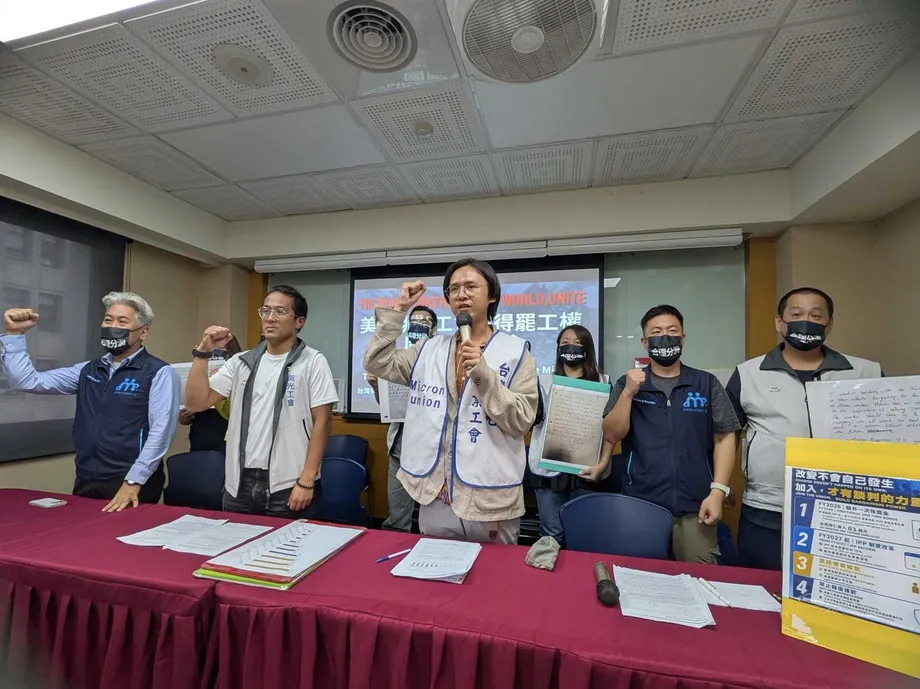
Residents resisted for about a decade. During a contentious public meeting in 2013, a resident challenged Lai, then mayor, over the loss of homes despite family support for his election. Lai defended cooperating with the central government's approved plan.
The dispute reached a decisive point on August 20, 2021, when the Railway Bureau mobilized police early in the morning to take possession of the last holdout home, owned by Huang Chun-hsiang. Officers removed Huang and supporters. Huang said officials had failed to negotiate properly; bureau official Wu Chih-jen described the enforcement action as unavoidable.
At an earlier unveiling of the new station, Lai thanked the affected residents and apologized for being unable to preserve their homes. The railway's public benefits and the residents' losses are both part of the project's history. The account of its opening includes a faster connection across the city, but also the removal of homes and the end of established neighborhood lives.
What will reconnect the city?
The 8.23 kilometer project runs from south of Daqiao Station to roughly 600 meters south of Dalin Road. The Railway Bureau says the completed scheme will remove 23 railway crossings and related structures, reducing the need for people traveling east and west to wait at tracks or detour through existing bridges and underpasses.
Tainan's government plans a greenway about 30 meters wide along the former railway corridor, with walking routes, cycling space and planted areas connecting stations, neighborhoods, schools and public facilities. New street connections are intended to spread traffic beyond the limited crossing points used today.
Pedestrians, cyclists, older residents and people with disabilities stand to gain from routes that avoid steep approaches or indirect crossings. More connected streets could also improve access for buses, ambulances and fire engines.
Chen Yen-chung, a distinguished professor in National Cheng Kung University's Department of Urban Planning, describes the first stage as moving the railway's transport function underground. He says the later work on surface space and urban uses will determine much of the change in daily life.
Existing tracks and structures still have to be removed, roads restored and walking routes improved. Chen identifies travel times, transfer convenience, accident rates, green space use and changes in surrounding neighborhoods as practical measures of success. Residents will experience those changes progressively as the surface works advance.
The historic station keeps its place
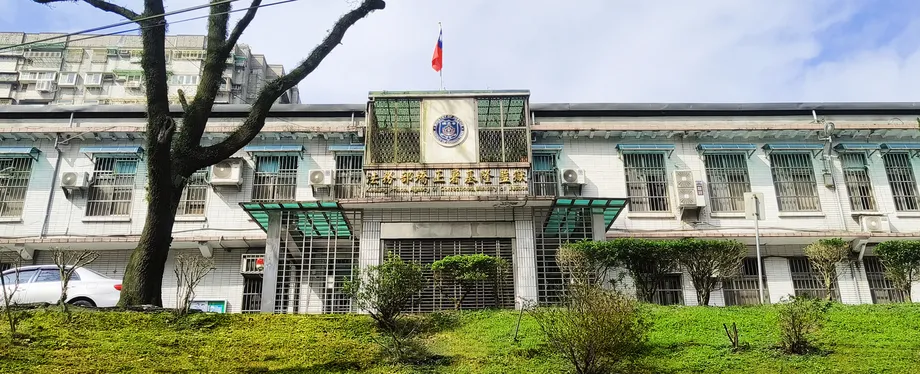
Tainan's surviving station building was rebuilt in 1936 and designated a national monument in 1998. The new station stands beside and beneath it, preserving the old building's role as an entrance to the city rather than relocating railway activity away from it.
Fu Chao-ching, an emeritus architecture professor at National Cheng Kung University and a member of the station restoration review committee, opposed an earlier proposal for a new station farther north. He argued that the old station's relationship with the roundabout and historic city center was central to Tainan's urban layout.
The adopted design uses a low horizontal building, a broad canopy about 14 meters high and a sunken plaza to connect old and new. Walkways link the historic building, the new concourse and surrounding streets, including the route toward University Road.
Taiwan Railway is discussing cafes, light meals, local souvenirs, reading areas and exhibitions for the historic station. Restoration covers five structures. Design for the main station building is scheduled for completion in June 2027, followed by central review and contracting. A second stage covers the police building, station office and the first and second platforms.
Twenty discoveries beneath the railway
Construction uncovered 20 archaeological sites or remains spanning prehistoric times, Qing rule and the Japanese colonial period. Tainan's Cultural Affairs Bureau says investigations, documentation and preservation decisions followed procedures under the Cultural Heritage Preservation Act.
The Railway Bureau attributes about two years of additional construction time to archaeological investigation and preservation. Depending on the remains and engineering conditions, teams changed designs, strengthened discoveries in place or moved them into protected storage. Some are intended to return to their original locations for display; others may be exhibited elsewhere or indoors.
One discovery near Sin Lau Hospital on Dongmen Road revealed roads containing sugar fragments, mixed with mortar, broken ceramics and roof tiles. Archaeologists connected the road foundations to Tainan's nineteenth century sugar economy and a likely route shown on an 1875 map. Plans call for their later presentation within the new parkway's cultural spaces.
Chen argues that railway heritage, including platforms, a turntable, warehouses and nearby city wall remains, can make the station a starting point for understanding Tainan. He described how preservation requirements could shape development:
"Restrictions should not be seen as limitations. They can instead become opportunities to create a distinctive urban character," Chen said.
A higher bill and a timetable through 2031
The project's estimated cost has risen from NT$33 billion to NT$41.26 billion, according to the Railway Bureau. That is an increase of NT$8.26 billion, or about 25 percent of the original estimate. The opening therefore arrives with both a much longer history and a larger budget than the initial approval suggested.
COVID-19, archaeological work, heritage reviews and the demolition dispute formed part of the project's long passage to operation. The next stages have separate dates, so passengers and nearby residents will continue to encounter construction after trains move underground.
- September 2009: the Cabinet approves the Tainan railway underground project.
- August 20, 2021: authorities take possession of the final holdout home.
- October 16 to 17, 2026: the railway schedules its overnight changeover and first stage opening.
- June 2027: design work for restoration of the main historic station building is scheduled to finish.
- 2029: Linsen underground commuter station is scheduled to open.
- 2030: South Tainan underground commuter station is scheduled to open.
- March 2031: full project completion is scheduled.
Taiwan Railway is also marking the opening with commemorative sales. A ticket set costing NT$399 goes on sale at 9 a.m. on October 17 near Exit 3, limited to 2,000 sets and two per person. Other items include 10,000 traditional Yongkang to Baoan commemorative tickets at NT$31 each and 1,000 commemorative transit cards at NT$150. A regional lunchbox costing NT$199 is planned for limited lunchtime sales from October 17 through November 1.
Further railway changes remain in planning
The Railway Bureau is preparing a separate extension north to Yongkang. Its feasibility study has Cabinet approval, while comprehensive planning and environmental review are underway. The proposed 6.72 kilometer route would put Yongkang and Daqiao stations underground and add Kangqiao Station.
Xinshi's proposed scheme would instead elevate about 4.6 kilometers of railway and move Xinshi Station north. City plans identify five level crossings and one vehicle underpass for removal. Shanhua is at an earlier stage: its feasibility study began after a contract award on April 10, 2025, and had not yet been submitted to the transport ministry for review.
Those projects have no opening dates in the announced plans. For central Tainan, the immediate task is more concrete: complete the overnight railway switch, guide passengers through the new station and turn the former track corridor into connected streets and usable public space.
Key Points
- Tainan's first stage of underground rail service is scheduled to begin on October 17, 2026.
- The final surface departure is southbound Express No. 145 at 10:29 p.m. on October 16.
- The overnight changeover is expected to affect 18 train services, with replacement buses arranged.
- The project covers 8.23 kilometers and has an estimated cost of NT$41.26 billion.
- Demolition affected 340 households; President Lai Ching-te has apologized for homes that could not be preserved.
- The historic station will remain, while surface railway space is planned for streets, walking and cycling routes, and greenery.
- Linsen and South Tainan stations are scheduled for 2029 and 2030, with full project completion in March 2031.