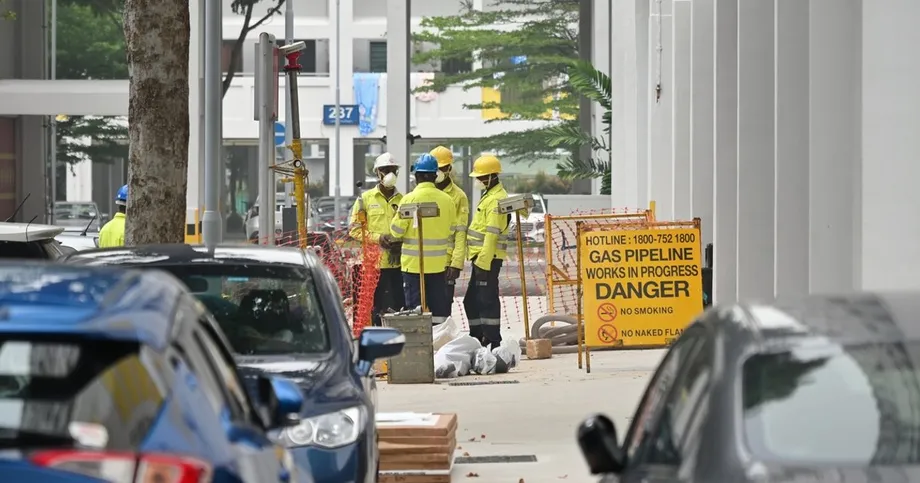
More than 400 inspections put workplace protection under scrutiny
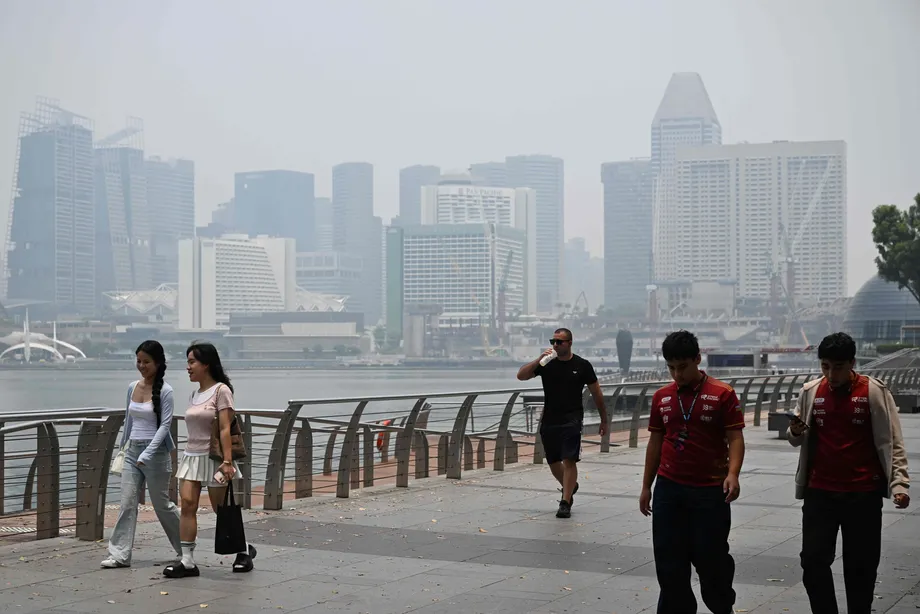
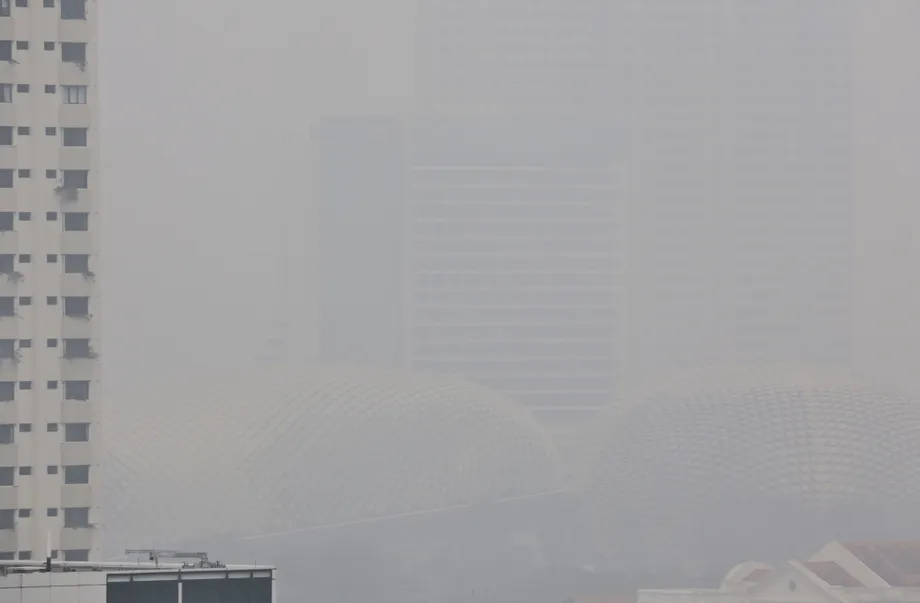
Singapore employers have been told to prepare for hazardous haze, with about a quarter of more than 400 Ministry of Manpower worksite inspections finding shortcomings in protective measures since September. The warning came as the central region's 24-hour Pollutant Standards Index (PSI) reached 229 at 3pm on October 16, 2026, the highest reading recorded that year.
Contents
- More than 400 inspections put workplace protection under scrutiny
- How the haze reached this point
- What changes above PSI 200 and 300?
- Why hourly particle readings also matter
- What employers should prepare before the next shift
- Inspectors will return to workplaces that fell short
- Working from home and leave can ease family pressures
- Delivery delays should not cost platform workers
- Closures widen while Singapore tracks the smoke
- Key Points
Acting Minister for Manpower Jasmin Lau said businesses should decide now how to reduce outdoor work, protect vulnerable employees and change working arrangements if conditions worsen. Platform operators were also told that delivery and ride-hail workers should not lose pay or job opportunities because haze makes their tasks take longer.
Singapore had recorded unhealthy air in at least one region for 12 consecutive days, beginning on October 5. That was its longest continuous stretch since the 2015 haze crisis, when poor air lasted 15 days, from September 23 to October 7.
Lau, speaking at the National Press Centre alongside Minister for Sustainability and the Environment Grace Fu and Minister for Education Desmond Lee, pointed to employers' duties under the Workplace Safety and Health Act.
"Protecting workers from haze is not optional," said Lau.
Employers must monitor conditions, assess the risks their workers face and take reasonable and practicable protective measures. For businesses with outdoor operations, that means preparing changes to tasks, staffing and rest arrangements before pollution reaches a more dangerous level. For office staff and caregivers, it can mean considering requests to work from home.
How the haze reached this point
Three regions recorded air quality in the very unhealthy range on October 16. Central Singapore crossed into that band at midnight, before its PSI climbed to 229 in the afternoon. All five regions had last recorded moderate air quality simultaneously at midnight on October 5, when readings ranged from 77 to 100.
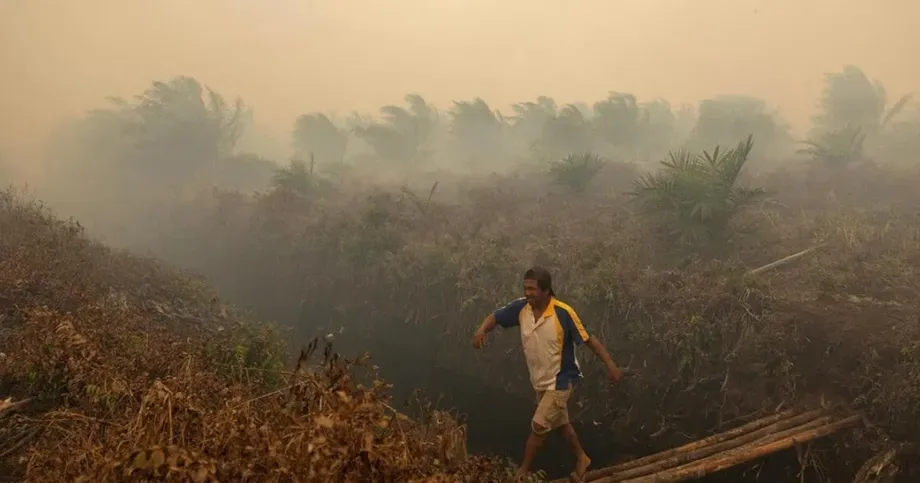
The National Environment Agency (NEA) attributed the haze to dense smoke plumes from sustained wildfires in neighbouring Indonesia. The deterioration followed earlier mask distributions and closures, when western Singapore's hourly fine particle concentration reached 288 micrograms per cubic metre on October 14.
The main developments show how a prolonged pollution episode has translated into changes at workplaces and public facilities:
- Since September: MOM conducted more than 400 worksite inspections, finding shortcomings in about a quarter.
- October 5: All five regions recorded moderate air at midnight; the run of unhealthy air began later that day.
- October 14: Western Singapore recorded hourly PM2.5 of 288 micrograms per cubic metre.
- October 15: Prime Minister Lawrence Wong said Singapore was examining which companies might be responsible for the Indonesian fires.
- October 16: Central Singapore's 24-hour PSI reached 229 at 3pm, and Lau urged employers to prepare for worsening conditions.
The 12 days of unhealthy air were three days short of the 15-day stretch in 2015. For workers outdoors, the duration matters alongside the day's pollution reading: employers must sustain protective arrangements through repeated shifts rather than respond to a single bad afternoon.
What changes above PSI 200 and 300?
MOM's work guidance uses the PSI forecast to set out progressively stronger precautions. A forecast above 200 falls within the very unhealthy range. Employers should avoid prolonged or strenuous outdoor work and minimise or avoid outdoor work for vulnerable employees.
Older workers, pregnant women and people with chronic heart or lung disease are among those requiring particular care. Workers who must remain outdoors for extended periods should receive N95 masks.
A forecast above 300 enters the hazardous range. Employers should then minimise outdoor work even for healthy workers, defer non-essential outdoor tasks, reduce work intensity and provide indoor rest breaks. The practical change is that protection extends beyond the most vulnerable staff to wider outdoor operations.
Lau urged employers to plan those measures in advance. A business that identifies which tasks can wait, which workers can move indoors and how shifts can be adjusted will have those decisions ready when the forecast worsens.
Why hourly particle readings also matter
The 24-hour PSI describes air quality over a longer period, while hourly PM2.5 readings show more recent changes in fine particle pollution. PM2.5 refers to particles measuring 2.5 micrometres or less across, small enough to travel deep into the lungs.
PSI is an index, while a PM2.5 concentration measures the amount of fine particles in a volume of air. Employers therefore need to understand both the kind of number they are checking and the period it covers. A rapid rise in hourly pollution may require attention while the longer measure is still catching up.
MOM will issue further advice on using hourly PM2.5 readings for immediate decisions about outdoor work. That advice may include when outdoor work for vulnerable employees should stop completely. Lau gave no release date or specific hourly threshold for that additional guidance.
Schools had already limited outdoor activities as fine particle pollution climbed. Workplaces face a related operational task: turning changing air readings into decisions about whether a particular person should continue a particular job outdoors.
What employers should prepare before the next shift
MOM recommends that companies identify susceptible employees, list outdoor tasks that can be reduced and decide the criteria for restricting that work. Employers should also establish a communication system so staff receive updates and can report adverse effects from haze.
Mask preparation includes fitting N95 masks properly and keeping at least a week's supply as part of business continuity planning. A mask must fit the wearer's face to provide the intended protection, so purchasing a stock of masks is only one part of preparation.
Indoor arrangements matter too. MOM recommends improving the efficiency of air cleaning devices, ensuring sufficient indoor rest breaks and providing adequate hydration for outdoor workers. Adjusting assignments can shorten the time employees spend outside even when their jobs cannot move entirely indoors.
Workers who experience breathing discomfort, tiredness or headaches while wearing masks should be deployed indoors, according to MOM's advice. Older and pregnant employees, and those with chronic heart or lung disease, should consult their doctors about mask use. Risk assessments should take account of the person's health, the work involved and the use of protective equipment.
Inspectors will return to workplaces that fell short
MOM found that most employers had taken appropriate steps, including preparing haze management plans, providing N95 masks and updating staff. About a quarter of its more than 400 inspections nevertheless found shortcomings, and the workplaces concerned were directed to correct them.
Lau said the reasons varied across sectors and did not give a detailed breakdown. The ministry will revisit workplaces told to make improvements and continue inspections for as long as the haze lasts.
Lau described the follow-up action at the press conference:
"We will check again. We will continue the inspections while the haze lasts," she said.
Employees with concerns about health or safety during the haze should raise them with their employers. They can also report those concerns to MOM. Workplace communication should allow staff to explain symptoms or problems with an assignment, as well as receive instructions from managers.
Working from home and leave can ease family pressures
Lau urged employers to allow work from home where the job permits, particularly for staff more vulnerable to haze. She also described the disruption pollution can cause at home: children may become sick, older relatives may need more care, or schools may switch to learning from home at short notice.
Employers must properly consider flexible work requests under the tripartite guidelines on flexible work arrangement requests. Parents whose children are learning from home are among those who may need to seek a change. The requirement is to consider requests properly, while the arrangement depends on the job and the circumstances.
Employees whose work must be done on site may need annual leave or childcare leave where applicable. If those entitlements have been used, Lau encouraged employers to consider paid time off or allow staff to draw on next year's annual leave without affecting wages.
Employees who become unwell should see a doctor, with medical leave applying under the usual arrangements. Lau called for employers and employees to discuss needs early so that family care, staff health and business operations can be addressed together.
Delivery delays should not cost platform workers
Platform operators have workplace safety and health responsibilities under the Platform Workers Act, including protecting people who provide delivery and ride-hail services. MOM has reminded operators to advise workers on precautions during haze.
Lau said workers should not be penalised for taking longer to complete deliveries or other tasks. That includes penalties through incentive schemes, reduced job allocation or pay deductions. Her warning addresses the financial pressure workers can face when taking precautions slows a job.
Grab and Foodpanda have partnered with the National Delivery Champions Association to distribute N95 masks to unionised workers. Lau welcomed those efforts and encouraged other operators to take similar action.
Mask distribution and payment arrangements address different parts of the same problem. Workers need protection while outdoors, and the way jobs and incentives are managed must allow them to take longer when haze conditions require it.
Closures widen while Singapore tracks the smoke
Sport Singapore temporarily closed outdoor and non-air-conditioned facilities at all ActiveSG sport centres on October 16. The closures extended the disruption beyond workplaces, affecting residents' access to exercise and recreation facilities across the island.
NEA forecast more showers over Singapore and parts of Kalimantan over the weekend following October 16. Winds were expected to shift to the southeast or south, which could reduce smoke transport from Kalimantan. Smoke from Sumatra could still drift towards Singapore.
Singapore was also examining which companies might be responsible for the forest and peatland fires in Indonesia, Wong said on October 15. That examination followed plantation fire allegations linking business groups to areas where fires and smoke had been detected.
Employers meanwhile have immediate decisions to make: prepare for the next PSI threshold, protect staff who are more susceptible, keep workers informed and arrange alternatives when outdoor duties or family care become difficult. MOM's continuing inspections and planned hourly PM2.5 advice will shape those decisions as conditions change.
Key Points
- Central Singapore's 24-hour PSI reached 229 at 3pm on October 16, the year's highest reading.
- Singapore recorded 12 consecutive days of unhealthy air in at least one region, its longest stretch since 2015.
- About a quarter of more than 400 MOM inspections found shortcomings; follow-up checks will continue.
- Above a PSI forecast of 200, prolonged or strenuous outdoor work should be avoided. Above 300, outdoor work should be minimised even for healthy workers.
- Employers must properly consider flexible work requests and are encouraged to offer practical leave arrangements.
- Platform workers should not face reduced job allocation, incentive penalties or pay deductions because haze delays their work.
- MOM will provide additional guidance on using hourly PM2.5 readings to make immediate outdoor work decisions.