Western Singapore records 288 as haze protection steps expand
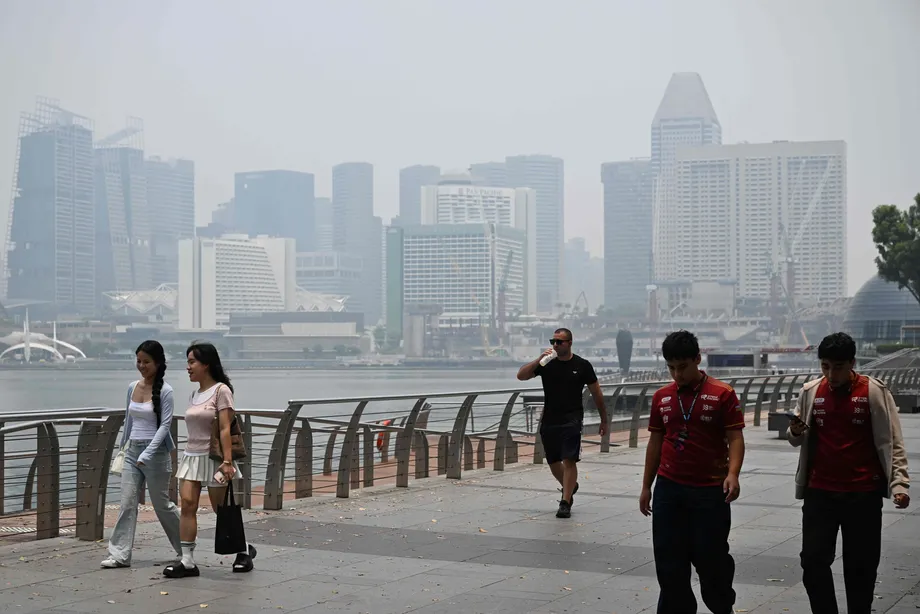
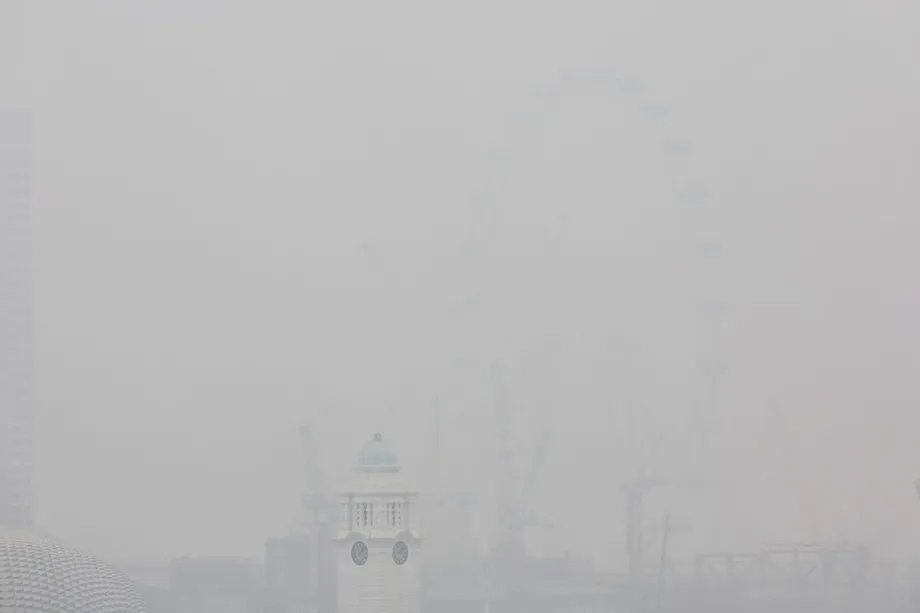
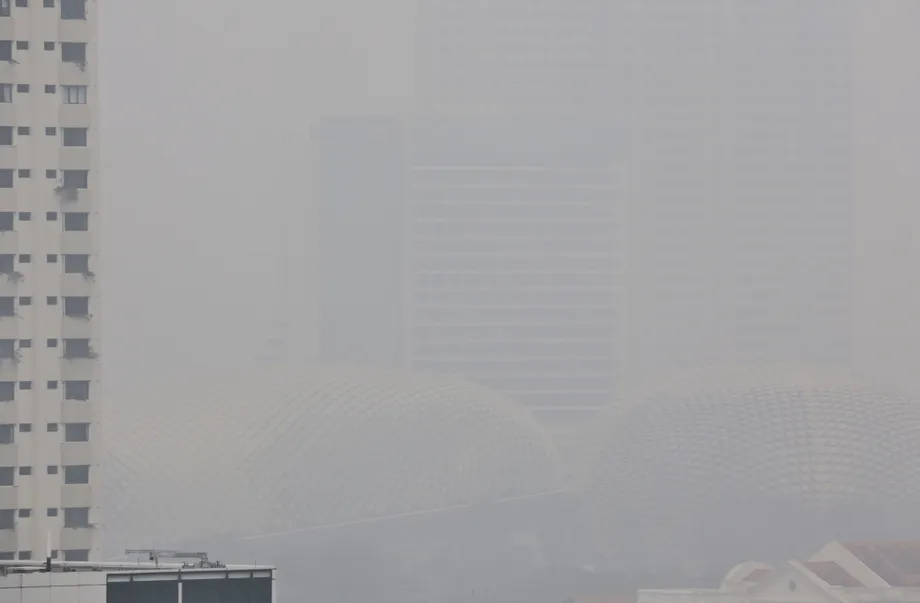
Western Singapore recorded an hourly PM2.5 concentration of 288 micrograms per cubic metre at 3pm on October 14, 2026, pushing fine particle pollution into the National Environment Agency's highest band, very high. By 9pm, the west's 24-hour Pollutant Standards Index (PSI) was reported at 203, in the very unhealthy range, as smoke from Indonesian fires continued drifting towards the island.
Contents
- Western Singapore records 288 as haze protection steps expand
- How pollution changed through the day
- Pollution spread beyond the west
- What PSI and PM2.5 mean for residents
- Why masks were distributed earlier
- Mask fit and personal health matter
- More than 300 shelters offer indoor refuge
- Sports closures widened and flights stayed suspended
- Schools adjust activities while lessons continue
- Indonesian fires keep the regional threat active
- Unhealthy air also reaches a legal threshold
- Key Points
The evening update placed the crossing above PSI 200 at 9pm, while a display attributed to NEA labelled the same western reading of 203 as occurring at 1pm. The precise time of that crossing is unclear. The afternoon measurements consistently showed a sharp rise in fine particles, followed by worsening air quality measured over 24 hours.
The government began distributing N95 masks to vulnerable Singaporeans before the anticipated PSI threshold was reached, opened haze shelters and suspended activities at outdoor sports facilities. Schools cancelled outdoor activities, while Firefly extended a flight suspension through October 16.
NEA attributed the haze to fires in Kalimantan, the Indonesian part of Borneo, and southern Sumatra. Its evening forecast put Singapore's air quality in the unhealthy to very unhealthy range for the following 24 hours, covering October 15.
The day's developments showed why Singapore publishes two pollution indicators. Hourly PM2.5 readings capture rapid changes in the air people are breathing now. The 24-hour PSI reflects pollution over a longer period and helps guide broader measures, including school arrangements and public health preparations.
How pollution changed through the day
Western Singapore's hourly PM2.5 rose from 195 to 284 at 2pm, then reached 288 at 3pm, according to the detailed afternoon sequence. Another published figure placed 288 at 2pm. Both put the west above the very high threshold of 251 during the afternoon.
The readings remained high for several hours. At 4pm, western PM2.5 was 251; at 5pm, it fell to 234. By 7pm, the west was again in the very high band, with the island's hourly concentrations ranging from 96 to 269 micrograms per cubic metre.
- October 13, 7pm: Regional 24-hour PSI readings ranged from 111 to 160, while hourly PM2.5 ranged from 57 to 95.
- October 14, 2pm: Western hourly PM2.5 reached 284 in the detailed afternoon sequence.
- October 14, 3pm: Western PM2.5 reached 288; regional 24-hour PSI readings ranged from 114 to 160.
- October 14, 5pm: Western PM2.5 eased to 234. Regional PSI readings were reported at 121 to 175, although another update gave 118 to 160 for that hour.
- October 14, 7pm: The west's 24-hour PSI reached 190, with all five regions still in the unhealthy range.
- October 14, 9pm: The evening update put western PSI at 203 and central PSI at 184.
The 288 concentration was the highest hourly PM2.5 reading reported for 2026. It was about 61 per cent of the western reading of 471 recorded at 11pm on October 19, 2015, during that year's severe haze episode. NEA began publishing hourly PM2.5 readings in 2014.
Pollution spread beyond the west
Central Singapore recorded hourly PM2.5 of 218 at 3pm, followed by the east at 208 and the south at 177. All three were in the high band. The north recorded 140, within the elevated band.
At the same hour, 24-hour PSI readings were 160 in the west, 154 in both the central and eastern regions, 138 in the south and 114 in the north. Every region was unhealthy, even though the immediate fine particle concentrations varied widely.
By 9pm, hourly PM2.5 had eased to 125 in central Singapore, 97 in the east, 88 in the south and 72 in the north. The longer averaging period meant PSI could continue rising while hourly particle concentrations declined. Western PSI of 203 also exceeded the previous 2026 peak of 192 recorded in central Singapore on October 9.
What PSI and PM2.5 mean for residents
PM2.5 describes airborne particles measuring 2.5 micrometres or less across. These particles are roughly 30 times smaller than the width of a human hair and can travel deep into the lungs, with some entering the bloodstream. During Singapore's haze episodes, they are usually the main pollutant.
NEA divides hourly PM2.5 concentrations into four bands: normal from zero to 55, elevated from 56 to 150, high from 151 to 250, and very high from 251 upwards. The figures measure particle concentration in micrograms per cubic metre.
Singapore's PSI is an index calculated from six pollutants: PM2.5, PM10, sulphur dioxide, nitrogen dioxide, carbon monoxide and ozone. Measurements are converted into individual index values, and the highest determines the reported PSI. Its categories are good from zero to 50, moderate from 51 to 100, unhealthy from 101 to 200, very unhealthy from 201 to 300 and hazardous above 300.
NEA's regional PSI dataset, published on Singapore's government data portal, provides readings for the major regions and is updated every 15 minutes. Users can request readings for a particular date or time. The dataset page lists coverage from February 2016 to October 2026.
Assistant Professor Seow Wei Jie of the National University of Singapore's Saw Swee Hock School of Public Health explained how the daily index and hourly particle measurement work together.
"Both indicators therefore serve different but complementary purposes," Asst Prof Seow said.
International platforms may display different numbers because they use other category boundaries, averaging periods and monitoring networks. Professor Steve Yim of Nanyang Technological University explained that the unhealthy PM2.5 concentration range under the US AQI is 55.5 to 125.4 micrograms per cubic metre, compared with 56 to 150 under Singapore's PSI. Residents can use NEA's hourly readings for immediate activity decisions and its PSI forecast for plans covering the next day.
Why masks were distributed earlier
The Haze Task Force, which comprises 28 government agencies and is led by NEA, announced on October 9 that N95 distribution would begin when 24-hour PSI exceeded 200. On October 14, the government brought distribution forward after hourly PM2.5 entered the very high band, also taking account of the forecast deterioration in PSI.
Eligible Singaporeans include members of the Pioneer and Merdeka generations, CHAS Orange and Blue cardholders, Medical Fee Exemption Card holders and ComCare Assistance recipients. Pregnant women, children aged seven to 16 and people with medical conditions such as asthma can also collect masks at community clubs or other designated People's Association venues.
Each eligible person can receive a pack containing two masks, available in medium or large sizes, using their NRIC. A family member or friend may collect on their behalf using the eligible person's NRIC. Collection points include community clubs and designated vending machines at selected transport hubs, Social Service Offices and People's Association venues. Machines were planned at 37 transport hubs and social service offices, with deployment beginning on Wednesday evening.
NEA said availability would increase progressively, so some locations might initially have no masks. The agency said retailers' warehouses and government stockpiles held sufficient supplies despite temporary shortages at some shops.
Mohammed Yusof, a 72-year-old retiree and stroke patient, had reduced his trips outdoors and started wearing a mask after developing a cough. He wanted distribution to begin sooner.
"Why must we wait for 200? They should start giving out masks now, instead of playing the waiting game," he said.
Among 21 members of the public interviewed before the announcement, close to three quarters favoured access before PSI exceeded 200. Rachel Lim, a sales executive who was 22 weeks pregnant, also supported earlier availability, while student Shreya Ahuja, who has asthma, considered the original threshold reasonable. Their experiences reflected differences in health, symptoms and access to protection.
Mask fit and personal health matter
N95 masks are designed to filter at least 95 per cent of fine airborne particles when worn correctly. Sharon Ngoh, acting medical director at Parkway Shenton, said they need to fit closely around the nose and mouth, without gaps. Surgical masks fit more loosely and provide unreliable protection against PM2.5.
Associate Professor Miranda Loh of NUS's Saw Swee Hock School of Public Health said individual health responses do not follow a sharp numerical boundary.
"In reality, the health effects of PM2.5 do not suddenly start or stop at a threshold," she said.
Exposure duration, physical exertion, age and existing illnesses affect the precautions a person needs. Dr Chew Wei Yang of Our Family Nest Medical advised people who develop symptoms at lower readings to reduce exposure without waiting for a fixed threshold.
NEA advises everyone to minimise outdoor activities for the next hour when hourly PM2.5 is very high. Children, older people, pregnant women and people with chronic heart or lung disease should avoid outdoor activities during that period.
People with severe heart or lung conditions who have difficulty breathing should consult a doctor before using an N95. Asiya Bakht, a 52-year-old media professional with asthma, described feeling breathless while wearing masks and instead reduced exposure by working from home and going out less. Dr Farah Khairi of Dr+ Medical and Paincare Telok Blangah identified reduced outdoor activity and cleaner indoor air as alternatives for people unable to tolerate an N95.
More than 300 shelters offer indoor refuge
Air conditioned rooms at more than 300 community clubs and selected Residents' Committee and Residents' Network centres were opened as haze shelters. Residents can contact their nearest community club for locations and operating hours. If 24-hour PSI enters the hazardous range above 300, community club shelter hours will extend until 10pm.
At home, closing doors and windows can reduce the entry of haze, but ordinary air conditioner filters mainly catch larger dust particles. Liu Zheng of NTU's School of Materials Science and Engineering explained their limitation.
"So it makes the room cooler, but not much cleaner," he said.
Professor Rajasekhar Balasubramanian of NUS said filters rated MERV 13 or higher can improve fine particle removal in suitable air conditioning systems. MERV is a rating of a filter's ability to capture airborne particles. A purifier with a HEPA filter, designed to trap very small particles, can also help in an enclosed room.
Philip Eng, a senior consultant respiratory physician at Mount Elizabeth Hospital, said a purifier must have enough capacity for the room's size. Singapore Environment Council executive director Cheang Kok Chung said indoor plants can absorb small amounts of some gaseous pollutants, but cannot effectively filter fine haze particles.
Subsidised treatment for conditions associated with haze became available at Public Health Preparedness Clinics and polyclinics on October 12, following an announcement by Health Minister Ong Ye Kung. All Singaporeans qualify for subsidies at polyclinics; participating clinic subsidies are limited to eligible groups, including children and seniors.
Sports closures widened and flights stayed suspended
Sport Singapore initially closed outdoor facilities and facilities without air conditioning at 10 western ActiveSG locations. These included Jurong East, Sport Village@Jurong Town, Jurong Lake Gardens, Jurong West, Hockey Village@Boon Lay, Bukit Batok, Bukit Gombak, Choa Chu Kang, Senja-Cashew and Clementi.
Later updates extended the affected area to eastern and central Singapore. Named facilities included Bedok and Bishan stadiums, Katong Swimming Complex and Kallang Sport Centre. Closures applied from October 14 until further notice, with affected bookings and swim passes cancelled and refunded.
SAFRA clubs in Toa Payoh, Choa Chu Kang and Jurong suspended outdoor activities. SAFRA Toa Payoh also closed its swimming pool until further notice. MPs David Hoe and Goh Pei Ming cancelled scheduled house visits as the haze worsened.
Firefly extended its suspension of flights between Singapore's Seletar Airport and Sultan Abdul Aziz Shah Airport in Subang, Malaysia, until October 16. The airline said affected passengers would be moved to Malaysia Airlines services between Kuala Lumpur and Singapore where possible.
Schools adjust activities while lessons continue
Maris Stella High School cancelled outdoor sports, Nan Hua High School cancelled at least one activity outside regular lessons, and Pasir Ris Secondary School cancelled football. CHIJ (Kellock) suspended outdoor activities, including physical education and outdoor play, for October 15 and 16. St Andrew's School (Junior) allowed pupils to wear physical education attire until December 31.
Education Minister Desmond Lee said lessons and national examinations were continuing in enclosed venues with air purifiers. When PSI exceeds 200, schools are to avoid outdoor activities and strenuous indoor exercise, reduce activities after lessons and arrange for students to eat indoors during recess.
The Ministry of Education will consider school closures and postponing national examinations if the next day's forecast is hazardous, with 24-hour PSI above 300. Any closure decision is expected around 8pm the preceding evening through schools and the ministry's official channels.
The closure plans cover MOE kindergartens, primary and secondary schools, and special education schools. Junior colleges, the centralised institute and junior college sections of Integrated Programme schools would remain open with additional haze precautions. Students affected by closures would move to learning from home.
Schools and care centres would still receive students needing care. Student care and Kindergarten Care centres would operate from 7am to 7pm during closures, providing an option for families unable to keep children at home.
Indonesian fires keep the regional threat active
NEA observed scattered to widespread fire hotspots in Kalimantan and southern Sumatra. Southeasterly winds carried smoke towards Singapore, while haze maps showed dense smoke across Singapore, southern Peninsular Malaysia, central Sumatra and much of Kalimantan.
Monitoring stations in Peninsular Malaysia, Singapore, Kalimantan, Sumatra and western Sarawak recorded air quality ranging from unhealthy to hazardous. Cloud cover restricted assessment of parts of the region.
Showers were forecast for Singapore and some neighbouring areas on October 15, but dry conditions were expected to persist in parts of southern Sumatra and Kalimantan. NEA warned that areas experiencing prolonged dry weather would continue facing a risk of severe haze crossing national borders.
Singapore offered assistance to Indonesia on October 10, and Indonesian officials welcomed offers from Singapore and Malaysia. One Indonesian disaster management official said firefighters on the ground could be more useful than helicopters. Regional coordination involves the ASEAN Specialised Meteorological Centre in Singapore and the Interim ASEAN Coordinating Centre for Transboundary Haze Pollution Control in Jakarta.
Unhealthy air also reaches a legal threshold
Singapore's Transboundary Haze Pollution Act, enacted in 2014, targets those responsible for causing or condoning fires whose haze keeps PSI at 101 or higher in any part of Singapore for at least 24 hours. The unhealthy episode beginning September 4 crossed that threshold, and the latest prolonged episode began October 5.
The Act provides for fines of up to S$100,000 a day, capped at S$2 million. NEA said it was monitoring hotspots, their sources and their effect on Singapore's air. Establishing responsibility involves evidence about fires, land concessions, wind direction and smoke movement.
By the end of September, Indonesian authorities had named 138 individual fire suspects and sealed concessions held by 68 companies. In Singapore, investigations involving four companies from the 2015 haze remain open: Bumi Andalas Permai, Bumi Mekar Hijau, Sebangun Bumi Andalas Woods Industries and Rimba Hutani Mas. Cases involving Bumi Sriwijaya Sentosa and Wachyuni Mandira were closed after NEA accepted their explanations that they were no longer associated with the affected land before the fires.
Simon Tay, chairman of the Singapore Institute of International Affairs, said cooperation to control fires should come first, alongside work to establish responsibility.
"Act first on the fires. Establish accountability when the facts are clearer," he said.
Sean Tseng, an adjunct senior research fellow at NUS's Asia-Pacific Centre for Environmental Law, identified a practical enforcement difficulty: collecting fines or damages can depend on whether the responsible entity has assets or subsidiaries in Singapore. The immediate response therefore combines local health protection with efforts to control fires beyond Singapore's borders.
Key Points
- Western Singapore's hourly PM2.5 reached 288 micrograms per cubic metre on October 14, the highest reported reading of 2026.
- The evening update put western 24-hour PSI at 203, in the very unhealthy range.
- N95 distribution began earlier than planned, and more than 300 community venues opened haze shelters.
- Outdoor sports closures expanded beyond the west, while schools suspended outdoor activities.
- School closure decisions would depend on a hazardous forecast for the next day and be announced around 8pm.
- NEA forecast unhealthy to very unhealthy air for October 15 as smoke continued arriving from Indonesian fires.
- Firefly's Seletar to Subang flight suspension was extended through October 16.