India approves the sale of control in IDBI Bank
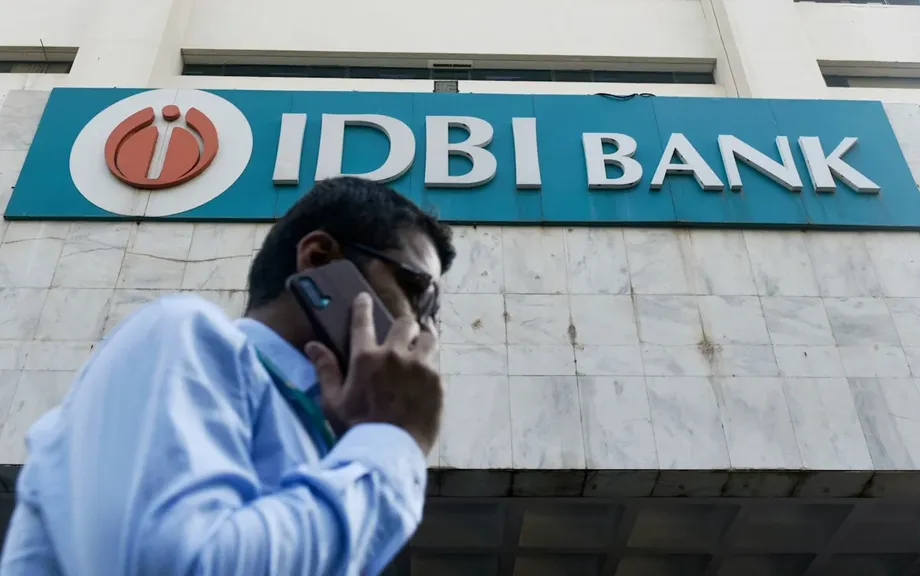
India's Cabinet Committee on Economic Affairs approved the sale of a 60.72% stake in IDBI Bank to an entity backed by Prem Watsa's Fairfax Financial Holdings on October 14, 2026, for about 528.78 billion rupees ($5.6 billion). The decision moves a long delayed transfer of control in the Mumbai lender closer to completion, with Reserve Bank of India approvals and other regulatory steps still ahead.
Contents
- India approves the sale of control in IDBI Bank
- What Fairfax is buying, and who receives the money
- How the price changed after an earlier rejection
- A timeline from banking distress to Cabinet approval
- The bank Fairfax would inherit is much stronger
- CSB Bank creates a second ownership decision
- What changes for customers and minority shareholders
- Where new management could seek growth
- Fairfax's investment expands an established India portfolio
- A larger role for foreign investors in Indian banking
- Key Points
Fairfax's winning offer is 81 rupees per share. The government will sell 30.48% of the bank and Life Insurance Corporation of India (LIC) will sell 30.24%. Immediately after the transaction, the government will retain 15% and LIC 19%, leaving them with a combined 34% holding.
Information Minister Ashwini Vaishnaw said the completed transaction would be India's largest foreign direct investment in the financial sector. Foreign direct investment means an overseas investor takes a lasting ownership interest in a business, rather than simply buying shares for a short period.
The government calls the transaction a strategic restructuring: Fairfax would acquire management control alongside the shares. The buyer named in the approval is 10955230 Canada Inc, whose parent is Fairfax Financial Holdings.
IDBI, described as India's sixth largest private bank by assets, has already undergone a substantial financial recovery. Its gross bad loan ratio fell from 31.78% in September 2018 to 2.32% in March 2026, while annual net profit reached 95.13 billion rupees in the financial year ended March 2026.
The next stage brings several connected decisions. Fairfax must present its credentials and a compliance roadmap to the RBI, make an open offer to minority shareholders, and resolve its existing 40% holding in CSB Bank. The government also has authority to sell its remaining IDBI shares later through the market.
What Fairfax is buying, and who receives the money
The 60.72% purchase gives Fairfax a majority of IDBI's shares and management control. Before the sale, the government owns about 45.5% and LIC about 49.2%. Their combined holding leaves only around 5% of shares available to other investors.
The purchase price values the whole bank at approximately 871 billion rupees. That figure is larger than the transaction payment because Fairfax is buying just over three fifths of the lender, rather than all of it.
The government and LIC receive the proceeds for the shares they sell. This is a transfer of existing ownership: the purchase payment goes to the sellers, while any fresh capital Fairfax might later put into IDBI would be a separate decision.
At 81 rupees per share, the government's portion would generate roughly 265.4 billion rupees, calculated from its 30.48% share of the 60.72% stake being sold. LIC's portion would generate roughly 263.3 billion rupees. The government component alone is about one third of India's 800 billion rupee asset sale target for the financial year.
The remaining public holdings have different routes ahead. The Cabinet has delegated authority for the government's residual 15% to be sold in the open market. LIC can manage its remaining stake under its internal procedures and its regulators' directions; the announced conditions also call for LIC to reduce its holding to 15% within two years.
How the price changed after an earlier rejection
Fairfax's 81 rupee offer exceeded the fresh valuation benchmark of 75.99 rupees per share by 5.01 rupees, or about 6.6%. The benchmark was based on two independent valuations, and the government considered the accepted price reasonable.
The earlier reserve price, the minimum the government was prepared to accept, was 94.42 rupees per share. Bids fell below that threshold, and the sale process was paused in March 2026. The revised benchmark was about 19.5% below the earlier reserve price.
The government reworked its valuation using comparisons with other businesses and an assessment of the bank's assets, citing volatility in IDBI's share price. Two parties ultimately qualified to submit bids, with Fairfax selected as the successful bidder.
IDBI shares rose as much as 13% during October 14 trading, reaching 93.62 rupees from a previous close of 82.92 rupees. The BSE closing figure was reported as 90.44 rupees, up 9.07%; another closing figure was 89.85 rupees, up 8.33%. Fairfax's offer was roughly 10% below either closing price.
Abizer Diwanji of Neostrat Advisors argued that the small proportion of freely traded shares made the market price a less useful reference for valuing a controlling stake. He estimated the transaction at around 1.5 to 1.6 times book value, compared with a reference valuation of 1.06 times for RBL Bank. Book value is the value of a company's assets after subtracting its liabilities.
A timeline from banking distress to Cabinet approval
IDBI's ownership story began well before the Fairfax bidding process. The lender required regulatory restrictions and a large investment from LIC before its finances recovered enough to support the current sale.
- 2017: The RBI placed IDBI under its Prompt Corrective Action framework, which imposes restrictions on banks with weak financial indicators.
- September 2018: IDBI's gross bad loan ratio stood at 31.78%, meaning nearly one third of its loan book was classified as troubled.
- January 2019: LIC took control after investing 216.24 billion rupees through newly issued shares. IDBI was subsequently classified as a private bank after the government's direct holding fell below 51%.
- 2022: The government announced the sale process for a controlling stake.
- March 2026: The process was paused after bids fell short of the government's price expectations.
- October 14, 2026: The Cabinet Committee on Economic Affairs approved Fairfax's entity as the strategic buyer at 81 rupees per share.
- October 17, 2026: IDBI is scheduled to announce its results for the second quarter.
- Before the end of 2026: Officials expect the share purchase agreement to be signed.
- Before March 31, 2027: Officials expect the overall transaction to be completed.
Arunish Chawla, secretary of the Department of Investment and Public Asset Management, gave the expected completion timetable. The deadlines depend on the remaining approvals and transaction requirements. The announced terms also provide for the buyer's invested capital to remain locked in for three years and for IDBI to retain its existing name.
The bank Fairfax would inherit is much stronger
IDBI's gross bad loan ratio dropped by 29.46 percentage points between September 2018 and March 2026, from 31.78% to 2.32%. A nonperforming loan is a loan whose borrower has fallen sufficiently behind on payments for the bank to classify it as troubled.
The bank's capital adequacy ratio rose from 6.22% in 2018 to 26.65% in March 2026. This measure compares a bank's capital cushion with its assets after accounting for their risk. A larger cushion gives the bank more capacity to absorb losses and support lending.
IDBI earned a record 95.13 billion rupees in the financial year ended March 2026, an increase of 27%. Its total business, a banking measure combining deposits and advances, was 6.008 trillion rupees. The lender operated 2,174 branches and 3,011 ATMs.
The quarter ended June 2026 showed continued growth, with net profit rising 5% to 21.15 billion rupees. Net interest income, the difference between interest earned and interest paid, increased 10% to 34.86 billion rupees. Loans grew 22% from a year earlier, while deposits grew 10%.
IDBI's net interest margin fell to 3.61%, indicating pressure on the income it earns from lending relative to its earning assets. Quarterly profit also benefited from a provision writeback, meaning some money previously set aside against possible losses was returned to earnings.
CSB Bank creates a second ownership decision
Fairfax already owns around 40% of CSB Bank through FIH Mauritius Investments Ltd. It acquired control in 2018, when CSB needed fresh capital, and reduced its holding by about 9.7 percentage points in June 2024 to meet RBI requirements.
Chawla said Fairfax must either merge CSB with IDBI or exit its CSB investment within two years of signing the share purchase agreement. The roadmap has also been described as requiring a merger within two years. The final structure will be governed by RBI and Securities and Exchange Board of India rules and the compliance plan accepted by regulators.
The RBI's fit and proper assessment examines whether a major bank shareholder is suitable to hold that position. Fairfax's entity must submit its credentials and explain how it will meet the ownership conditions. India's framework generally provides for promoter holdings to fall to 26% after 15 years, with larger holdings possible earlier under an approved reduction plan.
IDBI is much larger than CSB. Its annual profit of 95.13 billion rupees was about 8.8 times CSB's 10.85 billion rupees for the same financial year. IDBI's total business at March 2026 was approximately seven times CSB's 862.82 billion rupees at June 2026, although those business figures refer to different dates.
Shriram Subramanian, founder and managing director of InGovern Research Services, said the banks' geographic strengths could support a merger. He described CSB's presence in southern India as potentially complementary to IDBI's network, while suggesting regulators might allow time to stabilise IDBI before the final ownership decision.
What changes for customers and minority shareholders
IDBI's existing deposit, loan and banking agreements continue through the ownership transition. Deposit and lending rates remain governed by account terms, loan contracts, relevant interest rate benchmarks and the bank's funding decisions.
The RBI will continue to supervise the bank. Eligible deposits remain insured by the Deposit Insurance and Credit Guarantee Corporation up to 500,000 rupees per depositor per bank, including principal and interest held in the same right and capacity. The limit applies across eligible accounts at that bank, rather than separately to each account.
IDBI will also remain subject to the mandatory 40% priority sector lending target. This requires banks to direct a specified share of lending towards designated areas such as agriculture and smaller businesses. Finance Ministry officials said the lender would continue participating in financial inclusion, social security and pension programmes, including Jan Dhan accounts and the Atal Pension Yojana.
Branch operations, staffing, technology and new products will depend on the bank's future business plan. Specific changes to those services have not been announced.
Minority shareholders will have an open offer, a process through which an incoming controlling shareholder offers to buy shares from other investors under securities rules. The offer's detailed timetable and terms have not been given. Shareholders also face later changes in the ownership mix as the government and LIC reduce their remaining holdings.
Where new management could seek growth
Diwanji said IDBI had used the years of uncertainty over its sale to recover troubled loans, strengthen its balance sheet and attract deposits. He sees the ownership transfer as an opportunity to expand from that stronger base.
Diwanji, who works at Neostrat Advisors, described the next stage in these terms:
"Now it's time for new capital and new management practices to flow in to grow the business further," Diwanji said.
Dinesh Kumar Khara, former chairman of State Bank of India, identified small and medium enterprises and companies of medium size as potential lending opportunities. He said those businesses can offer better lending margins than some retail and large corporate segments, and that IDBI's deposit network and digital initiatives could support expansion.
Diwanji also pointed to insurance sales through bank branches, known as bancassurance, as a possible use of IDBI's relationship with LIC and Fairfax's insurance experience. Both Diwanji and Khara expect greater management certainty, with Fairfax exercising majority influence while the government and LIC retain minority stakes.
Fairfax's investment expands an established India portfolio
Prem Watsa, born in Hyderabad, has been Fairfax Financial Holdings' chairman and chief executive since 1985. His group's Indian investments already span banking, insurance, travel, airport infrastructure and capital markets.
The proposed IDBI purchase is larger than the reported assets of Fairfax India Holdings, the group's dedicated India investment vehicle. Fairfax India had assets of $3.76 billion and equity of $2.94 billion at June 30, 2026, compared with the roughly $5.6 billion transaction. The much larger parent, Fairfax Financial Holdings, reported assets of $109.1 billion.
Fairfax India owns 74% of Bangalore International Airport after buying an additional 10% from Siemens for $255 million. It also agreed to raise its holding in IIFL Capital Services to 51% through a $211 million investment. These holdings place the IDBI purchase within a broader expansion in Indian businesses rather than an isolated entry into the country.
Fairfax's other interests include Thomas Cook India and a linked investment in Go Digit General Insurance. Its portfolio has also changed through disposals, including the sale of its interest in Sanmar Chemical Enterprises for 2.48 billion rupees in April.
Vaishnaw, explaining the government's aim in approving the bank transaction, connected the ownership change to funding business growth:
"We need organisations that can meet growth capital for entrepreneurs," Vaishnaw said.
A larger role for foreign investors in Indian banking
Japanese lenders, including Mitsubishi UFJ Financial Group and Sumitomo Mitsui Financial Group, spent more than $6 billion combined buying stakes in Indian banks in 2025. Fairfax's roughly $5.6 billion purchase would approach that combined amount in a single transaction.
Prime Minister Narendra Modi's government is seeking to reduce state ownership while building banks with more capacity to finance economic growth. Authorities have discussed greater foreign participation and mergers among state controlled lenders as ways to create larger institutions.
The government's ambition is to make India a developed economy by 2047, with output reaching about $30 trillion. The financing ambition associated with that goal would require bank funding to rise from around 56% of gross domestic product to about 130%, an increase of 74 percentage points and more than twice the current share.
IDBI's sale connects that banking agenda with the government's effort to raise money from asset sales. Its immediate commercial task is more specific: complete the ownership transfer, settle Fairfax's CSB position and turn IDBI's recovered balance sheet into sustained lending growth.
Key Points
- The Cabinet approved Fairfax's purchase of 60.72% of IDBI Bank on October 14, 2026, for about 528.78 billion rupees, or $5.6 billion.
- Fairfax offered 81 rupees per share, above the revised 75.99 rupee benchmark and below the earlier 94.42 rupee reserve price.
- The government will initially retain 15% and LIC 19%; further reductions in those holdings are planned or permitted.
- RBI assessment, other approvals and an open offer to minority shareholders remain part of the transaction process.
- Fairfax must resolve its 40% CSB Bank holding through a merger or exit within two years of signing the purchase agreement.
- IDBI's gross bad loan ratio fell from 31.78% in September 2018 to 2.32% in March 2026.
- Existing banking agreements continue, and eligible deposits remain insured up to 500,000 rupees per depositor per bank.
- Officials expect the agreement before the end of 2026 and completion before March 31, 2027.